Short Answer: Preventive grub treatment for Westchester County lawns should go down in the third or fourth week of June. Japanese beetles, oriental beetles, and European chafers are laying eggs across Hudson Valley lawns right now. Those eggs hatch in July, and the small grubs are most vulnerable to preventive products like chlorantraniliprole or imidacloprid at that stage. A single mid-to-late-June application sets up the lawn against grub damage for the rest of the season. Wait until you see damage in September, and you are looking at curative treatment plus overseeding and possibly sod patches.
If you have walked your Westchester yard in the past week, you have probably seen Japanese beetles on the roses, on the grapevines, on the linden tree out front, or working over the bee balm. The beetles themselves are familiar. What most homeowners do not connect is that those same beetles are the parents of the grubs that destroy lawns in August and September. Every visible beetle is a future grub problem if the egg-laying succeeds.
That connection matters because the prevention window opens this month. If you are a Scarsdale, Bronxville, Larchmont, Chappaqua, or Yorktown homeowner, late June is the single most important week of the year for grub control. Here is why timing matters so much, what realistic prevention looks like, and what happens if you wait.
The Grub Lifecycle in Plain English
Three beetle species drive grub damage in Westchester County. Japanese beetle is the most familiar. Oriental beetle and European chafer round out the trio. All three follow roughly the same lifecycle, which is the key to the prevention timing.
In June, adult beetles emerge from the soil where they spent the winter and pupated in spring. They feed on ornamentals, mate, and the females begin laying eggs in lawn soil. They prefer moist, well-irrigated turf for egg laying, which is why golf courses, irrigated suburban lawns, and lush front yards in Westchester subdivisions take the heaviest damage. Dry, neglected lawns get fewer eggs because the females do not find them attractive.
In July, the eggs hatch. The first-instar grubs are small, soft, and feeding actively near the soil surface. This is the most vulnerable life stage to insecticide treatment.
In August and September, the grubs grow through second and third instar stages, getting larger and feeding heavily on grass roots. This is when visible damage appears: irregular brown patches that pull up like loose carpet because the roots are gone.
In October and November, the third-instar grubs feed less, then burrow deep into the soil for winter. By the time the visible damage is widespread, the grubs are out of reach of most products.
The prevention window: late June. Treat before the eggs hatch and the active ingredient is sitting in the root zone when the small grubs start feeding. The product intercepts them at their most vulnerable stage and prevents the population from establishing.
Why Preventive Beats Curative
Curative grub treatments work, but they have significant downsides compared to preventive.
Curative treatments are applied after grubs are present and damage is visible (usually August or September in Westchester). The active ingredients used (trichlorfon, dylox, carbaryl) work on larger grubs but require precise timing, immediate watering-in, and often only kill 60 to 80 percent of the grubs present. The damage that is already done is already done; the curative just stops further damage.
Preventive treatments kill the small grubs as they hatch, before any damage occurs. Effective preventive products (chlorantraniliprole, imidacloprid, clothianidin) provide 90 to 95 percent control through the entire grub generation. The lawn that gets a properly timed preventive treatment looks indistinguishable from a non-treated healthy lawn through fall, while the neighbor’s untreated lawn is patchy and torn up by squirrels and skunks digging for grubs.
The cost comparison is clear. A preventive treatment for a typical Westchester quarter-acre lawn runs $80 to $120. Renovating a grub-damaged lawn (curative treatment plus overseeding plus possibly sod patches) runs $1,500 to $4,000 depending on the extent. Preventive is the cheaper insurance by a factor of ten or more.
The Right Products for Westchester
Two active ingredients are the standards for preventive grub control on Hudson Valley lawns.
Chlorantraniliprole (Acelepryn is the common professional brand) is the safer, longer-residual option. It is highly effective on grubs, has low toxicity to bees and other beneficial insects when applied correctly, and provides season-long control. It is the product we use most often on properties with bee-friendly gardens, near pollinator habitat, or where pets and children spend significant time. Application should be in May or early June for the longest residual.
Imidacloprid is the older, less expensive option. It is effective when applied in late June and watered in well, but has more concerns around bee exposure when applied during bloom. For most Westchester properties, the safer choice is to apply chlorantraniliprole earlier (May or early June) or to apply imidacloprid in late June after spring bloom has finished.
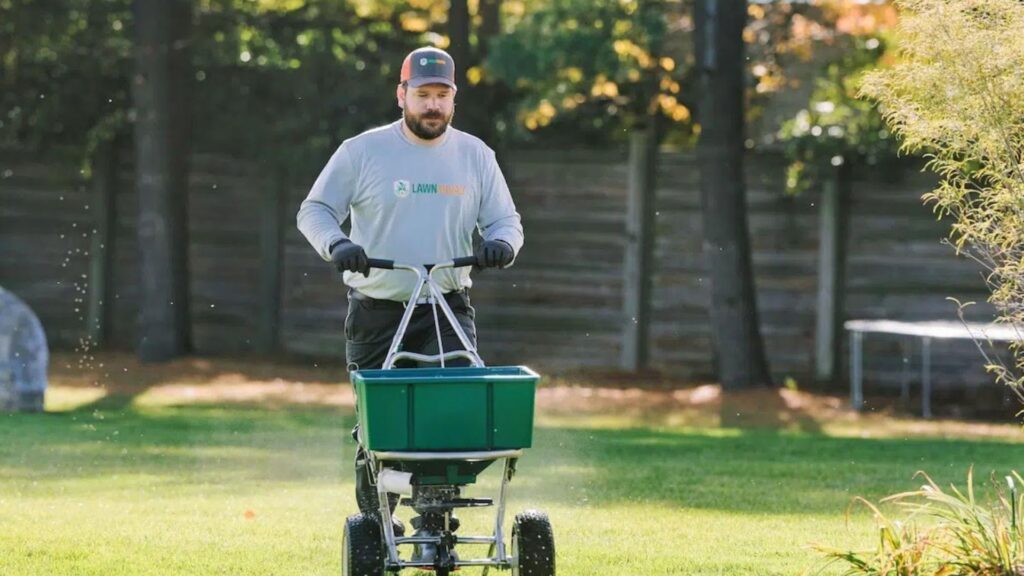
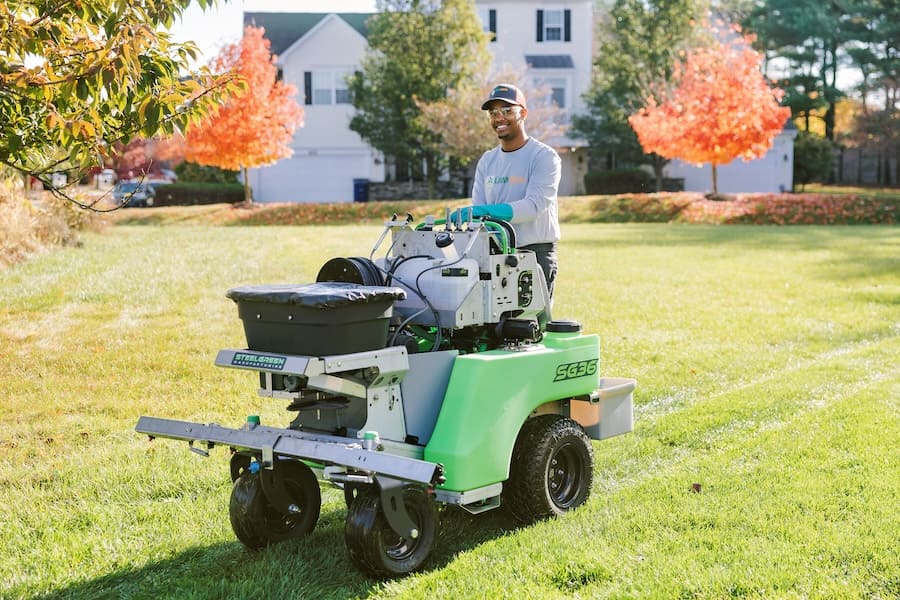
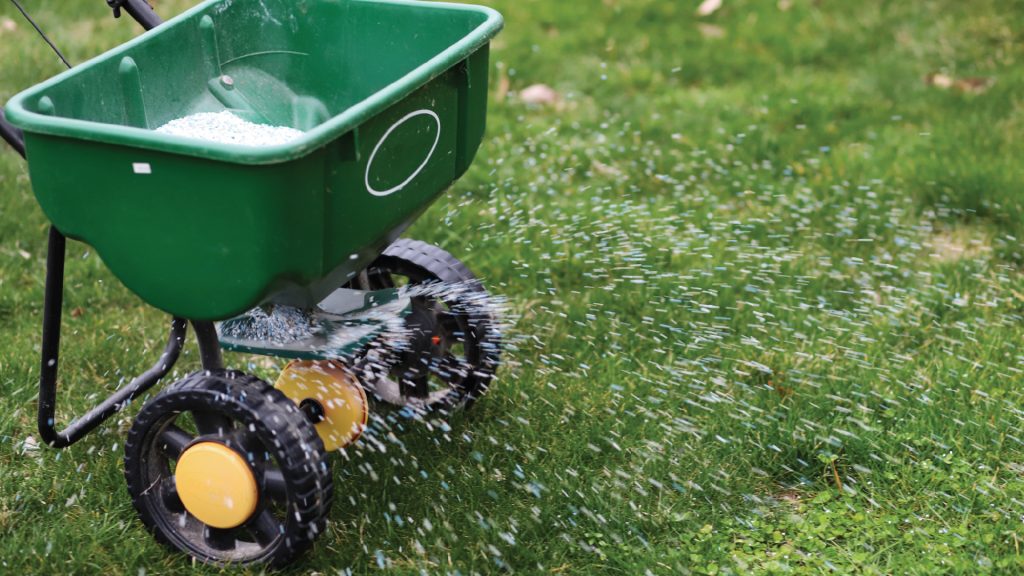
Either product needs to be watered in lightly after application (a quarter to half inch of irrigation or rainfall) to move the active ingredient into the root zone where the grubs will hatch. Skipping the watering significantly reduces effectiveness.
How Rocky Hudson Valley Soils Affect the Math
Westchester County soils are not uniform. Properties along the Hudson and in the lowland areas have deeper, richer soils. Properties up in the ridges and along the Bronx River corridor often have shallow soils over bedrock or rocky pockets, with significant compaction in newer construction zones.
The rocky soils affect grub damage in two ways. First, they limit how deep the grubs burrow, which keeps them more concentrated near the surface. Second, they limit how easily product moves through the root zone when watered in. On heavy, rocky soils, the irrigation pulse after grub application needs to be slow and deliberate (a half hour at low flow rather than ten minutes at high flow) to actually carry the product into the upper soil profile.
For properties on shallow soils over bedrock, we sometimes split the watering-in: a light irrigation immediately after application to move the product into the thatch, followed by a deeper watering 24 hours later to drive it into the root zone.
Which Lawns Need Treatment Most
Not every Westchester lawn needs preventive grub treatment every year. The risk factors that increase your need:
- History of grub damage in your yard or your neighbor’s yard in the past three to five years
- Heavy Japanese beetle activity on ornamentals in early summer
- Skunk, raccoon, or crow activity tearing up the lawn in late summer (they are after the grubs)
- Irrigated, well-maintained lawn (more attractive to egg-laying females)
- Property near horse barns, golf courses, or large irrigated landscape installations (high beetle populations)
- Kentucky bluegrass or perennial ryegrass blends (more attractive than tall fescue for egg laying)
If you check three or more of those boxes, preventive treatment is straightforward insurance. If you check none and your neighborhood has not had visible grub damage in five years, you have lower risk and may be able to monitor rather than treat preventively. We can help with that decision.
Cultural Practices That Reduce Pressure
Treatment is one piece. Cultural practices also reduce grub pressure over time.
Watering deeply and infrequently makes the lawn less attractive to egg-laying females, who prefer consistently moist soil. The same deep-and-infrequent practice that helps with disease resistance also helps with grub management.
Mowing tall (3.5 to 4 inches for Westchester cool-season lawns) develops deeper roots that can survive light grub feeding. Heavily grub-damaged lawns are almost always lawns that were also mowed too short.
Fall overseeding with grub-tolerant species shifts the lawn composition toward tall fescue or improved Kentucky bluegrass varieties that handle root pressure better.
And milky spore powder, an old-school biological treatment for Japanese beetle specifically, can be applied to lawns with chronic Japanese beetle pressure. It takes years to build up in the soil but provides long-term partial control. It does nothing for oriental beetle or European chafer, which is why it is supplemental rather than primary.
What to Do Next
If you are a Westchester County homeowner reading this in early to mid June, this is the window. A preventive grub application this month sets up the lawn for the rest of the season and prevents the damage that shows up in September.
Lawn Squad of Westchester serves homeowners across Westchester County.
Call us at 914-361-5501 or request a free quote at lawnsquad.com. Our VitaminLawn program includes preventive grub work timed for Westchester conditions, built around the Kentucky bluegrass and tall fescue lawns common across our service area, and the rocky-to-rich soil mix we see from Yonkers up through Bedford. Most Westchester homeowners on a comprehensive program never see grub damage; the ones who skip preventive often pay for it in fall.