Short Answer: June lawn care for West Houston gumbo clay focuses on five priorities: mow St. Augustine high (3.5 to 4 inches) and Bermuda or Zoysia at 1.5 to 2.5 inches, water deeply but infrequently with cycle-and-soak to defeat surface runoff on clay, apply a balanced slow-release fertilizer with iron for color without disease pressure, scout for chinch bugs along sun-baked edges, and prep for brown patch and gray leaf spot as humidity climbs. Below is the full plan we use across Bellaire and West Houston yards.
If you sank your shovel into the dirt at the edge of your Bellaire flowerbed this morning and it stuck halfway in like wet pottery clay, you already know what kind of soil we work with. West Houston is sitting on Houston Black gumbo, a heavy expansive clay that swells when wet, cracks open when dry, and behaves nothing like the loams and sandy soils most lawn care content is written for. Combine that soil with our Gulf Coast humidity, regular summer storms, and afternoon heat that pushes into the upper 90s with a real-feel above 105, and June becomes the month that decides whether your lawn survives August.
Here is the plan we work through with West Houston homeowners every June, organized so you can attack it task by task. Most of it is calibrated specifically for gumbo clay and warm-season grasses (St. Augustine, Bermuda, and Zoysia) that dominate our service area.
The Gumbo Clay Problem in One Paragraph
Gumbo clay has small pore spaces and high water-holding capacity. That sounds good, but in practice it means surface water cannot infiltrate quickly during an irrigation cycle. The top half-inch saturates fast, water then pools and runs off into the street, and meanwhile the soil six inches down is bone dry from last week’s heat. You can run your irrigation an hour a zone and still have a lawn with shallow roots and dry soil at depth. Everything in this article is designed to work with that reality rather than against it.
Mowing Height for Warm-Season Grass in West Houston
Mow St. Augustine at 3.5 to 4 inches starting in early June. Tall blades shade the soil surface, slow evaporation, develop deeper roots, and shade out crabgrass and other summer weeds. They also help St. Augustine survive the chinch bug pressure and disease pressure that ramp up in July and August.
Bermuda likes it shorter. Common Bermuda lawns in West Houston tolerate 1.5 to 2 inches. Hybrid Bermuda (Tifway 419) can go 0.75 to 1.5 inches, but most homeowners do not maintain reel mowers and should run a quality rotary at 1.5 to 2 inches. Going much lower than that with a rotary mower scalps the canopy and creates open windows for crabgrass.
Zoysia handles 1.5 to 2.5 inches depending on cultivar. Empire and Palisades are the common West Houston choices, both tolerate mid-range heights well.
The single most damaging mowing mistake on West Houston St. Augustine is the customer who scalps to 2 inches in late spring because they want it to look like a golf course. St. Augustine is not a golf course grass. Mow it tall.
Two more mowing notes that pay off: sharpen the blade every four to six weeks during heavy growth season (dull blades shred St. Augustine and open it to disease), and follow the one-third rule (never remove more than one-third of the blade in a single mowing). If you let it get long, raise the deck and step it down over two mowings.
Watering Gumbo Clay Without Wasting Water
Set up your irrigation system to deliver 1 to 1.5 inches per week in June, with rain accounted for. Most West Houston lawns get pop-up storms three to five days a month that contribute meaningfully to the total. A rain shutoff sensor or smart controller earns its keep here.
The critical trick on gumbo clay is cycle and soak. Run each zone in shorter cycles separated by rest periods. For example, a zone that needs 30 minutes total can run as three 10-minute cycles 45 minutes apart. The first run wets the surface, the rest period lets water move down into the profile, the second run carries water further. Total time is the same. Absorption is dramatically better and runoff drops to near zero.
Water before 8 a.m. Evening runs in our humidity invite gray leaf spot and brown patch overnight. Watering during peak afternoon heat loses much of the volume to evaporation.
And here is the West Houston specific note. Our gumbo clay holds water for days after a heavy storm. Skip irrigation runs for 48 to 72 hours after any rainfall of half an inch or more. Over-irrigating after a Gulf storm is the fastest path to fungal disease on St. Augustine.
Balanced Fertility With an Iron Boost
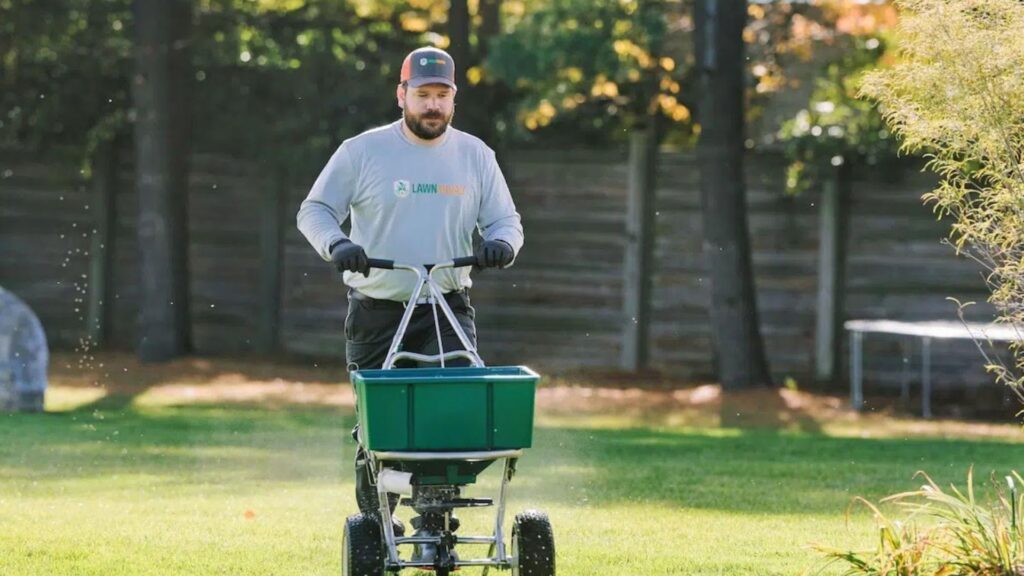
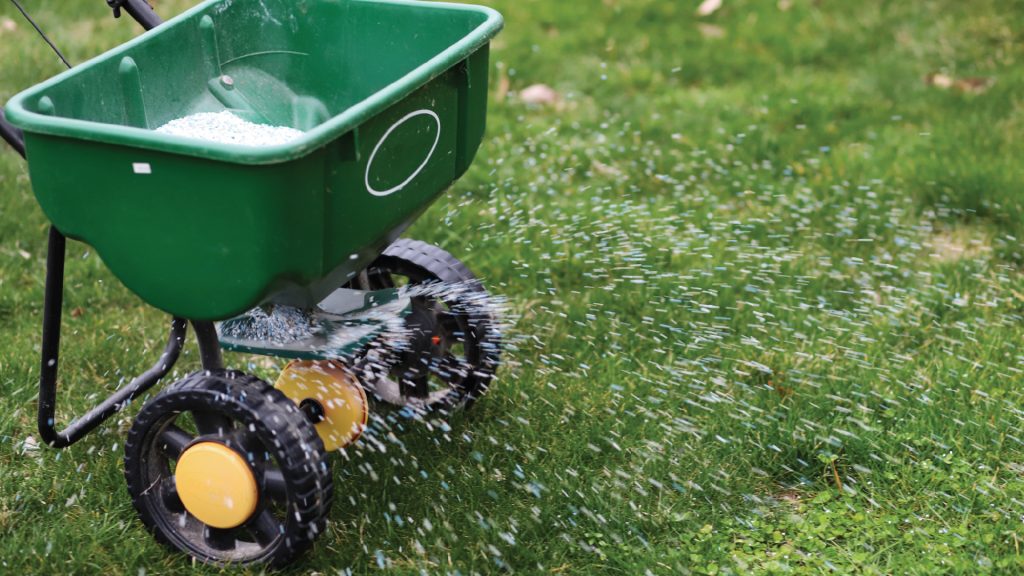
By early June, your St. Augustine or Bermuda has been growing actively for six to eight weeks and may be hungry. A balanced slow-release fertilizer at a modest rate (around half a pound of actual nitrogen per thousand square feet) keeps color and growth steady without forcing the lush top growth that disease loves.
Add an iron component, either as a liquid foliar iron spray or as a granular fertilizer with iron, to boost color without pushing growth. Iron deficiency is common on West Houston lawns because our soils are not always favorable for iron uptake, and adequate iron makes the lawn look greener at the same nitrogen rate.
Skip heavy fast-release nitrogen in June. The combination of fast nitrogen, humid nights, and Gulf Coast heat is a textbook recipe for brown patch outbreaks. Slow release is your friend.
If you have not had a soil test in three or four years, this is a good month to pull samples and send them to the Texas A&M AgriLife Extension or a private lab. The test tells you exactly what your gumbo soil is short on (often potassium or specific micronutrients), and you can dial future applications to actual need.
Chinch Bug Scouting Along Sun-Baked Edges
Chinch bugs are the number one insect problem on West Houston St. Augustine. They feed by injecting toxic saliva into grass blades, which causes irregular yellow patches that quickly turn brown. The patches always start in the hottest, driest spots, which on most West Houston yards means along driveways, sidewalks, and the south-facing sides of the house.
Scout weekly in June by parting the grass at the edge of a yellowing area and watching for small (about 1/5 inch) black-and-white adults or red nymphs running on the soil surface. A soap flush in a suspicious area (two tablespoons dish soap in two gallons of water, poured slowly) brings them up if they are there.
If chinch bugs are confirmed, a labeled product containing bifenthrin or a more targeted alternative gives quick knockdown. Watered in lightly and applied late in the day, it usually stops feeding within 48 hours. Watch for re-infestation in three to four weeks. Multiple generations occur each summer in our climate.
Pair chinch bug treatment with mowing height correction. Tall St. Augustine canopy shades soil temperatures down and is less attractive to chinch bugs than scalped St. Augustine.
Brown Patch and Gray Leaf Spot Are Coming
As nighttime temperatures stay above 70 degrees and humidity stays high (basically all summer in West Houston), two fungal diseases ramp up on St. Augustine.
Brown patch (large patch) shows as roughly circular yellow-to-brown patches with smoky margins, often expanding overnight. Gray leaf spot shows as gray or tan lesions on individual blades, often with thinning canopy areas rather than discrete circles.
Cultural prevention in June is more cost-effective than fungicide later. Water in the morning, never at night. Avoid pushing growth with fast nitrogen. Improve drainage in chronically wet low spots. Mow with sharp blades to avoid creating wound sites.
If you have a recurring brown patch history on your lawn, a preventive fungicide application in mid-June (azoxystrobin or thiophanate-methyl, applied as labeled) often pays off. Curative applications after symptoms appear work but recovery takes weeks.
The Take-All Root Rot Watchout
One more disease worth mentioning here, because we cover it in detail in our other June blog: take-all root rot. The signs show in June, the damage shows in July and August, and June is the diagnostic window. Look for yellowed patches with thinned canopy and easy-pull stolons. If you see them, call us before applying anything. Take-all needs specific cultural and fungicide treatment that differs from brown patch.
Long-Term Soil Improvement for Gumbo
The long game on West Houston gumbo clay is to gradually improve soil structure with organic matter. Topdressing with quarter-inch of high-quality compost in fall, after core aeration, slowly builds soil structure that lets water and air reach roots better. This is a multi-year process. There is no single product that fixes gumbo clay in one application. The customers who get the best long-term results are the ones who aerate annually and topdress modestly each fall.
June is not the month for aerating St. Augustine. Save that for early fall when the grass is still actively growing but heat stress has eased. Aerating in June stresses the lawn at the wrong time.
What to Do Next
If the above sounds like a lot to track between work, kids, and Houston traffic, that is what we are here for. We mow timing, water audits, fertility schedules, pest scouting, and disease monitoring as a complete program tuned to gumbo clay and warm-season grass, so you can spend Saturday on something other than your lawn.
Lawn Squad of West Houston serves Bellaire and Houston.
Call us at 713-489-6519 or request a free quote at lawnsquad.com. Our VitaminLawn program is built specifically for Gulf Coast St. Augustine, Bermuda, and Zoysia on gumbo clay, with iron supplementation, slow-release fertility, and integrated pest and disease scouting on every visit. Most homeowners on the program report their lawns hold steady through July and August while neighbors are watching theirs turn brown.