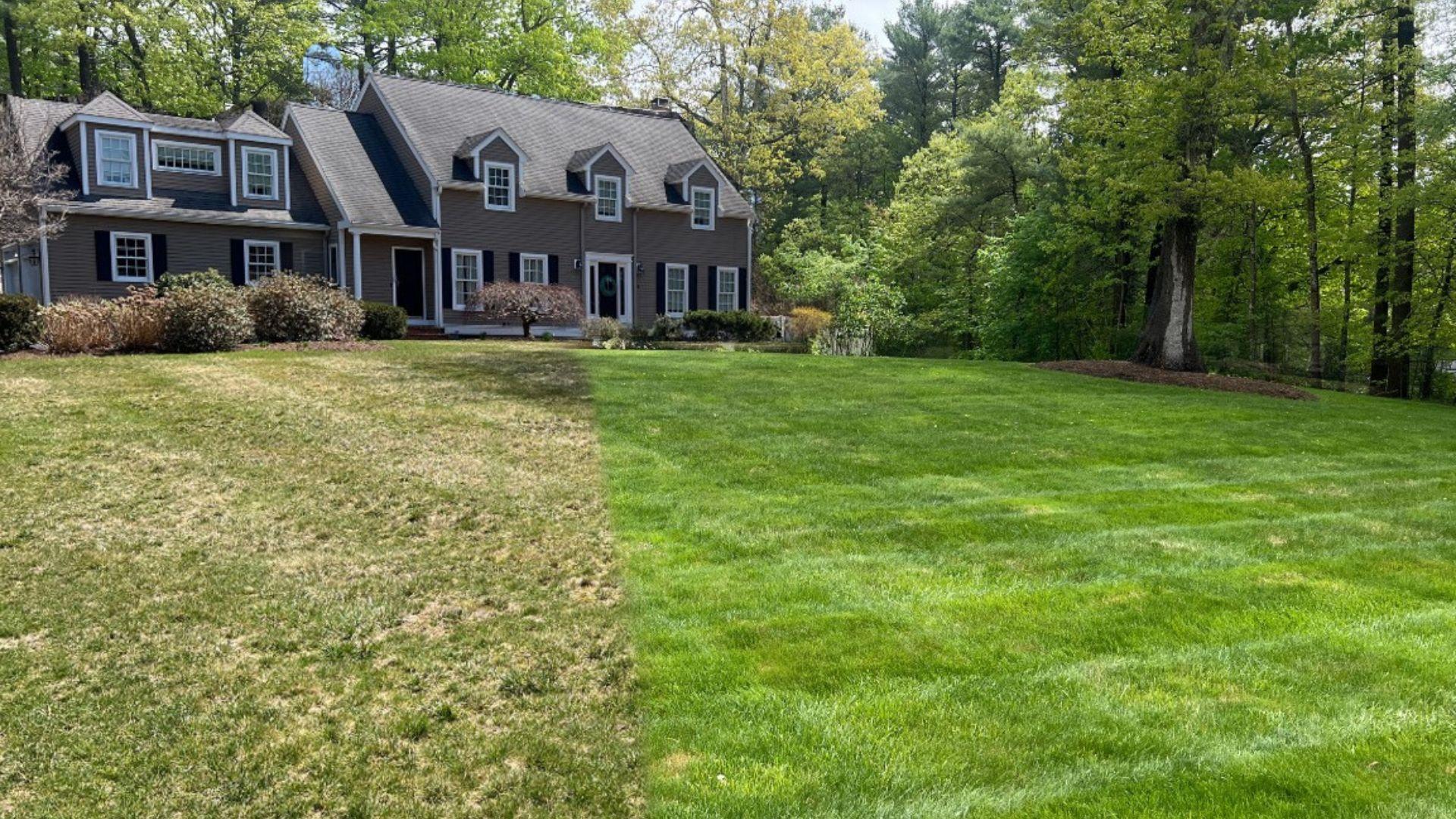
Short Answer: The May-to-June dip in Columbus lawns is real and largely normal. Cool-season grasses (Kentucky bluegrass, perennial ryegrass, tall fescue) hit peak growth in May, then transition into early summer stress as soil temperatures climb above 70 degrees. The five most common causes are: natural growth slowdown from the heat, shallow roots from prior watering habits, early disease pressure (brown patch and dollar spot), the first wave of crabgrass and summer weeds emerging through thinning turf, and accumulated mowing damage from cutting too short. Most of the dip can be reversed with the right cultural changes (higher mowing, deeper watering, no heavy nitrogen) in the first two weeks of June. Real trouble needs identification fast before July heat locks it in.
You stood in the driveway in New Albany or Hilliard the first Saturday of June and looked at the lawn that was tight and emerald-green three weeks ago. Something has changed. The color is a half-shade duller. There are a few patchy areas near the curb that you do not remember from May. The grass is not exactly suffering, but it is not as proud of itself as it was a month back. The neighbor asked if everything is okay.
We hear this conversation across every Columbus suburb every June. It catches homeowners off guard because spring went so well. The first cuts in April were satisfying, the lawn jumped to life, May was a victory lap. Then June arrives and the lawn that won April starts to soften. The good news is that most of the dip is normal seasonal transition. The bad news is that some of it signals real problems that have a two-week window to fix.
Here are the five causes we see most often, in order.
Cause 1: Cool-Season Grass Is Doing What Cool-Season Grass Does
Kentucky bluegrass, perennial ryegrass, and tall fescue all photosynthesize and grow most efficiently when air temperatures are between 60 and 75 degrees and soil temperatures are between 50 and 65. April and May give them exactly that. The lawn responds by growing fast, putting out new tillers, deepening color, and looking generally happy.
Once Columbus air temperatures consistently hit the 80s and soil temperatures rise above 70 degrees, the same plant biology starts to slow down. The grass closes its stomata more often during hot afternoons to conserve water, photosynthesis drops, and the color tones down. This is not a problem, it is the plant defending itself. By mid June, your lawn is producing maybe half the new tissue per week that it produced in mid May.
The fix is not to push it. Heavy nitrogen forced onto a cool-season lawn that has decided to slow down creates lush, succulent top growth without matching root support, which makes the lawn worse, not better. Let it ease through summer at its own pace.
Cause 2: Shallow Roots Are Cashing Their Bill
The second cause is a delayed payment from spring watering habits. If you ran the irrigation 10 minutes every day in April and May because the grass “looked thirsty,” you trained the roots to live in the upper inch or two of soil where that shallow water was easy to reach. The deeper roots that survive Columbus summer never developed because they were never needed.
Now June arrives. The surface dries out faster. The grass tries to pull moisture from deeper soil and discovers it has no roots there. Patches of thinning and yellowing show up on the highest, driest parts of the lawn first, often along the south- or west-facing edges and over any spots where the soil is thin.
This one is reversible if you act on it now. Shift to deep, infrequent watering: one inch per week (rainfall plus irrigation), delivered in one or two long cycles early in the morning. The root system will start pushing down within two to three weeks, and the lawn will be in much better shape by July. Wait until July to make this change and you are fighting heat and damage at the same time.
Cause 3: Disease Is Already Working
Columbus crosses into disease conditions in mid June most years. Nighttime temperatures above 65 degrees combined with humidity and any extended grass-blade wetness (from evening watering or heavy morning dew) creates the environment that brown patch and dollar spot need to fire up.
If the lawn has gone from uniform to spotty in June, walk it carefully in the early morning before the dew dries. Look for:
- Circular tan patches 1 to 3 feet across with a darker smoke ring at the edge (brown patch, common on tall fescue across Columbus).
- Small bleached spots about the size of a silver dollar, sometimes merging into irregular blotches (dollar spot, common on Kentucky bluegrass).
- Pink-red patches 3 to 6 inches across with a slightly fluffy texture (red thread, often on under-fed lawns).
- Cottony white growth visible early in the morning that disappears by mid-morning (mycelium of whichever pathogen is active).
If you find any of these in the first two weeks of June, the cultural fixes that handle them (early morning watering only, mow at 3.5 inches, avoid nitrogen) work well. Wait until July and you are likely looking at a fungicide application and recovery seeding in fall.
Cause 4: Crabgrass and Summer Weeds Are Filling the Thin Spots
Crabgrass seed germinates in Columbus across an extended window from late April through June. If your spring pre-emergent broke down a few weeks ago or was applied at a partial rate, late-germinating crabgrass is now coming up in any thin or bare spots in the lawn.
This shows up first along driveways, walkways, and curbs where the soil heats up faster than the open lawn. You might not see the crabgrass yet, but the grass blades you do see in those edges are lighter green and slightly different in texture. Within two weeks they will be unmistakable.
The same is true for goosegrass (more common on compacted, hard-packed areas) and various summer broadleaf weeds (spurge, knotweed, purslane) that germinate as soil warms.
If you spot summer grassy weeds at the seedling stage in early June, a post-emergent like quinclorac or fenoxaprop can knock them back. Hold off in the heat of midday, and never apply during a stretch of 90-plus weather to a stressed lawn. If you missed the early window, sometimes the best move is to spot treat and plan a fall renovation rather than risking damage to the desirable grass.
Cause 5: The Mowing Bill Comes Due
The fifth cause is sneakier. Through April and May, many homeowners mow at 2.5 or 3 inches because the spring grass is dense and short mowing looks tidy. The grass keeps up with it because cool weather and active growth let the plant recover from the stress quickly.
June changes the math. The same 2.5-inch cut that was fine in April now stresses the plant for days because recovery is slower. The exposed soil between blades dries faster, heats up more, and creates the bare gaps that crabgrass and disease both love. Over a few weeks of repeated short mowing, the lawn thins from below.
The fix is straightforward but takes patience. Raise the mower to 3.5 inches now, and follow the one-third rule (never cut more than one-third of the blade in a single mow). The lawn will look slightly different than the neighbors who cut their grass tight, but it will hold green color through July and August while the neighbors’ lawns go straw.
Also sharpen the mower blade. A dull blade tears grass tips, which dries the lawn to a gray cast the day after mowing and creates entry points for disease. Sharpen every 20 to 25 hours of use.
What Is Normal Versus What Needs a Visit
Normal June changes that do not need a service call: a slight dulling of color, mildly slower growth that lets you stretch from a 5-day to a 7-day mowing schedule, some thinning along the hottest dry edges that responds to deeper watering, and a few small disease spots that go away with cultural fixes.
Things that should prompt a call: large or spreading patches of brown or bleached turf, defined circles or arcs of damaged grass, sudden complete dieback of a section that was healthy a week earlier, visible insect activity (heavy adult beetle flights, sod webworm moths flying out when you walk the lawn), and any pattern of damage where the grass pulls up easily from the soil. The last one in particular often means grub damage from a prior generation or root disease, and both have specific treatment windows.
What to Do Next
If the June dip in your lawn does not feel right and you would rather have us walk it with you, we are here for that. A quick visit in early June is worth two visits in late July. The actions taken now while the lawn can still respond easily are very different from the actions required after July heat locks in.
Lawn Squad of Columbus serves Baltimore, Blacklick, Brice, Canal Winchester, Carroll, Columbus, Delaware, Dublin, Galloway, Grove City, Groveport, Hilliard, Lewis Center, Lockbourne, New Albany, Pataskala, Pickerington, Powell, Reynoldsburg, and Westerville.
Call us at 740-248-5880 or request a free quote at lawnsquad.com. Our VitaminLawn program is built specifically for the transition zone fescue and bluegrass lawns on clay soil that define our Columbus service area. The best summer lawns are usually the ones that quietly adjusted course in the first two weeks of June.