Short Answer: Late June through mid-July is the window to apply preventive grub control on Aurora, IL lawns. Japanese beetles and masked chafers are flying and laying eggs in the soil right now, and the eggs hatch into tiny first-instar grubs in mid-July. A preventive product applied in late June and watered in places the active ingredient in the root zone before those young grubs start feeding. Wait until you see brown patches in September and you are past the easy window. The math is brutal: roughly $80 in prevention versus $1,500 to $3,500 to renovate a grub-damaged Fox Valley lawn.
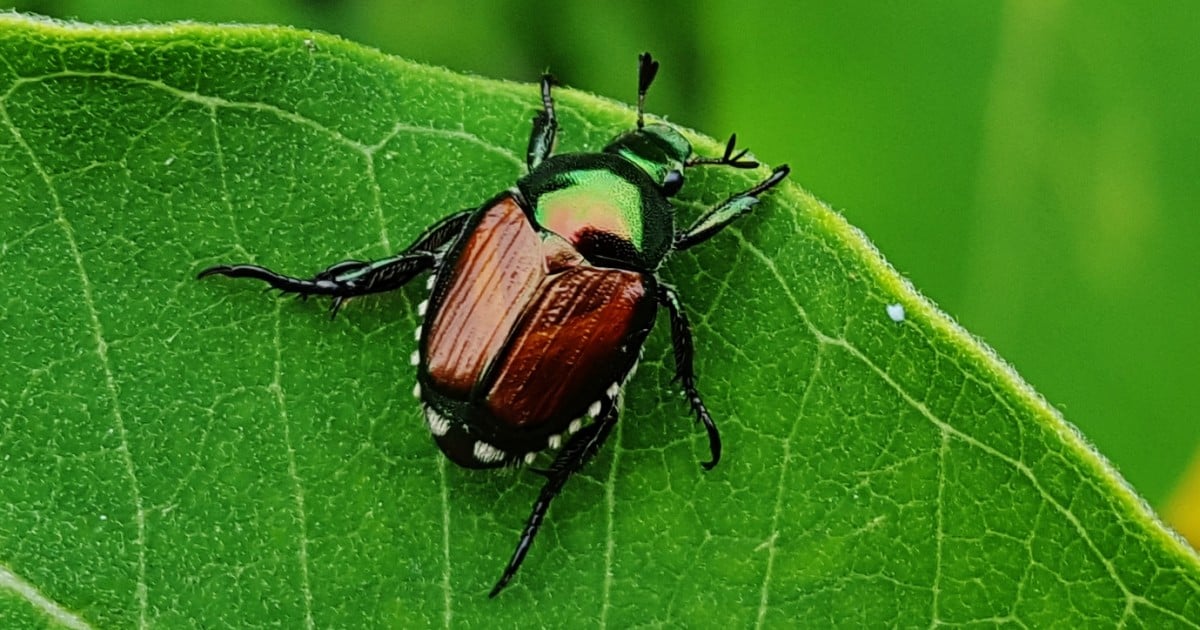
If you walked your Aurora, Naperville, or Oswego lawn last weekend and saw shiny metallic-green beetles crawling on the rose bushes, the linden tree, or the side of the garage, you saw the front half of the grub problem. Those Japanese beetles are not just chewing leaves. The females are laying eggs in your turf right now, and those eggs are why a lawn that looks fine in June can pull up like a rug in September.
Grub damage is one of the most common reasons homeowners across the Fox Valley call us in October. The conversation almost always starts the same way: “The lawn was green in August, and then suddenly there were huge brown patches that I could lift up with my fingers.” That damage was preventable. The window was June.
What Grubs Actually Are (And Which Ones Live in Aurora Soil)
The white C-shaped larvae you see when you peel back damaged turf are beetle larvae. In the Aurora area, the two species that cause the most lawn damage are Japanese beetles (Popillia japonica) and masked chafers (Cyclocephala species, the parent of the common June beetle). European chafers also show up in some Fox Valley neighborhoods.
Each of these beetles follows a similar one-year lifecycle. Adults emerge from the soil in late June through July, fly, feed on ornamental plants, mate, and the females burrow back into well-watered turf to lay eggs. The eggs hatch in mid-July into tiny first-instar grubs that immediately start feeding on grass roots. By August they have grown into second instars. By September they are large third-instar grubs doing serious root damage. They overwinter deep in the soil, return to feed briefly in spring, then pupate and start the cycle again.
The reason late June is the treatment sweet spot: the active ingredients in modern preventive grub products need to be in the soil before those July eggs hatch into feeding grubs. Apply too early and the product can break down before grubs arrive. Apply too late and the grubs are already too large for some products to control effectively.
Why Aurora Lawns Are Particularly Vulnerable
Fox Valley clay soil holds moisture, which is exactly what egg-laying females are looking for. A well-irrigated Kentucky bluegrass lawn in Naperville or Plainfield is more attractive to egg-laying beetles than a parched neighbor’s yard. The very thing that keeps your lawn green in July is also what tells the beetles to lay their eggs there.
Newer subdivisions across Aurora, Yorkville, and Oswego often have shallow topsoil layered over compacted clay subsoil. The grass roots in those lawns are already working hard. They cannot spare what grubs take. We see significantly worse fall damage in those subdivisions than in older neighborhoods with deeper, looser soil.
Add the Fox Valley’s typical July humidity and warm nighttime soil temperatures, and you have what beetles consider a five-star nursery. This is not a hypothetical regional issue. It is a yearly pattern we treat across our service area.
What Preventive Grub Products Actually Do
Two active ingredients dominate the preventive grub category: chlorantraniliprole (sold under names like Acelepryn and GrubEx-style consumer products in some formulations) and imidacloprid (sold under many trade names including Merit). Both work by sitting in the upper soil profile so that newly hatched grubs ingest the product when they start feeding on roots.
Chlorantraniliprole has a wider application window (late spring through mid-June in our area) because it persists longer in the soil. It is also considered lower-risk to pollinators when used correctly, since it is applied to turf rather than flowering plants. Imidacloprid is the more traditional choice and is most effective when applied in mid-to-late June. Both require watering in within 24 hours to move the active ingredient into the root zone where the grubs will be.
Curative products (trichlorfon, sold as Dylox) are a different category. They work on grubs that are already feeding, are applied in September after damage starts showing, and have a much narrower margin for error. We use curatives when we have to, but we vastly prefer to prevent.
How to Tell If Your Lawn Is High Risk This Year
Not every Aurora lawn needs preventive grub treatment every year. Here is how we triage it:
- Did you have grub damage last fall or spring? If yes, treat preventively. The beetle population in your soil profile is established.
- Are your neighbors reporting Japanese beetle activity right now on roses, lindens, or grapes? If yes, those beetles are also laying eggs in your turf.
- Is your lawn well-irrigated and lush in June? If yes, you are exactly what egg-laying females prefer.
- Do you have skunks, raccoons, or moles tearing up sections of turf? They are hunting for the grubs that are already there.
- Is the lawn newer (less than five years old) with thin topsoil? Roots in those lawns cannot tolerate much grub feeding before damage shows.
If you said yes to two or more of those questions, preventive treatment is the right call. If you said no to all of them and the lawn has been healthy for years, you can probably skip a season and monitor.
How to Check for Grubs Yourself
Cut a small square (about one foot by one foot) of turf with a sharp shovel and peel it back like a flap. Check the top three inches of soil. Healthy thresholds are zero to five grubs per square foot. Six to nine per square foot is borderline. Ten or more per square foot causes visible damage on most Aurora lawns.
Replace the flap, water it in, and the spot heals up within a couple of weeks. We do this kind of check on customer lawns when a homeowner wants to verify whether the preventive is worth doing. It is also how we confirm treatment success the following August.
The Mistakes We See Across the Fox Valley
The most common grub-control mistakes we see across Aurora, Naperville, and Plainfield are timing mistakes, not product mistakes.
Mistake one: applying a preventive product in early May. Too early. The product breaks down before the July grubs hatch, and the lawn has no protection when it counts.
Mistake two: applying in late August after seeing damage. Too late for most preventives. By August the grubs are large third instars, and only curative products with a tighter use window will help.
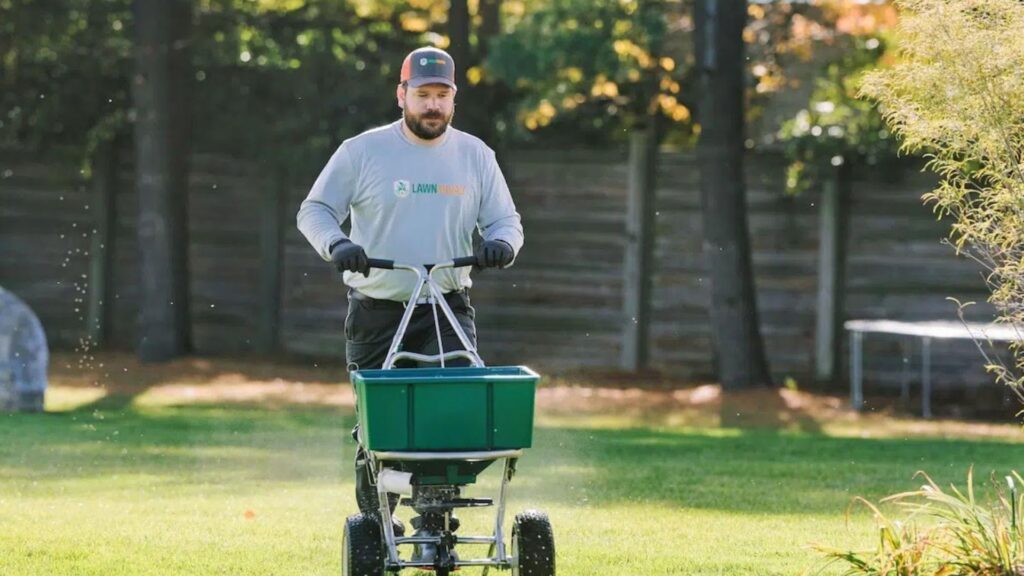
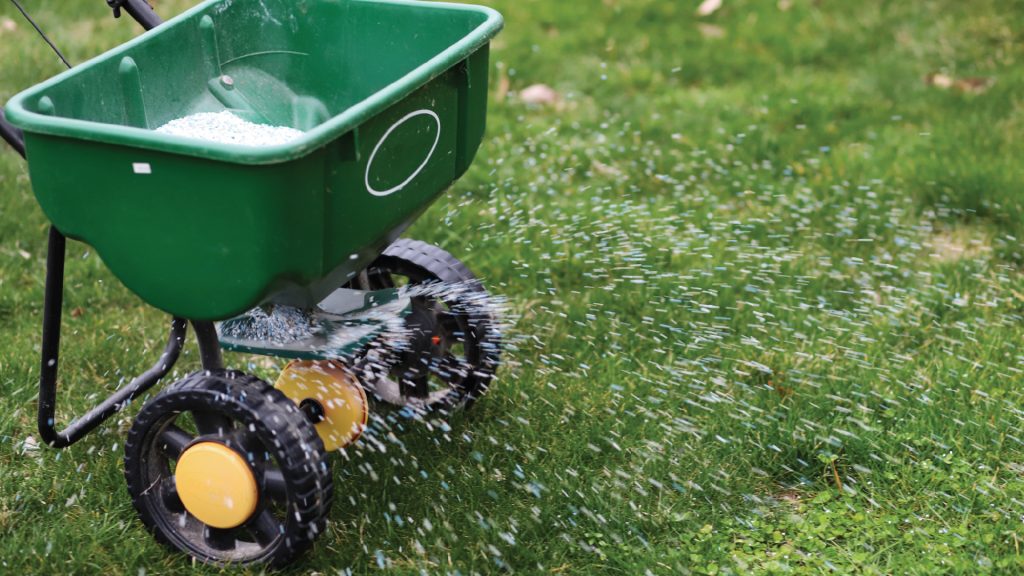
Mistake three: skipping the watering-in step. Granular grub products sit on the soil surface and do nothing until water moves the active ingredient into the root zone. A half-inch of irrigation or rainfall within 24 hours is the rule.
Mistake four: relying on a single milky spore application and assuming the lawn is permanently protected. Milky spore is a biological agent that targets only Japanese beetle grubs, takes years to establish, and does not address masked chafers or European chafers. It is not a stand-alone solution in our area.
What Recovery Looks Like If You Already Have Damage
If your lawn already had grub damage last fall, here is what we recommend now. First, apply a preventive in late June to break the cycle for this year’s beetle generation. Second, plan for a fall renovation in early September: core aeration, overseed with a quality Kentucky bluegrass and turf-type tall fescue blend, and starter fertilizer. Fall is the best time to rebuild a damaged cool-season lawn in our climate. New seed germinates fast in early-September soil temperatures, and the seedlings establish before winter.
Some homeowners ask whether they can skip the preventive and just renovate every few years. The math does not work. A single full renovation costs more than ten years of preventive treatments combined, and the lawn still has the same grub population underneath waiting to do it again.
What to Do Next
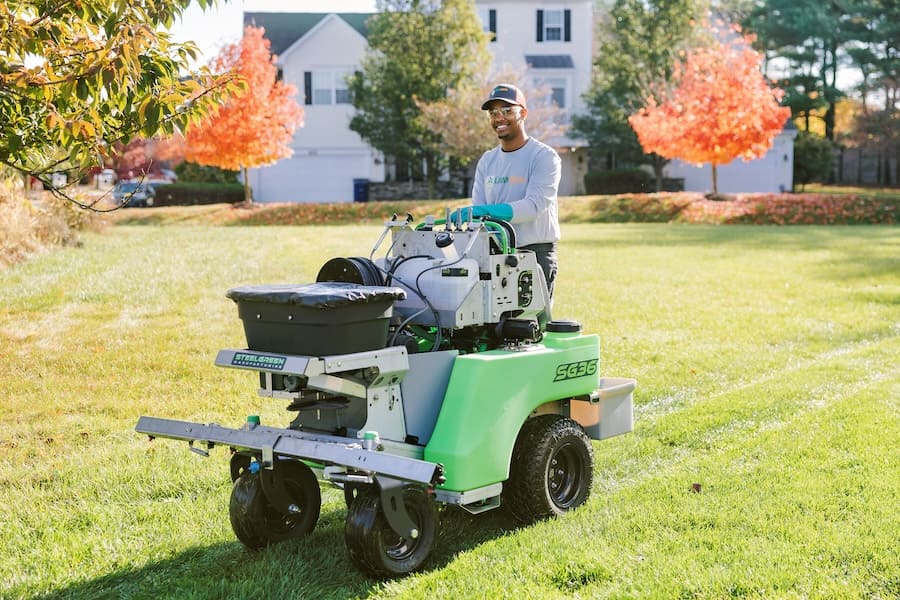
If you would rather have someone else identify your grub risk, time the application correctly, and make sure the product is watered in properly, we can take that off your plate.
Lawn Squad of Aurora serves Aurora, Batavia, Bristol, Fox Valley, Montgomery, Mooseheart, Naperville, North Aurora, Oswego, Plainfield, Plano, and Yorkville.
Call us at 630-389-4996 or request a free quote at lawnsquad.com. Our VitaminLawn program builds the preventive grub application into the seasonal schedule so the timing window does not come and go while life gets busy. For most Aurora lawns, that one decision in late June is the difference between a green September and a lawn renovation conversation in October.
Short Answer: Late June through mid-July is the window to apply preventive grub control on Aurora, IL lawns. Japanese beetles and masked chafers are flying and laying eggs in the soil right now, and the eggs hatch into tiny first-instar grubs in mid-July. A preventive product applied in late June and watered in places the active ingredient in the root zone before those young grubs start feeding. Wait until you see brown patches in September and you are past the easy window. The math is brutal: roughly $80 in prevention versus $1,500 to $3,500 to renovate a grub-damaged Fox Valley lawn.
If you walked your Aurora, Naperville, or Oswego lawn last weekend and saw shiny metallic-green beetles crawling on the rose bushes, the linden tree, or the side of the garage, you saw the front half of the grub problem. Those Japanese beetles are not just chewing leaves. The females are laying eggs in your turf right now, and those eggs are why a lawn that looks fine in June can pull up like a rug in September.
Grub damage is one of the most common reasons homeowners across the Fox Valley call us in October. The conversation almost always starts the same way: “The lawn was green in August, and then suddenly there were huge brown patches that I could lift up with my fingers.” That damage was preventable. The window was June.
What Grubs Actually Are (And Which Ones Live in Aurora Soil)
The white C-shaped larvae you see when you peel back damaged turf are beetle larvae. In the Aurora area, the two species that cause the most lawn damage are Japanese beetles (Popillia japonica) and masked chafers (Cyclocephala species, the parent of the common June beetle). European chafers also show up in some Fox Valley neighborhoods.
Each of these beetles follows a similar one-year lifecycle. Adults emerge from the soil in late June through July, fly, feed on ornamental plants, mate, and the females burrow back into well-watered turf to lay eggs. The eggs hatch in mid-July into tiny first-instar grubs that immediately start feeding on grass roots. By August they have grown into second instars. By September they are large third-instar grubs doing serious root damage. They overwinter deep in the soil, return to feed briefly in spring, then pupate and start the cycle again.
The reason late June is the treatment sweet spot: the active ingredients in modern preventive grub products need to be in the soil before those July eggs hatch into feeding grubs. Apply too early and the product can break down before grubs arrive. Apply too late and the grubs are already too large for some products to control effectively.
Why Aurora Lawns Are Particularly Vulnerable
Fox Valley clay soil holds moisture, which is exactly what egg-laying females are looking for. A well-irrigated Kentucky bluegrass lawn in Naperville or Plainfield is more attractive to egg-laying beetles than a parched neighbor’s yard. The very thing that keeps your lawn green in July is also what tells the beetles to lay their eggs there.
Newer subdivisions across Aurora, Yorkville, and Oswego often have shallow topsoil layered over compacted clay subsoil. The grass roots in those lawns are already working hard. They cannot spare what grubs take. We see significantly worse fall damage in those subdivisions than in older neighborhoods with deeper, looser soil.
Add the Fox Valley’s typical July humidity and warm nighttime soil temperatures, and you have what beetles consider a five-star nursery. This is not a hypothetical regional issue. It is a yearly pattern we treat across our service area.
What Preventive Grub Products Actually Do
Two active ingredients dominate the preventive grub category: chlorantraniliprole (sold under names like Acelepryn and GrubEx-style consumer products in some formulations) and imidacloprid (sold under many trade names including Merit). Both work by sitting in the upper soil profile so that newly hatched grubs ingest the product when they start feeding on roots.
Chlorantraniliprole has a wider application window (late spring through mid-June in our area) because it persists longer in the soil. It is also considered lower-risk to pollinators when used correctly, since it is applied to turf rather than flowering plants. Imidacloprid is the more traditional choice and is most effective when applied in mid-to-late June. Both require watering in within 24 hours to move the active ingredient into the root zone where the grubs will be.
Curative products (trichlorfon, sold as Dylox) are a different category. They work on grubs that are already feeding, are applied in September after damage starts showing, and have a much narrower margin for error. We use curatives when we have to, but we vastly prefer to prevent.
How to Tell If Your Lawn Is High Risk This Year
Not every Aurora lawn needs preventive grub treatment every year. Here is how we triage it:
- Did you have grub damage last fall or spring? If yes, treat preventively. The beetle population in your soil profile is established.
- Are your neighbors reporting Japanese beetle activity right now on roses, lindens, or grapes? If yes, those beetles are also laying eggs in your turf.
- Is your lawn well-irrigated and lush in June? If yes, you are exactly what egg-laying females prefer.
- Do you have skunks, raccoons, or moles tearing up sections of turf? They are hunting for the grubs that are already there.
- Is the lawn newer (less than five years old) with thin topsoil? Roots in those lawns cannot tolerate much grub feeding before damage shows.
If you said yes to two or more of those questions, preventive treatment is the right call. If you said no to all of them and the lawn has been healthy for years, you can probably skip a season and monitor.
How to Check for Grubs Yourself
Cut a small square (about one foot by one foot) of turf with a sharp shovel and peel it back like a flap. Check the top three inches of soil. Healthy thresholds are zero to five grubs per square foot. Six to nine per square foot is borderline. Ten or more per square foot causes visible damage on most Aurora lawns.
Replace the flap, water it in, and the spot heals up within a couple of weeks. We do this kind of check on customer lawns when a homeowner wants to verify whether the preventive is worth doing. It is also how we confirm treatment success the following August.
The Mistakes We See Across the Fox Valley
The most common grub-control mistakes we see across Aurora, Naperville, and Plainfield are timing mistakes, not product mistakes.
Mistake one: applying a preventive product in early May. Too early. The product breaks down before the July grubs hatch, and the lawn has no protection when it counts.
Mistake two: applying in late August after seeing damage. Too late for most preventives. By August the grubs are large third instars, and only curative products with a tighter use window will help.
Mistake three: skipping the watering-in step. Granular grub products sit on the soil surface and do nothing until water moves the active ingredient into the root zone. A half-inch of irrigation or rainfall within 24 hours is the rule.
Mistake four: relying on a single milky spore application and assuming the lawn is permanently protected. Milky spore is a biological agent that targets only Japanese beetle grubs, takes years to establish, and does not address masked chafers or European chafers. It is not a stand-alone solution in our area.
What Recovery Looks Like If You Already Have Damage
If your lawn already had grub damage last fall, here is what we recommend now. First, apply a preventive in late June to break the cycle for this year’s beetle generation. Second, plan for a fall renovation in early September: core aeration, overseed with a quality Kentucky bluegrass and turf-type tall fescue blend, and starter fertilizer. Fall is the best time to rebuild a damaged cool-season lawn in our climate. New seed germinates fast in early-September soil temperatures, and the seedlings establish before winter.
Some homeowners ask whether they can skip the preventive and just renovate every few years. The math does not work. A single full renovation costs more than ten years of preventive treatments combined, and the lawn still has the same grub population underneath waiting to do it again.
What to Do Next
If you would rather have someone else identify your grub risk, time the application correctly, and make sure the product is watered in properly, we can take that off your plate.
Lawn Squad of Aurora serves Aurora, Batavia, Bristol, Fox Valley, Montgomery, Mooseheart, Naperville, North Aurora, Oswego, Plainfield, Plano, and Yorkville.
Call us at 630-389-4996 or request a free quote at lawnsquad.com. Our VitaminLawn program builds the preventive grub application into the seasonal schedule so the timing window does not come and go while life gets busy. For most Aurora lawns, that one decision in late June is the difference between a green September and a lawn renovation conversation in October.