
Short Answer: Centipede is a low input grass, and most fall problems in Myrtle Beach come from treating it like bermuda. Too much nitrogen, soil pH above roughly six, excess phosphorus, thatch buildup, and mowing too low all push it toward what turf specialists call centipedegrass decline, which appears as fall yellowing and patches that simply never return in spring. On the sandy soils along the Grand Strand, the correct fall program is very light feeding, iron for color instead of nitrogen, a pH check, and large patch prevention.
Centipede Is Not a Low Maintenance Bermuda
Centipede is often sold as the easy grass, and in one sense that is fair. It genuinely needs less input than bermuda or zoysia. The problem is that homeowners hear low maintenance and interpret it as forgiving, and those are not the same thing.
Centipede is actually quite particular. It wants acidic soil, very little nitrogen, almost no phosphorus, a specific mowing height, and moderate water. Give it more of any of those and it does not simply grow faster the way bermuda would. It declines. That difference is the source of most centipede complaints along the Grand Strand.
It is also a slow grower that spreads only by above ground stolons, with no rhizomes and a relatively shallow root system. That means any damage it takes recovers slowly. A patch that bermuda would close in six weeks can stay open in centipede for a full year.
What Centipedegrass Decline Actually Is
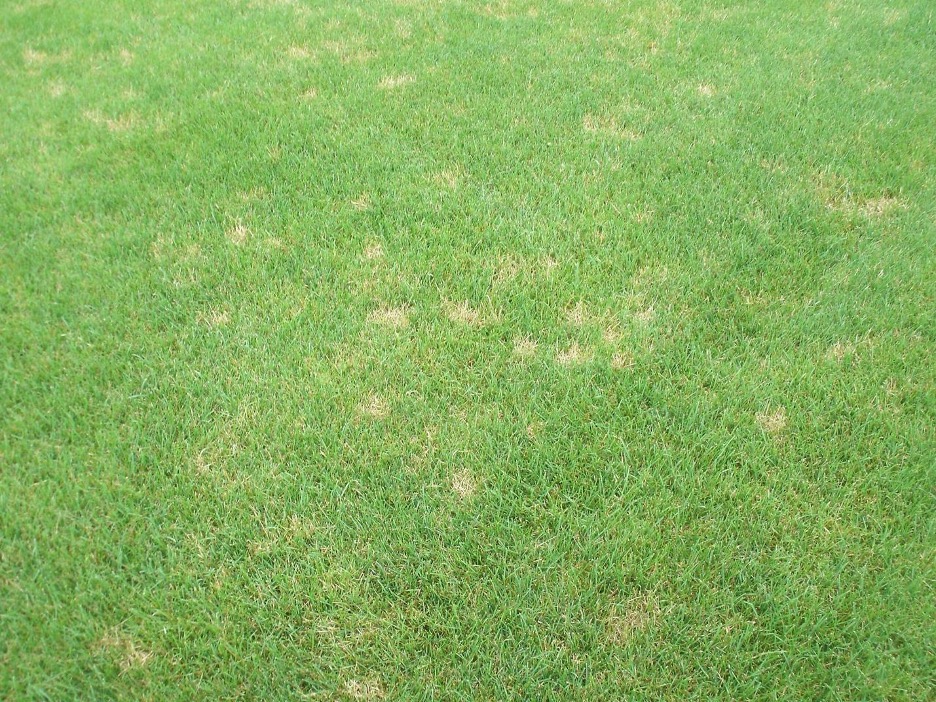
Turf specialists across the Southeast use the term centipedegrass decline for a recognizable pattern rather than a single disease. A lawn looks acceptable through summer, begins yellowing in the fall, thins out, and then in the spring large areas either green up very late or never green up at all.
There is no single pathogen behind it. It is the cumulative result of management that pushed the grass outside its preferences, usually over several seasons. The most common contributors are excess nitrogen, soil pH that has drifted upward, excess phosphorus, heavy thatch, and improper mowing height. Any one of those alone can cause visible problems. Two or three together produce the classic decline pattern.
Because the symptoms surface in fall and the failure shows in spring, the cause and the effect are separated by months, which is exactly why the connection gets missed.
The Nitrogen Mistake
This is the single most common error and the easiest to correct.
Centipede needs very little nitrogen. A total of roughly one pound of nitrogen per thousand square feet across an entire year is adequate for most centipede lawns, and on decent soil some do well with less. Compare that with bermuda, which may want three to five pounds over a season, and the difference in scale becomes clear.
When centipede gets bermuda rates of nitrogen it produces soft, thin walled growth and excess thatch, becomes markedly more susceptible to large patch disease, loses cold tolerance, and starts down the decline path. The lawn frequently looks better for a few weeks, which reinforces the behavior, and then looks worse for a year.
Late nitrogen is worse still. On the Grand Strand, the last nitrogen of the year on centipede should go down roughly six weeks before the average first frost, which typically lands somewhere in November here. That puts the cutoff in the neighborhood of late September, and honestly a centipede lawn that got its light feeding in the spring and early summer probably does not need anything in September at all.
Soil pH Along the Grand Strand
Centipede prefers acidic soil, generally in the range of about five to six, and it is noticeably unhappy above that.
Coastal Horry County soils create a specific problem here. The sands along this coast frequently contain shell fragments, which are calcium carbonate and raise pH. Irrigation water drawn from certain wells in the area can also carry dissolved minerals that push pH upward over time. On top of that, many homeowners apply lime out of habit because they read general southern lawn advice, and on a centipede lawn that is precisely the wrong move.
When pH climbs above six, iron becomes progressively less available to the plant even though it is physically present in the soil. The lawn turns pale yellow between the veins while the veins stay greener, which is classic iron chlorosis. Homeowners see yellow and reach for nitrogen, which does not fix an iron availability problem and adds a nitrogen problem on top of it.
A soil test costs very little and is the only way to know. If pH is high, elemental sulfur applied according to test recommendations lowers it gradually. This is slow work measured in seasons, and fall is a reasonable time to start.
Centipede and Phosphorus
Centipede is unusually sensitive to excess phosphorus, which is the middle number on a fertilizer bag. High phosphorus interferes with iron and micronutrient uptake and contributes directly to decline.
Many general purpose lawn fertilizers and nearly all starter fertilizers carry substantial phosphorus. Applying those to established centipede year after year builds soil phosphorus to levels that cause problems. For established centipede, a low phosphorus or phosphorus free product is generally the correct choice unless a soil test specifically shows a deficiency.
This is another area where the coastal setting adds a reason for restraint, since phosphorus running off into the waterways and estuaries along this coast contributes to algae problems.
Iron Is What You Actually Want This Time of Year
If your centipede is pale in the fall and you want it greener, iron is the tool and nitrogen is not.
Chelated iron applied as a foliar treatment greens the plant within a few days without stimulating growth. That distinction is everything in the fall. You get the color you wanted without producing tender tissue that has to survive a cold event, and without adding to the thatch layer or feeding large patch.
Iron treatments are temporary and need repeating, typically every four to six weeks while you want the effect. On a lawn where pH is the underlying cause, iron is treating a symptom while the sulfur program addresses the cause, and running both together is reasonable.
Mowing Height Matters More Than People Think
Centipede wants to be mowed at roughly one and a half to two inches. That range is narrower than most homeowners realize and both directions cause trouble.
Mowed too low, centipede scalps easily because it grows on stolons that ride along the surface. Scalping removes leaf tissue the plant needs, exposes the stolons to heat and desiccation, and opens the canopy to weeds. Mowed too high, it becomes stemmy and layered, thatch accumulates faster, and the lower canopy shades itself out.
Going into the fall, keep mowing at the same correct height rather than lowering it. There is no benefit to a low final cut on centipede, and the extra leaf area helps the plant store energy before dormancy. Keep the blade sharp, since torn leaf tips invite disease at exactly the season when large patch is looking for an opening.
Thatch Builds Faster Than You Expect
Centipede produces thatch readily, particularly when it has been overfertilized. Thatch above roughly half an inch holds moisture at the crown, harbors the large patch fungus, shelters insects, and keeps roots growing in the thatch layer instead of down in the soil where they can find water.
The important timing note is that thatch removal on centipede belongs in late spring or early summer, when the grass is growing hard and can recover. Dethatching or aerating in the fall on a warm season lawn opens the crown right as the plant is trying to shut down and leaves it damaged going into winter. If you have a thatch problem, note it now and address it in May.
The same logic applies to the aerate and overseed advice that circulates every September. That is cool season guidance written for fescue and bluegrass in the Midwest. On Myrtle Beach centipede it is genuinely harmful, and there is no seed you would overseed centipede with anyway that does not compete with it in the spring.
Large Patch on Centipede
Centipede is highly susceptible to large patch, the soil borne fungal disease that turns active as soil temperatures fall through the seventies and requires long periods of leaf wetness.
Fall on this coast supplies those conditions generously. Nights are long, humidity is high, dew forms early and lingers, and the ocean influence keeps things damp. Add evening irrigation and the leaf surface never dries.
Preventive fungicide applied as two inch soil temperature falls through about seventy degrees is far more effective than treating after rings appear, and on centipede that gap matters more than on any other grass because centipede recovers so slowly. A patch that develops in October will very likely still be visible the following summer. Shifting irrigation to finish around sunrise and cutting fall water volume are free measures that reduce disease pressure substantially.
Ground Pearls and Nematodes in Coastal Sand
Two soil dwelling pests deserve mention here because they are genuinely associated with centipede on sandy soils in the Carolinas and because they are frequently missed.
Ground pearls are the immature stage of a scale insect that attaches to roots and appears in the soil as tiny hard round pinkish or purple spheres about the size of a pinhead. They favor sandy soil and centipede, they cause irregular patches that yellow, thin, and die and are often mistaken for drought, and there is no reliable chemical control available. Management is essentially cultural, keeping the grass as healthy as possible so it tolerates the pressure.
Nematodes are microscopic soil roundworms that feed on roots and are far more damaging in sandy soils than in clay. They produce general decline, thinning, and a lawn that wilts despite adequate water, with short stubby dark roots instead of a white fibrous system. A nematode assay through a soil testing laboratory is the only way to confirm them.
If you have exhausted the fertility, pH, mowing, and disease explanations and the lawn still declines, these are the next things to investigate before assuming the grass is simply failing.
Fall Watering
Centipede has a shallower root system than bermuda or zoysia, which means it wilts sooner in a dry stretch but also that it is easy to overwater.
Through the fall, reduce total volume as temperatures fall and days shorten. A centipede lawn in October needs meaningfully less water than the same lawn in July. Water deeply enough to wet the root zone and no deeper, since on sand additional volume simply carries nutrients past the roots. Shift the schedule so cycles finish near sunrise so the canopy dries early instead of staying wet all night.
Once the lawn is dormant, it needs very little, generally an occasional deep soak only during an extended dry winter stretch when the ground is not frozen.
What a Correct Fall Program Looks Like
For a Myrtle Beach centipede lawn, the fall list is short by design.
- A soil test, so pH, phosphorus, and potassium are known rather than assumed.
- No nitrogen after roughly late September, and probably none in the fall at all.
- Potassium if the test calls for it, since it supports cold tolerance without pushing growth.
- Chelated iron if you want color, repeated as needed.
- Preventive large patch fungicide at the seventy degree soil temperature trigger.
- Fall pre emergent in roughly the same soil temperature window for winter annual weeds.
- Continued mowing at the correct height until growth stops.
- Reduced irrigation, shifted to early morning.
- No aeration, no dethatching, and no overseeding.
That is close to the whole program. The discipline is in what you leave off the list rather than what you add to it.
What to Do Next
Walk the lawn this week and write down the two or three things that actually bother you about it, then work backward from the window rather than forward from today. Almost every fall mistake we see in Myrtle Beach comes from starting with the calendar instead of with the lawn.
If you would rather have someone look at it with you, Lawn Squad of Myrtle Beach offers a free quote. Call 833-816-7508 or find us at lawnsquad.com. Every Lawn Squad location is independently owned and operated, and our VitaminLawn fertilization and weed control program is built around the grass, soil, and conditions here rather than a national average.
A first visit is a walk of the property, a look at the thin areas, a check of mowing height and irrigation, and a straight conversation about what is realistic in the weeks left this season. At 30 days you should see color and density improve. At 90 days the lawn should be visibly thicker, with the root growth that carries it through winter.