
Alkaline Soil and Yellow Grass: Iron, Nitrogen, and Fall Feeding for Utah County Lawns
Alkaline Soil and Yellow Grass: Iron, Nitrogen, and Fall Feeding for Utah County Lawns
Short Answer: Many Utah County soils are alkaline, often with a pH around 7.5 to 8 or higher, and that affects how bluegrass lawns use nutrients. High pH can tie up iron, causing iron chlorosis: grass that looks yellow even when it has enough nitrogen. A late-season feeding in late October to mid November should still focus on nitrogen, since that drives spring green-up, but adding iron can help hold color on alkaline soil. Phosphorus and potassium are often already plentiful here. A soil test shows what your lawn actually needs before you buy anything.
If you are reading this, you may have a lawn that never quite gets that deep, rich green you see in magazines. Maybe it looks a little yellow even after you fertilize. Maybe certain areas, especially near the foundation or along the sidewalk, always look paler than the rest. It is frustrating to put work into a lawn and still see yellow.
That is a common story along the Wasatch Front, and it often has less to do with how much you fertilize than with the soil itself. Here is what is going on in many Utah County lawns, and how it should shape your late-season feeding.
Why Utah County Soils Are Alkaline
Much of Utah County’s soil formed from limestone-rich sediments carried down from the mountains and deposited by ancient Lake Bonneville. In a dry climate, there is not enough rainfall to leach out the calcium carbonate in those soils. The result is soil with a high pH, often around 7.5 to 8 or higher, and sometimes visible white specks of lime.
Lawn grasses generally do best in slightly acidic to neutral soil. In alkaline soil, some nutrients become less available to the plant, even when they are present in the soil.
Iron Chlorosis: Yellow Grass With Plenty of Nitrogen
Iron is one of the nutrients most affected by high pH. The soil may contain plenty of iron, but in alkaline conditions, it stays locked in forms the grass cannot easily absorb. Without enough iron, grass cannot make chlorophyll efficiently, and the blades turn yellow, often with the veins staying greener than the tissue between them.
That condition is called iron chlorosis, and it is common across Utah. It is often worse in cool, wet spring weather, in compacted or overwatered soil, and in areas near foundations and concrete, where the soil tends to be even more alkaline.
How to Tell Iron Chlorosis From Nitrogen Deficiency
Both can make a lawn look yellow, but there are clues. Nitrogen deficiency usually causes an overall pale, light-green to yellow color, slow growth, and older leaves yellowing first. Iron chlorosis tends to show up on newer growth, with yellowing between the veins and a lawn that may still be growing reasonably well. Iron chlorosis is often patchy, worse in certain spots, rather than uniform across the whole yard.
A soil test and a tissue test, when needed, can confirm which problem you have.
Why Nitrogen Still Leads in November
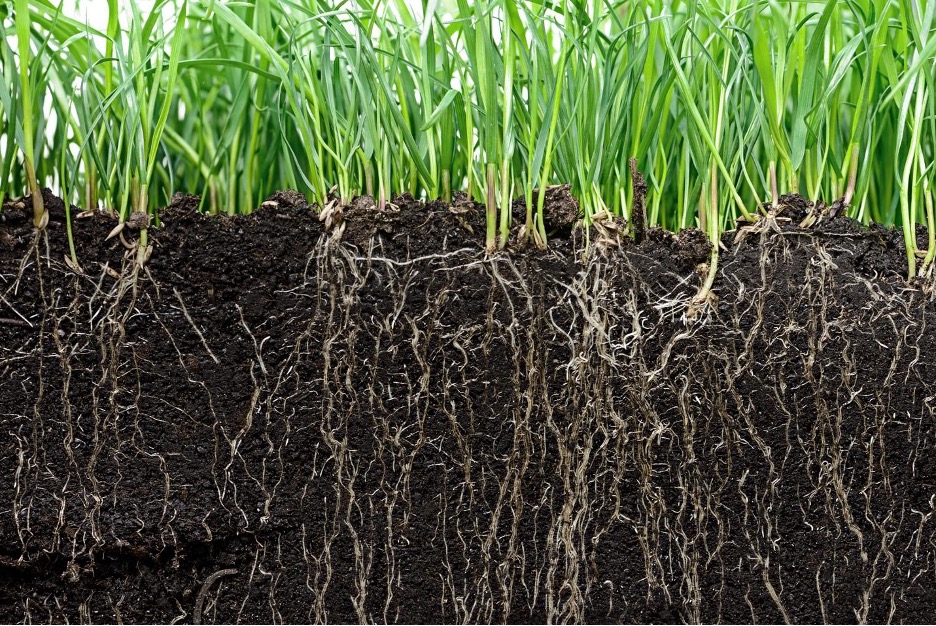
Even on alkaline soil, nitrogen is the key nutrient for a late-season feeding. In late fall, Kentucky bluegrass takes up nitrogen and stores it in its crowns, roots, and rhizomes. That stored energy drives an earlier, more even green-up in spring and helps the lawn fill in thin areas.
Here is what we have found works best. Apply a nitrogen-focused feeding from late October into mid November, once mowing has slowed but the grass is still green and the ground is not frozen. Lean earlier on bench lots, where the ground freezes sooner.
Adding Iron
Many fertilizers sold along the Wasatch Front include iron, often listed as chelated iron or iron sulfate. Iron can deepen bluegrass color quickly and help offset chlorosis on alkaline soil. In a late-season feeding, iron helps the lawn hold good color into late fall and supports a greener start in spring.
Iron’s color boost is often temporary, especially in alkaline soil. Chelated forms, particularly ones designed for high-pH soils, tend to stay available longer. Iron also stains concrete, so sweep any granules off driveways, sidewalks, and patios right away.
Phosphorus and Potassium Are Often Plentiful
Many Utah County soils already contain adequate phosphorus and potassium. Adding more when the soil does not need it wastes money and, in the case of phosphorus, can contribute to algae problems in Utah Lake and other waters. Unless a soil test shows a shortage, choose a product with little or no phosphorus for the late-season feeding.
Can You Lower the pH?
Homeowners sometimes ask whether they can simply lower the soil pH. In soils with a lot of free lime, which describes many Utah County lawns, changing pH meaningfully across a whole lawn is very difficult and slow. Elemental sulfur can lower pH slightly in the top layer over time, but the underlying calcium carbonate keeps pushing it back.
For most lawns, it makes more sense to manage around the high pH: use nitrogen and iron wisely, avoid overwatering, relieve compaction, and choose grass varieties that tolerate alkaline conditions.
Overwatering Makes Chlorosis Worse
Waterlogged soil limits oxygen to the roots, which makes it even harder for grass to take up iron. Lawns that are watered too often, or areas with poor drainage, often show the worst chlorosis. Deeper, less frequent watering during the growing season, and fixing low spots where water sits, can noticeably improve color.
Compaction and Aeration
Compacted soil also restricts root growth and nutrient uptake. Core aeration in late summer or early fall opens the soil, improves drainage, and helps roots reach more nutrients. On alkaline clay soils, aeration and a late-season feeding work well together.
Salty Soils in Some Areas
Some parts of Utah County, especially low-lying areas near Utah Lake and newer developments on former farmland, have soils with elevated salt levels. Salty soil can stress grass in ways that look similar to nutrient problems, with thin, yellowish, or slow-growing turf. A soil test that includes salinity can tell you whether that is part of the picture. Deep, occasional watering helps push salts below the root zone over time.
Organic Matter Helps
Adding organic matter improves soil structure and can make nutrients a bit more available. Mulching leaves into the lawn with the mower in fall and topdressing with compost after aeration both add organic matter over time.
A Soil Test Is the Best First Step
Utah State University’s Analytical Laboratories offers soil testing, and USU Extension can help interpret the results. A test shows pH, nutrient levels, and sometimes salt content, which can also be an issue in some Utah County soils. That information tells you exactly what your lawn needs and what it does not.
What a Greener Lawn Looks Like Next Spring
Imagine this. It is April. Your lawn is greening up evenly, without the yellow cast it used to have. The area by the foundation is still a shade lighter, but much closer to the rest of the yard. You tested the soil, stopped buying phosphorus, added iron to the late-season feeding, and backed off on overwatering. The alkaline soil is still there, but the lawn is working with it now.
What to Do Next
This month, apply a nitrogen-focused late-season feeding that includes iron, from late October into mid November, while the grass is still green and the ground is unfrozen. Choose a product with little or no phosphorus unless a soil test says otherwise, sweep any granules off concrete right away to avoid iron stains, and get a soil test through USU if you have not had one recently.
If you would rather have someone else handle the timing decisions, product selection, and application for your Utah County lawn, we are here for that. Lawn Squad of Utah County serves homeowners across Utah County. Visit lawnsquad.com to request a free quote. Our VitaminLawn program is built for the grass types, soils, and weather patterns we deal with here.
Here is what to expect. We will look at your grass, talk through how your lawn handled this year, and explain what we would apply before winter and why. If your lawn does not need a late-season application, we will tell you that honestly.
