Short Answer: It depends entirely on your grass. Cool-season lawns should be fed in fall, and the late fall application made while the grass is still green but top growth has slowed is the most valuable feeding of the entire year, because nitrogen goes into roots and stored carbohydrates rather than into blade growth. Warm-season lawns are the opposite: the last feeding should happen well before dormancy, generally around six weeks ahead of your average first frost, because pushing tender growth into a cold event causes real winter injury. Feeding a warm-season lawn late is one of the few lawn care mistakes that actively damages the plant.
Fertilizer timing generates more confused advice than any other topic in lawn care, and most of the confusion comes from people in different climates giving each other perfectly good advice for the wrong grass.
There is no universal fall fertilization rule. There are two rules that point in opposite directions, and which one applies to you is determined entirely by what is growing in your yard.
Cool-Season Lawns: Feed Now, and Feed Again Later
For Kentucky bluegrass, perennial ryegrass, fine fescue, and tall fescue, fall is the most productive feeding window of the year, and there are typically two applications in it.
The early fall application, made as temperatures moderate and the grass resumes active growth, supports recovery from summer stress and drives the tillering and density that fills in thin areas. If you aerated and overseeded, a starter fertilizer at seeding covers this role, since starters carry the phosphorus that seedlings use for root development.
The late fall application is the one that matters most and the one most homeowners skip. Made while the grass is still green but vertical growth has slowed noticeably, this feeding gets taken up by the plant and directed almost entirely into root growth and carbohydrate storage rather than into leaf tissue. Those stored reserves are what carry the lawn through winter and what drive early green up in spring without the excessive top growth that a heavy spring feeding produces.
This is genuinely the highest value application in the cool-season year, and it produces almost no visible result at the time you make it, which is exactly why it gets dropped.
The mistake to avoid on this side is feeding too early, while summer heat is still peaking. Nitrogen applied to a heat stressed cool-season lawn pushes soft growth at the moment disease pressure is highest, and brown patch in particular responds enthusiastically to it.
Warm-Season Lawns: Stop Earlier Than Feels Right
Bermuda, zoysia, centipede, and St. Augustine run the opposite pattern, and here the risk is not a missed opportunity. It is genuine damage.
These grasses need to harden off before dormancy. That process involves slowing growth, moving resources into stolons, rhizomes, and roots, and building cold tolerance. Nitrogen applied late interrupts it by forcing tender new growth precisely when the plant should be preparing to shut down.
That tender tissue is the part that gets killed by the first real cold event, and the damage is not limited to cosmetic browning. Winter kill on bermuda and zoysia frequently traces back to a late feeding the previous fall.
The working guideline is to make the final nitrogen application roughly six weeks before your average first frost date. That number gives the grass time to use the nitrogen and then slow down naturally.
Centipede deserves a specific mention because it is the grass most often damaged by over fertilization generally. It is adapted to poor, acidic soils and low fertility, and treating it like bermuda produces decline rather than improvement.
What the Numbers on the Bag Mean
Three numbers, always in the same order: nitrogen, phosphorus, potassium.
Nitrogen drives green color and leaf growth, and it is the number that moves fastest and matters most in routine feeding. Phosphorus supports root establishment, which is why starter fertilizers carry more of it, and it is restricted or banned for established lawns in a number of states because of runoff into waterways. Potassium supports stress tolerance, including cold hardiness and disease resistance, and it is the one that becomes relatively more important heading into winter.
Slow release nitrogen sources feed over weeks rather than days. They cost more, they produce steadier color without a surge and crash, and they are considerably less likely to burn. For fall applications, slow release is generally the better buy.
How Much, and Why a Soil Test Changes the Answer
Application rates are expressed as pounds of nitrogen per thousand square feet, and most fall applications land near one pound.
The important detail is that the rate on the bag is stated for a specific spreader setting and a specific square footage, and almost nobody measures either accurately. Measuring the actual turf area once, and calibrating the spreader once, removes most of the guesswork from every application afterward.
A soil test changes the conversation entirely, because it tells you what is actually missing rather than what a generic program assumes. Lawns are routinely fed phosphorus they do not need and denied the lime or potassium they do need, for years, because nobody spent a modest amount on a test. Fall is the right time to do it, since amendments like lime work slowly and benefit from going down before winter.
Common Fall Fertilization Mistakes
- Applying the same program to a warm-season and a cool-season lawn because they are both grass.
- Feeding heavily right after seeding, which pushes top growth on seedlings that have not built roots yet.
- Applying to dry, drought stressed turf, which raises burn risk substantially.
- Skipping the late fall cool-season application because the lawn already looks good.
- Fertilizing dormant grass, which feeds weeds and runs off rather than doing anything useful.
- Leaving granules on hard surfaces, where they wash straight into storm drains. Blowing them back onto turf takes a minute and keeps them out of waterways.
Granular, Liquid, and Organic Options
The form matters less than the timing, and it does change how the application behaves.
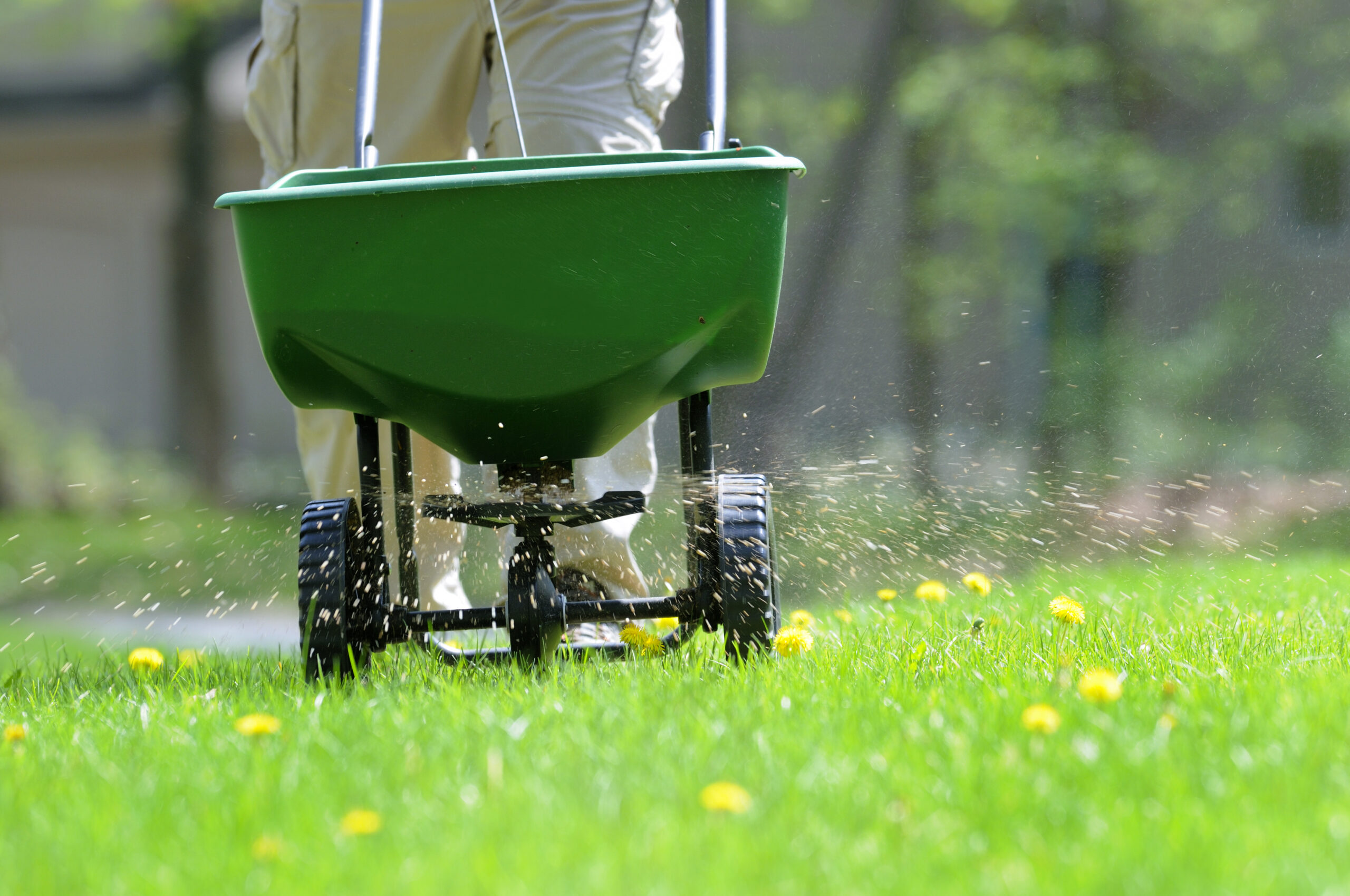
Granular products are the standard for fall feeding. They spread evenly with a calibrated spreader, slow release formulations meter themselves out over weeks, and they are forgiving of small application errors. They do need water to move into the soil.
Liquid applications act faster and give more uniform coverage, which is why professional programs often use them, but they generally feed for a shorter period. They suit corrective feeding more than they suit the long, slow release that fall calls for.
Organic fertilizers work through soil biology rather than directly feeding the plant, which means they act slowly and depend on soil temperature. That is a real limitation in late fall, since microbial activity drops as soil cools and a late organic application may simply sit there until spring. Used earlier in fall they build soil structure and organic matter in a way synthetic products do not.
Reading a Fertilization Program Quote
If you are comparing lawn care programs rather than buying bags, a few questions separate them quickly.
Ask how many applications the annual price covers and roughly when they fall, because a five visit program and an eight visit program are genuinely different products. Ask whether the rate is based on measured turf area or estimated from the lot size, since measured is the only version that means anything. Ask what is included beyond fertilizer, particularly weed control, and whether callbacks between visits cost extra.
And ask what happens if the lawn does not respond. A company confident in its program will have a straightforward answer.
What to Do Next
Confirm which grass you actually have before you buy a bag of anything, because every recommendation in this article flips depending on that answer, and a surprising number of lawns are not what their owners assume.
Then find your average first frost date and count backward. That single piece of arithmetic tells warm-season owners when to stop and cool-season owners when their most valuable application is due.
If you would rather have someone build the schedule around your lawn, find your local Lawn Squad at lawnsquad.com or call 833-816-7508 for a free quote. Every Lawn Squad location is independently owned and operated, and each one builds its VitaminLawn fertilization and weed control program around the grass type, soil, and climate where you actually live, not around a national average.
Here is what to expect from us. We match the program to your grass type rather than to the season, we would rather run a soil test than guess at what your lawn is short of, and we will tell you when the right move is to stop feeding rather than to apply one more round.