
Short Answer: A lawn that thins every July almost always has a shallow root system, and the cause is usually compacted clay, watering that is frequent and light rather than deep and infrequent, or mowing too short. Cool-season grasses in central Ohio go into a natural slowdown when soil heats up, and a lawn with deep roots rides that out while one rooted in the top inch cannot. The fix is not a summer product. It is fall work: aerate to relieve compaction, overseed to thicken the stand, feed to build roots, and change how you water so roots follow moisture downward.
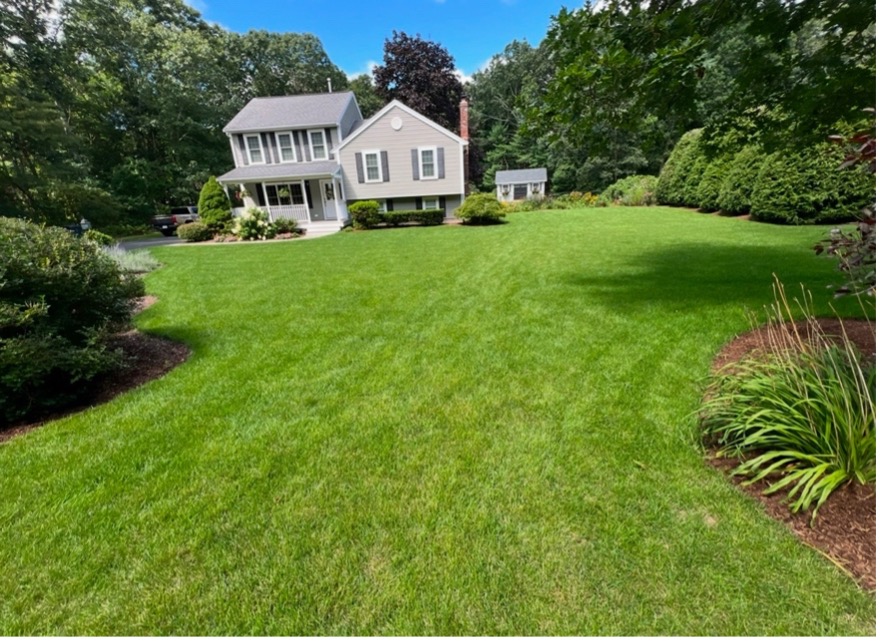
This is the most common lawn complaint we hear in Columbus, and the timing of the question is always the same. The lawn looked genuinely good in May. By late July it is thin, pale, and patchy, and by August the homeowner is wondering what went wrong this summer.
Usually nothing went wrong this summer. Summer just revealed what was already true, and the honest fix is happening now rather than then.
What Is Actually Happening in July
Central Ohio lawns are cool-season grasses. Tall fescue, Kentucky bluegrass, and perennial ryegrass all have an optimal soil temperature range for root growth that sits well below what our soil reaches in midsummer.
When soil heats past that range, root growth slows or stops. The plant is no longer building. It is spending reserves to hold what it has, and it stays in that state until soil cools in September.
So the question is not really why the lawn struggles in July. Every cool-season lawn in Ohio is under stress in July. The question is why yours runs out of reserves while your neighbor’s does not, and that comes down to root depth.
A lawn rooted six inches down has a large volume of soil to draw moisture from and a real buffer. A lawn rooted in the top inch has almost nothing, and the top inch is the first thing to dry out.
Cause One: Compacted Clay
Most of Franklin County and the surrounding area sits on heavy clay, and clay compacts under traffic, equipment, and its own weight over time.
Roots cannot grow through soil that has no pore space. They stay in the loose upper layer, which is exactly the shallow root system that fails in July.
Newer neighborhoods have it worst. Construction equipment compacts the subsoil, a thin layer of topsoil is spread over it, and sod goes down on top. The lawn looks perfect for two years and then begins the annual summer decline as the sod’s original root mass gives out and new roots cannot penetrate what is underneath.
You can check this yourself in two minutes. Water the lawn, wait a day, then push a long screwdriver into the soil with hand pressure alone. Six inches easily means compaction is not the issue. Stopping at two inches means it is. Better still, cut a wedge four inches deep with a spade and look: roots concentrated in the top inch above dense gray clay is the classic picture.
Cause Two: How You Water
This one is the most common and the easiest to fix, and it is counterintuitive.
Roots grow toward moisture. Watering lightly every morning keeps moisture in the top half inch, so roots have no reason to go deeper and every reason to stay shallow. You are training the lawn to be fragile.
Watering deeply and infrequently, roughly an inch a week including rainfall delivered in one or two long soaks, pulls moisture down through the profile and roots follow it. A lawn watered that way in spring enters July with a root system that can actually find water.
Most people have no idea what their system delivers. Put a few straight sided containers on the lawn, run a zone for fifteen minutes, and measure. It takes twenty minutes and it is the number every other watering decision depends on.
Cause Three: Mowing Too Short
Cutting height and root depth are directly connected, and short mowing is a reliable way to produce a shallow rooted lawn.
Leaf area drives photosynthesis, and photosynthesis funds root growth. Cutting a lawn short repeatedly removes the machinery that builds the roots. Taller grass also shades the soil surface, which keeps the root zone measurably cooler through a Columbus summer and reduces evaporation.
Most cool-season lawns here do best mowed in the three to four inch range through summer. The lawn that gets scalped every week in June is the one that browns first in July.
The other half is blade sharpness. A dull blade tears rather than cuts, and a torn leaf tip loses water far faster and browns within a day. If your whole lawn takes on a whitish cast after mowing, that is a dull blade, not disease.
Cause Four: The Wrong Grass in the Wrong Place
Some thinning is not a care problem at all.
Kentucky bluegrass wants sun and struggles under mature trees. Fine fescues tolerate shade far better. If a specific area thins every year in the same footprint, and that area is shaded, the issue may simply be species selection rather than anything you did.
The same applies to a strip along a south facing driveway, where reflected heat creates conditions no cool-season grass enjoys, and to areas over shallow fill or buried construction debris, which recur in exactly the same shape every year.
Recognizing a site problem saves money, because no amount of fertilizer fixes it.
Why the Repair Happens in Fall
Here is the part that frustrates people. The lawn looks worst in July, and July is the worst possible time to work on it.
Seeding into summer heat fails. Aerating a heat stressed lawn opens it up when it cannot recover. Heavy nitrogen in July feeds disease more than grass. Nearly everything that would help has to wait.
September and October are when the repair actually happens. Soil is cooling into the range where roots grow fastest, the grass is actively building again, and everything you do gets used.
So the lawn that looks good next July is the one you work on now.
What the Fall Repair Looks Like
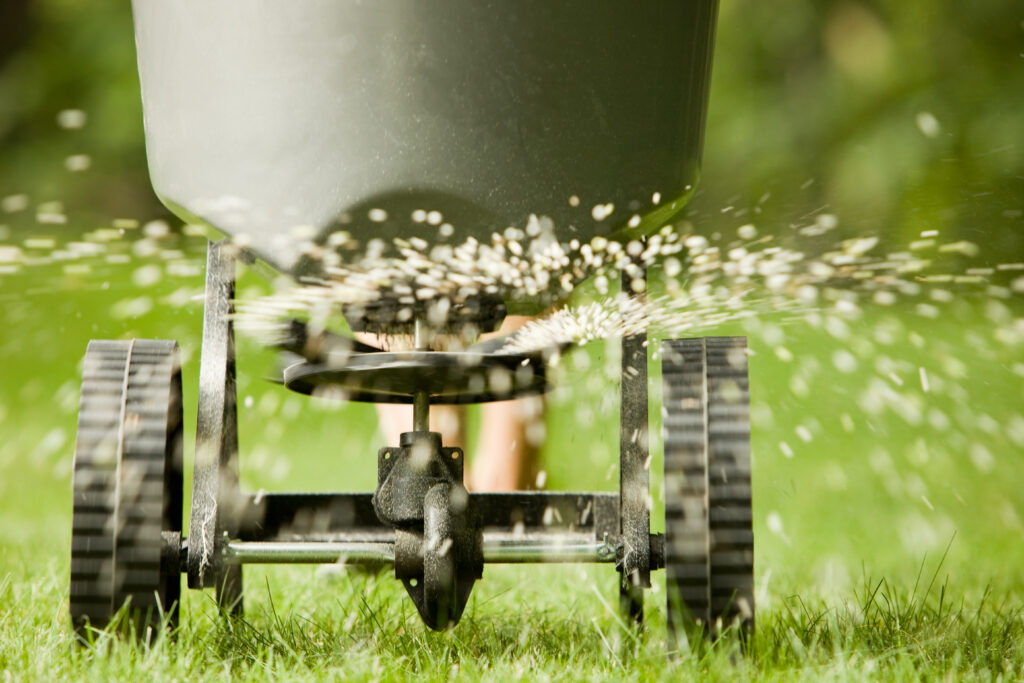
- Core aerate to relieve compaction and open pathways into the root zone.
- Overseed immediately into the aeration holes, which is the only reliable way to thicken a thin stand.
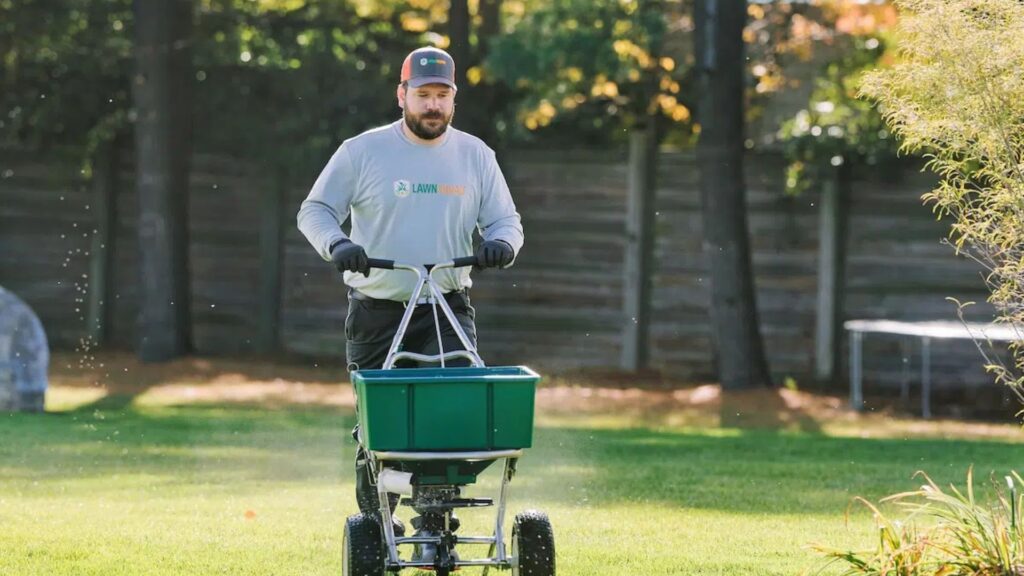
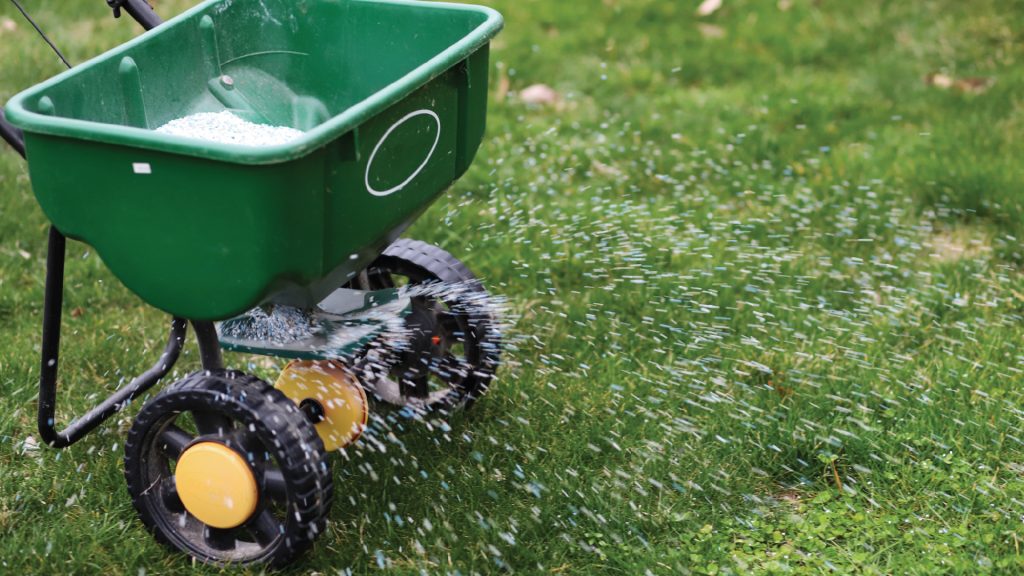
- Feed, including the late fall application in October that goes almost entirely into roots and stored carbohydrates.
- Change the watering pattern permanently to deep and infrequent, so roots follow moisture down.
- Raise the mowing height for next season and sharpen the blade.
- Get a soil test, so amendments address what is actually missing rather than what a generic program assumes.
What a Realistic Timeline Looks Like
Turf improves over seasons rather than weeks, and knowing that prevents both disappointment and switching approaches before anything has had a chance to work.
After one fall of proper work you should see a visibly denser lawn going into winter and a stronger, more even green up in spring.
The real test is the following July. A lawn that was aerated, overseeded, and fed through fall, then watered deeply and mowed high through spring, enters that summer with a genuinely deeper root system and holds far better.
Two fall cycles is where most lawns with compaction problems really turn, because compaction relief is cumulative. The most common mistake we see is a homeowner doing one round, judging it against an unrealistic expectation, and starting over with a different approach the next year, which resets progress every time.
What to Do Next
Walk the lawn this week and write down the two or three things that actually bother you about it, then work backward from the window rather than forward from today. Almost every fall mistake we see in Columbus comes from starting with the calendar instead of with the lawn.
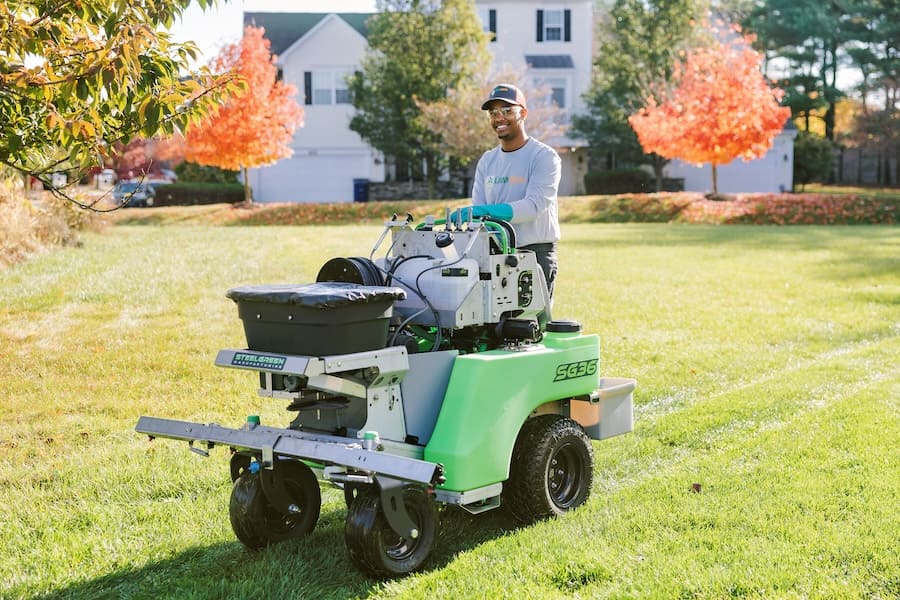
If you would rather have someone look at it with you, Lawn Squad of Columbus offers a free quote. Call 833-816-7508 or find us at lawnsquad.com. Every Lawn Squad location is independently owned and operated, and our VitaminLawn fertilization and weed control program is built around the grass, soil, and conditions here rather than a national average.
A first visit is a walk of the property, a look at the thin areas, a check of mowing height and irrigation, and a straight conversation about what is realistic in the weeks left this season. At 30 days you should see color and density improve. At 90 days the lawn should be visibly thicker, with the root growth that carries it through winter.