
What Does Fall Lawn Fertilization Cost in North San Antonio?
Short Answer: A single fall fertilization visit for a typical North San Antonio lawn generally runs between $60 and $125, priced from measured turf square footage rather than lot size. Full season programs of six to eight visits commonly land between $400 and $800 annually for an average property, which works out cheaper per application than buying visits individually. Doing it yourself costs roughly $30 to $55 per application in product. The more expensive risk in our market is not overpaying for a visit, it is buying a high nitrogen winterizer product in November and losing turf to disease as a result.
Price is usually the first question and the last thing a lawn care website will tell you. We would rather put the numbers on the page. If they are outside your budget you have lost a few minutes, and if they work, you arrive at a conversation already knowing we are in the right range.
Here is how fall fertilization is priced across North San Antonio, what moves a quote up or down, and where we see money spent that does not improve a lawn.
Pricing Comes From Measured Turf
Fertilization is priced per thousand square feet of actual grass, not by lot size and not by the hour. That distinction matters here as much as anywhere, because properties on this side of town vary widely. A half acre lot in the Hill Country with substantial rock outcrop, oak canopy, and native bed areas may carry a fraction of the turf of a smaller lot in a newer Stone Oak subdivision that is mostly open lawn.
This is the first thing we would question in a quote. A company that names a price without measuring is either padding to protect itself or planning to apply light. Neither serves you. Most homeowners we walk through this are surprised, usually because driveways, structures, beds, and rock areas subtract more than expected.
With that number in hand, every quote becomes comparable on the same terms. Without it, you are weighing one company’s estimate against another’s.
The Ranges We See Here
For a typical North San Antonio lawn, a single fertilization application commonly falls between $60 and $125. Smaller lots inside Loop 1604 sit toward the low end. Larger properties north and west into the Hill Country climb from there and are generally quoted per thousand square feet rather than as a flat number.
Full season programs in our market usually run six to eight visits, since our growing season is long and does not shut down for five months the way a northern one does. Those packages commonly land between $400 and $800 annually for an average property, and per application that is meaningfully less than buying visits one at a time.
The honest caveat is that what gets bundled varies a great deal. Some programs include weed control, some include large patch prevention, some include grub or chinch bug management, some include iron and micronutrients as standard and others bill them separately. A $400 program and an $800 program are frequently not the same service at two prices.
Why One Off Visits Cost More
The premium on a single application is not arbitrary. A truck routed to your address for one stop carries the same drive time and fuel as one making a dozen stops in the same neighborhood, and pricing reflects that.
It is still a legitimate choice. If you handle most of your own lawn care and simply want a correctly timed fall application, paying the one off rate is reasonable and we are glad to do it. We would rather you get one right application than commit to a program you do not want.
What we would steer you away from is buying a program for a single season and dropping it. Lawn improvement here compounds across years, particularly on thin soil where organic matter builds slowly, and the properties that make real progress are treated consistently rather than intensively for one fall.
What You Are Paying For Beyond the Bag
Fertilizer itself is a modest share of the cost. The rest is calibrated equipment, labor, routing, licensing, and knowing what to apply when. In our market that judgment carries extra weight for two reasons.
The first is timing against frost. Fall is the season when the wrong product does active harm rather than simply nothing, because late nitrogen on warm season grass feeds large patch and produces cold damaged tissue. The second is water. Granular product needs to dissolve, and under aquifer based watering restrictions, scheduling an application so it actually gets watered in is part of the work.
A good visit should also put eyes on the lawn. October and November are when large patch appears on St. Augustine and zoysia here. Take all root rot, grub damage from late summer, and the pale color that signals iron lockout on our alkaline soils all show up to someone walking the property regularly. Ask what happens when a problem is found and whether correction is included or billed separately.
Thin Soil Changes the Program
Worth explaining, because it affects how many applications make sense here. Much of North San Antonio sits on thin soil over caliche and limestone. In plenty of yards you hit rock within a foot, and some lots have a few inches of imported topsoil over hardpan.
Shallow soil holds less water and fewer nutrients than a deep profile, so heavy infrequent feedings work less well than moderate regular ones. It also means root systems are naturally shallower, which limits how much of any application the plant can reach.
The practical consequence for your budget is that a program with more visits at lighter rates generally outperforms fewer heavy applications for similar total spend. When you see six to eight visits quoted and wonder whether that is necessary, thin soil is a large part of the reason it is.
The Do It Yourself Numbers
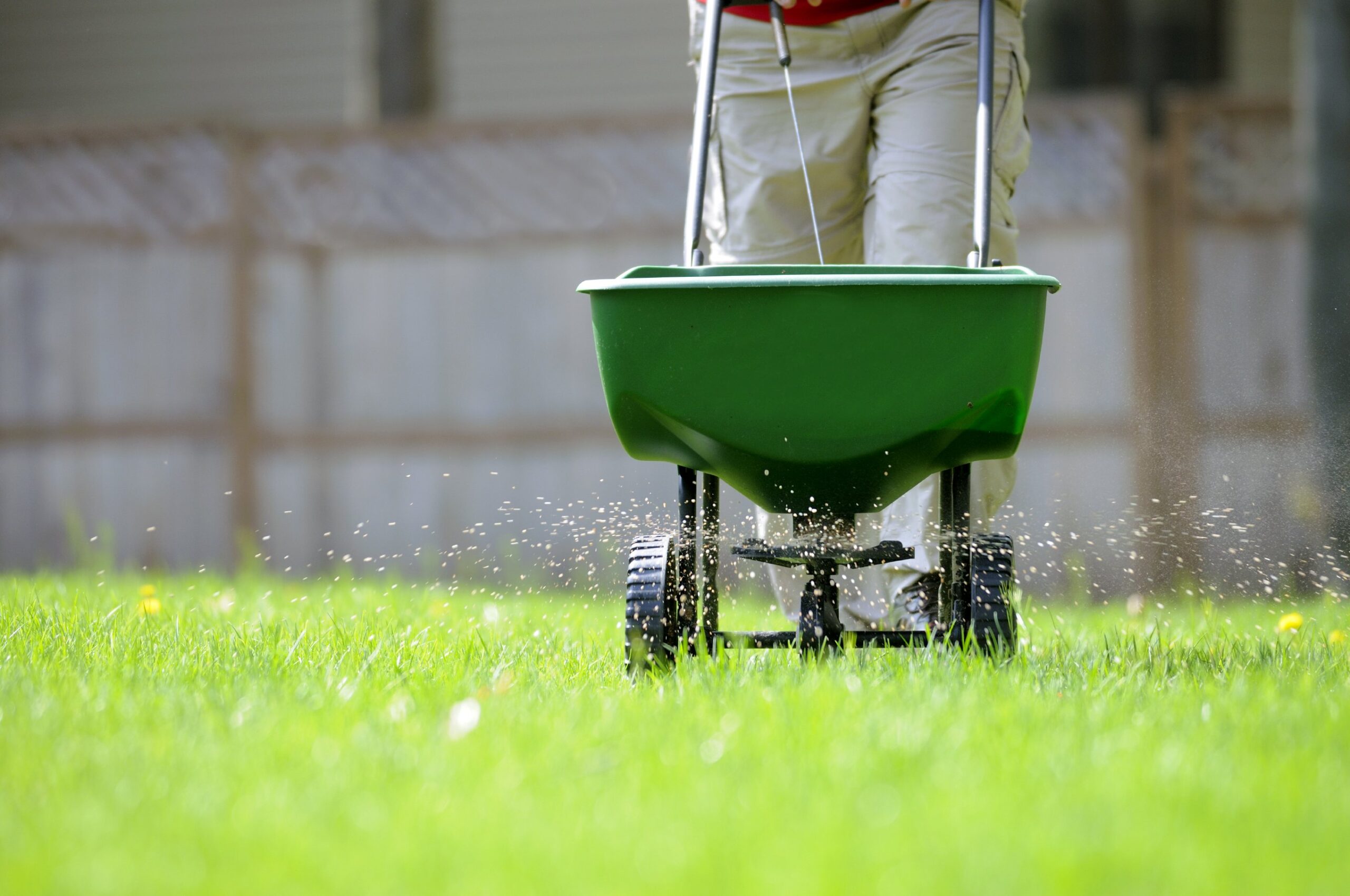
Fertilization is among the more approachable parts of lawn care to handle yourself. A quality bag covers roughly five thousand square feet and runs about $25 to $45. For an average lawn here that is one to two bags per application, so roughly $30 to $55 in product.
Add a broadcast spreader, a one time purchase of $60 for a basic model or $150 and up for one that holds calibration. Add a separate iron product, which is a real additional line item in our market given how commonly high pH limits iron availability. Add about forty five minutes per application plus a trip to buy product.
The dollar gap against professional service is real but narrower than most people assume. Where the DIY route slips is calibration, since every spreader setting number means something different on every bag. Applying twenty percent heavy in October is how homeowners here accidentally create the large patch outbreak they were trying to avoid.
Where the Money Actually Gets Wasted
The most expensive mistake in our market is not paying too much for a visit. It is buying a high nitrogen winterizer product in November because that is what the shelf tag and most national advice recommend. On warm season grass heading toward frost, that feeds disease and produces cold damaged tissue. You paid for the product and then pay again in lost turf and a spring repair.
Second is buying nitrogen to fix a yellow lawn that is actually short on available iron. Our caliche influenced soils commonly run at a pH above 7.5, and at that level iron converts into forms roots cannot absorb. The lawn stays yellow, often gets paler as new growth dilutes the limited iron, and the homeowner buys another bag. A soil test costing a fraction of one application would have redirected the plan.
Third is applying granular and not getting it watered in. Product sitting dry on the surface for a week is product you did not use, and on a windy Hill Country lot some of it does not stay where you put it.
What to Do Next
Measure your turf before you call anyone. Pace the perimeter of each grass area, multiply length by width, and subtract beds, paving, structures, and rock. That figure makes every quote comparable and protects you from over and under application.
Get a soil test before committing to a program. On caliche influenced soil the pH number reframes the whole conversation and tells you whether the pale color you have been fighting is a nitrogen question or an iron question.
When you request pricing, ask four things. Is the price based on measured square footage. What nitrogen rate and source are used on the fall application. Is iron or a micronutrient package included. Does the schedule follow soil temperature and watering restrictions or fixed calendar dates. Those answers sort companies quickly.
If you would rather have someone else handle the timing, product selection, and soil chemistry for your North San Antonio lawn, we are here for that. Visit lawnsquad.com to find Lawn Squad of North San Antonio and request a free quote on your property. Our VitaminLawn program is built around the warm season grasses, thin caliche soils, and water limits we actually work with here.