
What Does Fall Lawn Fertilization Cost in North Raleigh?
Short Answer: A single fall fertilization visit for a typical North Raleigh lawn generally runs between $55 and $120, priced from measured turf square footage rather than lot size. Full season programs commonly run five to seven visits and land between $350 and $700 annually for an average property, with fescue programs weighted toward fall since that is the productive feeding season. Doing it yourself costs roughly $30 to $50 per application in product. The most expensive mistake here is not overpaying for a visit, it is applying a late fall feeding to a Bermuda lawn or skipping it on a fescue one.
Price is the first thing most homeowners want to know and the last thing a lawn care site will tell you. We would rather put the numbers on the page. If they do not fit your budget you have lost a few minutes, and if they do, you arrive at a conversation already knowing we are in your range.
Here is how fall fertilization is priced across North Raleigh, what moves one quote above another, and where we see money spent that does not improve a lawn.
Priced From Measured Turf
Fertilization is quoted per thousand square feet of actual grass, not by lot size and not by the hour. That matters here because properties vary widely. A lot in a wooded older neighborhood off Six Forks with mature canopy and natural areas may carry half the turf of a similar sized lot in a newer subdivision north of town that is mostly open lawn.
This is the first thing we would question in a quote. A company naming a price without measuring is either padding to protect itself or planning to apply light, and neither serves you. Most homeowners we walk through this are surprised by the number, usually because driveways, structures, beds, and wooded areas subtract more than expected.
With your real figure, every quote becomes comparable on the same terms. Without it you are weighing one company’s guess against another’s.
The Ranges We See Here
For a typical North Raleigh lawn, a single fertilization application commonly falls between $55 and $120. Smaller lots closer in sit toward the low end. Larger properties out toward Wake Forest and the northern county, and homes on half acre or more, climb from there and are generally quoted per thousand square feet.
Full season programs here usually run five to seven visits and land between $350 and $700 annually for an average property. Per application that is meaningfully less than buying visits individually, which is how most companies structure it.
What gets bundled varies enormously, and this is where headline comparisons mislead. Some programs include weed control, some include pre emergent for crabgrass, some include lime, some include brown patch prevention for fescue in summer. A $350 program and a $700 program are frequently not the same service at two prices.
Fescue Programs Weight Toward Fall
This shapes what a sensible program looks like here and it is worth understanding before you compare quotes.
On a fescue lawn, fall is the productive feeding season and it wants two applications inside it. One in September or early October for recovery from summer, and a late one in November that drives next spring’s green up. Spring applications are lighter by comparison, because heavy spring nitrogen produces lush growth on shallow roots heading into a Piedmont July.
If you have Bermuda or zoysia, which is increasingly common in the sunnier newer subdivisions around North Raleigh, the schedule inverts. Those lawns want feeding through late spring and summer, with nitrogen stopping roughly four to six weeks before our first frost, so around the start of October.
A company quoting an identical schedule regardless of grass type is not paying attention to your lawn. That is a fair question to ask on a first call, and the answer tells you a lot.
Lime Is Frequently a Separate Line
Worth flagging because it surprises people comparing quotes. Piedmont soils here are predominantly acidic red clay, and untreated lawn soil across our area commonly tests well below what turf prefers.
At low pH, nutrients you apply become chemically less available to roots, so a portion of every application goes unused. Lime raises pH over months, and on strongly acidic clay it is often the highest value input available, sometimes producing more improvement than another feeding would.
Lime is usually priced separately because the rate depends on a soil test and on how far off your pH is, and clay has high buffering capacity so it takes more material to move than lighter soil would. Ask whether lime and a soil test are included and how the recommendation gets made. A cheap program on unlimed acidic clay is money working at a discount.
What You Are Paying For Beyond Product
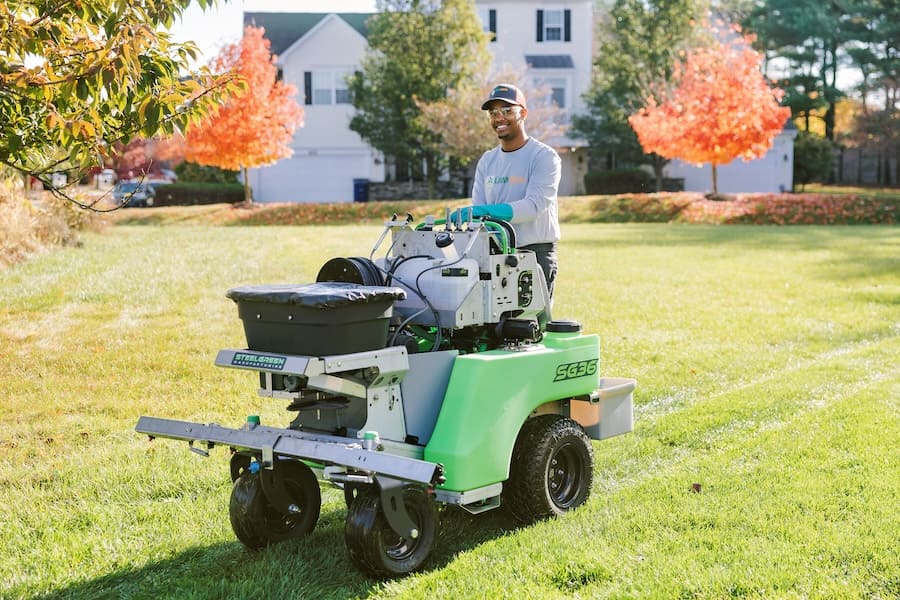
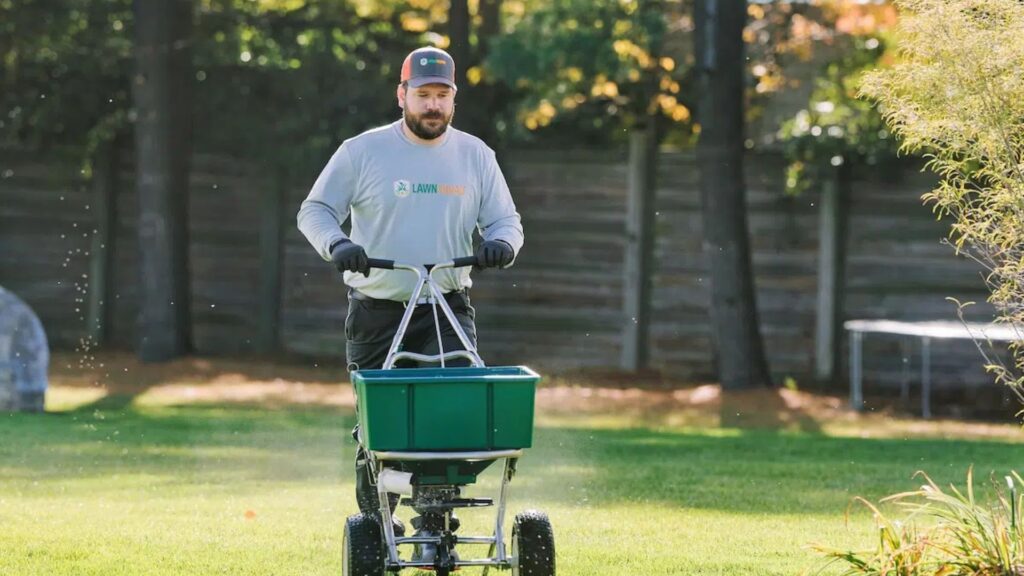
Fertilizer is a modest share of the cost. The rest is calibrated equipment, labor, routing, licensing, and the judgment to apply the right thing at the right time for your specific grass.
In a transition zone market that judgment carries unusual weight, because the same product applied in November is correct on fescue and damaging on zoysia. There are not many places where misidentifying a lawn costs more.
A good visit should also put eyes on the lawn. Brown patch hits fescue in our summer humidity and leaves gaps that do not self repair, since fescue grows in bunches rather than spreading. Grub damage peaks in early fall. Both present as something else to someone not looking for them, and catching either early is frequently worth more than the application it was noticed during.
The Do It Yourself Numbers
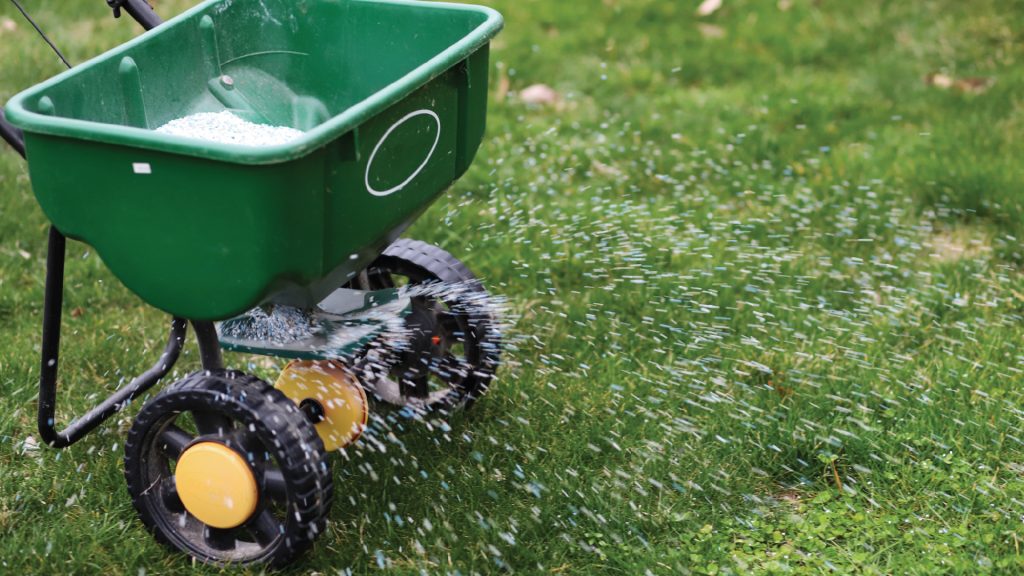
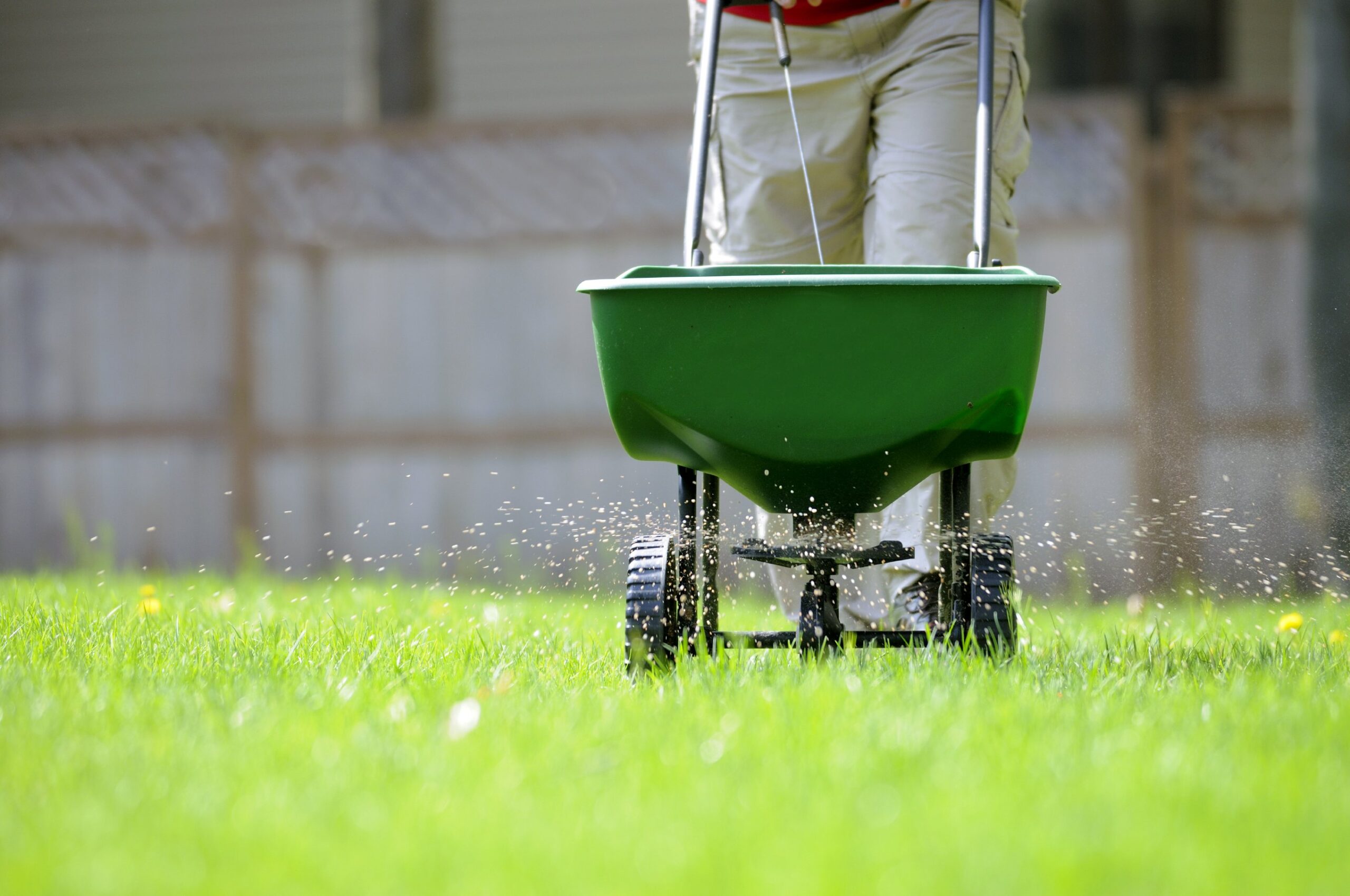
Fertilization is among the more approachable parts of lawn care to handle yourself. A quality bag covers roughly five thousand square feet and runs about $25 to $45. For an average lawn here that is one to two bags per application, so roughly $30 to $50 in product.
Add a broadcast spreader, a one time purchase of $60 for a basic model or $150 and up for one that holds calibration. Add lime, which is heavy, bulky, and awkward to haul in the quantities acidic clay actually requires. Add about forty five minutes per application plus a trip to buy product.
The dollar gap is real but narrower than most people assume. Where the DIY route slips is calibration, since every spreader setting number means something different on every bag. Applying twenty percent light produces a lawn that never quite responds and leaves you blaming the product rather than the setting.
Where the Money Actually Gets Wasted
The most expensive mistake here is a grass type error in either direction. Applying a November winterizer to a Bermuda or zoysia lawn produces cold damaged tissue and feeds disease, so you pay for product and then pay again in spring repair. Skipping the November application on a fescue lawn forfeits the highest value feeding of the year, which is invisible because you never see what you did not get.
Second is feeding a lawn whose real problem is something else. Fescue thinned by summer brown patch will not close those gaps from fertilizer, because the plant does not spread. A lawn on compacted construction fill cannot reach much of what you apply. A shaded lawn is short on light, not nitrogen.
Third is fertilizing acidic clay without ever testing pH. Homeowners feed faithfully for years, get mediocre response, and conclude they need more product. A soil test costing a fraction of one application frequently redirects the whole plan toward lime instead.
What to Do Next
Identify your grass first, since it determines what program makes sense and it is the error with the highest cost. Fescue grows in clumps with wide flat blades and stayed green last January. Bermuda and zoysia spread by runners and turned tan.
Measure your turf. Pace the perimeter of each grass area, multiply, and subtract beds, paving, structures, and wooded areas. That figure makes every quote comparable.
Get a soil test before committing to a program. On acidic Piedmont clay the pH number frequently changes the priority order, and it costs a fraction of one application.
If you would rather have someone identify the grass, test the soil, and build a schedule around both, we are here for that. Visit lawnsquad.com to find Lawn Squad of North Raleigh and request a free quote on your property. Our VitaminLawn program is built around the transition zone grasses and Piedmont clay we actually work with here.