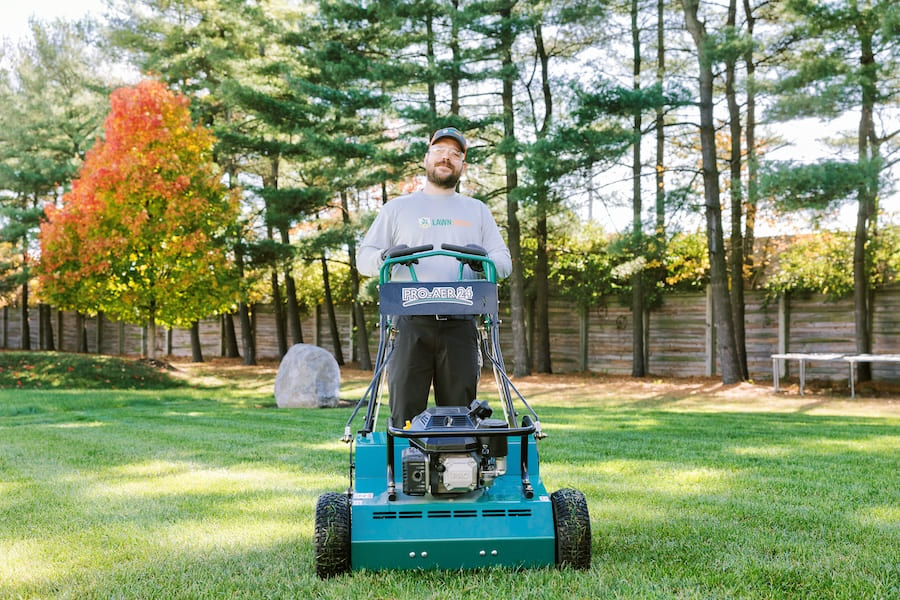
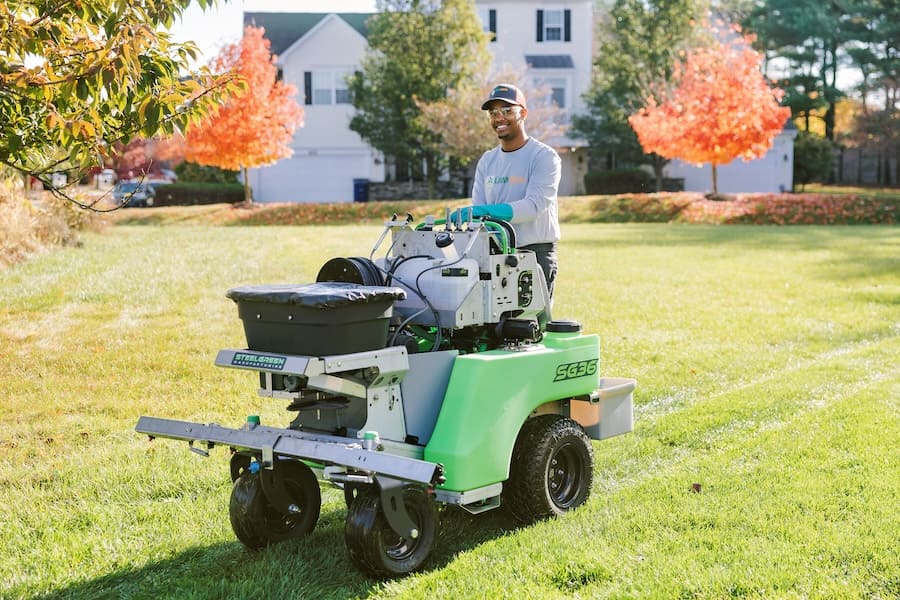
Short Answer: On bermuda and zoysia in North Atlanta, the last nitrogen application should go down roughly six weeks before the average first frost, which usually means late August into the first days of September. After that, nitrogen pushes tender growth that cold weather kills. Tall fescue lawns are the exception and can take a feeding into October and again in November. If you do not know which grass you have, identify it before you feed it, because the two calendars are almost opposites.
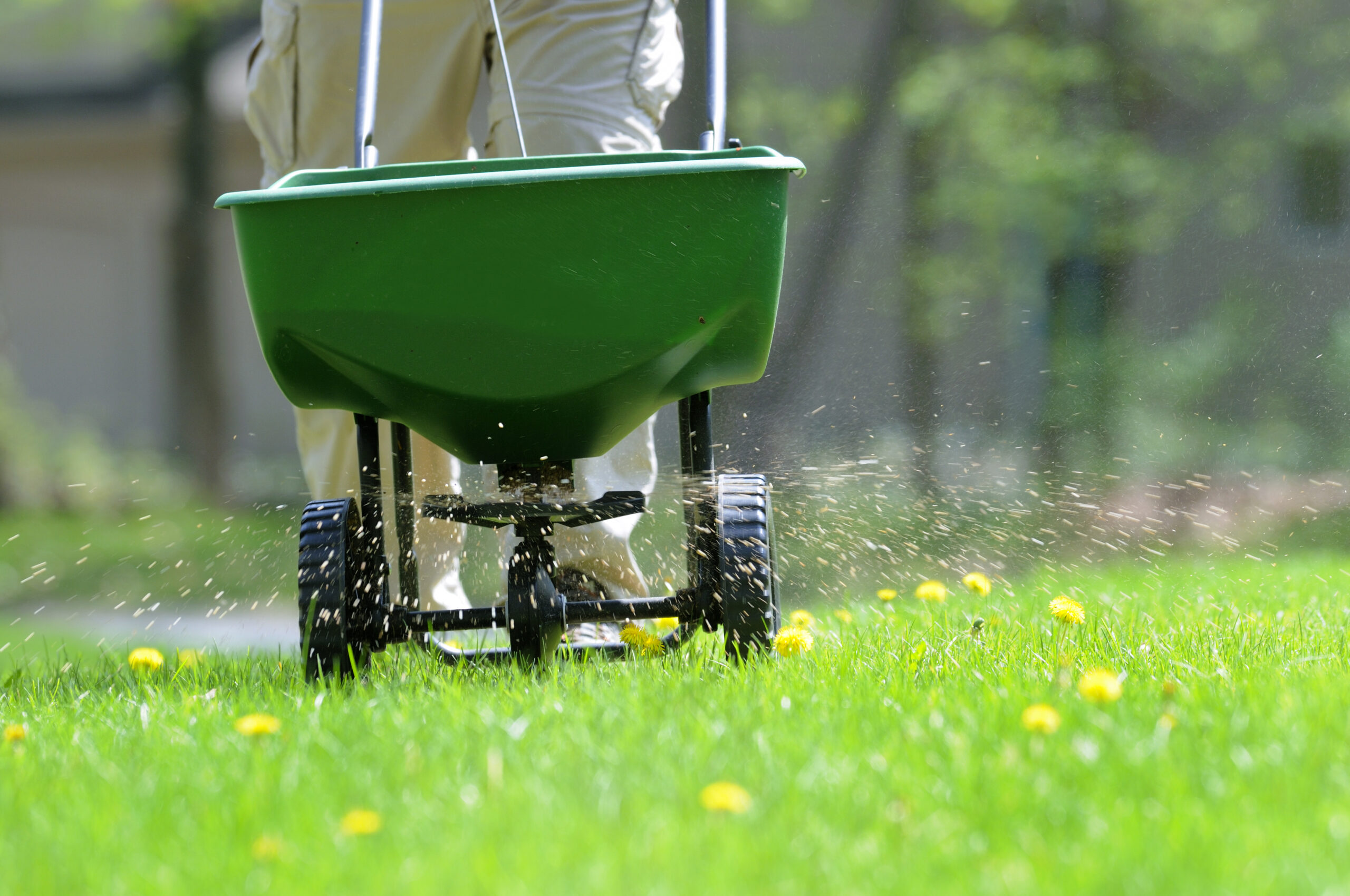
Why the Last Feeding Matters More Than the First
Most homeowners think about fertilizer in spring, when the lawn is waking up and a green response feels earned. The application that actually decides how your lawn looks next April is the last one of the season. Get it right and the turf enters winter with carbohydrate reserves stored in roots and rhizomes, breaks dormancy early, and fills in on its own. Get it wrong and you spend the following spring repairing damage you paid to create.
The mechanism is not complicated. Nitrogen tells grass to build leaves. New leaves are tender. Tender tissue going into a cold event is the tissue that dies. In North Atlanta, where the first real frost can arrive anywhere from late October in the higher northern counties to well into November closer to the city, the margin for error is measured in weeks.
The Six Week Rule and What It Means in North Atlanta
The working rule for warm season grass is that the last nitrogen application should land about six weeks before the average first frost. That gives the plant time to use the nitrogen, finish the flush of growth it triggers, and harden off before cold arrives.
In our area that usually puts the final nitrogen feeding on bermuda and zoysia in late August or the first days of September. By late September a nitrogen application on bermuda is working against you. By October it is a real liability.
Where you sit matters. Lawns well north of the perimeter, especially on higher ground toward Cherokee and north Forsyth, cool off and frost sooner than lawns sitting inside the metro heat island. If you are in one of those cooler pockets, use the earlier end of the range rather than the later one.
What Late Nitrogen Actually Does to Warm Season Turf
When a bermuda or zoysia lawn is preparing for dormancy, it is moving energy downward. Sugars produced in the leaves get stored in the crown, rhizomes, and stolons. That stored energy is what the plant lives on all winter and what it spends to green up in spring.
A late nitrogen application interrupts that process. Instead of storing, the plant spends. It pushes a new flush of soft top growth, using reserves it should be banking. Then the first hard freeze burns that growth off. The lawn goes into winter with less stored energy than it should have, and it comes out slower and thinner.
The worst case is winter kill, where whole areas fail to return in spring. It does not happen every year in North Atlanta, but it happens often enough, and it clusters in lawns that were fed late. Shaded areas, north facing slopes, and low spots where cold air settles are where you see it first.
Tall Fescue Lawns Follow a Different Calendar
A large share of North Atlanta lawns are tall fescue rather than bermuda or zoysia, particularly in older neighborhoods with mature tree canopy and on the shadier north side of houses. Fescue is a cool season grass and its calendar is close to the opposite.
Fescue does most of its real growing when soil temperatures are falling. Fall is its best season. A fescue lawn benefits from a feeding in September or October and often a second one in November, when top growth has slowed but roots are still active. That November feeding is one of the most valuable things you can do for a fescue lawn all year.
This is why blanket advice fails here. The same October fertilizer bag that helps a fescue lawn hurts the bermuda lawn two doors down.
How to Tell Which Grass You Have Before You Feed It
Identifying your grass takes about two minutes and it is the single most useful thing you can do before buying anything.
- Bermuda spreads by above ground runners and underground rhizomes, has fine to medium blades, loves full sun, and goes fully brown in winter. If your lawn turns tan in December and green again in April, and it creeps into flower beds, it is very likely bermuda.
- Zoysia also goes dormant and brown, but feels dense and springy underfoot, almost like carpet. It tolerates some shade better than bermuda and is slower to fill gaps.
- Tall fescue grows in clumps rather than runners, has wide coarse blades, holds green color through most of the winter, and thins out in July and August heat. If your lawn looks worst in late summer and best in November, it is fescue.
Many North Atlanta properties have both. It is common to see bermuda in the sunny front yard and fescue under the trees in back. Those two areas need different treatment on different dates, and treating the whole property on one schedule is why one half always looks off.
Potassium Is Not the Same as Nitrogen
People often hear that a late season application helps with cold tolerance, and there is truth in that, but the nutrient doing the work is potassium, not nitrogen. Potassium supports cell wall strength, water regulation, and stress tolerance. It does not push top growth.
On warm season turf, a potassium application in early fall can be genuinely useful while a nitrogen application at the same time is harmful. That is why reading the analysis on the bag matters. A product labeled as a winterizer may be built for cool season lawns in the north and carry far more nitrogen than a bermuda lawn in Georgia should get in October.
If a bag has a high first number, it is a nitrogen product. On dormant approaching bermuda, leave it in the garage until spring.
Fall Pre-Emergent Is the Higher Value Application
If you are going to do exactly one thing to a warm season lawn this fall, it should be a pre-emergent, not a fertilizer.
Winter annual weeds germinate as soil temperature falls through about 70 degrees. That includes annual bluegrass, henbit, chickweed, and hairy bittercress. They come up while your bermuda or zoysia is slowing down and heading for dormancy, and they have the lawn to themselves. By February, when they are obvious and blooming, they are far too mature to control cleanly.
A pre-emergent applied as soil temperature drops through that 70 degree threshold stops most of them before they ever emerge. In North Atlanta that window generally falls in September, and it moves earlier in a cool year and later in a warm one. Watching soil temperature rather than the calendar is what separates a pre-emergent that works from one that goes down two weeks late and misses half the flush.
What to Do Instead of a Late Feeding
Once the nitrogen window closes on a warm season lawn, there is still plenty of productive work available.
- Get the pre-emergent down on time and water it in.
- Keep mowing as long as the grass grows, and keep the height consistent rather than dropping it suddenly.
- Keep leaves off the turf. A mat of wet leaves on dormant grass invites disease and smothers the crowns.
- Fix drainage and compaction problems now, while you can see where water sits.
- Adjust irrigation downward as evaporation drops, rather than running the same summer schedule into November.
Mowing Height Into Dormancy
There is a persistent belief that warm season lawns should get scalped before winter. On a home lawn in North Atlanta that is usually a bad trade. Leaf tissue is what insulates the crown, and removing most of it right before cold weather exposes the growing point.
The better approach is to keep mowing at your normal height until growth genuinely stops. On bermuda that is often in the range of one and a half to two and a half inches, and on zoysia a bit higher. On fescue, hold three to three and a half inches through the fall, since taller leaf area feeds root growth during the season when fescue roots actually build.
Whatever height you choose, change it gradually. Removing more than about a third of the blade in one cut stresses the plant at exactly the wrong time of year.
Watering as the Season Turns
Fall rainfall in North Atlanta is unpredictable. Some years October is wet and irrigation should be off entirely. Other years we go through a dry stretch that stresses turf while it is trying to store reserves.
The rule is to water by need rather than by schedule. A dormant or dormancy approaching lawn needs far less than it did in July, but it should not go into winter bone dry, especially on the harder red clay soils common through much of the area. Deep and infrequent still beats light and daily. If you have a fescue lawn or newly seeded areas, keep the surface consistently moist while seedlings establish, then back off.
Common Mistakes We See Here Every Fall
The same handful of errors account for most of the fall damage on North Atlanta lawns.
- Feeding a bermuda lawn in October because the fescue lawn next door is being fed.
- Aerating and overseeding warm season turf in fall, which is cool season advice applied to the wrong grass and mostly wastes seed and money.
- Waiting for weeds to appear before treating, rather than preventing them at germination.
- Scalping the lawn in November in the belief it helps it winter over.
- Running the summer irrigation schedule until the first freeze.
None of these are exotic. They are all timing errors, and timing is most of what fall lawn care actually is.
What to Do Next
Walk the lawn this week and write down the two or three things that actually bother you about it, then work backward from the window rather than forward from today. Almost every fall mistake we see in North Atlanta comes from starting with the calendar instead of with the lawn.
If you would rather have someone look at it with you, Lawn Squad of North Atlanta offers a free quote. Call 833-816-7508 or find us at lawnsquad.com. Every Lawn Squad location is independently owned and operated, and our VitaminLawn fertilization and weed control program is built around the grass, soil, and conditions here rather than a national average.
A first visit is a walk of the property, a look at the thin areas, a check of mowing height and irrigation, and a straight conversation about what is realistic in the weeks left this season. At 30 days you should see color and density improve. At 90 days the lawn should be visibly thicker, with the root growth that carries it through winter.