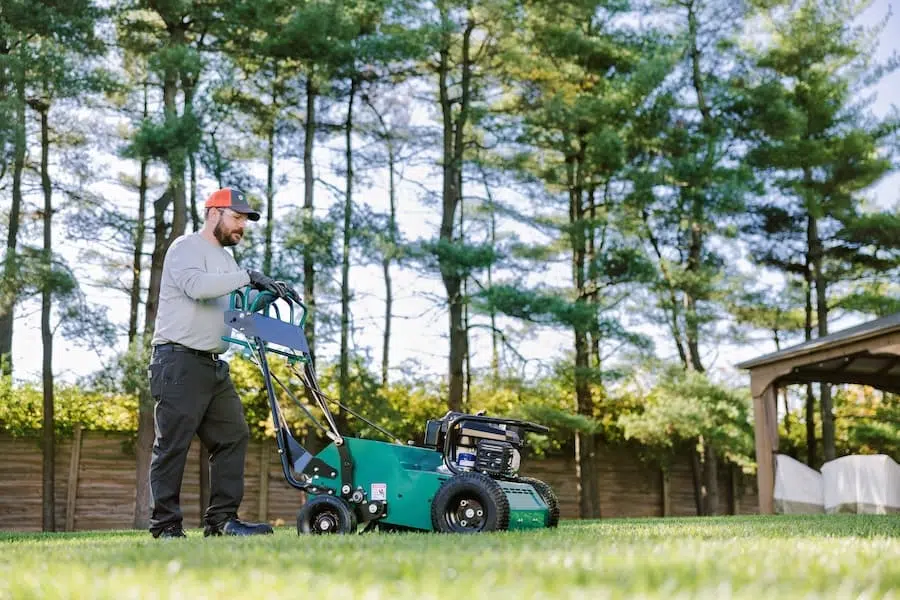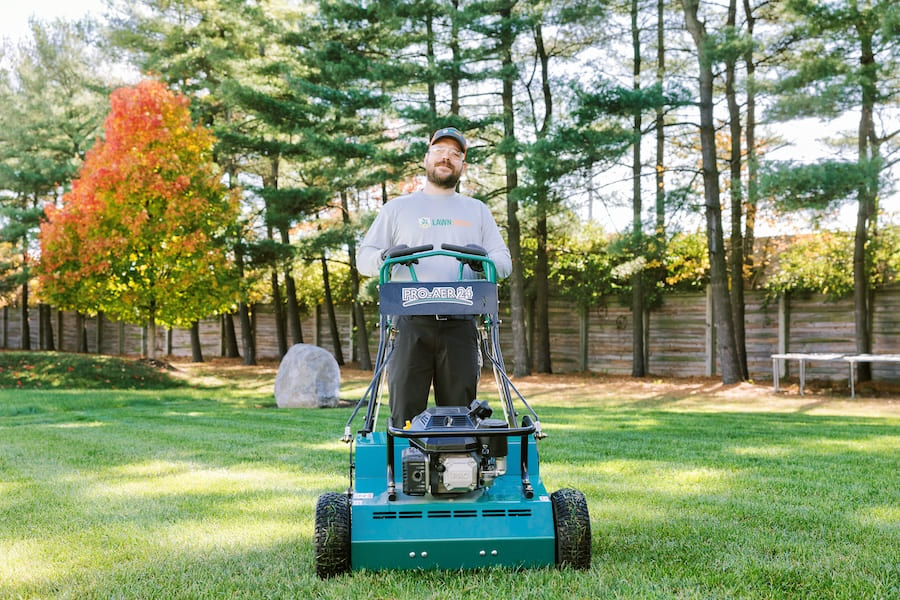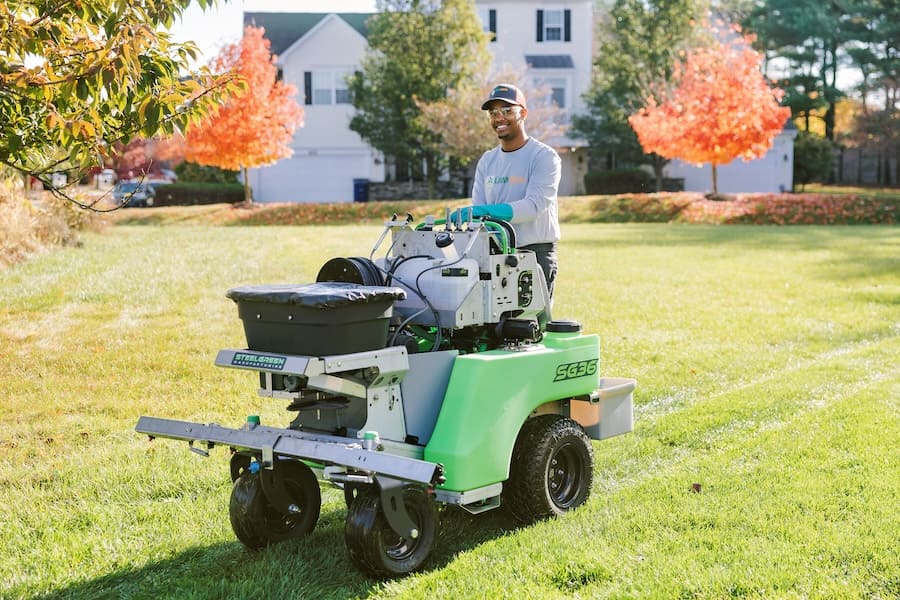

Short Answer: In Birmingham, the last nitrogen application on bermuda or zoysia should go down roughly six weeks before the average first frost, which puts the cutoff in mid to late September for most of Jefferson and Shelby County. Nitrogen after that point pushes soft new growth that has no time to harden off before the first cold event, and that tender tissue is what winter injury takes first. Late September through November is for potassium, weed prevention, and soil correction, not for pushing color.
Why This Question Matters More Here Than Up North
Most fertilizer advice on the internet was written for cool season lawns in the Midwest and the Northeast, where a late fall feeding in November is one of the most valuable applications of the year. That advice is not merely unhelpful in Birmingham. On a bermuda or zoysia lawn it is actively harmful.
Warm season grasses run on a completely different clock. They build carbohydrate reserves in the crown and root system through late summer, then shut down top growth and move into dormancy as soil temperatures fall. Pushing nitrogen into that shutdown interrupts it. The lawn spends energy it should be storing on leaf tissue it will lose in the first freeze.
The result is a lawn that enters winter soft and unprepared. Birmingham gets enough hard cold events each season to punish that, and the damage usually does not show up until April, when patches simply fail to green up with everything else.
Know Which Grass You Are Actually Feeding
Birmingham sits in the transition zone, so we see more grass variety here than either the Gulf Coast or the far northern part of the state. On a single street you may find common bermuda, hybrid bermuda, zoysia, and tall fescue, and the fertilizer cutoff is different for each one.
- Bermuda is the most common lawn grass in the metro. It loves heat, spreads aggressively, and goes fully tan after the first hard frost.
- Zoysia grows more slowly, holds color a little later into the fall, and is somewhat more prone to winter injury when it gets pushed late.
- Tall fescue stays green through winter and shows up in shaded yards, older neighborhoods, and properties over the mountain. It follows the opposite calendar.
- Centipede appears occasionally in the southern edge of the metro and tolerates late nitrogen worse than anything else we treat.
If you are not sure what you have, the easiest test is what the lawn did last winter. Solid tan from December to April means warm season. Green through January means fescue.
The Six Week Rule and Where It Comes From
The working rule for warm season turf is that the last nitrogen application should go down roughly six weeks before the average first frost. Six weeks is approximately how long it takes new growth stimulated by nitrogen to mature, thicken its cell walls, and harden off enough to survive freezing temperatures. Grass still actively pushing tender tissue when the thermometer drops into the twenties has nowhere useful to put that energy, and the tissue dies.
This is not a marketing rule or a scheduling convenience. It comes out of turfgrass research at land grant universities across the Southeast and it holds up in the field. The lawns we walk with the worst spring green up problems are very often the lawns that took a heavy nitrogen feeding in October because the homeowner thought the turf looked thin and wanted to fix it before winter.
When Birmingham Actually Gets Its First Frost
The Birmingham metro averages first frost somewhere in early to mid November, though the spread across the area is wide. Properties in low lying spots near creeks and in the valleys frequently see frost a week or two ahead of homes up on the ridges, and the urban core holds off the longest because of retained heat from pavement and structures.
Work backward six weeks from a first week of November frost and the nitrogen cutoff lands in the third week of September. That is why we treat mid September as the practical end of the nitrogen window and anything past the third week as a judgment call about the specific property. On a north facing slope in Trussville, be conservative. In a warm protected pocket in Homewood, you have slightly more room. Neither situation justifies feeding in October.
What Late Nitrogen Actually Does to the Plant
Nitrogen tells a grass plant to grow leaves. That is essentially its whole job. In June that is what you want, because leaf growth in a warm season lawn drives density and recovery. In October the plant should be doing the opposite, moving sugars downward into the crown and rhizomes so it has fuel to push new growth next May.
When nitrogen arrives during that transition, the plant redirects reserves upward into leaves instead of storing them. Then frost kills the leaves. The carbohydrates that went into them are gone, the lawn enters winter with a smaller reserve than it should have, and spring green up is slower and patchier as a result.
There is a second problem. Soft, nitrogen rich tissue is far more attractive to disease. Large patch, which is the fall and spring disease that shows up on zoysia and centipede as soil temperatures pass down through the seventies, is strongly encouraged by late season nitrogen. Homeowners who feed in October frequently find rings of collapsed turf the following March and blame the winter. The fertilizer set it up.
Tall Fescue Is the Exception in Birmingham
If your lawn is tall fescue, almost everything above reverses. Fescue is a cool season grass, it does its best growing when soil temperatures are in the sixties, and fall is the single most productive time of year for it. Fescue lawns here benefit from feeding in September, again in late October, and often once more in November.
Fescue is also the one grass type in Birmingham where fall seeding makes sense. Warm season lawns should not be aerated and overseeded in fall, because you would be opening the canopy of a grass that is trying to go dormant and putting seed in the ground at the wrong temperature. Fescue is the opposite. If you have thin fescue, September and early October is your window.
Mixed properties are common here, with fescue in the shade on the north side and bermuda in the sun out front. Those two areas need different treatment on different dates, and treating the whole property with a single blanket application on a single visit is one of the more common reasons a Birmingham lawn looks inconsistent.
What Belongs on the Lawn After the Nitrogen Cutoff
Stopping nitrogen does not mean stopping lawn care. The last six weeks before dormancy are genuinely productive if you spend them on the right things.
- Potassium supports cell wall strength, root function, and cold tolerance without pushing leaf growth. It is the one nutrient that is still useful late.
- Fall pre emergent applied as soil temperatures fall through about seventy degrees is the highest value application of the entire season, because it stops winter annual weeds before they germinate.
- Lime, if a soil test calls for it. Birmingham soils frequently run acidic and fall is a reasonable time to correct pH because it takes months to move.
- A soil test itself, so next year’s program is based on what the ground actually lacks rather than on a guess.
Fall Pre Emergent Is the Application People Skip
Almost every homeowner who calls us in February about a lawn full of henbit, chickweed, and annual bluegrass is describing a missed fall pre emergent. Those weeds germinate in the fall, sit low and small through early winter, and then explode in late winter against a dormant tan lawn where they are impossible to miss.
Once they are up and established, you are into post emergent control on a dormant lawn, which is slower, less complete, and leaves dead weed skeletons behind. A properly timed pre emergent barrier put down when soil temperature is passing down through seventy degrees, which in Birmingham is usually late September into early October, prevents most of it. Miss the window by three weeks and the barrier goes down after germination has already begun.
How to Tell You Fed Too Late Last Year
The evidence shows up the following spring, and it is fairly readable once you know what to look for.
- Green up that is noticeably later than neighboring lawns of the same grass type.
- Patchy green up, where some areas come back on time and others stay tan into May.
- Circular or arcing dead areas one to three feet across, which points at large patch rather than pure cold injury.
- Thinning concentrated in the shadiest and coldest parts of the property, usually the north side and anywhere that stays wet.
Cold injury and disease often occur together on the same lawn, because the conditions that cause one favor the other. Both trace back to the same decision made in October.
Read the Lawn Instead of the Bag
Bagged fertilizer sold in Birmingham is generally labeled for a national audience. The instructions on a bag frequently say to feed every six to eight weeks through the growing season without ever defining when the growing season ends in central Alabama. Follow that literally and you will feed in October.
The better habit is to watch the lawn. When bermuda stops needing weekly mowing, it is telling you that top growth has slowed and the plant is transitioning. That is your signal that the nitrogen conversation is over for the year, regardless of what the calendar or the bag says. A lawn that still needs mowing twice a week in late September is a different situation than one you have not touched in two weeks, even on the same street.
What to Do Next
Walk the lawn this week and write down the two or three things that actually bother you about it, then work backward from the window rather than forward from today. Almost every fall mistake we see in Birmingham comes from starting with the calendar instead of with the lawn.
If you would rather have someone look at it with you, Lawn Squad of Birmingham offers a free quote. Call 833-816-7508 or find us at lawnsquad.com. Every Lawn Squad location is independently owned and operated, and our VitaminLawn fertilization and weed control program is built around the grass, soil, and conditions here rather than a national average.
A first visit is a walk of the property, a look at the thin areas, a check of mowing height and irrigation, and a straight conversation about what is realistic in the weeks left this season. At 30 days you should see color and density improve. At 90 days the lawn should be visibly thicker, with the root growth that carries it through winter.