
Should I Give Up on Grass Under My Trees? Honest Options for Cypress and Tomball Yards

Should I Give Up on Grass Under My Trees? Honest Options for Cypress and Tomball Yards
Short Answer: Not necessarily, but it helps to be honest about what grass can do in shade. St. Augustine is the most shade-tolerant lawn grass commonly grown around Cypress and Tomball, yet it still needs several hours of direct sun a day to stay thick. Here is what we have found works best: thin the tree canopy to let in more light, mow shaded grass taller, feed and water it less than the sunny parts of the yard, keep leaves and needles off it, and turn the deepest shade into beds or groundcover instead of fighting it every year.
If you are reading this, you probably have a spot under the trees where the grass gets thinner every year. Maybe you have laid new sod there twice, and it looked great for a summer before fading back to bare soil and roots. Many yards in Cypress, Tomball, Magnolia, and Pinehurst have mature pines and hardwoods, and that shade is part of what makes the neighborhoods so appealing. It is also the reason so many lawns struggle in the same places.
Here is the honest truth up front. Grass can grow in some shade. It cannot grow in deep shade, no matter how much you feed it or water it. The real question is how much light your spot gets, and what is worth doing about it.
Why Grass Struggles in Shade
Grass makes its food from sunlight. With too little light, it cannot produce enough energy to stay thick, recover from wear, or fight off weeds and disease. Blades grow long and thin as they stretch toward the light, runners spread out instead of packing in, and bare soil starts to show. Under trees, the grass is also competing with tree roots for water and nutrients, which makes the problem worse.
How Much Sun Is Enough?
Most St. Augustine needs at least four to six hours of direct sun a day, and a lawn getting only that much will still be thinner than one in full sun. Some varieties are sold as more shade tolerant and can manage with a bit less. Zoysia varies a lot by variety, with some handling partial shade reasonably well. Bermuda needs full sun and almost always fails under trees.
The easiest way to find out what you have is to watch the spot on a sunny day. Check it every hour or two from morning to late afternoon and note when sun actually reaches the ground. Many homeowners are surprised by how little direct light their shaded areas get.
Shade Changes With the Seasons
Keep in mind that the shade you see in October is not the shade the grass lives with all year. Deciduous trees like water oaks, red oaks, sweetgums, and pecans drop their leaves and let in more light through winter, but by early summer the canopy is full again and the shade is at its deepest, right when warm-season grass is supposed to be growing. Pines and live oaks stay shady year round. A spot that looks fine in January may be far too dark in June, so check light in summer too.
Signs You Have Reached the Limit
When shade wins, the signs are easy to spot. The grass is thin and spindly. Bare soil, moss, or a green film of algae shows up between the blades. Sod you lay in spring looks good for a few months and then fades. If you are seeing all of these, the spot likely does not get enough light for any lawn grass to thrive.
Option One: Let In More Light
The single biggest improvement usually comes from thinning the tree canopy. Removing some lower limbs and thinning crowded branches lets more dappled sun reach the ground without hurting the tree. This is a job for a certified arborist, not a ladder and a chainsaw. Never top a tree. It harms the tree and causes dense regrowth that makes the shade worse within a few years.
Option Two: Change How You Care for Shaded Grass
Grass in shade needs different care than grass in sun. Here is what we have found works best.
Mow it taller. Keep St. Augustine in shade at the top of its range, closer to four inches, so each plant has more leaf surface to catch what light it gets.
Feed it less. Shaded grass uses less fertilizer than grass in full sun, and too much nitrogen pushes weak, leggy growth that is more prone to disease.
Water it less. Shade stays damp longer, especially in fall and winter. Overwatering shaded areas invites disease and does nothing to make up for missing sunlight.
Limit traffic. Grass in shade recovers slowly from wear. If the dog runs the same path under the trees every day, that path will stay thin.
Keep Leaves and Needles Off the Grass
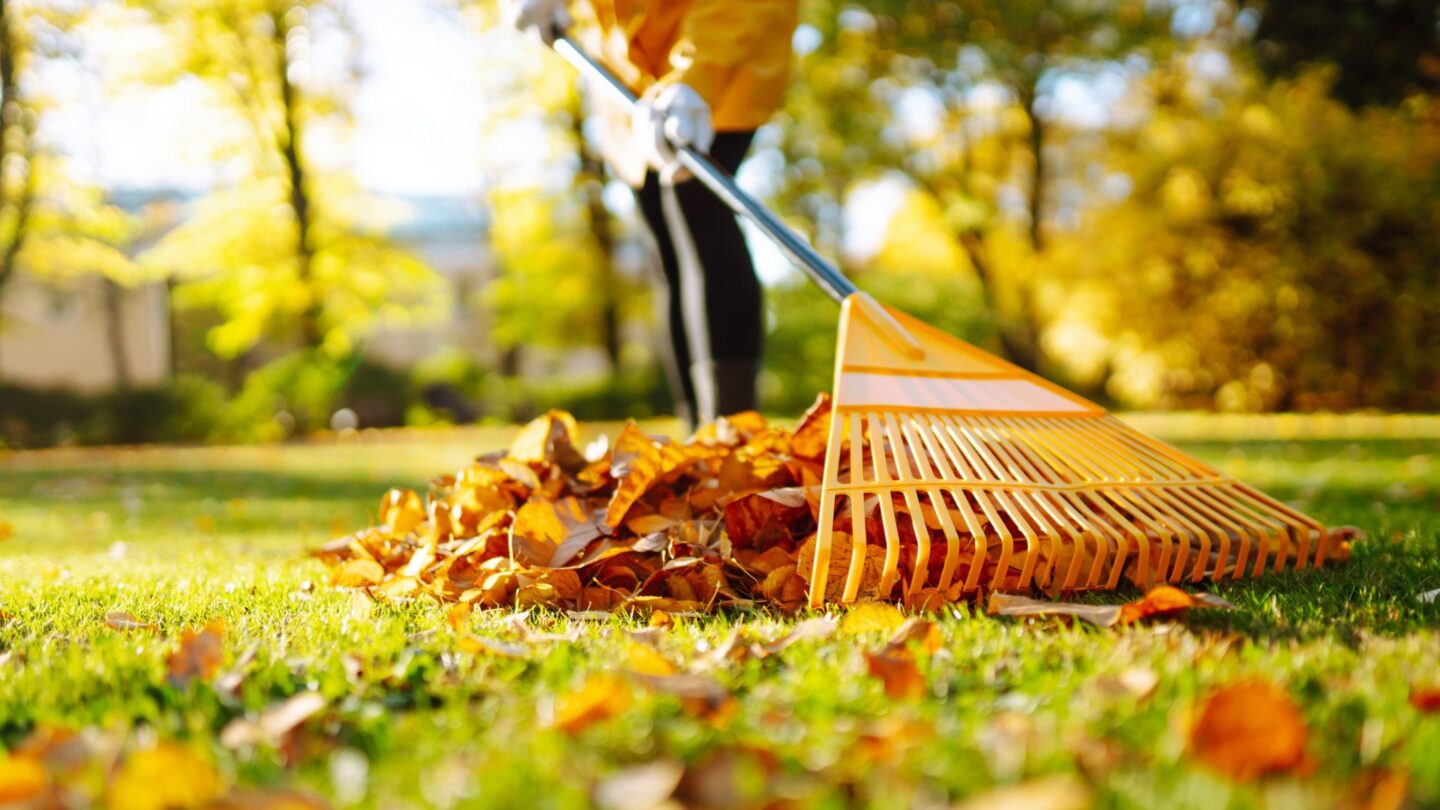
In fall, leaves and pine needles pile up under trees and block what little light the grass gets. Clearing them regularly through fall and winter makes a real difference. Light layers of leaves can be mulched with the mower. Pine needles and heavy layers should be raked or blown off and can be reused as mulch in beds.
Option Three: Stop Fighting the Deepest Shade
For spots that will never get enough sun, the best answer is often to stop trying to grow grass there. A mulched bed under the tree looks clean, protects the roots, and ends the cycle of replacing sod every year. Shade-tolerant groundcovers that do well around Houston, such as Asian jasmine, liriope, and mondo grass, can fill the space with something green that actually belongs there.
Many of the best-looking yards in wooded Cypress and Tomball neighborhoods are designed this way, with healthy lawn in the sunny areas and beds under the trees.
Be Careful Around Tree Roots
When you build a bed or add soil under a tree, keep it shallow. Piling several inches of soil over roots or mounding mulch against the trunk can harm the tree. A few inches of mulch, kept back from the trunk, is plenty. Avoid tilling or digging deeply through the root zone.
Why Re-Sodding Every Year Does Not Work
We often meet homeowners who have replaced the same shady patch of sod several times. Fresh sod is grown in full sun, so it starts out thick and green. Once it is under the trees, it slowly thins out to whatever density that spot can actually support. Unless something changes about the light, new sod will follow the same path as the last batch.
Common Mistakes
A few patterns show up in shaded yards every year. Fertilizing the shade harder to make it fill in. Watering shaded areas on the same schedule as the sunny ones. Mowing the shade as short as the rest of the lawn. Topping trees to let in light. And laying sod in the same deep shade year after year.
What a Balanced Yard Looks Like
Imagine this. It is next summer. The sunny front lawn is thick and even, the canopy over the backyard has been thinned so dappled light reaches the ground, and the grass in partial shade is mowed tall and holding its own. Under the oldest pine, where nothing ever grew well, there is a clean mulched bed edged with groundcover, and you are no longer buying sod for that spot every spring.
What to Do Next
This fall, watch your shaded areas through a sunny day to see how much direct light they really get. Keep leaves and needles cleared, mow shaded grass taller, and water and feed it less than the sunny parts of the yard. Talk to a certified arborist about thinning the canopy, and consider turning the deepest shade into beds or groundcover.
If you would rather have someone else help sort out what will grow where, we are here for that. Lawn Squad of Cypress & Tomball is coming in 2027 to serve homeowners across Cypress, Tomball, Hockley, Magnolia, Pinehurst, and northwest Houston. Visit lawnsquad.com to request a free quote. Our VitaminLawn program is built for the grass types, soils, and weather patterns we deal with here.
Here is what to expect. We will walk your yard, look closely at the shaded and thin areas, and talk through your watering, mowing, and fertilizing habits. Then we will explain what we think is happening, what we would treat, and what you can change to help. If your lawn does not need a treatment, we will tell you that honestly.