
Fire Ants in Katy Yards: Why Fall Is a Smart Time to Treat

Fire Ants in Katy Yards: Why Fall Is a Smart Time to Treat
Short Answer: Fall is one of the best times of year to get ahead of fire ants in a Katy yard. The ants are still foraging actively in mild weather, mounds pop up after fall rains, and a colony knocked back now has fewer workers in spring. Here is what we have found works best: the Texas A&M AgriLife Two-Step Method. Broadcast a fresh fire ant bait across the whole yard when the ants are foraging and the ground is dry, then treat any mound that sits where people walk, play, or mow.
If you are reading this, you probably found a fresh fire ant mound in your yard after the last rain, or someone in the family found it the hard way. Fire ants are one of the most common complaints we hear from homeowners around Houston, and Katy is no exception. Open, sunny lawns on the prairie are exactly where they like to build.
Most people treat fire ants one mound at a time, every time a new one shows up. That works for the mound in front of you, but it rarely changes how many you see next month. Fall is a good time to step back and treat the yard as a whole.
Why Fire Ants Are Worse Than Other Ants
Red imported fire ants are not native to Texas. They are aggressive, they sting repeatedly, and they swarm when a mound is disturbed. For most people the stings cause painful, itchy blisters. For a small number of people they can cause a serious allergic reaction. Kids, pets, and anyone mowing or gardening are the ones most likely to get stung.
Mounds also get in the way. They make mowing rough, damage edging and turf around them, and tend to appear in the sunny spots where families actually spend time.
Why Fall Is a Smart Time
Fire ants stay active through a Katy fall. As long as the weather is mild, workers are out foraging for food and carrying it back to the colony. That matters because the most effective products are baits, and baits only work when the ants are picking them up.
Fall rains also bring mounds to the surface, which makes the problem easier to see. And a colony that is weakened in fall goes into winter smaller, which usually means fewer mounds in spring when the yard gets busy again.
Where Fire Ants Build in a Katy Yard
Fire ants like sun and soil they can work. In most Katy yards that means open stretches of lawn, the edges of driveways and sidewalks, along fence lines, around the base of a mailbox or utility box, and in flower beds that get regular water. Newer neighborhoods built on open prairie often see plenty of mounds, because fire ants favor open, sunny ground.
The Two-Step Method
Texas A&M AgriLife Extension recommends what it calls the Two-Step Method for lawns with ongoing fire ant problems. Here is what we have found works best.
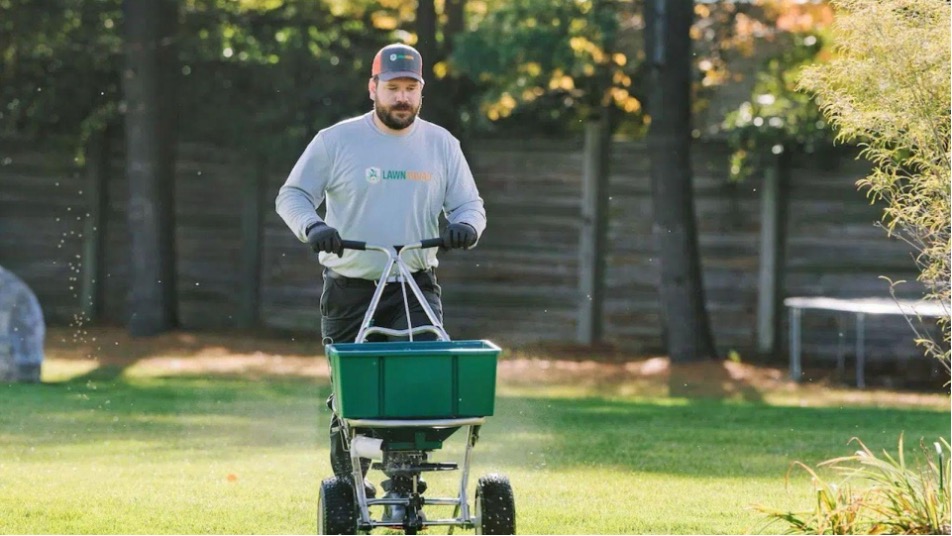
Step one is to broadcast a fire ant bait across the entire yard. Worker ants carry the bait back and share it with the colony, including the queen. That reaches colonies you cannot see yet, not just the mounds you can.
Step two is to treat individual mounds that sit where they are a real problem, such as next to the patio, along the driveway, or in the play area. A mound treatment works faster than bait, so it is the right tool for the spots where you cannot wait.
Getting the Bait Right
Baits fail more often from how they are applied than from the product itself. Use fresh bait. Many baits use an oil that ants will ignore once it goes stale, so an opened bag from two summers ago is not worth spreading. Apply it when the grass and ground are dry and no rain is expected for at least a day.
Timing during the day matters too. Ants forage when the soil is warm but not hot. An easy test is to drop a potato chip near a mound. If ants are crawling on it within about half an hour, they are foraging and it is a good time to spread bait.
Use a hand-held spreader set for a light rate. Fire ant bait goes out very thin, and more is not better.
Treating the Mounds That Matter
For individual mounds, follow the label on whichever mound treatment you choose, whether it is a granular product that gets watered in, a drench, or a dust. Do not disturb the mound first. Kicking or poking it makes the ants move the queen deeper or relocate, and the mound simply pops up a few feet away.
How Long Results Take
Patience is part of the plan. Depending on the product, a broadcast bait can take anywhere from a few days to several months to knock colonies down, because it has to move through the colony to the queen. Growth regulator baits are the slowest, and when they go down in fall they can take up to six months to finish the job. Mound treatments work faster, often within a day or two. If you check the yard a week after baiting and still see ants, that does not mean it failed. Give it time before you reach for something else.
Home Remedies That Do Not Work
We hear about a lot of shortcuts. Grits do not kill fire ants. Boiling water only works some of the time, it is a scald risk, and it kills the grass around the mound. And never pour gasoline or other fuel on a mound. It is dangerous, it poisons the soil, and it leaves a dead spot in the lawn for a long time.
Why Mounds Come Back
Even a well-treated yard will see new mounds eventually. Fire ants fly in from neighboring lots, greenbelts, and open land, and new colonies start after mating flights, which are most common in spring and fall, usually after a rain. That is not a failure of treatment. It is why the broadcast step is repeated on a schedule instead of once.
Keeping Your Family and Pets Safe
Read and follow the label on any fire ant product. Keep kids and pets off treated areas for as long as the label directs, store products out of reach, and wash your hands after handling them. If someone in the house has had a severe reaction to stings, talk to a doctor about what to do if it happens again.
How This Fits Into Lawn Care
A healthy, thick lawn does not keep fire ants away on its own, but it recovers faster from mound damage and is easier to keep an eye on. In our VitaminLawn program, Fire Ant Prevention is included in the Elite plan, along with disease control, aeration, and a soil test.
Common Mistakes
A few patterns show up every fall. Treating only the mounds you can see and never the yard. Spreading old bait from the garage. Putting bait down right before a storm. Disturbing mounds before treating them. And giving up on a bait after a few days, when baits often take weeks to work.
What a Treated Yard Looks Like in Spring
Imagine this. It is April, and the kids are back out in the yard every afternoon. Last year there were mounds along the fence and one right next to the swing set. This year you have spotted one small mound near the street, and that is it, because the whole yard was baited in fall and the problem mounds were handled before they could spread.
What to Do Next
This fall, broadcast a fresh fire ant bait across the whole yard on a dry day when the ants are foraging, then treat any mound that sits where people walk, play, or mow. Skip the home remedies, leave mounds undisturbed until you treat them, and plan to repeat the broadcast step in spring.
If you would rather have someone else handle fire ants for your Katy yard, we are here for that. Lawn Squad of Katy is coming in 2027 to serve homeowners across Katy and the surrounding communities. Visit lawnsquad.com to request a free quote. Our VitaminLawn program is built for the grass types, soils, and weather patterns we deal with here.
Here is what to expect. We will walk your yard, look at where the mounds are showing up, and talk through how your family and pets use the space. Then we will explain what we would treat and how often. If your yard does not need a treatment right now, we will tell you that honestly.