Anyone who’s lived in Southeastern Massachusetts for a few falls knows the routine. The maples drop their leaves sometime around Columbus Day, you get the yard cleaned up and feel pretty good about it, and then the oaks start. And they keep going. And going. Some years we’re still blowing oak leaves off driveways the week after Thanksgiving, usually right after a nor’easter has plastered everything flat.
So, which is best? Raking every leaf, or mow them over and let the lawn eat them?
Honestly, it’s a little of both, and most of the advice out there skips the piece that matters most around here: ticks. Between the stone walls, the wooded back lines, and the deer cutting through every neighborhood from Hanover to Dartmouth, what you do with your leaves this month changes how many ticks are sitting at the edge of your yard next May.

If you only read one paragraph, make it this one. In the open part of the lawn, mow the leaves in, as long as you can still see green grass when you’re done. In the play area, on the patio, on the walkways, and along the strip by the woods, rake or blow up all the leaves so those spots are completely clean. Then bag those leaves, put them in a compost bin, or take them to the town drop-off. Please don’t dump the pile at the tree line (we’ll get to why in the meat and potatoes of this blog).
Why Leaf Cleanup Matters For The Grass
Your lawn isn’t done for the year just because the kids are back in school. Cool-season grasses, like fescue, which is what most yards in Plymouth and Bristol County are, do a lot of their real work in the fall. That’s when they store up food to get through January. A soggy mat of oak leaves shuts that down pretty fast.
What we see under a heavy layer, year after year:
- Grass that’s thin and yellow by spring because it went weeks without light.
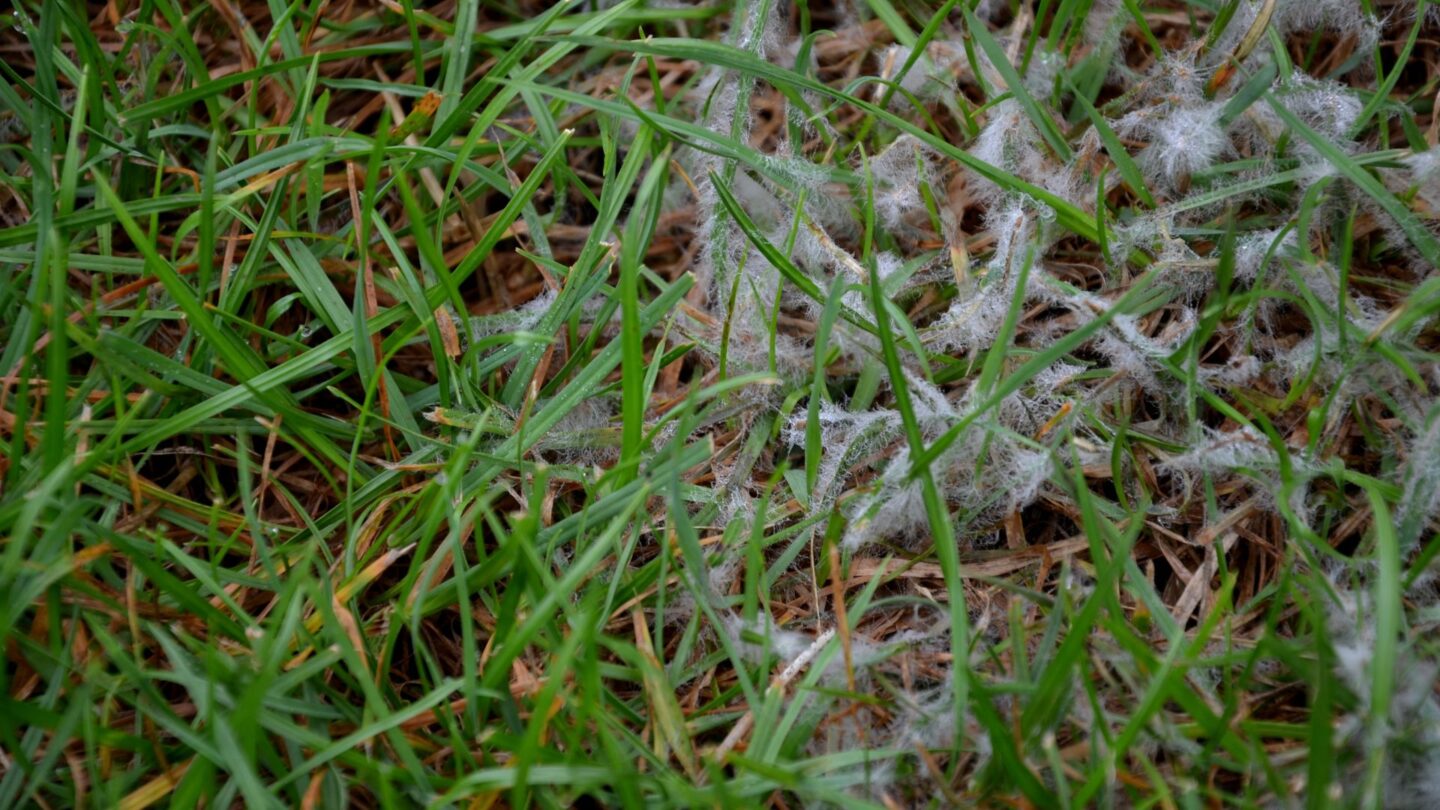
- Snow mold. That’s the matted, grayish-pink stuff you find in March after the snow pulls back, and wet leaves sitting on the crowns all winter are basically an invitation.
- Dead patches where somebody overseeded and the leaves came down before the new grass had a chance. Seedlings just can’t push through.
- Voles and mice tunneling underneath, which brings ticks along for the ride.
So yes, you have to do something with the leaves. A lawn that goes into winter cut to the right height without a blanket on it comes back faster and greener. What you do with them is the part worth thinking about.
Mowing Leaves In Actually Helps (Within Reason)
People who mulch their leaves aren’t just being lazy, as it turns out. Michigan State University’s turf folks ran this test for years back in the ’90s, chewing up an entire fall’s worth of leaves into research plots, and the grass didn’t suffer. Thatch didn’t build up. Soil pH didn’t budge. Extension programs in Minnesota, Connecticut, and plenty of other places have been recommending it ever since.
A few things you get out of it. Leaf bits rot down over the winter and leave organic matter behind, so the soil holds water better. You keep the nitrogen and potassium on your property instead of paying the town to haul it off. Some trials even saw fewer dandelions and less crabgrass the next spring.

Cornell did a four-year version in Westchester County, New York, which honestly isn’t so different from our suburbs. The mulched lawns handled foot traffic and pests better than the raked ones. They also counted ticks, and mowing didn’t affect tick numbers. Worth remembering, because chopped-up leaves down in the grass aren’t really the issue. Deep piles of whole leaves are.
Now, how much is too much? University of Minnesota Extension says you can keep going until about half the lawn is hidden, and after that you should start bagging. UConn is pickier and would rather see no more than about 20% covered after you mow. We land somewhere in between. If you’d like to go deeper on the turf research, we covered it in our post on mulching vs. removal.
Ticks and Fall Leaves
Deer ticks dry out fast. Put one on short, sunny grass, and it won’t last long. Under a few inches of damp leaves, though, it’s cool and humid and protected, and that’s exactly where they wait out the winter. It’s the reason leaf litter shows up on just about every tick-prevention checklist the CDC puts out.
Here’s where a lot of us (we’ve seen it in plenty of yards) go wrong. You rake or blow the whole lawn clean and push everything to the back, right up against the woods or the stone wall. Looks great from the kitchen window. Ticks love it.
There’s actual research on this. A team in Monmouth County, New Jersey set up test plots on regular homeowners’ properties in 2017 and 2018. The spots where leaves had been piled at the woods’ edge ended up two or three times deeper than the natural forest floor, and by spring they had about three times the blacklegged tick nymphs (Journal of Medical Entomology study, via Entomology Today). Nymphs are tiny, about the size of a poppy seed, and they’re behind most Lyme disease cases. Peak season is May into June.
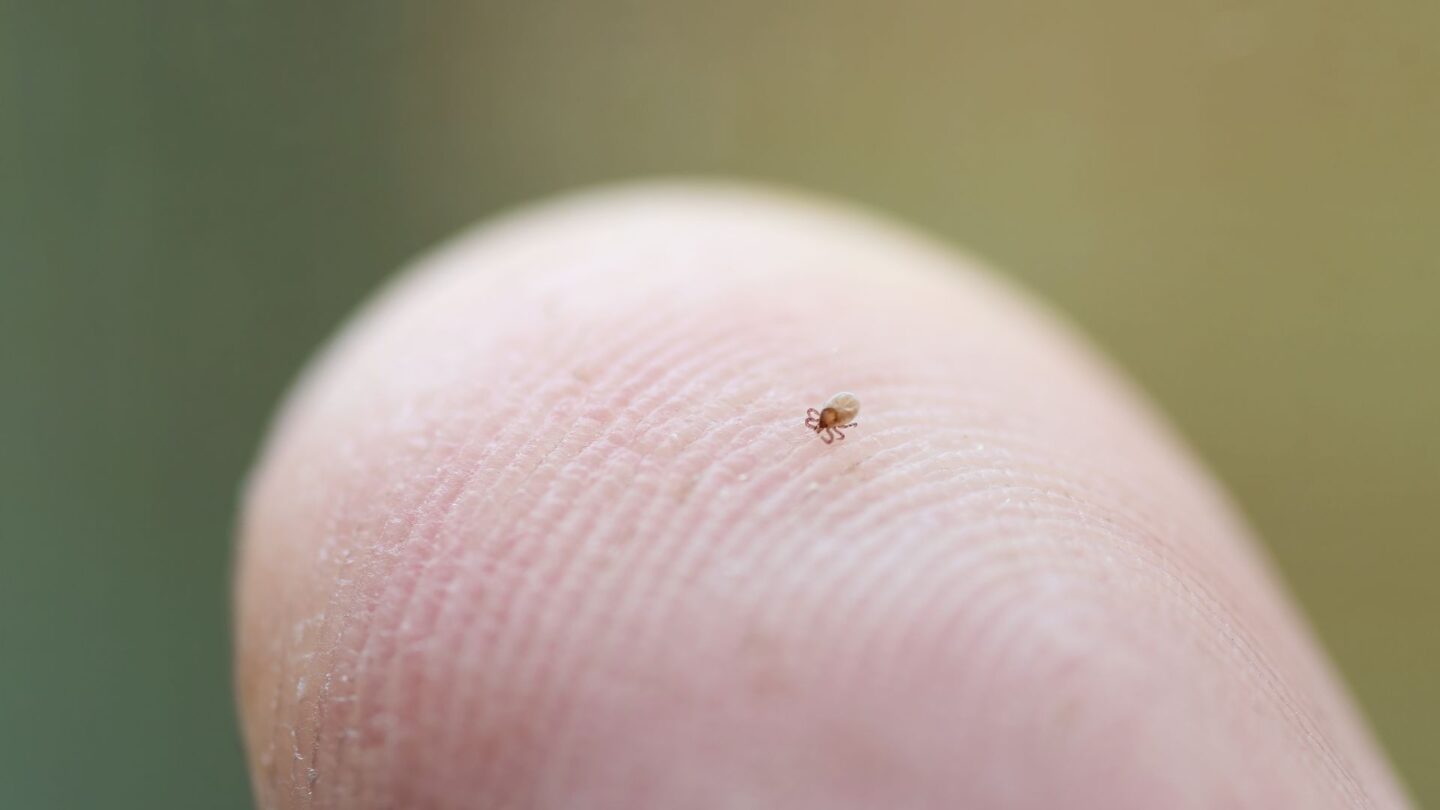
What the researchers suggested is pretty much what we’d tell you anyway. If you get a lot of leaves, get them completely out of the places people use. If you can’t haul it all away, stash the piles somewhere nobody goes. And if you don’t get many leaves to begin with, mowing them in place is fine, since chopped leaves break down quickly and ticks don’t get much out of them.
That woods edge is a big deal in this part of the state. So many lots in Marshfield, Middleborough, Westport, and Carver back up to trees, a bog, or an old stone wall, and the deer and white-footed mice travel that line every night. If you keep one strip clean, make it that one.
Common Mistakes (And What To Do Instead)
| What people do | Better idea | Why? |
| Blow everything to the woodline or stone wall | Bag it, compost it away from the yard, or use town pickup | Those edge piles can triple tick nymphs by spring |
| Leave whole leaves on the lawn till spring | Mow them fine or clear them before the snow sticks | Matted leaves block light and set up snow mold |
| Wait and do one huge cleanup in December | Mow or rake every week to ten days | A couple inches mulches easy, a foot of wet oak doesn’t |
| Mow right after it rains | Wait for a dry afternoon | Wet leaves clump up and clog the deck |
| Keep mulching even when the grass is gone | Bag whatever’s left once you can’t see green | Too much shredded leaf smothers the lawn too |
| Mulch over new seed | Blow leaves off it gently, and often | Baby grass has no reserves to recover |
| Pile leaves by the deck or swing set | Keep those spots bare | That’s where kids and dogs actually pick up ticks |
Partial Cleanup? Sure, Just Do It By Area
For most yards around here, a partial cleanup is the right call. You get the free fertilizer from mulching, and you don’t hand ticks a winter home. It just means deciding based on where the leaves are sitting, not on how much of your Saturday is left.
We like to split a yard into three areas:
Right around the house. Deck, patio, play set, dog run, the walks, the grill, the bed along the foundation. Get these all the way clean, whether that’s a rake, a blower, or a leaf vac. This is where your family spends the most time, so no leaf cover at all.
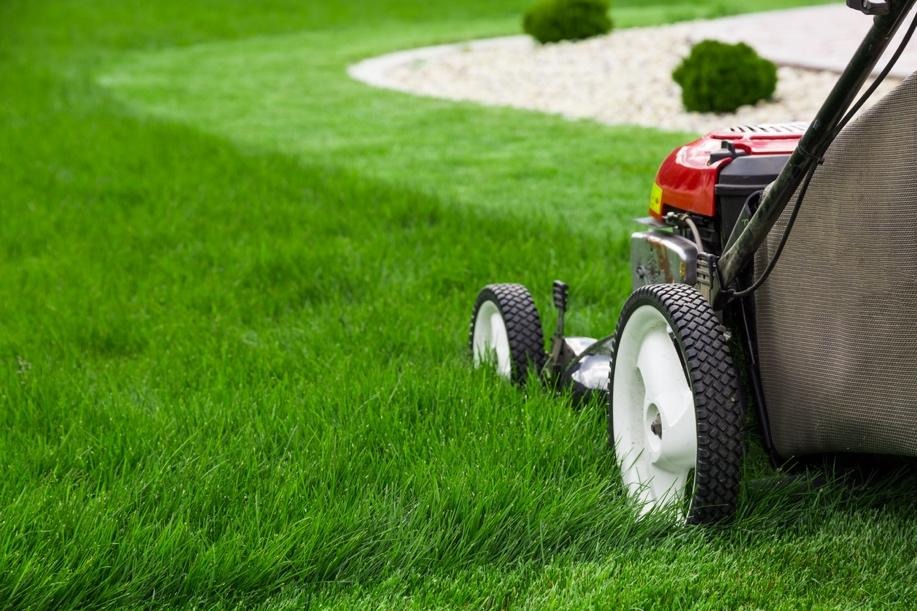
The open lawn. The sunny middle of the yard is where mulching really works. Mow the leaves down to roughly dime-sized pieces and let them sift into the grass. Sun and wind keep this area too dry for ticks, and the lawn gets fed. Just don’t overdo it. Once the green disappears, bag the rest.
The edge. That’s where the lawn runs into woods, brush, a wall, or wetland. Keep at least a 3-foot strip completely clear. The CDC actually suggests putting down a 3-foot band of wood chips or gravel along there to slow ticks crossing into the yard, plus keeping patios and play sets roughly 9 feet back from it. Past that strip, in the woods themselves, the leaves can stay where they fell. Just don’t add more.
And the extras? A covered compost bin in a sunny corner far from the house, your town’s yard waste pickup or transfer station, or shredded and spread thin in garden beds that aren’t next to a door. Anywhere but the woodline.
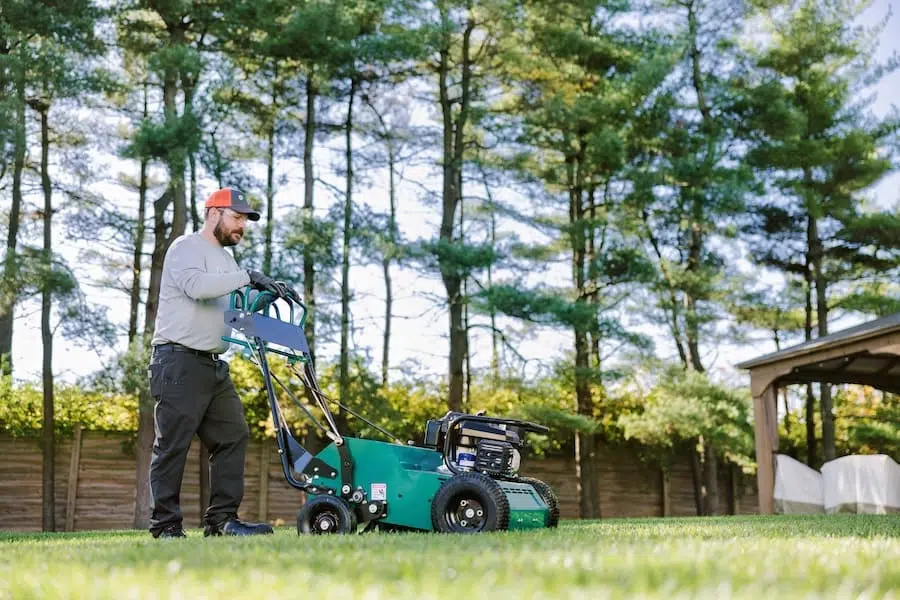
How to mulch leaves with your mower
- Wait until the leaves are dry. Mid-afternoon after the dew’s gone is perfect.
- Sharpen the blade, or swap in a mulching blade if you’ve got one. A dull blade rips leaves instead of chopping them. A mulching kit that closes off the side chute also helps a lot.
- Bump the deck up a notch or two for the first pass and take the bag off.
- Go over it twice, the second time crosswise. You want pieces somewhere around dime-size.
- Look down when you’re done. Plenty of green showing through? You’re good. Mostly brown? Put the bag back on and pick up the extra.
- Do it again every week or so through late October and November.
- Make your last pass once the oaks are finally done, which here usually means late November or the first week of December, and before the snow comes.
If you’re on a lot that’s mostly oak, which describes a good chunk of Duxbury, Norwell and Rochester, plan on extra passes. Oak leaves are leathery and slow to rot, and you’ll probably end up bagging more of them than you would with maples.

Do Leaves Affect Your Lawn And Tick Treatments?
They can. Few people talk about this part.
Start with the lawn. A fall winterizer is supposed to reach the grass and the soil. A light dusting of chopped leaves won’t stop it, but a thick layer of whole ones will catch the product before it ever gets there, and the grass underneath is sitting in the shade when it should be soaking up sun. If you’re on our fall lawn care program, mulching or clearing before your visit is honestly the most helpful thing you can do.
Same story with aeration and overseeding. Seed has to hit dirt, and new grass needs light. On anything seeded this fall, skip the mulching and just keep blowing the leaves off until it fills in.
Tick treatments are a little different. A good tick program targets the places ticks actually hang out: the woodline, stone walls, shrub beds, the leaf litter at the yard’s edge. But spray can only reach so far. If you’ve blown a foot of leaves back there, you’ve basically given them a thick, protected bunker. Keep that edge cleared and the treatment does its job, and there’s a lot less shelter for ticks to come back to.

We suggest pairing smart leaf habits with a tick control program from our sister company, Mosquito Squad of Southeastern Massachusetts. Cleaning up takes away where they live, and treating takes care of the ones already there. You really need both.
Every property’s a little different, so if you’re not sure about timing, ask your tech next time they’re out.
Should You Just Clean Up All the Leaves?
This depends on your yard. Find the one that sounds like yours.
| Your yard | What we’d do |
| A few street trees, open lawn, no woods nearby | Mulch pretty much all of it. Keep patios and walks clear. You may never need a bag. |
| Some trees, brush or a hedge along one side | Mulch the open lawn, clear the brush edge and play area, bag what’s left once the green’s gone. |
| Lots of oak or maple, backs up to woods, a bog or stone wall | Clear the house area and the edge strip completely. Mulch lightly on open lawn. Expect to bag most of it. |
| Kids, dogs, or somebody who’s had Lyme | Lean toward full removal anywhere people go, and get a professional tick program. |
| Overseed this fall | Keep leaves off the new grass, gently and often, until spring. |
If you’re in one of those last two rows, we’d go with the full cleanup in the spaces your family uses. The nutrients from mulching are nice, but a fall feeding makes up for them easily. Ticks in the backyard where your kids play are the bigger problem.
Leaf timing in Southeast Massachusetts
- Early to mid-October. Maples, birch, and ash start coming down. Mulch weekly, and clear the edge strip now while it’s still easy.
- Late October through mid-November. This is a heavy stretch. Mow or bag every 10 days to 1 week, and clear the lawn before any scheduled visit.
- Late November into early December. Oaks finally give up. Do one last cleanup and drop the mower a notch for the final cut.
- Before the first snow that sticks. No whole leaves left lying on the lawn. If snow mold has been a problem in past years, ask us about lawn disease control.
- Winter. Adult deer ticks are out any day it’s above freezing, so a warm January afternoon poking around the leaf pile can still earn you a tick check.
- Early spring. Rake up whatever blew back in, especially along the woods, before the nymphs get going in May.

Leaf Litter Clean Up FAQs
Rake or mulch, which is better? On an open, sunny lawn without a crazy amount of leaves, mulch. It’s better for the grass and quicker. Around play areas, patios, the woods, and new seed, rake them up and get them out.
Can leaves kill grass? A heavy wet layer left for a few weeks sure can. It blocks light and holds moisture right on the plant. Finely chopped leaves that drop down between the blades won’t hurt it.
Do mulched leaves bring in ticks? Not according to the research we’ve seen. Ticks want deep, undisturbed piles of whole leaves, especially in the shade at the edge of the yard. Shredded bits in sunny turf don’t give them much.
Where should raked leaves go? A compost bin away from the house and play areas, yard waste bags for town pickup, or the transfer station. Just not against the woods or the back wall.
How do I know if there’s too much to mulch? Mow, then look. If you can’t see grass through it, bag the extra.
Should I clear leaves before my lawn treatment? Yes, please. Fall applications need to reach the turf and soil, and a thick leaf layer gets in the way.
What about leaves in my garden beds? A light layer is fine and actually helps protect roots. Keep it off the foundation, away from doors and walkways, and don’t let it pile up in beds that run along the woods.
Need A Hand?
Mulch the open lawn, clean up where your family hangs out, keep the woods edge clear, and never pile leaves where ticks can spend the winter. That’s really the whole plan.
For the lawn, Lawn Squad of Southeastern Massachusetts builds every VitaminLawn program around New England grass and the soils we have here. Give us a call at 774-295-1455 or grab a free quote online. For ticks, our sister company Mosquito Squad of Southeastern Mass has been treating yards on the South Coast and South Shore since 2012. You can reach them at (774) 234-4611.
Some local families utilize both, so you can get your grass green and your yard a lot less friendly to ticks.