When Should Katy Homeowners Turn the Sprinklers Down for Winter?
When Should Katy Homeowners Turn the Sprinklers Down for Winter?
Short Answer: Sooner than most people do. Once Katy nights start cooling in fall, St. Augustine slows down and needs far less water than it did in August, yet many sprinkler systems keep running on a summer schedule into December. Here is what we have found works best: switch from a fixed schedule to watering only when the lawn shows it needs it, water in the early morning, use short cycles on heavy clay, turn the system off on freezing nights, and give a dormant lawn an occasional deep watering during long dry spells.
If you are reading this, you may have noticed the sprinklers running on a cool, damp morning and wondered whether the lawn really needs it. In a lot of Katy neighborhoods, the irrigation controller gets set in spring, runs hard all summer, and simply keeps going through fall and into winter because nobody thinks to change it.
That habit costs money on the water bill, and it often costs the lawn too. Too much water in cool weather is one of the most common reasons we see disease in fall and thin, weak grass in spring.
How Water Needs Change in Fall
In the heat of a Katy summer, St. Augustine uses a lot of water, and most lawns need roughly an inch a week from rain and irrigation combined. As temperatures drop, the grass grows more slowly, less water evaporates from the soil, and fall rains pick up some of the work. By late fall the lawn may need a fraction of its summer water, and in many weeks it needs none at all.
Why Overwatering Hurts in Cool Weather
Wet grass in mild fall weather is exactly what large patch needs. This fungal disease shows up as expanding brown circles in St. Augustine and zoysia, and it thrives when blades stay damp for long periods. Constantly wet soil also favors take-all root rot, keeps roots shallow, and on heavy Katy clay it can leave the soil waterlogged for days after a rain.
Read the Lawn, Not the Calendar
Here is what we have found works best. Water when the lawn tells you it needs it. St. Augustine that is short on water shows it. The blades fold or curl lengthwise, the color shifts to a dull, bluish gray, and footprints stay pressed into the grass instead of springing back. If you do not see those signs, the lawn is usually fine.
Switch Off the Fixed Schedule
The simplest change is to move the controller from a fixed schedule to manual, or to cut the run days back sharply. Many homeowners water once a week or less by late fall, and some turn irrigation off for long stretches when rain is normal. If you like the schedule running, adjust it with the seasons rather than leaving summer settings in place.
Water Early in the Morning
When the lawn does need water, run it in the early morning. The grass dries as the day warms up, which shortens the time the blades stay wet. Evening watering leaves the lawn damp all night, which is the condition fall diseases like best.
Use Short Cycles on Clay
Katy clay soaks up water slowly. When a zone runs for a long time all at once, water often runs off into the street before it soaks in. A better approach is to split each watering into two or three shorter cycles with a break in between, so the first round soaks in before the next one starts. You get deeper watering with less waste.
Find Out How Much Your System Puts Out
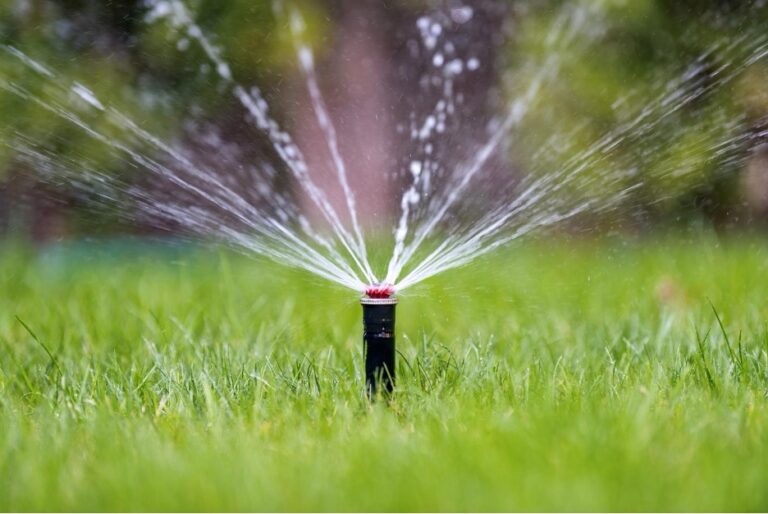
Many people have no idea how much water a zone actually delivers. Set a few empty, straight-sided cans around the lawn, run the zone for fifteen minutes, and measure how much collects. That tells you how long it takes to put down a half inch or an inch, and whether some parts of the yard get far more than others.
Check the Heads While It Is Cool
Fall is a good time to walk the system while it runs. Look for heads that are broken, tilted, blocked by grass, or spraying the driveway instead of the lawn. A single bad head can leave a dry crescent in one spot and a soggy area in another, and both can be mistaken for disease.
Not Every Zone Needs the Same Water
Most yards have zones that behave very differently. A shady backyard under trees dries out slowly in fall and often needs the least water of all. A sunny strip along the driveway or street dries faster because of heat from the concrete. Low spots collect runoff from the rest of the yard. Set each zone on its own, and cut the shady and low zones back first.
Trees and Beds Are a Separate Question
Turning lawn zones down does not mean ignoring everything else. Newly planted trees and shrubs still need regular water through their first year, even in winter dry spells. If your beds share zones with the lawn, check them separately before cutting back, so you do not starve a young tree while saving water on the grass.
Use a Rain or Freeze Sensor
A rain sensor keeps the system from running after a good rain, and many sensors also stop watering when temperatures drop near freezing. If your system has one, make sure it still works. If it does not, adding one is an inexpensive way to stop watering on days the lawn clearly does not need it. Also follow any watering schedule your city or water district sets.
Freezing Nights
On nights when a hard freeze is forecast, turn the system off. Sprinklers running on a freezing morning coat sidewalks and streets with ice and can damage the system. Cover or wrap any exposed backflow preventer. If the lawn is dry heading into a hard freeze, a thorough watering a day or two ahead, during the warm part of the day, actually helps protect it.
Dormant Lawns Still Need Some Water
Bermuda and zoysia go fully dormant in winter, and St. Augustine slows way down. Dormant grass is not dead, and its roots still need some moisture. If several weeks go by with little or no rain, a deep watering keeps the roots alive and ready for spring. You do not need to keep it green, just keep it from drying out completely.
What It Means for Your Water Bill
The savings can be real. A system that keeps running summer cycles through fall can put down far more water than the lawn can use. Cutting back to as-needed watering in fall and winter often means many weeks with little or no irrigation, which shows up on the bill and in a healthier lawn.
Common Mistakes
A few patterns show up every fall. Leaving the summer schedule running into December. Watering in the evening. Running long single cycles that send water down the gutter. Ignoring a broken head for months. And letting the system run on a freezing morning.
What a Well Watered Lawn Looks Like in Spring
Imagine this. It is March. Neighbors who watered all winter are dealing with brown circles and thin spots along their sidewalks. Your lawn greens up evenly as it warms, because it was watered only when it needed it, early in the morning, in short cycles that soaked into the clay, and the system stayed off on cold nights.
What to Do Next
This month, switch the controller to manual or cut the run days back, and water only when the lawn shows signs of needing it. Water early in the morning, split long runs into short cycles, check your heads and your rain sensor, and turn the system off on freezing nights. During long dry spells in winter, give the lawn an occasional deep watering.
If you would rather have someone else keep an eye on your lawn through winter, we are here for that. Lawn Squad of Katy is coming in 2027 to serve homeowners across Katy and the surrounding communities. Visit lawnsquad.com to request a free quote. Our VitaminLawn program is built for the grass types, soils, and weather patterns we deal with here.
Here is what to expect. We will look at your grass type, how your lawn came through the fall, and any trouble spots, then explain what we would do this winter and what comes next in spring. If your lawn does not need a treatment right now, we will tell you that honestly.