Pine Needles, Oak Leaves, and Your Lawn: Fall Cleanup for Cypress & Tomball Yards

Pine Needles, Oak Leaves, and Your Lawn: Fall Cleanup for Cypress & Tomball Yards
Short Answer: Leaves and pine needles left to pile up on a Cypress or Tomball lawn through fall and winter block light, hold moisture against the grass, and set up disease, especially in shady yards. Here is what we have found works best: clear the lawn every week or two during heavy drop, mulch light layers of leaves with the mower, rake or blow pine needles and heavy layers off the grass, reuse them as mulch in beds, and keep them out of the street. Pine needles do very little to change soil pH, so the real problem is smothering, not acidity.
If you are reading this, you probably have a yard that turns a little more brown every week this time of year, and not because the grass is dying. Wooded neighborhoods across Cypress, Tomball, Magnolia, and Pinehurst have tall pines, oaks, sweetgums, and magnolias, and from fall into winter they shed onto everything below them.
It is tempting to wait and clean it all up in one big weekend in January. For the lawn underneath, that wait is the problem. A few minutes every week or two through the season does far more good than one big cleanup at the end.
What Falls and When
Different trees drop at different times, which is why cleanup can feel endless. Pines shed their older needles mostly in fall. Hardwoods like water oaks, red oaks, sweetgums, and pecans drop leaves through late fall and early winter. Live oaks are the exception. They hold most of their leaves through winter and shed heavily in late winter and early spring. Southern magnolias drop their tough, leathery leaves a few at a time, with more coming down in spring.
Why Piles Hurt the Lawn
A thick layer of leaves or needles works like a tarp. It blocks sunlight the grass needs, even in winter when warm-season grass is slowed down. It traps moisture against the blades, which favors fungal diseases like large patch in St. Augustine and zoysia. And over several weeks it can smother the grass underneath, leaving thin, yellow patches when the layer is finally removed.
Shady yards suffer the most, because the grass there is already working with less light.
The Pine Needle and pH Myth
We hear this one a lot. Pine needles are slightly acidic, but a layer of them on the lawn does very little to change the pH of the soil underneath. If grass under your pines is struggling, the usual causes are shade, root competition, and the needles physically covering the grass, not acid soil. If you want to know your soil’s pH for certain, a soil test will tell you.
Mulch Light Layers With the Mower
Here is what we have found works best for leaves. If you can still see grass through the layer, run the mower over it at your normal height. A mulching mower chops leaves into small pieces that settle down between the blades and break down over time. Two passes may be needed on a heavier layer. This saves time and returns some organic matter to the soil.
Once the layer gets thick enough to hide the grass, or the leaves are wet and matted, it is time to bag or rake instead.
Rake or Blow Pine Needles
Pine needles do not mulch well. They are long, tough, and slow to break down, and they tend to slide off a mower deck rather than chop up. For needles, a rake or a leaf blower is the better tool. Try to clear them every week or two during the heaviest drop, before they build into a mat.
Reuse What You Collect
Pine needles make an excellent mulch for beds, often sold as pine straw. Spread them a few inches deep around shrubs and under trees, kept back from trunks and stems. Shredded leaves are great in beds too, or in a compost pile. There is no need to bag and haul away what can protect your beds through winter.
Rake or Blower?
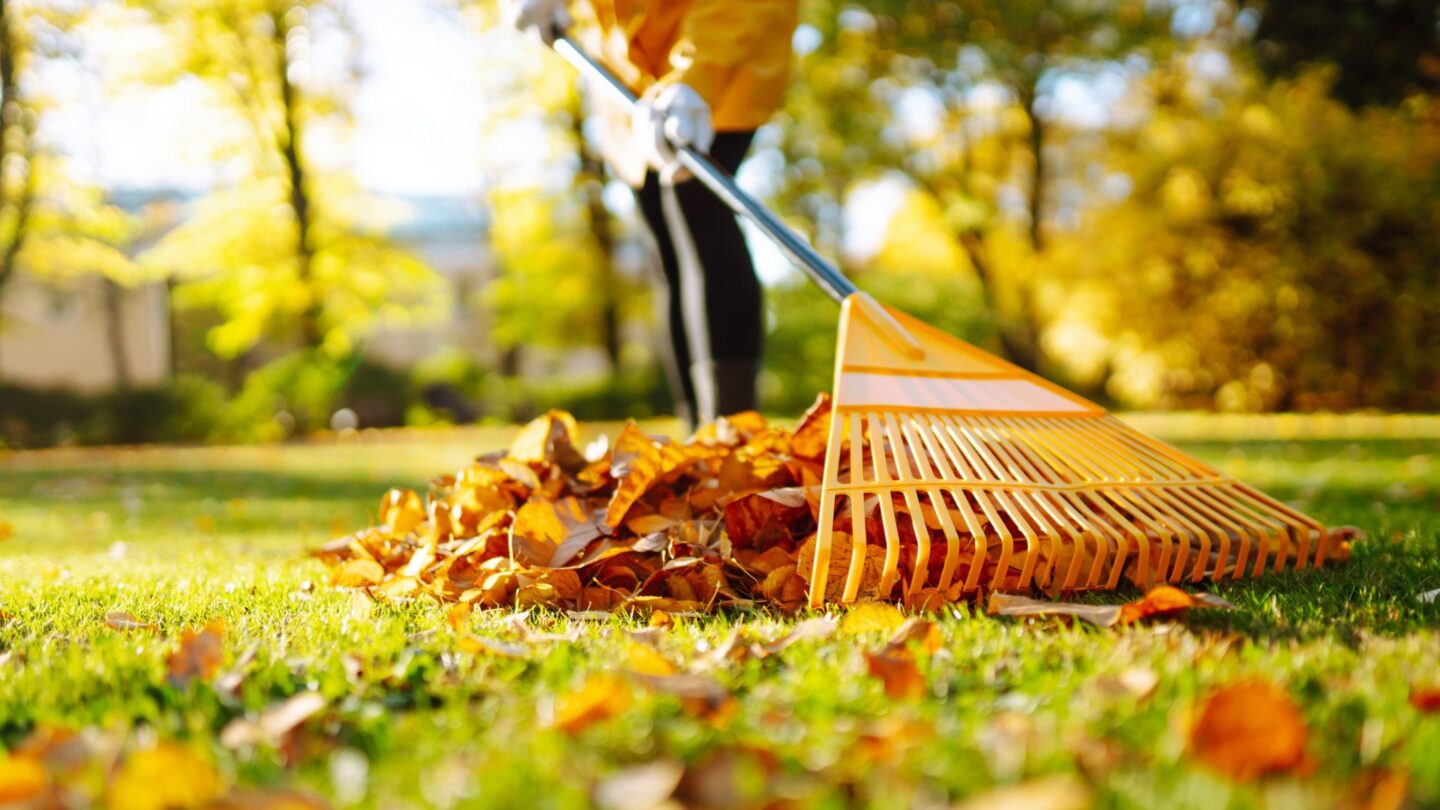
Both work. A leaf blower is faster on large, open lawns and dry leaves, and it is good for clearing needles out of St. Augustine without pulling at the runners. A rake gives you more control in beds and corners and handles wet, matted leaves better. A flexible leaf rake is gentler on the lawn than a stiff garden rake, which can tear up grass that is already slowed down for winter.
Leaf Piles Hide Winter Weeds
A covered lawn is also a lawn you cannot see. Winter weeds start sprouting as temperatures cool, and under a layer of leaves they go unnoticed until spring, when they are larger and harder to control. Clearing the lawn regularly lets you spot weeds early and keeps any weed treatments in contact with the plants they are meant to reach.
Keep It Out of the Street
Blowing leaves and needles into the street feels like the end of the job, but it is not where they stay. The next rain washes them into storm drains, where they clog inlets and carry nutrients into the creeks and bayous of the area, including Cypress Creek and Spring Creek. Blow toward beds, a tarp, or a pile you can collect instead.
Check the Gutters Too
Needles and leaves clog gutters fast in a wooded yard. A clogged gutter overflows in the next heavy rain and dumps water onto the same strip of lawn every time, or a downspout backs up and soaks one corner of the yard. Clearing gutters in late fall prevents soggy spots that invite disease.
Do Not Forget the Shady Corners
Leaves blow into corners, along fences, and against the house, where they pile deepest and stay wet the longest. Those are often the same shaded spots where grass already struggles. Give them extra attention during cleanup.
Spring Brings a Second Round
If you have live oaks, plan on a second cleanup in late winter and early spring when they drop. That timing matters, because it lines up with when warm-season grass is trying to green up. A mat of oak leaves in March can delay green-up in the areas underneath, so keep clearing through spring too.
What About Leaves in Beds?
Leaves that land in beds can usually stay there as a natural mulch, as long as they are not smothering small plants or piling against stems. In beds, a light layer protects soil, holds moisture, and breaks down into organic matter over time.
Common Mistakes
A few patterns show up every fall. Waiting until January to clear months of needles. Running a mower over a thick, wet mat of leaves. Blowing everything into the street. Adding lime to undo pine needles without testing the soil first. And forgetting the second round when live oaks drop in spring.
What a Clean Yard Looks Like in Spring
Imagine this. It is March. On streets lined with pines and oaks, some lawns are uncovering yellow, thin patches where needles sat all winter. Yours greens up evenly, because the leaves were mulched while they were light, the needles were cleared every couple of weeks and reused in the beds, and nothing sat on the grass long enough to smother it.
What to Do Next
This fall, clear the lawn every week or two while trees are dropping. Mulch light layers of leaves with the mower, rake or blow pine needles and heavy layers off the grass, and reuse them as mulch in beds. Keep everything out of the street, clean the gutters, and plan a second round of cleanup for live oaks in spring.
If you would rather have someone else keep an eye on your lawn through winter, we are here for that. Lawn Squad of Cypress & Tomball is coming in 2027 to serve homeowners across Cypress, Tomball, Hockley, Magnolia, Pinehurst, and northwest Houston. Visit lawnsquad.com to request a free quote. Our VitaminLawn program is built for the grass types, soils, and weather patterns we deal with here.
Here is what to expect. We will look at your grass type, how your lawn came through the fall, and any trouble spots, then explain what we would do this winter and what comes next in spring. If your lawn does not need a treatment right now, we will tell you that honestly.