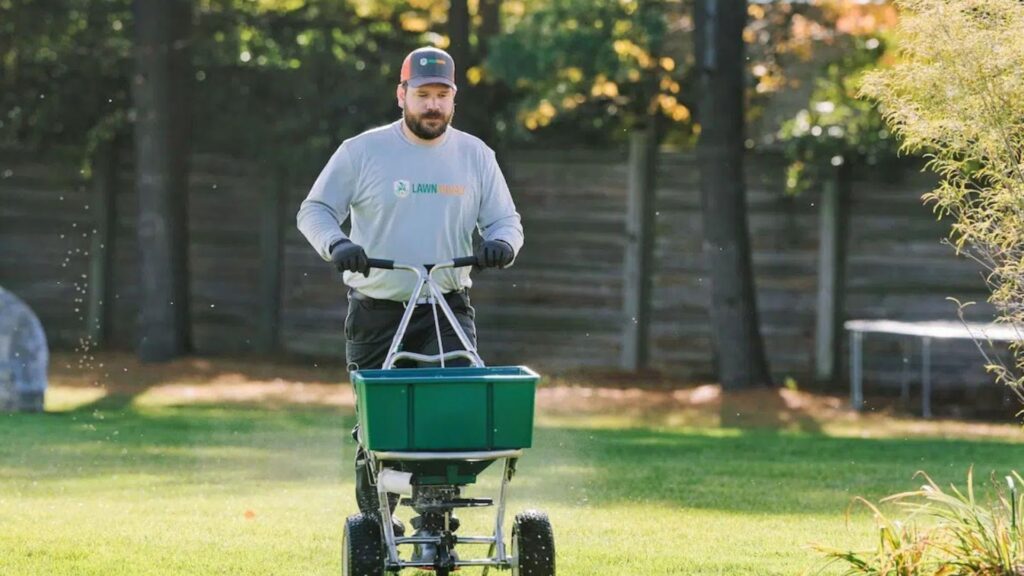
We get the call a few times a week. Someone in Bridgewater or Dartmouth or Plymouth searched for a lawn spray service, found us, and wants to know if we’ll come out and spray the yard.
The honest answer is yes; we spray. Just not for everything.

That surprises some people. Plenty of companies around here run every visit out of a tank on the back of the truck, and it’s a fair question to ask why we don’t. Here’s our reasoning. If you’re shopping for yard spraying in Southeastern Massachusetts, this article should help you figure out what your lawn needs before you sign up with anyone, including us.
What an “All Spray” Lawn Spray Service Means
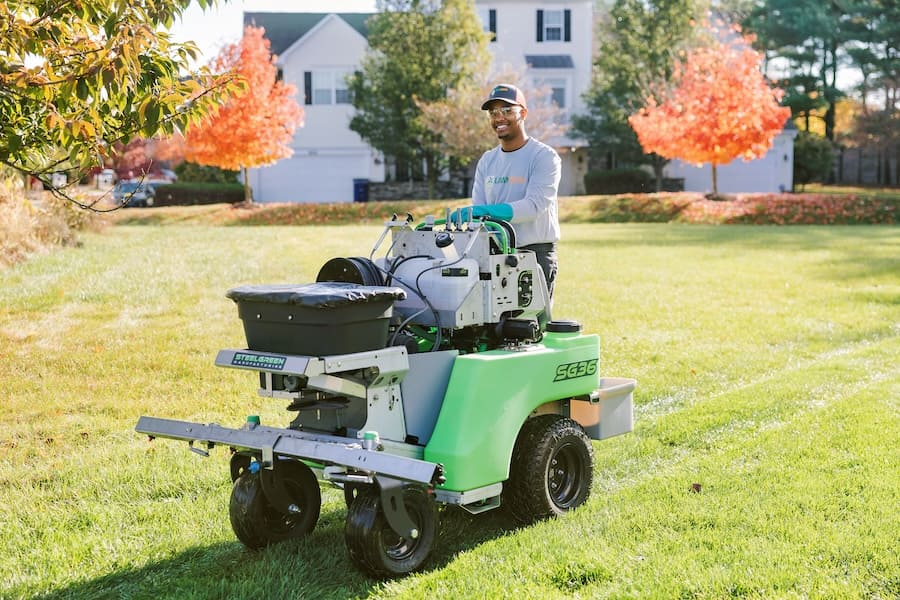
An all-spray program does exactly what it sounds like. Fertilizer, weed control, insect control, and whatever else is on the schedule get mixed into water and sprayed across the whole lawn with a hose. The tech walks the yard, rolls up the hose, and heads to the next house.
We understand the appeal. It’s quick. You see a crew on the lawn, and it feels like something is happening. Weeds curl up within a week or two, which is satisfying to watch. And because a truck can hit many houses in a day, the price per visit can look attractive.
The trouble is that speed and a green flush after each visit aren’t the same thing as a healthy lawn. In our corner of the state, the soil and water make that gap wider than it would be in many other places.
Our Soil Doesn’t Hold Onto Much
If you’ve ever dug a garden bed in Carver, Wareham, or Plymouth, you already know. A lot of Southeastern Massachusetts sits on sandy ground that the glaciers left behind. It’s the same soil that made this area perfect for cranberry bogs. It drains fast, which is great after a nor’easter and not so great when you’re trying to feed grass.
Liquid fertilizer from a typical lawn spray service is mostly quick-release nitrogen. The grass greens up fast, then the effect fades in a few weeks. On heavy soil, that’s manageable. On sand, a good share of it washes down past the roots with the next couple of soaking rains before the lawn ever uses it. You paid for that nitrogen, and the grass got a fraction of it.
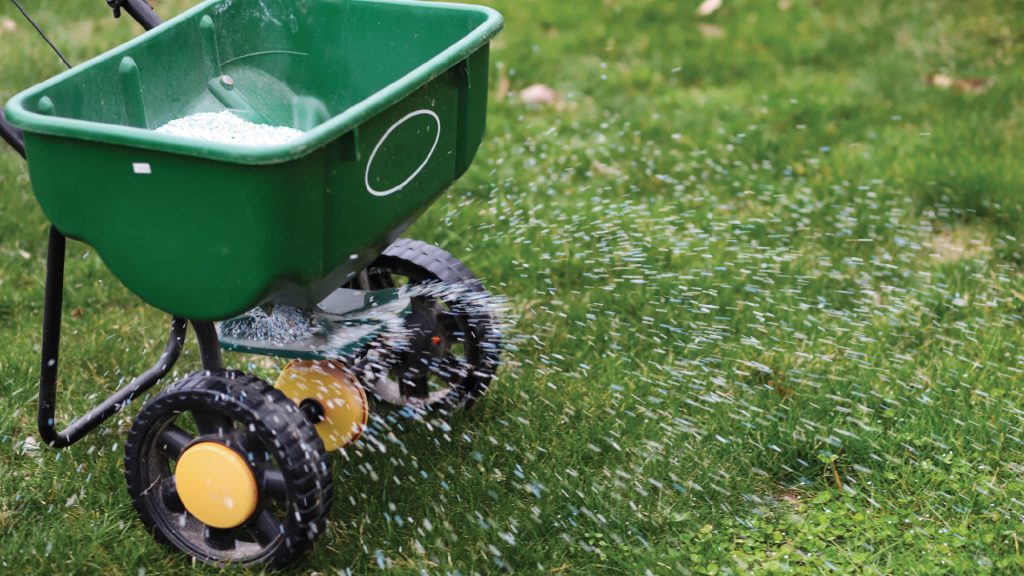
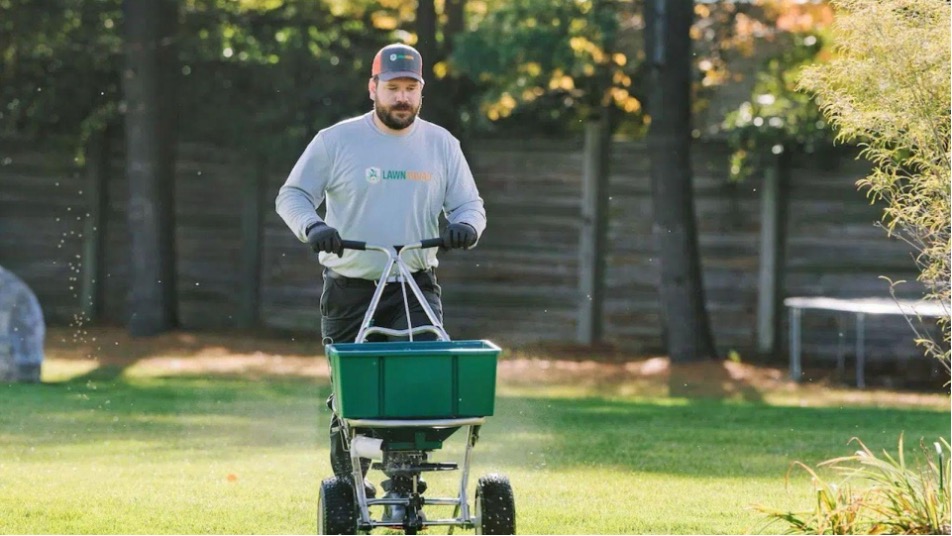
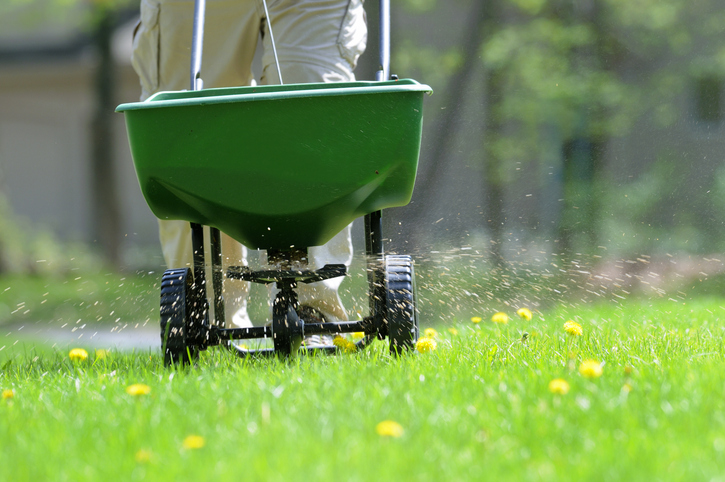
A slow-release granular fertilizer works differently. The granules break down gradually with moisture and soil temperature, so the lawn gets a steady meal over weeks instead of one big gulp. For sandy yards, that’s the difference between feeding the grass and feeding the groundwater.

Also read: What are the Differences In Liquid Versus Granular Fertilization – Which Is Best For My Lawn?
The Lime Problem
Then there’s pH. Soil across most of our service area runs acidic, often well below the 6.0 to 7.0 range, where cool-season grasses like fescue do their best work. When the soil is that sour, grass can’t take up nutrients properly, no matter how much fertilizer goes down. Moss and some weeds, on the other hand, are perfectly happy.

Fixing it takes limestone, and it takes real volume. You’re talking pounds per thousand square feet, spread and worked in over time. A spray tank just can’t carry enough lime to move the needle in a meaningful way. That’s why a spring limestone application is part of our program offerings and why an all-spray approach tends to leave acidic lawns stuck right where they started.
Where the Runoff Goes Around Here
Think about how much water is in Southeastern Massachusetts. Buzzards Bay, the Taunton River, the North and South Rivers, Assawompset, and the Lakeville ponds, a cranberry bog around every corner, and a private well in half the backyards in Rochester and Middleboro. Whatever doesn’t stay in the root zone ends up somewhere, and around here, that somewhere is usually water we swim in, fish in, or drink.
Massachusetts takes this seriously. The state’s plant nutrient regulations apply to homeowners and lawn pros alike. Phosphorus can only go down when a soil test shows the lawn needs it or when you’re seeding or repairing turf. No fertilizer at all between December 1 and March 1, none on frozen or saturated ground, and there are required setbacks from streams, ponds, and wetlands.
Any responsible company follows those rules, sprayer or not. Our point is simpler. On fast-draining sand near all this water, it makes sense to use products that stay put and release slowly, and to put down only what the lawn will use. Blanket spraying the whole property every visit, whether the lawn needs it or not, runs the other way.
One more local wrinkle. If you live near the shore in Marshfield, Duxbury, Westport or Mattapoisett, you know the wind hardly ever quits. Liquid spray drifts on a breezy day. Granular product is far less likely to end up in your neighbor’s vegetable garden or on the side of your car.
To Be Fair, Spraying Has Its Place
We’re not anti-spray. That would be silly. Liquids are the right tool for some jobs, and we use them.
Broadleaf weeds are the best example. Dandelions, clover, plantain, and ground ivy respond well to a liquid weed control, and the smart way to apply it is to spot treat the weeds you can see instead of soaking every square foot of healthy grass. Less product, same result.

Surface insects, some soil conditioners, and our spring liquid aeration also go down as liquids because that’s how they work best. The question isn’t spray or no spray. It’s whether each treatment is going down in the form that suits it, or whether everything is getting sprayed because that’s what the truck is set up to do.
What We Do Instead
Our VitaminLawn program mixes granular and liquid treatments based on what each one does best and what time of year it is. Here’s roughly how a season plays out on a typical South Shore or South Coast lawn.
Early spring starts with crabgrass prevention and feedings to wake the lawn up. On our Pro and Elite plans, this is also when the limestone goes down to start chipping away at that acidic soil, along with a liquid aeration treatment to loosen things up.
Late spring into summer is about fertilization and weed control that holds up through the heat, spot treating weeds as they show up, and grub prevention before the beetles lay eggs. Anyone who’s watched skunks tear up a lawn in August knows why that one matters.

Fall is the most important stretch of the year for cool-season grass. A root stimulant and a fall winterizer help the lawn store up energy for the cold months. On our Elite plan, we also do core aeration and overseeding, “pulling plugs” of soil so air, water, and seed can get down where they’re needed. There’s no way to spray that. It’s a mechanical process with some good seed, and it does more to thicken a tired lawn than almost anything else.
Every plan comes with unlimited service calls. If something concerning pops up between visits, we come back out.
Questions Worth Asking Any Yard Spraying Company
Whoever you end up hiring, a few questions will tell you a lot about how they think.
- Is your fertilizer slow-release or quick-release? If they don’t know, that tells you something, too.
- Do you test or adjust soil pH, and how? Ask how much lime goes down per visit.
- Do you spray weeds across the whole lawn every time, or spot treat what’s there?
- What happens on a windy day or when heavy rain is in the forecast?
- Is core aeration or overseeding part of the plan?
A good company will have straight answers to every one of those. You shouldn’t need a turf degree to understand them.
The Bottom Line for Southeastern Massachusetts Lawns
If you searched for a lawn-spray service, you probably want a thick, green lawn without spending your weekends on it. That’s a great goal. We just think the road there looks a little different on sandy, acidic soil surrounded by rivers, ponds, and the ocean.
Lawn Squad of Southeastern Massachusetts is a local, family-owned team. The owners grew up here, their kids play ball here, and we care about what goes into this ground as much as you do. If you’d like a straight answer about what your lawn needs, give us a call at 774.295.1455 or request a free lawn service quote.