Short Answer: Fall is the best time of year to control perennial broadleaf weeds, and it is not close. In autumn, plants like dandelion, clover, plantain, and ground ivy move sugars downward into their root systems to store for winter. A systemic herbicide applied then gets carried down the same pathway and reaches the roots, which is what actually kills a perennial rather than just burning off its top. The same application in spring, when the plant is pushing growth upward, often removes the visible leaves and leaves the root alive to return. The main constraint is that herbicide and new grass seed do not mix.
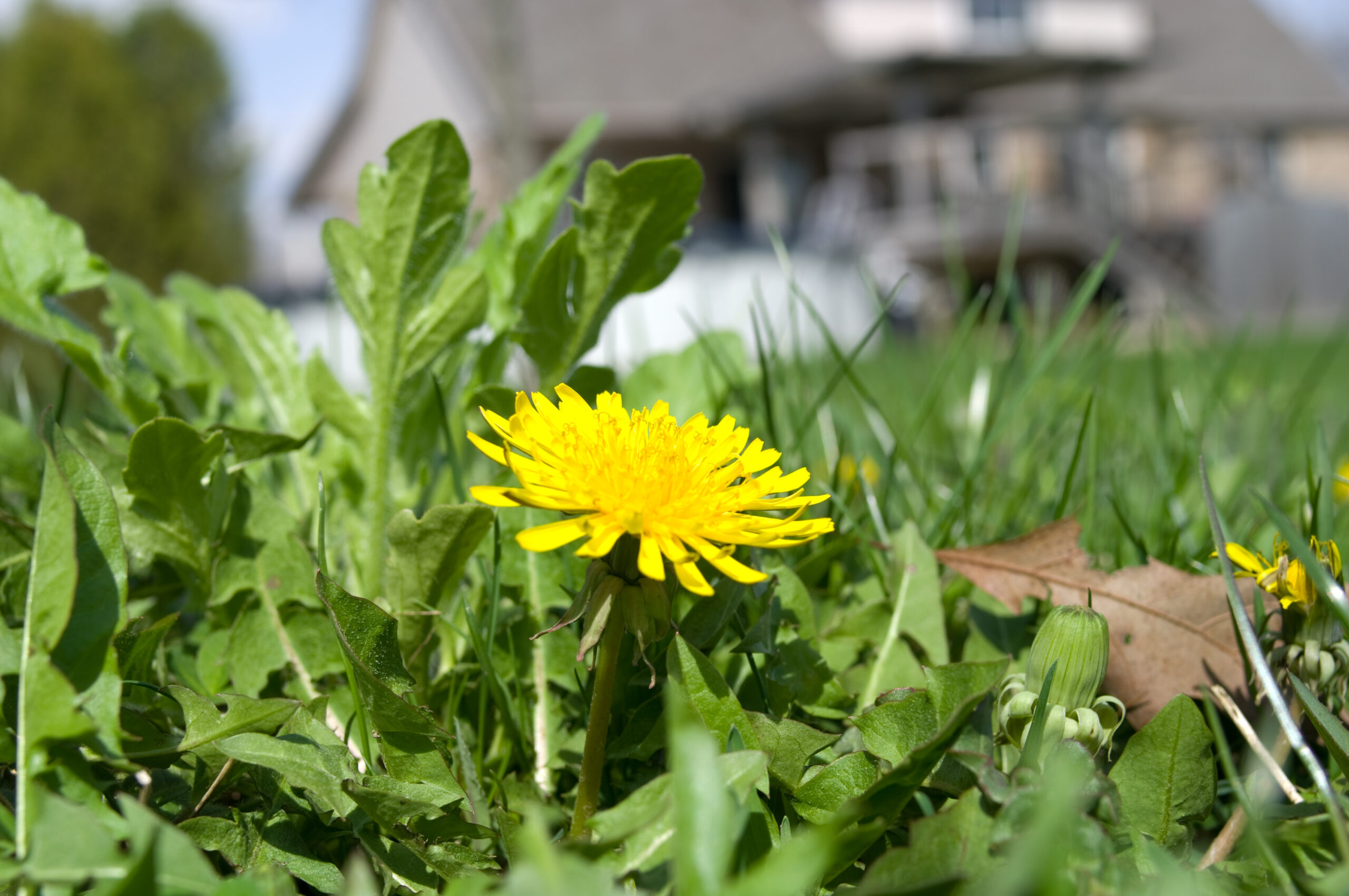
Most homeowners fight weeds in spring, because spring is when weeds are most visible and most irritating. It is an understandable instinct and it is working against the plant rather than with it.
Fall applications on perennial broadleaf weeds work better for a straightforward biological reason, and understanding it changes how you plan the year.
What the Plant Is Doing in Autumn
A perennial weed survives winter in its root system. To do that it spends autumn moving carbohydrates produced in the leaves downward into roots, taproots, stolons, and rhizomes for storage. That flow is strongly downward for several weeks in fall.
Systemic herbicides move within the plant along the same pathways that carry sugars. Apply one while the plant is actively translocating downward and the product goes where the sugars go, which is straight into the storage tissue that would otherwise regenerate the plant next spring.
In spring the flow runs the other way. The plant is pulling stored energy up and pushing new top growth, so a systemic product applied then tends to concentrate in leaves and stems. You often get an impressive result within a week, the weed browns and collapses, and then it returns from an untouched taproot a few weeks later. That cycle is why some homeowners conclude the product does not work.
The practical consequence is that one well timed fall application often accomplishes what three spring applications do not.
The Weeds This Actually Targets
Fall timing matters most for perennials, the ones that come back from roots year after year.
Dandelion is the obvious one, with a taproot that can run well below where any spring treatment reaches. Autumn is when that taproot is most vulnerable.
White clover spreads by stolons across the surface and reestablishes readily from any fragment left alive, which is why partial control fails so visibly.
Ground ivy, widely known as creeping charlie, is among the most difficult lawn weeds there is, forming dense mats with square stems and rooting at the nodes. It is close to the definitive case for fall treatment, since spring applications on ground ivy are famously disappointing.
Plantain, wild violet, and thistle round out the usual list. Wild violet in particular is stubborn enough that fall timing is less an optimization than a requirement.
Summer annuals like crabgrass are a different matter entirely. They are finishing their life cycle and dying on their own as frost approaches, so spending money to kill them in fall accomplishes nothing. Crabgrass is a pre-emergent problem next spring, not a post-emergent problem now.
Timing Within the Season
There is a window, and it has an end.
The weeds need to be actively growing and carrying enough green leaf area to absorb the product. Applications made after a hard freeze, once the plant has been knocked back and shut down, do very little, because there is neither uptake nor transport happening.
The workable window is generally from the point where temperatures moderate in early fall through to a couple of weeks before your first expected hard freeze. Daytime temperatures in the range of roughly sixty to eighty degrees are ideal for uptake.
Avoid applying during drought stress. A plant conserving water has closed down and is not actively transporting much of anything, so absorption drops sharply. If conditions have been dry, water first and let the weeds resume active growth before treating.
Rainfall matters after application too. Most products want a rain free period of several hours to be absorbed, and a downpour an hour later mostly washes your application into the storm drain.
The Seeding Conflict, Again
This is the same collision that complicates fall pre-emergent, and it needs planning rather than improvisation.
Broadleaf herbicides do not distinguish between a dandelion seedling and a grass seedling. Most product labels specify a waiting period both before and after seeding, commonly in the range of several weeks on each side, and those intervals exist because ignoring them kills new grass.
That leaves a real sequencing problem, since the ideal window for overseeding and the ideal window for fall broadleaf control substantially overlap. There are a few honest ways through it.
Treat weeds first, wait out the label interval, then seed, which works if you start early enough in the season. Or seed first, let the new grass establish through several mowings, then treat late in the window if conditions still allow. Or split the property, treating areas that do not need seed and seeding areas that do.
What does not work is doing both in the same week and hoping. Read the specific label rather than relying on a general rule, because intervals vary meaningfully between products.
Spot Treating Versus Blanket Applications
Scattered weeds in an otherwise decent lawn do not justify treating the whole property.
Spot treatment uses far less product, costs less, and limits exposure to areas that need it. It is the right default for a lawn with isolated dandelions or a few clover patches.
Blanket application makes sense when weed coverage is high enough that spot treating becomes impractical, or when the weeds are mat forming species like ground ivy or clover where the boundary between weed and turf is not distinct.
Either way, the thing that reduces next year’s application is turf density. Weeds establish in gaps. A thick, well fed lawn leaves very few gaps, which is why fertilization and overseeding do more for long term weed control than herbicide does.
Reading a Herbicide Label Without Reading All of It
Labels are long, and four sections carry nearly all the practical information.
The weeds controlled list tells you whether the product actually targets what you have. Many broadleaf products control dandelion easily and ground ivy poorly, and the label will say so rather than leaving you to discover it.
The turf tolerance list matters just as much. Some products injure St. Augustine or centipede at rates that bermuda tolerates without trouble. Applying a product not labeled for your grass is how people damage a lawn while trying to improve it.
The seeding interval, usually stated as a waiting period before and after overseeding, is the one that governs your fall sequencing.
And the application conditions section gives the temperature range, the rain free period required, and any restriction on applying to stressed turf. Most disappointing results trace back to one of those three being ignored rather than to the product being wrong.
Managing Expectations on Timing
Fall herbicide applications look slower than spring ones, and that is the mechanism working rather than failing.
In spring, a systemic product concentrated in the leaves produces dramatic visible wilting within days. In fall, the product is moving downward into roots, so top growth may look largely unchanged for a week or two while the meaningful work happens out of sight.
Some weeds will still be standing when the first frost arrives, and the honest test of a fall application is not what the lawn looks like in November. It is how few of those weeds come back in April.
What to Do Next
Walk the lawn and identify what you actually have, separating perennials that will return from annuals that are dying anyway. Treating the second group is money spent on plants that were leaving regardless.
Then decide the seeding question before you buy any product, because the label interval will dictate your sequence whether you plan for it or not.
If you would rather have someone sort out the order of operations, find your local Lawn Squad at lawnsquad.com or call 833-816-7508 for a free quote. Every Lawn Squad location is independently owned and operated, and each one builds its VitaminLawn fertilization and weed control program around the grass type, soil, and climate where you actually live, not around a national average.
Here is what to expect from us. We identify the weed before selecting a product, we sequence herbicide and seeding around each other rather than against each other, and we will tell you when the real answer is a thicker lawn rather than another application.