Blackland Clay: Why Your North Dallas Lawn Cracks, Yellows, and Resists Fertilizer
Short Answer: Blackland Prairie clay does three things that work against a lawn. It shrinks and cracks dramatically when dry and swells when wet, which tears roots and swallows granular fertilizer into cracks below the root zone. It compacts severely, especially after construction equipment worked it wet, which caps root depth. And it runs alkaline, commonly above a pH of 7.5, which locks iron away from roots and produces the pale yellow color so many well fed lawns here show. Aeration, foliar iron, and organic matter are the responses that actually work.
The dark heavy soil across North Dallas and up through Collin County is some of the most agriculturally productive ground in Texas, which is why this was prairie farmland before it was subdivisions. It is also, for a lawn, one of the more difficult soils to work with in the country.
If you have watched cracks open in your yard wide enough to lose a golf ball, or fed your lawn faithfully and gotten back a pale yellow green, or noticed water sheeting toward the street instead of soaking in, all three have the same source. Here is what blackland clay actually does and what genuinely helps.
The Shrink and Swell Problem
Blackland clay is what soil scientists call a vertisol, and its defining property is that it changes volume dramatically with moisture. The clay minerals in it absorb water between their layers, swelling substantially when wet, and release it when dry, shrinking and pulling apart.
You have seen the result. In a dry North Texas August, cracks open across the yard, sometimes an inch or more wide and running a foot or more deep. Homeowners around here are so used to this that it stops registering as unusual, but very few soils in the country do it to this degree.
For a lawn, it causes real problems. Roots growing across a crack get torn as the soil pulls apart. Water and fertilizer applied to cracked soil fall straight down into the fissures and end up well below the root zone, where shallow roots cannot retrieve them. And when the soil swells again after rain, it closes around roots with considerable force.
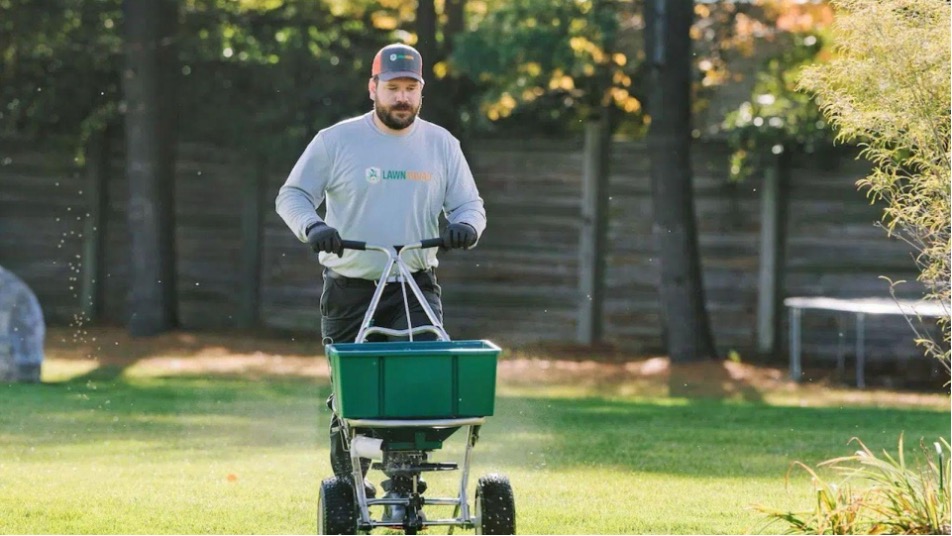
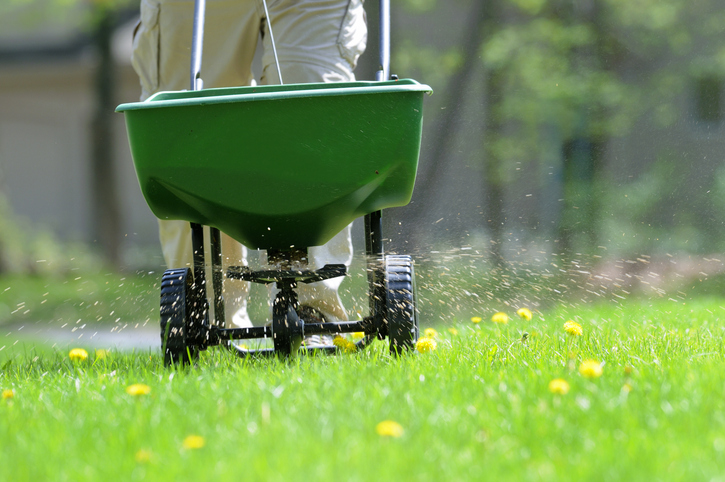
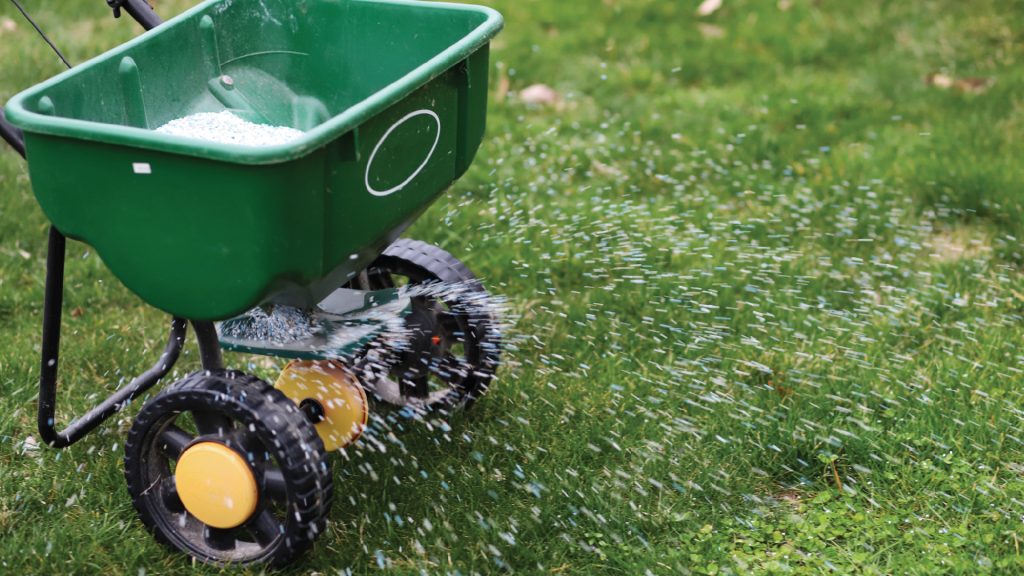
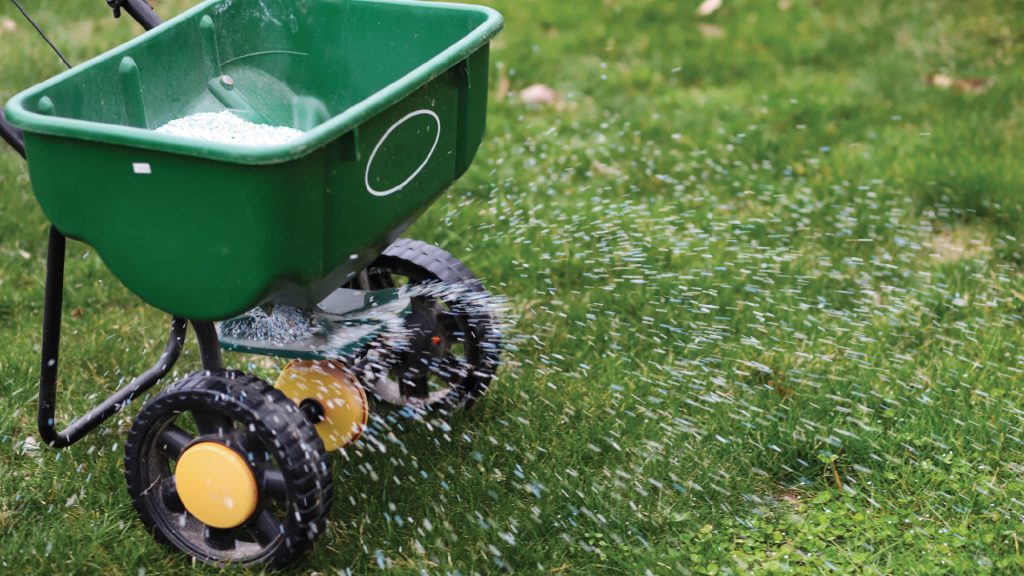
The practical response is straightforward. Water the lawn a day before a granular application if the clay has cracked open, so the cracks close and the product stays in the root zone. That single step changes the result of an application more than most homeowners would guess.
The Compaction Problem
Clay compacts more readily than any other soil texture, because the particles are extremely fine and flat and pack together with very little pore space. Pore space is what roots, water, and air actually move through.
Across North Dallas this is compounded by how recently much of the area was built. Heavy equipment works these sites for months, frequently when the clay is wet, which is when it compresses most severely. A thin layer of topsoil and sod goes over the top, the lawn looks finished on closing day, and two or three years later it begins thinning as roots hit that layer and stop.
A lawn with roots confined to three inches has almost no drought tolerance in a Texas summer and can only reach a fraction of what you apply. Water runs across a compacted surface rather than soaking in, taking dissolved nutrients toward the storm drain.
The test takes two minutes. Push a six inch screwdriver into the soil a day or two after rain, when the ground is moist but not saturated. If you have to lean on it, that resistance is exactly what roots are meeting. Core aeration is the response, and on clay it is annual maintenance rather than a one time repair, because the soil closes back up within a season.
The Alkalinity Problem
Blackland clay is calcareous, meaning it contains free calcium carbonate, and that pushes soil pH upward. Readings in the high sevens are routine across our area and above eight is not unusual.
Soil pH governs which nutrients are chemically available to roots. Above roughly 7.5, iron reacts with other soil elements and forms compounds roots cannot absorb. The iron is physically present and chemically unavailable. Since iron is required to build chlorophyll, the plant cannot produce green color regardless of how much nitrogen is supplied.
That is the explanation for the most common complaint we hear across North Dallas, which is a lawn that stays pale despite regular feeding. It is not hunger and it is not a bad product. It is soil chemistry.
The sign to look for is specific. Iron deficiency produces yellowing between the veins of the blade while the veins themselves stay green, showing on newest growth first. Nitrogen deficiency yellows the whole blade uniformly and shows on older growth first. A lawn that needs mowing on schedule but looks pale is almost always an iron problem.
Why Adding Nitrogen Makes It Worse
Worth stating plainly because the instinct is so strong. Nitrogen drives the plant to produce new leaf tissue, and new tissue requires iron to make chlorophyll. If iron is unavailable, you have produced more tissue competing for the same limited supply, and lawns here frequently look paler two weeks after a nitrogen application for exactly that reason.
There are secondary costs too. Excess nitrogen in fall produces soft tissue heading toward our November frost, and on St. Augustine it feeds large patch. So the response to a yellow lawn can produce a lawn that is soft, disease prone, and still yellow.
The response that works is foliar iron, sprayed onto the leaf where it is absorbed directly and bypasses soil chemistry entirely. Chelated iron products, where the iron is bound to an organic molecule that keeps it available, outperform simple iron sulfate in our conditions.
Can You Fix the pH
Homeowners ask constantly and deserve a straight answer, which is mostly no, not meaningfully and not permanently.
Elemental sulfur does lower soil pH and on mildly alkaline soil it can help. The difficulty here is that the alkalinity comes from calcium carbonate distributed throughout a deep clay profile, and it buffers relentlessly. You can shift the top few inches temporarily and the soil pulls it back. On blackland clay, attempting to correct pH is closer to bailing than to repairing.
What does help modestly is building organic matter, which improves nutrient holding, water infiltration, and buffering in the root zone. Topdressing with quality compost, returning clippings with a mulching mower rather than bagging them, and core aeration to work that material down all contribute over years.
The realistic framing is management rather than correction. Grass grows well on this soil. It simply needs iron supplied in a form the soil cannot intercept, and it needs the physical problems addressed separately.
The One Genuine Advantage
Worth ending on a real positive, because blackland clay is not all difficulty.
Clay holds nutrients extremely well. Unlike the sandy soils along the Gulf and the Atlantic, where nitrogen leaches through quickly and demands frequent light feeding, what you apply here tends to stay in the root zone and remain available once it gets there.
That is a meaningful efficiency advantage. Lawns here can generally go longer between applications than a coastal lawn can, and a well timed application does more work. The catch is entirely in the getting it there, which is why aeration and closing those summer cracks matter as much as the product itself.
What to Do Next
Run the screwdriver test this week in several spots, including a traffic lane and an untouched corner. If it fights you, aeration belongs in your plan and it is an annual item on this soil rather than a one time project.
Look closely at a yellow blade and check whether the veins are still green. If they are, that is iron, and buying more nitrogen will make the color worse rather than better.
Get a soil test. On blackland clay the pH reading is the single most useful number about your property, and it costs a fraction of one application. Before your next granular application, water the day before if the soil has cracked open.
If you would rather have someone assess the compaction, the chemistry, and the schedule together, we are here for that. Visit lawnsquad.com to find Lawn Squad of North Dallas-Prosper and request a free evaluation. Our VitaminLawn program is built around the blackland clay we actually work with here.