The differences between liquid and granular fertilizers are a hot topic of debate over which is best for achieving your long-term lawn care goals. Which type of feeding is better depends solely on your needs. For example, liquid fertilizer provides instant greening of the turf but has the potential to burn in warmer conditions. It may turn yellow and lose its efficacy quickly, leaving you with a yellow lawn while waiting for your next scheduled treatment.
Lawn Squad of Southeastern Massachusetts talks about this with customers all the time. People want to see their lawn look good — that’s the whole point. But “looking good the day after we treat it” and “looking good all summer” are two very different things, and the fertilizer we choose is a big part of why.

So, What’s Actually in Liquid Fertilizer?
It’s a nutrient solution — already dissolved, ready to absorb. When it hits your lawn, the grass pulls it in fast, through the roots, and sometimes right through the blade itself. You really can see greening within a day or two. That’s not marketing spin, it’s just how the chemistry works.
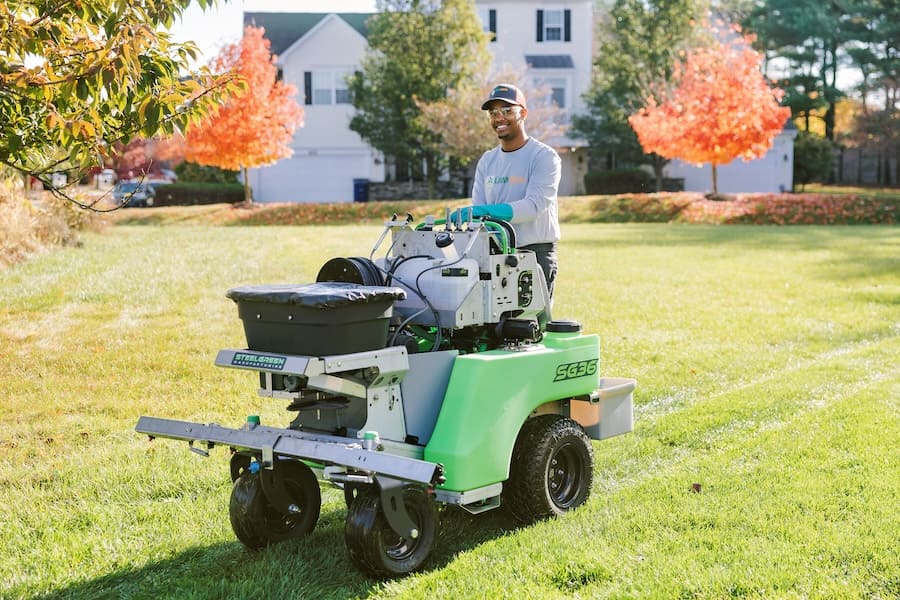
And honestly, that speed is why many lawn care companies default to it. It’s easier to apply from a tank, easier to calibrate, and it gives homeowners a visible result right after the visit. From a business standpoint, that “wow factor” is appealing.
The problem is what happens next.
That Green Doesn’t Last
Here’s the thing about liquid fertilizer — because it absorbs so fast, it also runs out fast. A week or two after treatment, the nutrients are essentially gone. The lawn starts to fade. Sometimes it goes back to the same color it was before, sometimes it looks more yellow because now you’re comparing it to how green it just was.
We’ve had customers call us confused, thinking something was wrong with their lawn. They’d had it treated, and it looked great, and then suddenly it was yellowing. No disease, no drought issue — just liquid fertilizer wearing off between visits.
That cycle — green after treatment, fading before the next one — is a common experience with liquid programs. If a company runs a tight schedule, it can be managed. But any delay from weather, staffing, or scheduling, and the lawn starts to show it.
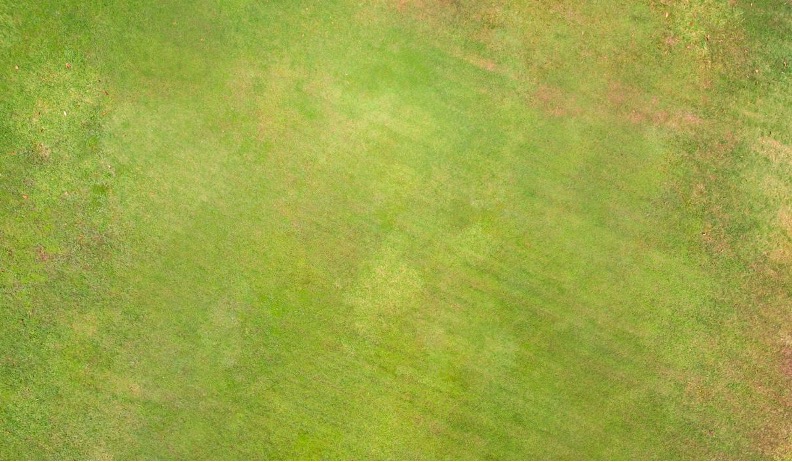
A few other things worth knowing about liquid:
- Swirl marks. Spray application isn’t always perfectly even. You can end up with arc or swirl patterns in the lawn where coverage was heavier or lighter. Not a great look, and it sticks around until the next treatment.
- Burn potential. High nutrient concentration hitting the grass all at once — especially in warm weather — can scorch the turf. It happens more often than people realize.
- You need it more often. To keep that green going, liquid needs to go down every few weeks. More applications mean higher costs and more opportunities for something to go wrong.
Why We Use Granular
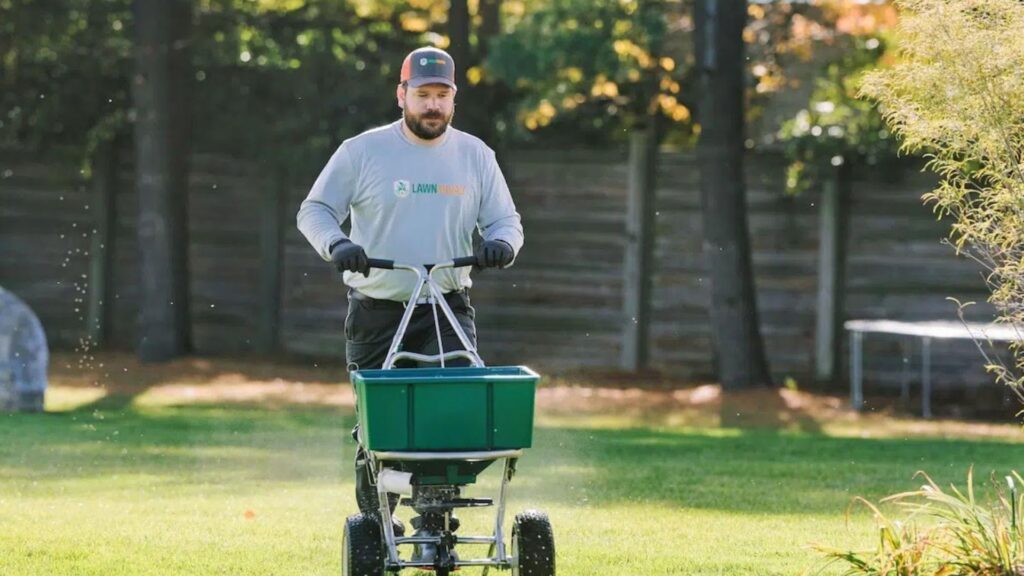
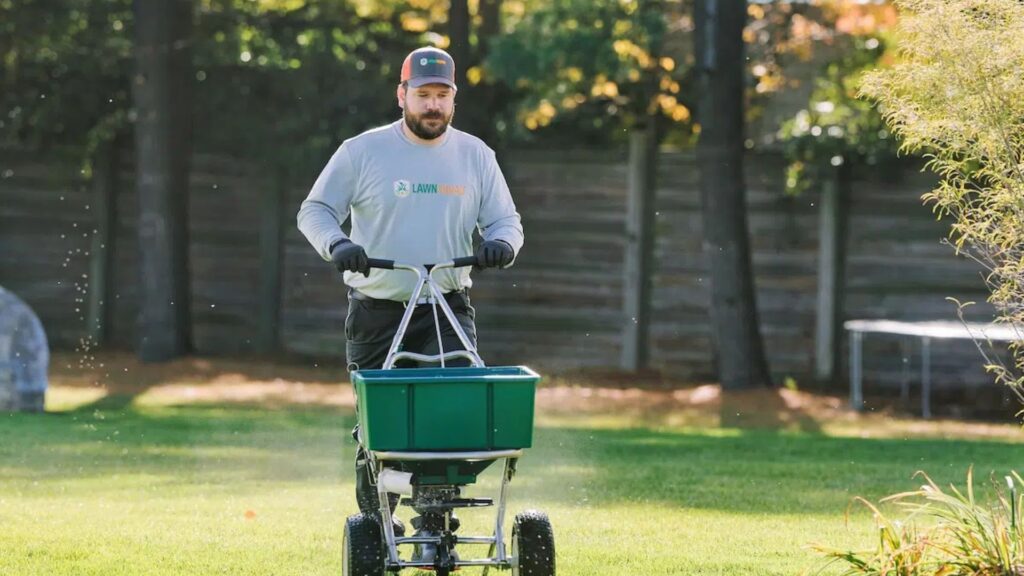
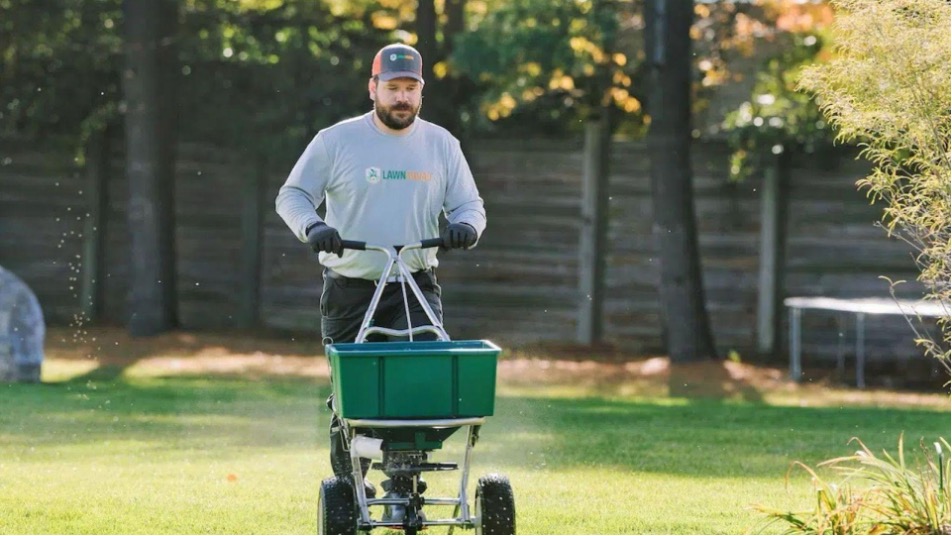
We use granular fertilizer as part of our VitaminLawn comprehensive lawn service. It comes down to one thing: we’d rather your lawn look consistently good than look amazing for a few days and then fade.
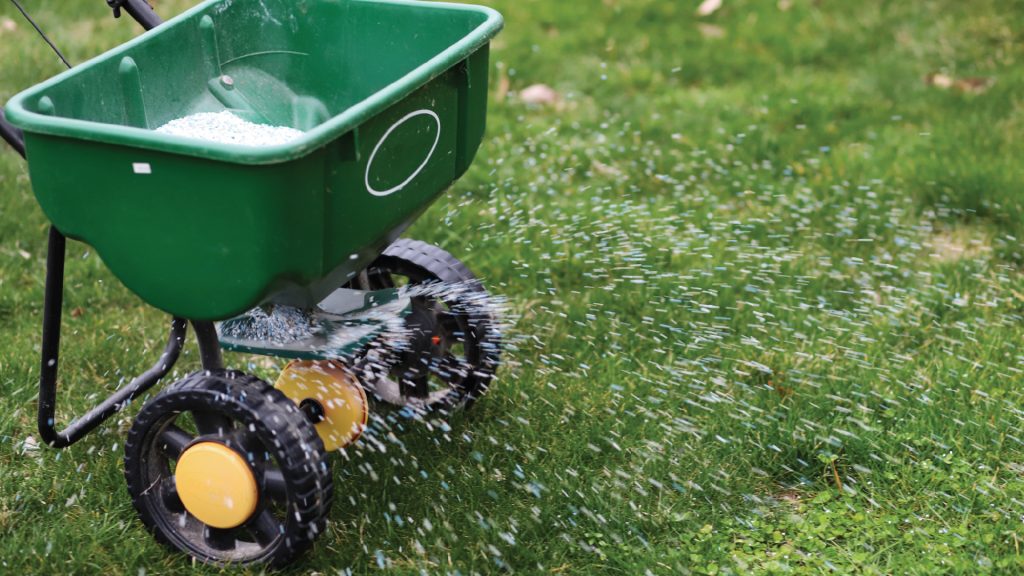
Granular works differently from the ground up. The pellets go down across your lawn, and once moisture hits them, they start breaking down slowly — over weeks, not days. Soil temperature plays a role, and so does microbial activity. It’s not a flood of nutrients all at once. It’s a steady, measured release that keeps feeding your grass in between our visits.
That’s what “slow-release” or “time-release” literally means in practice. Your lawn gets what it needs as it needs it, not everything upfront.
Why Slow-Release Matters
The most obvious thing is that your lawn doesn’t go through that boom-and-bust pattern. There’s no spike of green followed by a fade. Color stays more even. Growth stays more even. During summer heat, especially, that matters — a sudden surge of fast nitrogen pushes rapid blade growth, which stresses the turf and makes it more vulnerable to disease and insects. Granular fertilizer’s steady pace sidesteps that entirely.
Coverage is cleaner, too. Spreading granular with calibrated equipment means consistent distribution without the swirl patterns you can get from spray application.
Burn risk is also significantly lower. The nutrients reach the root zone gradually, at a rate the grass can use. We’re not overwhelming it.
One more thing people don’t think about: rain. If it rains after a liquid application — before the turf has had time to absorb it — you lose effectiveness. That treatment essentially washes away. Granular is already on the ground in solid form. Rain activates it. It’s a meaningful difference, especially in Southeastern Massachusetts, where the weather doesn’t always cooperate.
Read more @ What’s The Best Fertilizer For My Lawn In Massachusetts?
The One Honest Downside
We’re not going to pretend granular is perfect in every way. It isn’t.
If you treat your lawn today with granular, you’re not going to walk outside tomorrow and see a dramatic difference. It takes 5 to 7 days for the green to really start to show, and even then, it’s a gradual deepening rather than a sudden pop. This gradual feeding also supports the overall health of your turf, not solely for immediate aesthetics.
If someone has a party this weekend and needs the lawn to look great by Saturday, liquid might be a better one-time fix. We get that.
But if the goal is a lawn that holds up through spring, summer, and into fall — one that your neighbors notice, not just on treatment day but consistently — granular is the stronger foundation. Our goal isn’t to impress you the afternoon we leave your driveway. It’s to make sure your lawn looks good the following Monday and the Monday after that.
What This Looks Like in Southeastern Massachusetts
Lawns around here deal with a real mix of conditions — cold, wet springs, humid and often brutal summers, and unpredictable stretches in between. In towns like Plymouth, Hingham, Marshfield, New Bedford, and Attleboro, the grass undergoes a lot of wear and tear over a single season.
A fertilizer approach that spikes and crashes isn’t built for that. Granular slow release holds up through the swings. It keeps working through the weeks between our visits, and it doesn’t leave your lawn looking depleted while you wait for the next scheduled treatment.
That quality and consistency are what we’re after — and it’s what our VitaminLawn program is built around.

Thinking About Making a Switch?
If your current lawn care provider uses liquid fertilizer, there’s a good chance you’ve seen this pattern already — great results right after a treatment, then a gradual fade before the next visit. That’s not your lawn failing. It’s the program.
Lawn Squad of Southeastern Massachusetts builds our fertilization around granular, time-release feeding because we think your lawn should look good all season, not just on treatment day.

Lawn Squad of Southeastern Massachusetts is locally operated and serves the South Shore, Greater New Bedford, Plymouth, Taunton, Attleboro, and surrounding communities. No hidden fees. Satisfaction guaranteed.
FAQ’s Granular VS Liquid Fertilization:
Q: What is the difference between liquid and granular fertilizer?
Liquid fertilizer is a nutrient solution sprayed directly onto your lawn that absorbs quickly — often within 24–48 hours. Granular fertilizer comes in small pellets that are spread across the lawn and break down slowly over several weeks once activated by moisture. The main difference is speed versus longevity.
Q: Why does my lawn turn yellow after a liquid fertilizer treatment?
That yellowing is one of the most common complaints with liquid fertilizer programs. Because liquid nutrients absorb so quickly, they also run out quickly — usually within one to two weeks. Once the nutrients are depleted, the lawn begins to fade. It’s not a sign of disease or drought; it’s simply the fertilizer losing its efficacy before the next scheduled treatment.
Q: Can liquid fertilizer burn my lawn?
It can, yes. Because liquid fertilizer delivers a high concentration of nutrients all at once, over-application or application during hot weather increases the risk of scorching the turf. Granular fertilizer releases nutrients gradually, which significantly reduces the chance of burn under normal conditions.
Q: What are the swirl marks I sometimes see on lawns after fertilizer treatment?
Those arc or swirl patterns are a telltale sign of liquid fertilizer application. They happen when spray coverage isn’t perfectly even — some areas receive more than others. The uneven feeding shows up as visible patterns in the grass. Granular fertilizer, spread with calibrated equipment, distributes nutrients more uniformly and avoids this issue.
Q: How long does granular fertilizer last compared to liquid?
Granular slow-release fertilizer typically feeds your lawn for 6–8 weeks after application. Liquid fertilizer, by comparison, is usually effective for only 1–2 weeks before it needs to be reapplied. This means fewer applications are needed, with more granular, more consistent results between professional visits.
Q: What happens if it rains after a fertilizer treatment?
The answer depends on which type was used. If liquid fertilizer is applied and rain hits before the grass has absorbed it, the nutrients can wash away — reducing the effectiveness of that treatment. Granular fertilizer benefits from rain; moisture activates the breakdown process and helps drive nutrients into the soil.
Q: Why does Lawn Squad use granular fertilizer instead of liquid?
We use granular slow-release fertilizer because our goal is a lawn that looks consistently good all season — not just on the day we treat it. Granular keeps feeding your lawn between our visits, avoids the boom-and-bust green-then-yellow cycle, and carries a much lower risk of burn or uneven coverage.
Q: Is granular fertilizer better for lawns in southeastern Massachusetts?
For the type of seasonal conditions we see here — cool springs, hot humid summers, and unpredictable weather — granular slow-release fertilizer holds up better. It handles the temperature swings, keeps working between treatments, and doesn’t leave your lawn looking faded while you wait for the next visit.
Q: How do I know which fertilizer program is right for my lawn?
If your primary goal is long-term health, even color, and consistent results throughout the season, a granular slow-release program is the stronger choice. If you need a quick green-up for a specific event or short-term situation, liquid can serve as a temporary fix. For most homeowners, granular is the better foundation for a healthy lawn year-round.