
Short Answer: Spring is when warm-season grasses in Birmingham (Bermuda, zoysia, centipede) break dormancy and rebuild after winter, and the decisions you make from mid-March through May set the trajectory for the entire year. Get the pre-emergent window right, feed the lawn at green-up (not before), stay ahead of fire ants, and watch for early disease pressure, and you will coast through our hot, humid summer with a lawn that holds up. Miss this window, and you will be fighting crabgrass, large patch, and thinning Bermuda from June through September.
You step out onto your deck one morning in early April and take a look at the yard. The Bermuda is about half green, half tan. There’s a single purple henbit plant blooming near the fence line and a trail of winter weeds along the edge of the driveway. Maybe a few fire ant mounds have popped up in the sunny spots. And you’re thinking: “This is about when I should probably do something, right?”
Yes. And the something you do (or don’t do) in April and May matters more than anything else you’ll do all year. Here’s why Birmingham springs are uniquely important, and what the highest-leverage actions actually are.
What’s Happening Underground Right Now
Birmingham’s warm-season grasses spend the winter in true dormancy. The top growth browns out, but the rhizomes and stolons underground stay alive, waiting for consistent soil temperatures around 65 degrees to trigger green-up.
In a typical Birmingham year, that trigger point arrives somewhere between late March and mid-April depending on elevation and how much sun your lawn gets. Mountain Brook lawns tucked in under mature trees tend to green up a week or two later than open Hoover lawns with southern exposure.
Here is the part most homeowners miss. At green-up, your lawn is using stored carbohydrate reserves to push new top growth. It is at its weakest point of the entire year. Everything you do (or don’t do) in the next six weeks either supports that recovery or drains it.
The Pre-Emergent Window Is Narrower Than You Think
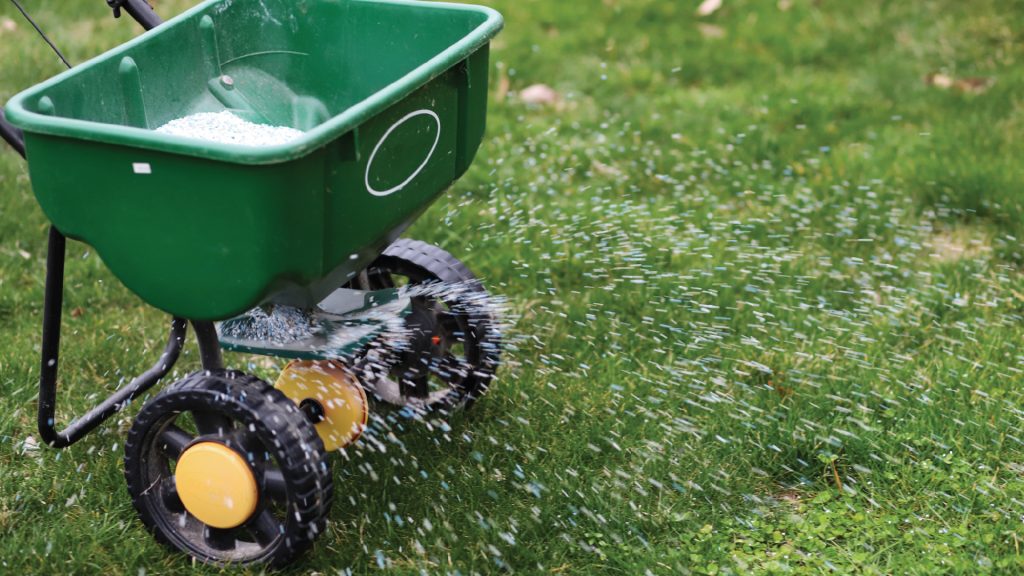
Crabgrass, goosegrass, and annual grasses germinate when soil temperatures hit 55 degrees consistently. In Birmingham, that is typically late February to early March for the first application, with a second application in April to keep protection in place through the long germination window our climate creates.
If you didn’t get a pre-emergent down in February, April is your last real opportunity, and it needs to happen by mid-month. Apply too late and the weeds are already germinated, which means pre-emergent does nothing and you’re switching to post-emergent products that are harsher on your warm-season grass during green-up.
This is the single biggest timing mistake we see in Birmingham. Homeowners wait until they see crabgrass to act, but by then you are weeks past the window when prevention works.
Green-Up Feeding: Timing Beats Quantity
Once your lawn is actively growing (not just showing green hints, but genuinely pushing new blades), it is time for the first spring fertilizer application.
The mistake we see constantly in Birmingham: homeowners feeding before green-up. Putting nitrogen on a dormant or semi-dormant lawn does nothing for the grass and feeds winter weeds instead. Wait until the lawn is 70 to 80 percent green and actively growing.
When you do feed, match the product to your grass type:
- Bermuda: loves nitrogen at green-up, responds strongly, can take higher rates
- Zoysia: moderate nitrogen, spoon-fed in smaller amounts. Heavy spring nitrogen increases large patch risk.
- Centipede: very light nitrogen, centipede is notorious for declining if overfed. A low-rate balanced product is usually safer.
- Fescue (shaded areas): light feeding, as the grass is already transitioning toward summer stress.
Fire Ants: The Birmingham Spring Reality
Fire ants in Birmingham are not an if-question. They are a when-question, and spring is when the mounds explode.
What happens: once soil temperatures rise, colonies that overwintered start producing workers and expanding their mounds. By late April and early May, a lawn that had three visible mounds in February might have 20. New colonies (from mating flights) also establish in spring.
The most efficient approach is a broadcast bait application across the whole lawn in spring, which takes out existing colonies over two to four weeks and prevents new ones from establishing. Spot-treating individual mounds with insecticide works on what you can see but misses the colonies you haven’t found yet.
Early Disease Pressure Starts Now
Large patch on zoysia and centipede, take-all root rot on Bermuda, and brown patch on shaded fescue all start showing in April in Birmingham. By the time you see a full-sized disease patch, the fungus has been active underground for two to six weeks.
This is why preventive disease programs in spring save so much money compared to curative applications in summer. Treating a quarter-acre of Bermuda preventively costs a fraction of replacing failed sections of lawn in July.
What Happens If You Skip Spring
Here is the honest picture of a Birmingham lawn that misses its spring window:
- By mid-June: crabgrass and goosegrass filling in thin spots and competing with the Bermuda
- By late June: large patch or take-all root rot visible as persistent brown or slow-green areas
- By July: fire ant activity now at peak, dogs and kids avoiding certain areas of the yard
- By August: the lawn is patchy, you’re watering more, mowing harder, and the grass is fighting for every blade
Compare that to a lawn that got the April and May right: pre-emergent holding, fertility dialed in for the grass type, fire ants suppressed, disease pressure monitored. That lawn coasts into summer instead of collapsing into it.
What to Do Next
Spring in Birmingham is a tight window but a forgiving one if you act on time. If you want a team that knows exactly when to apply what on your specific grass type and soil, we’re here.
Lawn Squad of Birmingham serves Acton, Alabaster, Bessemer, Birmingham, Cahaba Heights, Fairfield, Helena, Homewood, Hoover, Indian Springs Village, Lake Purdy, Meadowbrook, Mountain Brook, Pelham, Shannon, and Vestavia Hills. Call us at 205-573-1921 or request a free quote at lawnsquad.com.
Our VitaminLawn program is built for Birmingham’s warm-season grasses, red clay soil, and long humid summer. Here’s what to expect once you reach out: we measure your lawn, identify grass type and current condition, and send back a clear plan and quote. Most homeowners see a real difference by the second application, with the full payoff showing up by midsummer when the neighbors’ lawns are struggling and yours is holding steady.