Why Birmingham Zoysia Lawns Get Those Tan Circles Every November
Short Answer: Those expanding tan circles are large patch, a Rhizoctonia fungus that lives in your soil year round and becomes active as soil temperatures fall through the sixties with cool nights and long dew periods. Zoysia is the most susceptible grass in our area. Excess nitrogen is one of the clearest triggers, because it produces the soft growth the fungus moves through easily and keeps the canopy humid longer. Stopping nitrogen four to six weeks before frost, watering in the early morning, and improving airflow prevent it more reliably than any fungicide applied after the damage appears.
If you have watched a section of your lawn go from green to yellow to flat tan over about ten days in November, and then watched that circle get bigger each week, you have met large patch. It is the most common fall disease on warm season lawns across Birmingham, and most homeowners meet it by accident after the damage is underway.
What makes it worth understanding is that the single biggest controllable factor is a decision you make in September and October, not a product you buy in December. Once you see the connection, the timing advice in every other fall lawn article stops sounding arbitrary.
What Large Patch Is
Large patch is caused by a soil fungus in the Rhizoctonia group. Many homeowners here call it brown patch, and the names get used interchangeably, though turf specialists now reserve large patch for the warm season version that hits zoysia, Bermuda, and St. Augustine.
The fungus lives in your soil and thatch year round. It is not something that blows in from a neighbor’s yard. It sits inactive through the heat of summer and switches on when conditions shift, which is why it appears on a schedule rather than at random.
Those conditions are specific and our fall supplies all of them. Soil temperatures easing down through the seventies into the sixties. Cooler nights. Dew sitting on leaf blades for six or more hours. Add the humidity that comes standard in Alabama and the window runs from roughly October into December.
Zoysia is the most susceptible common grass here, which matters because zoysia has become popular across Birmingham for its density and drought tolerance. Bermuda gets it too, though generally less severely.
How Nitrogen Feeds It
The mechanism is worth understanding rather than just accepting. Nitrogen tells a grass plant to produce leaf tissue quickly. Tissue produced quickly is thin walled, high in water content, and low in the structural carbohydrates that make a blade tough.
That tissue is substantially easier for a fungus to penetrate and move through. So a heavily fed lawn is not just greener, it is more susceptible, and that susceptibility peaks exactly when the fungus becomes active.
There is a compounding effect. Lush growth creates a denser canopy, and a denser canopy holds moisture near the soil surface longer after dew or irrigation. The fungus needs extended leaf wetness, so you have simultaneously made the plant easier to infect and lengthened the window for infection.
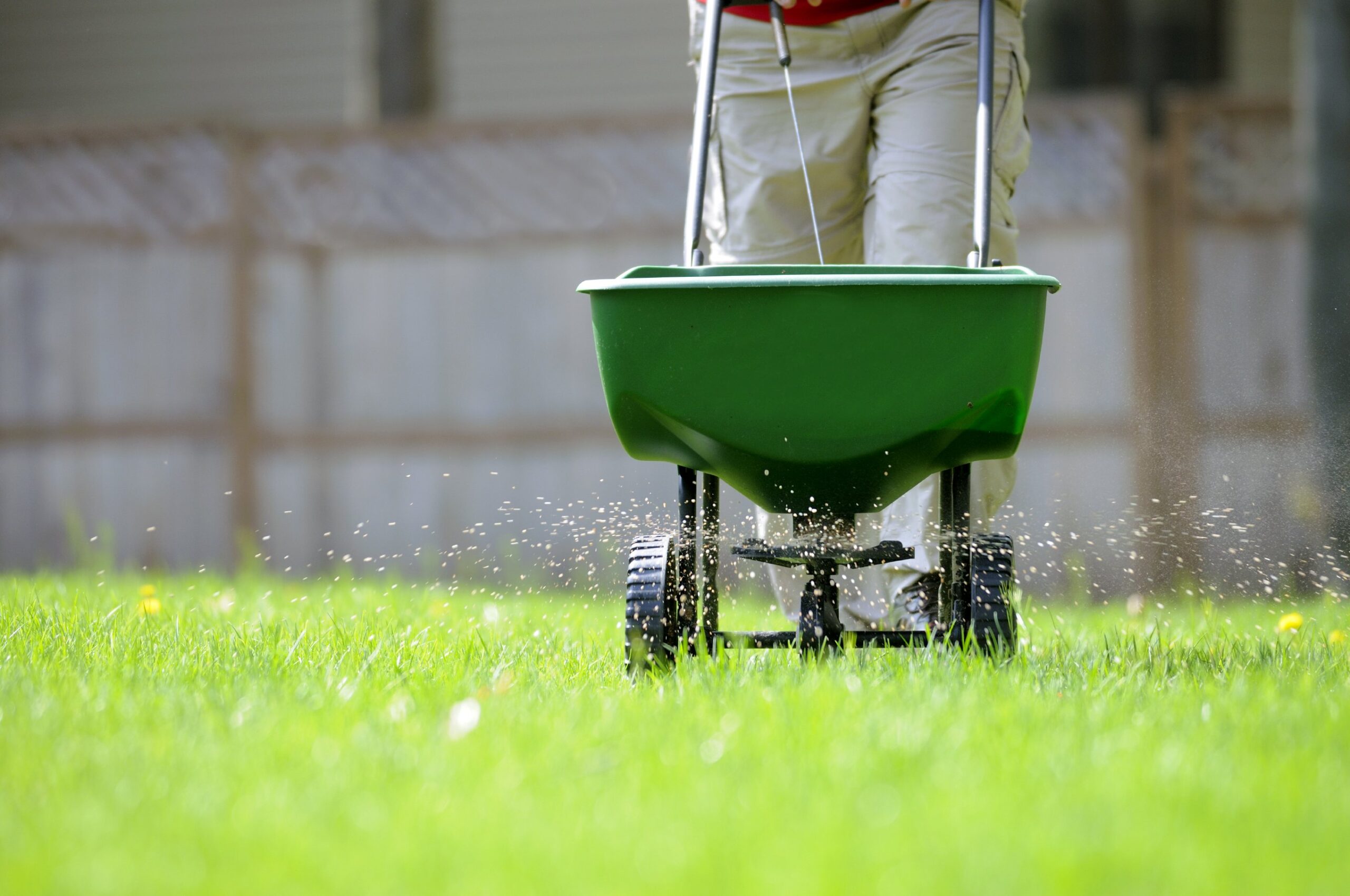
This is why the most effective preventive measure in our market costs nothing at all. Stopping nitrogen four to six weeks ahead of first frost, which around Birmingham means by roughly the start of October, removes the trigger before the season begins.
Identifying It Correctly
Getting this right matters, because the response differs and a wrong diagnosis costs a season.
Large patch produces roughly circular or irregular patches, often a foot to several feet across, expanding outward over weeks. The margin is the giveaway, typically showing a yellow to orange band of declining grass at the advancing edge, most visible in early morning.
The definitive check is at the base of the blade. Grasp a few blades in an affected area and pull gently. With large patch they come free easily, and the bottom inch near the soil will be dark, water soaked, and rotted looking. Healthy grass resists being pulled and its base is firm and pale.
Two things get mistaken for it. Grub damage produces irregular patches where the turf lifts like loose carpet because roots have been severed, and you will find C shaped larvae underneath. Dormancy itself confuses people in late fall, since warm season grass browning uniformly is normal and expected, while large patch produces distinct circles inside a lawn that is otherwise still green.
What Actually Prevents It
Prevention is mostly about water and air rather than chemistry, which is good news because those levers are free.
Watering time matters most. Irrigating in the early morning, finishing shortly after sunrise, lets blades dry quickly as the day warms. Evening watering adds hours of leaf wetness on top of natural dew, and that extension is precisely what the fungus needs. Of everything a homeowner can change, moving irrigation to early morning is the highest value adjustment.
Airflow and light help too. Where shrubs have grown tight against the turf, or a fence or slope blocks the prevailing breeze, dew lingers well into the day. Thinning shrubs and limbing lower branches so morning sun reaches the soil shortens the wet period measurably.
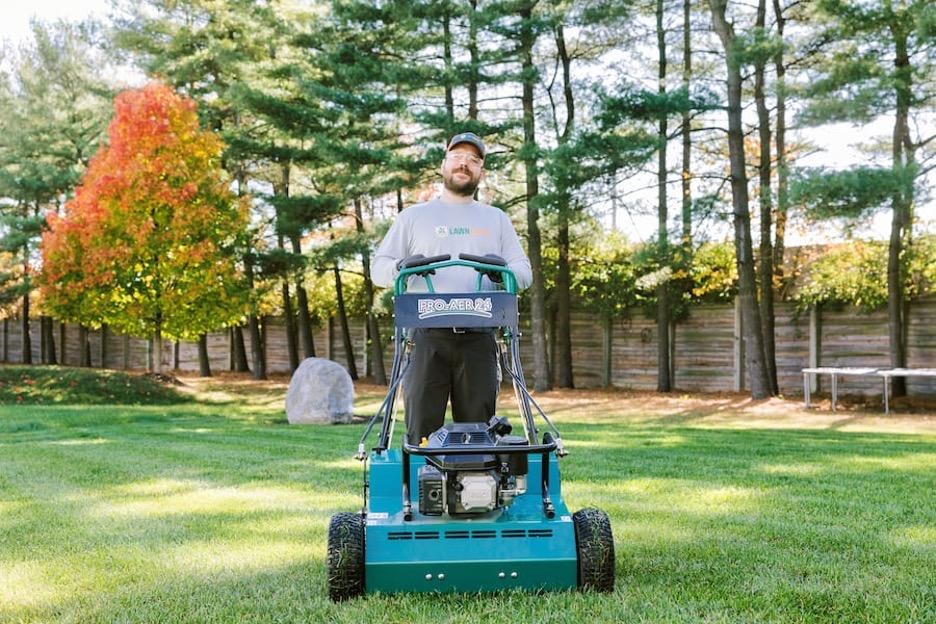
Thatch is the third factor and it matters on zoysia particularly, since zoysia builds thatch readily. A thick layer holds moisture against the crowns and harbors the fungus through the year. Core aeration reduces thatch over time and improves drainage on our clay.
And reduce watering as growth slows. A lawn barely growing in November needs a fraction of what it needed in July, and carrying a summer schedule into fall is one of the more common contributors we see.
If You Already Have It
We want to be honest about expectations, because this is where homeowners get frustrated.
A fungicide can stop large patch from spreading further. It cannot repair grass that is already dead. Recovery requires the plant to grow, and warm season grass in December is barely growing at all.
So patches you have now will largely sit through winter and fill in during spring green up, when zoysia and Bermuda runners begin spreading again. That is a genuinely slow answer and there is not a faster one available.
What we would specifically not do is fertilize the affected area to push recovery. Nitrogen on active large patch feeds the fungus more reliably than it feeds the grass, and homeowners who try this generally expand the damage rather than repairing it.
Why It Returns to the Same Spots
Because the fungus lives in your soil, it does not need to reinfect from outside. The areas with the right microclimate express it first every year, and those areas tend to be predictable.
Low spots that hold water. The north side of the house where morning sun never reaches. Turf tight against a fence, hedge, or retaining wall. Anywhere two irrigation heads overlap and deliver double water. On Birmingham’s sloped lots, the bases of slopes where water collects are common repeat offenders.
Most homeowners can point to the same two or three areas from previous years once they know what they are looking at. That is useful information, because it tells you where drainage and airflow work will pay off rather than treating the whole lawn.
What to Do Next
Walk your lawn this week and look for expanding circles with a yellow orange margin. Pull a few blades at the edge and check whether they release easily from a dark soft base. Ten minutes now is worth more than a fungicide in December.
Move your irrigation clock to finish in the early morning and cut run times as growth slows. If you have already applied nitrogen this month on a warm season lawn, that was your last application of the year, and stopping is correct rather than a gap to fill.
Here is what to expect. If you catch it early and hold the nitrogen, spread usually stops within a couple of weeks. The damaged turf will not recover until spring, and the patches will still be visible in February. That is normal rather than a failure.
If you would rather have someone watching for this and timing applications around it, we are here for that. Visit lawnsquad.com to find Lawn Squad of Birmingham and request a free evaluation. Our VitaminLawn program is built around the grasses, humidity, and disease pressure we actually work with here.