
What Does Fall Lawn Fertilization Cost in North Atlanta?
Short Answer: A single fall fertilization visit for a typical North Atlanta lawn generally runs between $60 and $130, priced from measured turf square footage rather than lot size. Full season programs commonly run six to eight visits and land between $400 and $800 annually for an average property. Two local factors push quotes around more than elsewhere: heavy tree canopy means many properties have far less turf than their lot size suggests, and newer construction lots frequently need aeration on top of fertilization because compacted red clay limits how much of a feeding the grass can use.
Price is the question most homeowners want answered first, and it is the one most lawn care sites bury behind a form. We would rather put the numbers on the page. If they are outside your budget you have lost a few minutes, and if they work, you arrive at the conversation already knowing we are in your range.
Here is how fall fertilization is priced across North Atlanta, what moves one quote above another, and where we see money spent that does not improve a lawn.
Priced From Measured Turf, and That Matters Here
Fertilization is quoted per thousand square feet of actual grass, not by lot size and not by the hour. In this market that distinction is bigger than in most, because of how much tree canopy we have.
A half acre lot in an established Roswell neighborhood with mature hardwoods, natural areas, and beds may carry a quarter of the turf of a similar sized lot in a newer Cumming subdivision that is mostly open lawn. Homeowners routinely assume their quote should reflect their acreage, and it should reflect their grass.
This is the first thing we would question in any quote. A company naming a price without measuring is either padding to protect itself or planning to apply light. Most homeowners we walk through this find a smaller number than they expected, sometimes dramatically so once the canopy and beds come out.
With that figure, every quote becomes comparable. Without it you are weighing one company’s guess against another’s.
The Ranges
For a typical North Atlanta lawn, a single fertilization application commonly falls between $60 and $130. Smaller lots in the higher density newer developments sit at the low end. Larger properties out toward Milton and the more rural parts of the northern counties climb from there and are generally quoted per thousand square feet.
Full season programs here usually run six to eight visits and land between $400 and $800 annually for an average property. Our growing season is long and Bermuda in full Georgia sun is a heavy feeder during it, so the visit count runs higher than a northern program would.
The honest caveat is that bundling varies enormously. Some programs include weed control, some include pre emergent for crabgrass, some include lime, some include disease treatment. A $400 program and an $800 program are frequently not the same service at two prices, and comparing headline figures alone will mislead you.
New Construction Changes the Budget
This is the most common reason a quote comes in higher than a homeowner expected, and it deserves explanation rather than appearing as a line item.
Across the newer subdivisions that have filled in north of the perimeter over the last two decades, heavy equipment compacted the red clay for months during construction, and then a thin layer of topsoil and sod went over the top. The lawn looks perfect on closing day. Two or three years later it thins, because roots hit that compacted layer a few inches down and stop.
A lawn in that condition cannot use a full fertilizer application. A share of it never reaches roots, and water runs across the surface rather than soaking in, which on our sloped lots means it heads for the street. Feeding harder does not fix it.
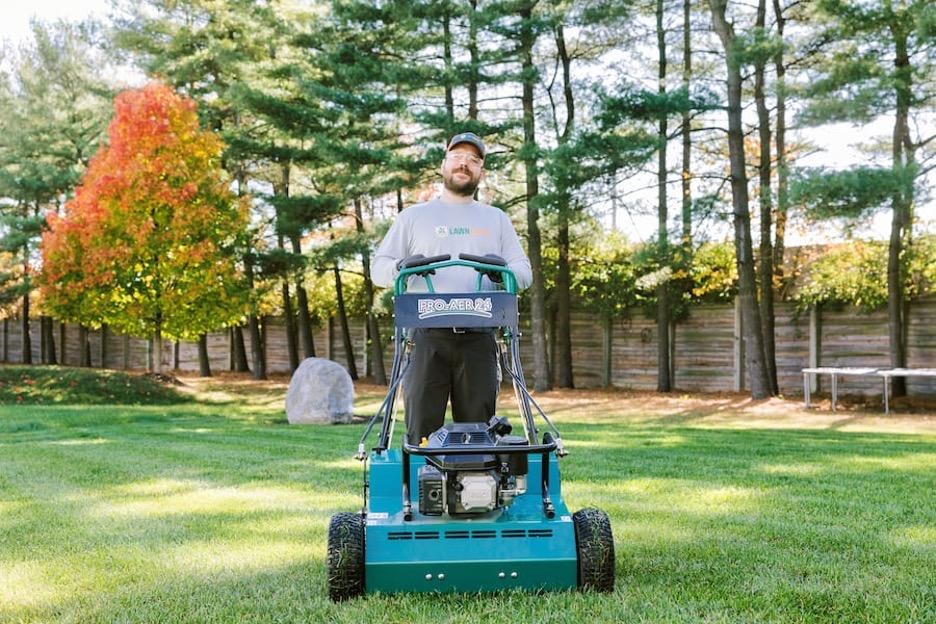
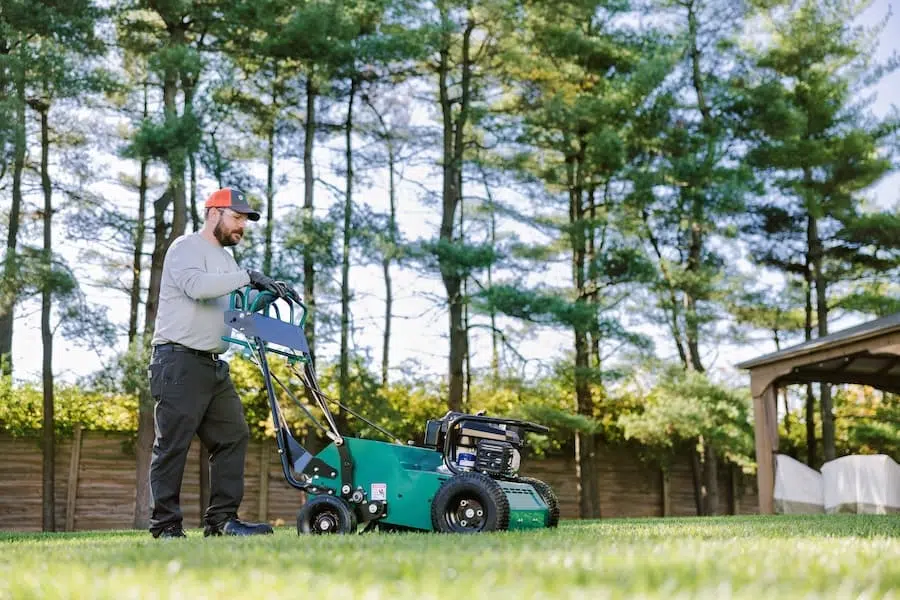
Core aeration does, over several years rather than one, and on Georgia clay it is worth doing annually. So on a newer lot, a realistic budget includes aeration alongside fertilization. That can read as an upsell if nobody explains it, and it is genuinely the difference between a program that works and one that spins.
Lime Is Often a Separate Line
Worth flagging because it surprises people comparing quotes here. Georgia red clay runs acidic, and untreated lawn soil across the metro commonly tests well below what turf prefers.
At low pH, the nutrients you apply become chemically less available to roots, so part of every application goes unused. Soil microbes that convert slow release nitrogen into usable forms also work less effectively. Lime raises pH over months, and on strongly acidic clay it frequently produces more improvement than another fertilizer application would.
Lime is usually priced separately because the rate depends on a soil test and on how far off your pH is, and clay takes considerably more material to move than lighter soil. Ask whether lime and a soil test are included and how the recommendation gets made. A cheap program on unlimed acidic clay is money working at a discount.
What You Are Paying For Beyond Product
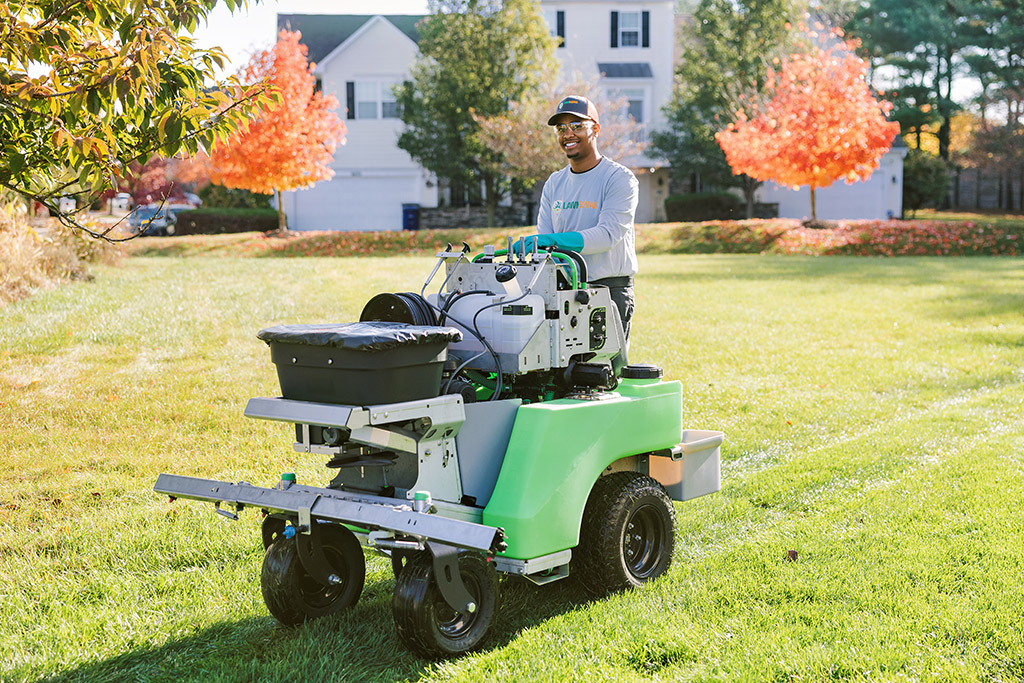
Fertilizer is a modest share of the cost. The rest is calibrated equipment, labor, routing, licensing, and the judgment to apply the right thing at the right moment for your grass.
In a market with both Bermuda in the sun and fescue under the canopy, that judgment matters. The same application in November is correct on fescue and damaging on zoysia, and a company running one schedule across every property is not looking closely.
A good visit should also put eyes on the lawn. Large patch appears on zoysia from October into December. Spring dead spot on Bermuda traces back to fall decisions. Grub damage peaks in early fall and presents as drought stress. Catching any of them early is frequently worth more than the application it was noticed during, so ask whether corrective treatment is included or billed separately.
The Do It Yourself Numbers
Fertilization is among the more approachable parts of lawn care to handle yourself. A quality bag covers roughly five thousand square feet and runs about $25 to $45. For an average lawn here that is one to two bags per application, so roughly $30 to $55 in product.
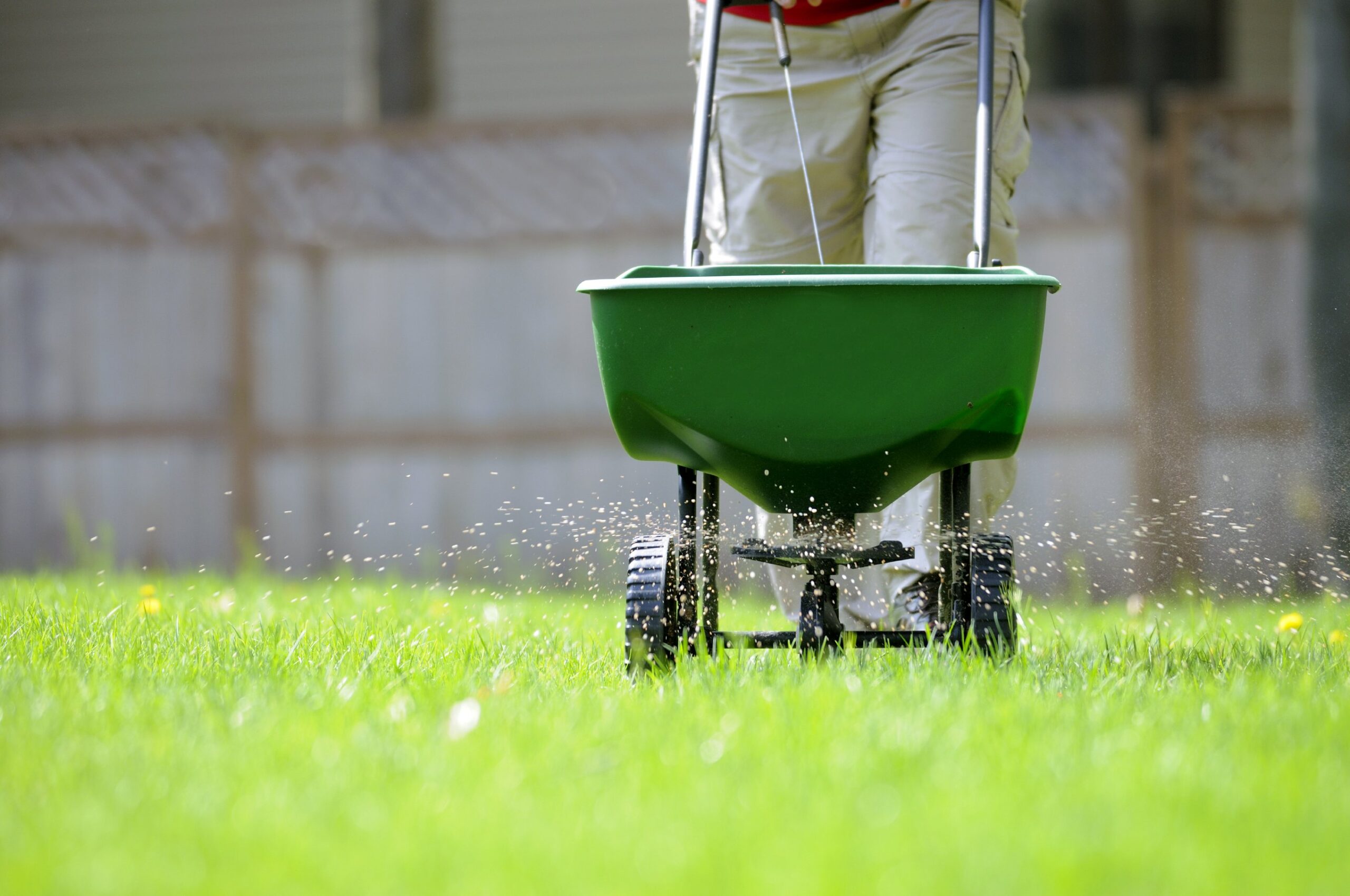
Add a broadcast spreader, a one time purchase of $60 for a basic model or $150 and up for one that holds calibration. Add lime, which is heavy and awkward to haul in the quantities acidic clay needs. Add roughly forty five minutes per application plus a trip to buy product, across six to eight applications.
The dollar gap is real but narrower than most people assume. Where the DIY route slips is calibration, since every spreader setting number means something different on every bag, and grass identification, since applying a cool season schedule to a Bermuda lawn in November causes real damage.
Where the Money Gets Wasted
The most expensive mistake here is a high nitrogen winterizer applied in November because that is what the shelf tag and most national advice recommend. On Bermuda or zoysia heading toward frost, that feeds disease and produces cold damaged tissue, so you pay for the product and again for the spring repair.
Second is feeding a compacted lawn harder rather than aerating it. If roots are confined to three inches, the limiting factor is delivery rather than supply, and additional product largely runs off across the surface.
Third is feeding a shaded lawn more. Under our canopy, thin turf is usually short on light rather than nitrogen, and pushing it with fertilizer produces weak stretched growth that is more vulnerable to disease. That one deserves its own conversation, but it belongs in a list of where money disappears.
What to Do Next
Measure your turf before you call anyone. Pace the perimeter of each grass area, multiply, and subtract beds, paving, structures, and natural areas. Under heavy canopy that figure often surprises people, and it makes every quote comparable.
Push a screwdriver into moist soil in several places. If you have to lean on it, aeration belongs in the budget alongside fertilization rather than instead of it.
Get a soil test. On acidic red clay the pH number frequently shifts the priority order from more fertilizer toward lime, and it costs a fraction of one application.
If you would rather have someone assess the soil, the compaction, and the schedule together, we are here for that. Visit lawnsquad.com to find Lawn Squad of North Atlanta and request a free quote on your property. Our VitaminLawn program is built around the red clay, canopy, and grasses we actually work with here.