

Core Aeration in Frederick County: What Is Still Worth Doing in October
Short Answer: By October the two halves of fall aeration work have separated in Frederick County. Core aeration itself is still genuinely worth doing, because relieving compaction does not depend on anything establishing before winter, and the open channels give lime, fertilizer, and amendments a route into the root zone with the whole dormant season to work. Overseeding is the part with a real deadline, and in this market that deadline has arrived. The first week or two of October is the last reliable point for new seed here. Here is how to spend October well.
October in Frederick County is the month the fall lawn window starts closing, and it closes faster than most homeowners expect.
What makes it tricky is that the pieces of fall lawn work do not all expire on the same date. One of them is nearly out of time and the others have weeks left, and treating them as a single decision means either rushing something or abandoning something unnecessarily.
Here is what is still on the table this month, what is not, and how to get the most out of what is left.
What Core Aeration Actually Does
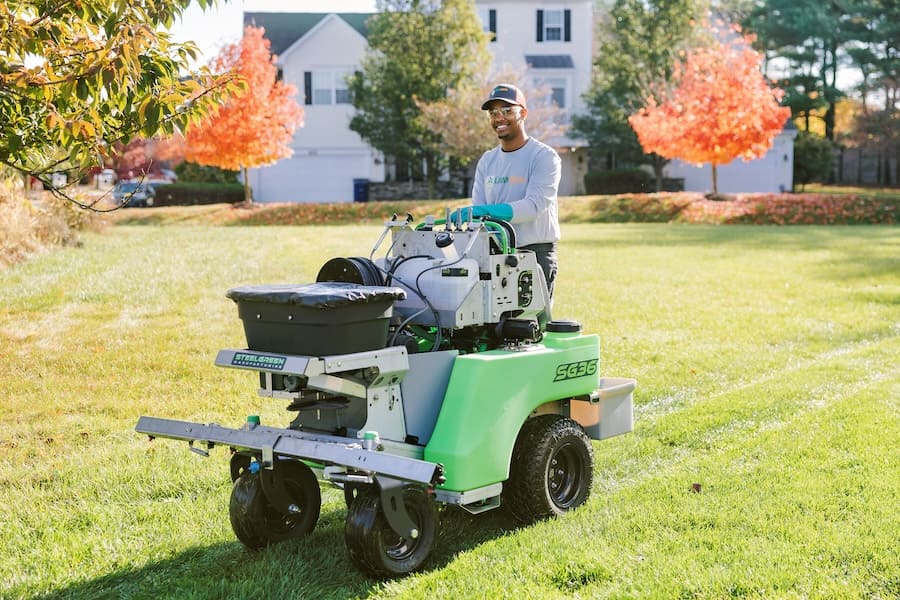
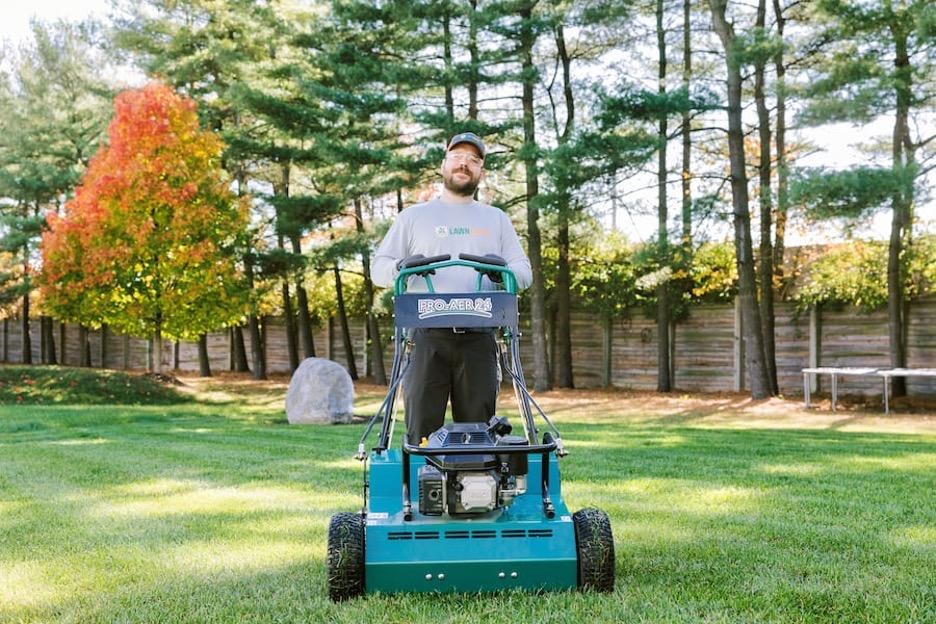
Core aeration pulls thousands of small plugs of soil and thatch out of your lawn, leaving holes roughly two to three inches deep across the entire surface. The plugs get left on top to break down, which is the part homeowners notice and the part that looks untidy for a week or so.
The holes are the point. Each one is a channel that lets water, air, and nutrients bypass the compacted surface layer and reach the root zone directly. Compacted soil is dense enough that water runs off rather than soaking in, roots cannot push downward, and fertilizer sits near the surface where it does far less good than intended.
It is worth distinguishing this from spike aeration, which punches holes with solid tines and removes nothing. Spiking pushes soil sideways and compresses it against the surrounding soil, which can make compaction worse over time. Core aeration is the only version that genuinely relieves it.
Coverage matters as much as the technique. Hole density is what determines the result, and a single fast pass leaves far more untouched ground than most homeowners assume. Two slower passes in opposing directions produce meaningfully better results than one rushed pass.
Why Frederick County Soil Makes This Necessary
Frederick County sits in the Piedmont, and the soils that come with it are generally clay loams and silt loams weathered from shale, schist, and limestone depending on where in the county you are. They hold nutrients and moisture reasonably well and they compact readily under traffic.
Compaction does three things to a fescue lawn, all of them compounding. Water infiltration drops, so irrigation and rainfall run off rather than soaking in. Roots cannot penetrate dense soil, so they stay shallow, which is precisely why a lawn that looks fine in June collapses in the first serious dry stretch of July. And fertilizer stays near the surface rather than reaching the root zone.
There is also a rock component here that catches newcomers out. Shallow bedrock and stone in the profile are common across parts of the county, which limits how deep roots can go regardless of what you do and makes maximizing the usable soil depth more important rather than less. Aeration is one of the few practices that genuinely improves what you have to work with.
Where October Leaves You in Frederick County
October in Frederick County is the closing edge of the window rather than the middle of it, and the two halves of this work now have different deadlines.
Overseeding is the time sensitive half. The first week or two of October is generally the last point where new seed can germinate and build enough root to survive the winter reliably. Past that, germination still happens and survival gets progressively less likely, which means later seeding is increasingly a gamble rather than an investment.
Aeration itself stays worthwhile considerably later. Compaction relief does not depend on establishment, and opening up Piedmont clay over shale with shallow bedrock in places helps whether or not anything gets seeded into the holes. The channels also give lime, fertilizer, and amendments a route into the root zone, and those have all winter to work.
The practical rule for Frederick County right now: if it is early October, move quickly and do both. If it is late October, aerate and feed now and plan the overseeding for next September.
Aeration Without Overseeding Is Still Worth Doing
This is worth saying plainly, because a lot of homeowners assume the two services are a package and skip both when the seeding window closes.
Aeration on its own addresses the constraint underneath most lawn problems. It improves how much water actually enters the soil instead of running off, lets air back into a root zone that compaction has closed up, and gives roots somewhere to grow that was not available to them before. None of that requires a single seed.
It also changes what everything else you apply is worth. Fertilizer, lime, and soil amendments applied to compacted ground largely stay at the surface. Applied right after aeration, they move down through thousands of open channels into the zone where roots can actually use them, and they have the entire dormant season to integrate.
There is a timing detail worth getting right on the soil itself. Aerating saturated ground smears and compresses the walls of each hole rather than pulling a clean plug, which wastes the pass, while ground that has gone hard and dry resists the tines and produces shallow holes. Moist rather than wet is the target, and in October that sometimes means working around the weather instead of a fixed date.
If you are going to do one thing on your lawn this month, aerating and then feeding into the open holes is a better use of the money than seed that will not make it to spring.
What to Expect in the Weeks After
The first thing you will notice is the plugs, and they are the most common source of homeowner concern. They look messy, they are scattered across the lawn, and they will be there for one to two weeks. Leave them. As they break down they return organic matter and soil microbes to the surface, which actively helps decompose thatch.
Beyond that the improvements are gradual rather than dramatic. Within the first few weeks you should notice water soaking in faster after rain, and areas that used to puddle or run off draining more effectively.
In October specifically, much of the benefit is deferred to spring rather than visible now. The soil structure you open up this month is what determines how the lawn handles the wet conditions of an early spring thaw and how quickly roots can get moving once soil temperatures rise.
The larger benefit builds over seasons. Lawns aerated consistently year after year develop measurably deeper root systems, denser turf, and better drought tolerance than lawns that are never aerated.
How Often Your Lawn Actually Needs It
Annual aeration is the right default for Frederick County lawns, and the reason is the combination of clay content and fescue biology.
Tall fescue is a bunch-forming grass. It does not send out runners and it does not fill gaps on its own, which means every plant lost to summer heat leaves a space that stays open until seed goes into it. Pairing annual aeration with annual overseeding is how a fescue lawn maintains density over years rather than slowly thinning.
Properties with heavy traffic, dogs, or newer construction compaction benefit from a more aggressive schedule in the early years. Established lawns on lighter soils that have had several consecutive years of treatment can sometimes move to every other year.
The effect compounds. Three consecutive years of aeration and overseeding on a Frederick fescue lawn produces a visibly different lawn than one treated once.
What to Do Next
Check the date honestly. If it is the first week or two of October in Frederick County, move now and do both aeration and overseeding together, because that combination is worth more than either alone.
If it is later in the month, aerate and feed now and plan the overseeding for next September. Seed that does not survive the winter is not a partial result, it is a total loss, and there is no reason to buy it.
Visit lawnsquad.com to find the Lawn Squad location nearest you and request a free quote. Our VitaminLawn program is built specifically for the grass types, soils, and weather patterns in each market we serve.