Does Fall Fertilization Even Apply to a South Miami Lawn?
Short Answer: Not in the way most fall lawn articles mean it. South Miami lawns never go dormant, so there is no winter to prepare for and no last nitrogen application before frost. What actually changes in October is the weather pattern. The summer rainy season winds down and the dry season begins, which shifts fertilization from a leaching problem to an irrigation dependent one. That means your October feeding needs to be watered in deliberately rather than relying on afternoon storms, and it opens a window for applications that local rainy season restrictions may have limited through the summer.
If you have searched for fall lawn care advice and found article after article about winterizing, dormancy, and the last feeding before frost, you have probably concluded none of it applies to you. That instinct is mostly correct. Almost every fall lawn care article published in this country is written for grass that stops growing in winter, and your lawn does not do that.
But something real does change here in October, and it changes how your lawn should be fed. It just is not temperature. Here is what actually shifts and what it means for the next few months.
Your Lawn Does Not Have a Winter
St. Augustine, particularly Floratam, covers the large majority of lawns from Coral Gables through Kendall and Pinecrest, with zoysia in some newer installations and Bermuda mostly on sports surfaces. These are warm season grasses, and in most of the country they go dormant, turn tan, and stop growing from roughly November through March.
Here they do not. South Miami rarely sees frost, and our winter lows generally stay well above the point where warm season grass shuts down. Growth slows somewhat as days shorten and nights cool into the sixties, but it does not stop. Most homeowners here are still mowing in January, just less often.
That single fact removes the entire premise of northern fall advice. There is no dormancy to prepare for, no need to harden tissue against frost, and no reason to count backward from a first freeze date. The concept of a final nitrogen application for the year simply does not exist on a lawn that grows twelve months.
What Actually Changes in October
The real seasonal shift here is water, not temperature. South Florida runs on a wet and dry cycle rather than a warm and cold one. Our rainy season delivers the bulk of the year’s rainfall from late spring through early fall, and then things change over.
Through October and into November, the afternoon storm pattern breaks down and the dry season begins. Rainfall drops sharply and stays low through roughly April. That is the transition your lawn is actually experiencing right now, and it has direct consequences for fertilization.
During the rainy season, heavy rain moves nutrients down through our shallow soil quickly, and applications risk being washed off before the grass uses them. In the dry season that pressure disappears, which means fertilizer stays where you put it far more reliably. The tradeoff is that nothing happens without irrigation, because granular product sitting dry on the surface does nothing at all.
Why That Makes This a Good Window
The dry season start is genuinely one of the better times of year to feed a lawn here, for reasons that have nothing to do with fall as northern gardeners understand it.
Nutrient loss is lower. Without daily downpours flushing through a shallow rocky profile, more of what you apply stays in the root zone and available. You get more value per dollar of product than you do in July.
Disease pressure is also easing. Sod webworms, which chew through South Florida St. Augustine in the late rainy season and leave lawns looking scalped, wind down as the pattern shifts. Constant leaf wetness that supports fungal problems declines too. A lawn recovering from a rough late summer has better conditions to grow into now than it had two months ago.
And it lines up with local rules. Many South Florida jurisdictions restrict nitrogen and phosphorus application during the summer rainy season specifically because of runoff into Biscayne Bay and the canal system. As that restricted period ends, a window opens. We will come back to the regulatory side in more detail, but it is worth noting that October is often when applications become permissible again.
What the Schedule Should Look Like
Because the lawn grows year round, feeding here is spread across the calendar rather than concentrated. Programs in our market typically run more visits than northern ones, often eight or more, at lighter rates each.
That approach exists for two reasons. Our soils hold very little, so heavy applications leach or wash rather than being stored. And a lawn growing continuously has continuous nutrient demand rather than a spring flush and a fall wind down. Lighter and more frequent matches both realities.
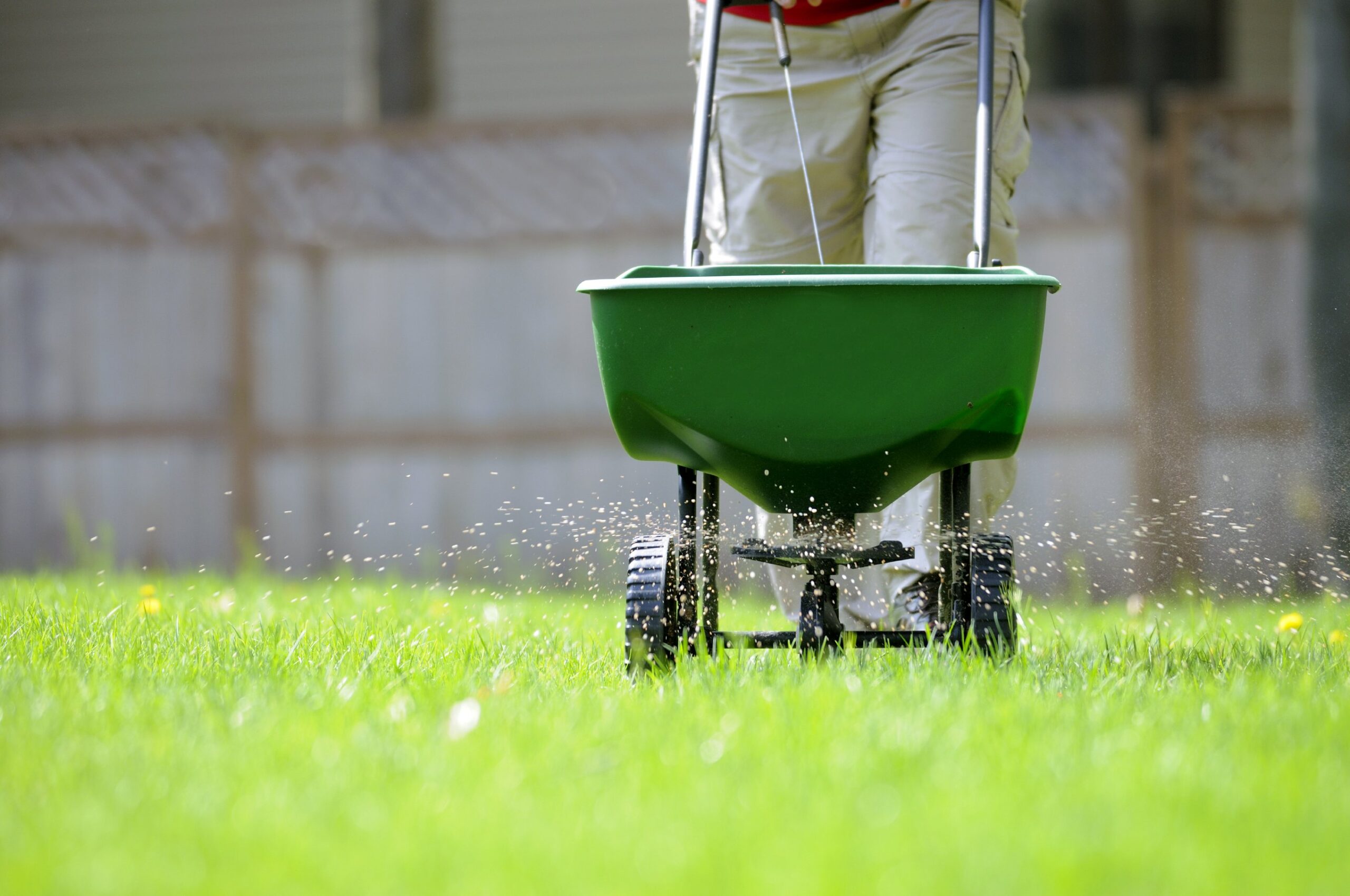
For the October and November period specifically, a moderate application with slow release nitrogen, potassium, and a meaningful micronutrient package is what we would put down. The micronutrients matter more here than almost anywhere, which is worth its own explanation given what our soil is made of.
What we would not do is apply a heavy nitrogen rate to push a dramatic color response. On a lawn that never rests, repeated heavy nitrogen builds thatch, encourages chinch bug pressure, and produces soft growth that pests and disease find easy. Steady beats dramatic here.
The Soil Under Your Lawn Is Unusual
This is the factor that separates South Miami from nearly every other market, and it deserves mention in any discussion of feeding. Much of our area sits on oolitic limestone, sometimes with a thin layer of marl or sand over it. In many yards you hit rock within a foot.
That produces a very high soil pH, commonly between 7.5 and above 8. At that pH, iron and manganese react into forms grass roots cannot absorb. The nutrients may be physically present in the soil and still be completely unavailable to the plant.
The practical result is that lawns here can look pale and yellow while being well supplied with nitrogen, and adding more nitrogen does not fix it. Micronutrient applications, particularly iron applied to the leaf rather than the soil, are a normal and necessary part of lawn care here rather than a specialty add on. If your lawn is yellow rather than thin, this is the first thing to investigate.
What Growing Year Round Costs You
Worth being straightforward about the flip side of a lawn that never sleeps. It never stops needing attention either.
Mowing continues through winter, less often but continuously. Irrigation becomes more important rather than less, because the dry season is genuinely dry and shallow rocky soil holds almost no reserve moisture. Chinch bugs, which die back in colder markets, remain a threat here in mild winters.
The upside is that recovery also happens year round. A damaged area in a northern lawn waits until spring to repair. Here, St. Augustine runners keep spreading through winter, so problems fixed in December are actually resolving in January rather than sitting until April. That is a meaningful advantage and it argues for addressing issues when you see them rather than waiting for a season that does not come.
What to Do Next
Stop reading fall lawn care advice that mentions dormancy, winterizing, or frost dates, because none of it describes your lawn. The useful filter is whether an article names St. Augustine, and preferably whether it mentions high pH or limestone soil.
Check your irrigation before you feed. With the rainy season ending, a system that was effectively unnecessary in August is now doing the entire job. Run each zone and look for heads that are blocked, misaimed, or not turning, because a granular application over a dry spot is money spread on the ground.
Confirm what your local rule currently allows before applying, since restrictions vary by municipality and county and they change. Then feed at a moderate rate with slow release nitrogen and a full micronutrient package, and water it in deliberately rather than waiting for rain that is not coming.
If you would rather have someone else track the seasonal shift, the local requirements, and the micronutrient side of our limestone soils, we are here for that. Visit lawnsquad.com to find Lawn Squad of South Miami and request a free quote on your property. Our VitaminLawn program is built around the year round growth, high pH soils, and dry season conditions we actually work with here.