Short Answer: There are two different salt problems here and one wind problem. Salt spray carried off the ocean during storms burns leaf tissue directly on exposed properties, and it does the most harm in winter when grass cannot outgrow the injury. Road and walkway de-icing salt is worse, because sodium accumulates in the soil, degrades its structure, and blocks water uptake at the root. Wind adds constant drying, which is why exposed North Shore lawns brown out faster than sheltered ones. Fall is when you build tolerance and choose grasses that handle it.
Two Different Salt Problems
People on the North Shore tend to lump all salt damage together, but the two sources injure grass by completely different mechanisms and they call for different responses.
Airborne salt spray off the ocean lands on the leaf surface and burns tissue directly. It is a foliar injury. Soil salt, which mostly comes from de-icing products on roads, driveways, and walkways, does not burn the leaf at all. It accumulates in the root zone, changes the chemistry and structure of the soil, and interferes with the plant’s ability to pull water in. The first kind looks bad and usually recovers. The second kind is quieter and does the lasting damage.
Salt Spray Off the Ocean
On exposed properties along Cape Ann, in Nahant, in Marblehead, and anywhere with a direct fetch to open water, onshore storms carry a fine salt aerosol well inland. A strong nor’easter can deposit measurable salt hundreds of yards from the water line, and considerably farther on truly exposed headlands.
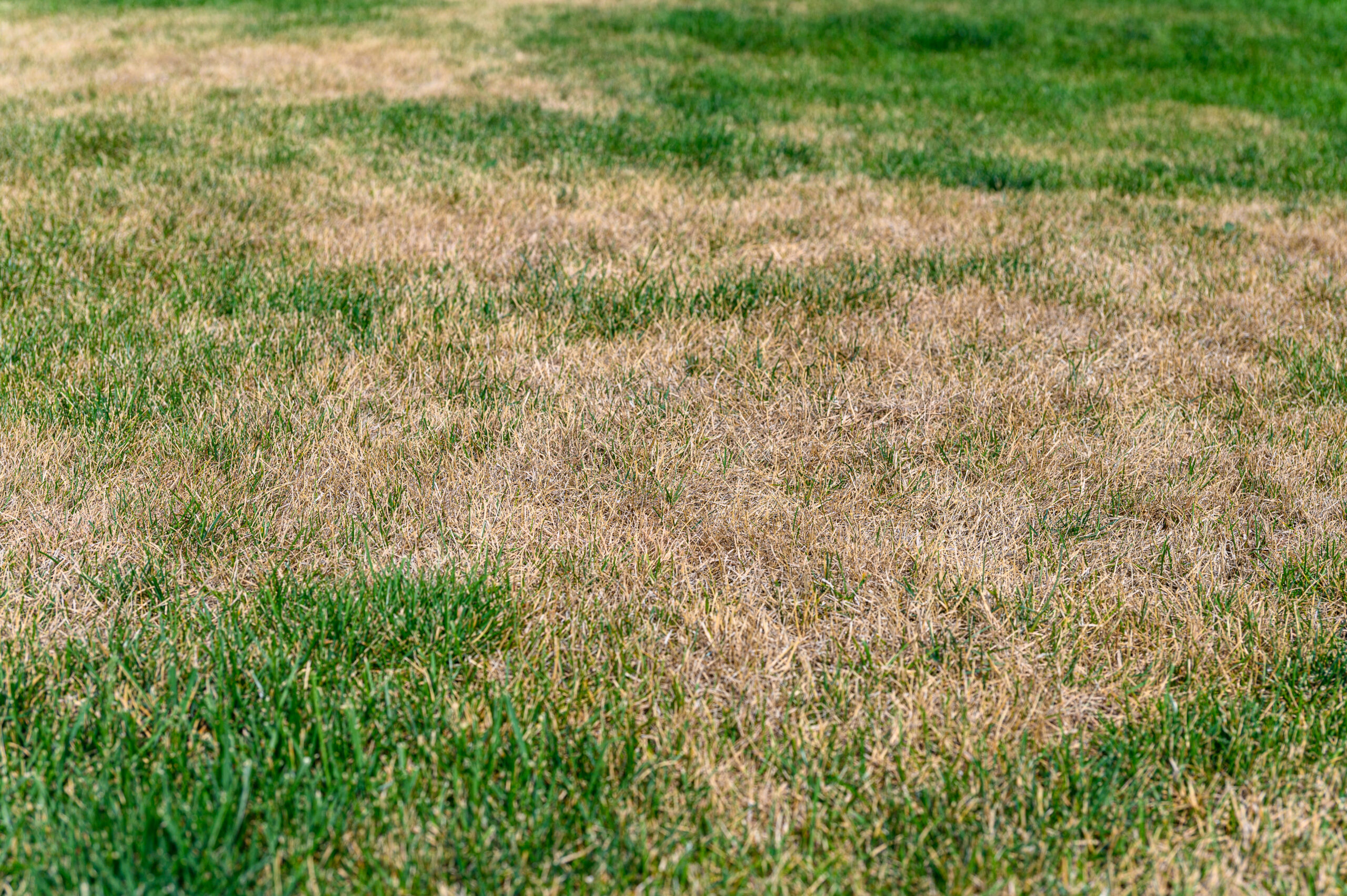
On turf the damage shows as tip burn and bronzing, worst on the windward side of the property and grading out as you move to leeward or behind a structure. In the growing season the lawn outgrows it, which is why a summer storm rarely leaves a mark. In winter the grass is not producing new tissue, so a February storm’s damage sits there until April. If you have shrubs on the same side of the house with brown tips only on the ocean-facing branches, that confirms it.
De-icing Salt Does the Real Injury
Sodium chloride is what most municipalities and most homeowners use, and it is hard on soil. Two things happen. The dissolved salt raises the salt concentration of the soil water so high that roots cannot pull water in, even when the soil is visibly wet. The plant effectively droughts out in moist ground.
Worse, sodium displaces calcium and magnesium on the soil’s exchange sites. That breaks down soil structure, collapses pore space, and leaves a dense, poorly draining, crusted surface. That damage outlasts the salt itself, and it explains why a roadside strip stays bad for years even after a mild winter. Plow trucks throwing salty slush make it worse than your own driveway ever will.
Telling Salt Damage From Ordinary Winter Kill
Pattern is the whole diagnosis. Salt damage from de-icing shows as a band running parallel to pavement, typically three to eight feet wide along a plowed road and narrower along a walkway, with severity fading as you move away from the edge. It has a fairly defined boundary. It always appears in the same places year after year.
Snow mold, by contrast, shows as irregular matted patches anywhere on the lawn with no relationship to pavement. Vole damage appears as winding narrow trails. Crown hydration injury shows up in low spots where meltwater pooled and refroze. If the dead area hugs the road or the walk and grades out with distance, you are looking at salt, and no amount of seed will hold there until the soil is dealt with.
Which Grasses Actually Tolerate Salt
Grass species differ enormously in salt tolerance, and this is the highest-leverage decision you make on a coastal property.
- Fine fescues are the best practical choice. Slender creeping red fescue in particular has real salt tolerance, and hard fescue handles both salt and drought well. They also do fine in the sandy, low-fertility soil common near the water.
- Tall fescue is moderately tolerant and a reasonable choice for the broader lawn away from the worst edges.
- Perennial ryegrass is only fair, though it establishes fast, which is useful in a repair mix.
- Kentucky bluegrass is poor. It is the wrong grass for a salt-exposed strip, and it is what most standard sun mixes are built around.
- For the truly brutal spots directly against a plowed road, alkaligrass is used on highway shoulders specifically because it survives salt levels nothing else will. It is coarse and not a handsome lawn grass, but it holds ground.
Constant Wind Is a Water Problem
Set salt aside for a moment. Wind alone stresses North Shore lawns. Moving air strips moisture from leaf surfaces continuously, so an exposed lawn loses substantially more water per week than a sheltered one at the same temperature. That is why two lawns a quarter mile apart, on the same soil with the same irrigation, can look entirely different in August.
Winter desiccation is the same mechanism at a worse time. On an exposed site with little or no snow cover, cold dry wind pulls moisture out of the crowns while the frozen ground prevents the roots from replacing it. The grass dies of thirst in the middle of winter. Snow cover actually protects against this, which is why a low-snow winter with hard wind is often harder on coastal turf than a snowy one.
Sandy Coastal Soil Holds Almost Nothing
Much of the soil near the water here is sand or sandy loam, sometimes over ledge. It drains beautifully and retains very little. Water and nutrients both move straight through, which means a coastal lawn needs lighter and more frequent feeding than an inland one and cannot bank moisture between rains.
There is one genuine advantage. Sandy soil flushes salt out of the root zone far more readily than clay does, so recovery from a salt event is quicker if you get water through it. Building organic matter is the long game. Aerating and topdressing with a quarter inch of compost each fall raises water-holding capacity and cation exchange capacity over a few seasons, which improves drought tolerance and salt resilience at the same time.
What to Do This Fall
Fall is when you set up next spring’s outcome on a coastal property. A few things matter most.
Overseed the salt-exposed bands with a fine fescue blend rather than whatever mix is on the shelf, and do it in September while soil is still warm. Core aerate the compacted strip along the road, because that soil is usually both salted and compacted and neither improves on its own. Topdress those areas with compost. Feed the lawn in October so it goes into winter with real carbohydrate reserves, which is the main thing that determines how much winter injury it can absorb. And decide now what you are going to put down on the driveway this winter, before the first storm forces the decision for you.
De-icer Choices and Habits
Every chloride-based product carries some risk, so the honest framing is which is least bad and how little you can use.
Calcium magnesium acetate is the gentlest common option on plants and soil, though it is more expensive and works over a narrower temperature range. Magnesium chloride and calcium chloride work at lower temperatures and do less soil structure harm than sodium chloride because they supply calcium and magnesium instead of sodium, but they are still salts. Plain sand adds traction with no chemical injury at all and is the right answer for the stretch of walkway that drains onto your best turf.
The habits matter as much as the product. Most people apply several times the amount needed. Shovel first and apply to a cleared surface, spread thinly and evenly rather than in piles, and sweep up the excess after the melt so it does not sit and wash into the lawn. Where you push snow matters too. A salty snow pile dumped on the same corner of lawn every storm concentrates a winter’s worth of salt into one small area.
Spring Recovery: Flush and Amend
When the melt is done, the first move on a salt-damaged band is water, and more of it than feels reasonable. Heavy irrigation leaches sodium down past the root zone, and on sandy soil that works quickly. Do it before you put seed down, because seeding into a salty root zone wastes the seed.
On soils with real sodium accumulation, gypsum is the standard amendment. The calcium in it displaces sodium from the exchange sites so it can be flushed out, and it does this without raising pH the way lime would. A soil test that reports sodium levels tells you whether you need it rather than leaving you to guess. Then rake the dead material out, reseed with fine fescue, and keep the surface damp until it establishes.
What to Do Next
Walk the lawn this week and write down the two or three things that actually bother you about it, then work backward from the window rather than forward from today. Almost every fall mistake we see on the North Shore comes from starting with the calendar instead of with the lawn.
If you would rather have someone look at it with you, Lawn Squad of the North Shore offers a free quote. Call 833-816-7508 or find us at lawnsquad.com. Every Lawn Squad location is independently owned and operated, and our VitaminLawn fertilization and weed control program is built around the grass, soil, and conditions here rather than a national average.
A first visit is a walk of the property, a look at the thin areas, a check of mowing height and irrigation, and a straight conversation about what is realistic in the weeks left this season. At 30 days you should see color and density improve. At 90 days the lawn should be visibly thicker, with the root growth that carries it through winter.