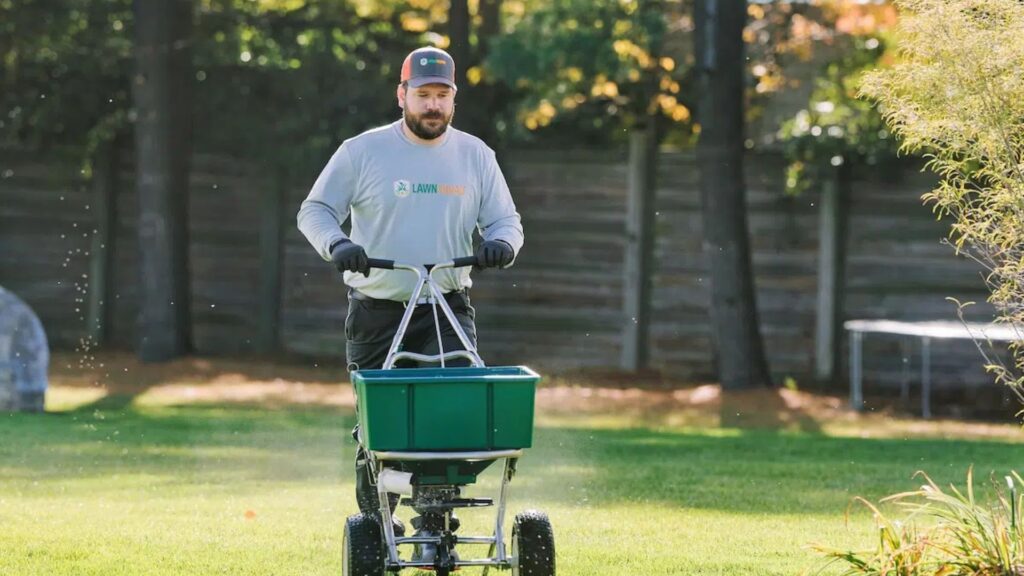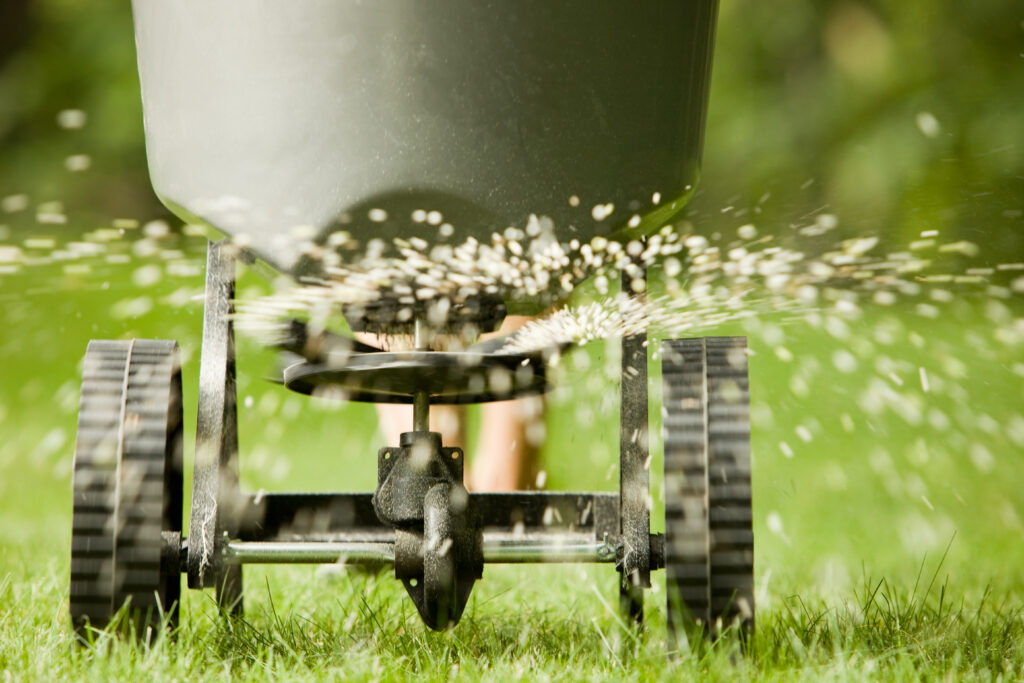
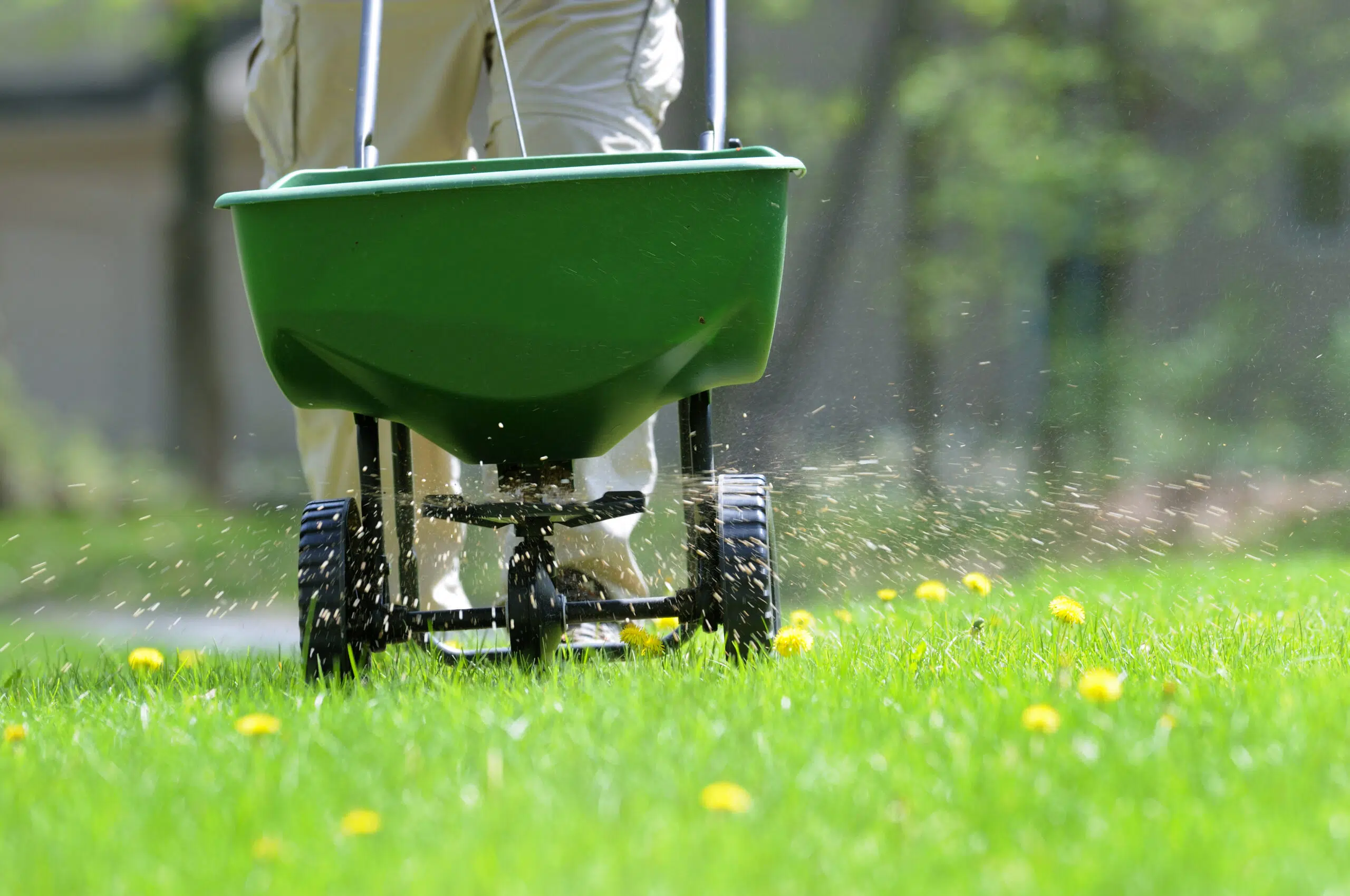
Short Answer: It depends on one thing, which is whether you are seeding. A fall pre-emergent applied from late August through early October stops henbit, purple deadnettle, common chickweed, hairy bittercress, and annual bluegrass from ever germinating, which is why some Central Indiana lawns turn purple in March and others do not. But the same chemistry that blocks weed seed blocks grass seed. If you are overseeding this fall, skip the standard pre-emergent and handle those weeds with a post emergent application in late October instead.

What a Fall Pre-Emergent Actually Targets
A pre-emergent herbicide does not kill existing plants. It forms a treated zone in the top layer of soil that interferes with cell division in germinating seedlings, so the seed sprouts and then dies before it reaches the surface. Timing is everything, because the product has to be in place before germination begins.
Most homeowners in Central Indiana associate pre-emergent with spring and crabgrass. That is one use of it. The fall application is a completely separate job aimed at a completely different group of weeds, the winter annuals, and skipping it is the reason so many lawns around Indianapolis look weedy in March before the grass has even started growing.
The Weeds That Germinate in September and October
Winter annuals run backward compared to what most people expect. They germinate in fall as soil temperatures drop, survive winter as small low rosettes that go almost unnoticed, then grow rapidly and flower in March and April while the turf is still waking up. By the time they are obvious they are already producing seed for next year.
The main players in this region are henbit, purple deadnettle, common chickweed, mouse ear chickweed, hairy bittercress, shepherd’s purse, and annual bluegrass. Hairy bittercress is the one with seed pods that fling seed several feet when disturbed, which is why pulling it in April spreads it. Every one of these is far easier to stop in September than to fight in spring.
Why Henbit and Purple Deadnettle Are Such a Problem Here
If you drive around central Indiana in late March, the farm fields and fence rows turn a distinct purple. That is henbit and purple deadnettle flowering, and there is an enormous regional seed bank feeding your lawn from every direction. Wind, birds, mowers, and equipment move it constantly.
Both are members of the mint family with square stems and opposite leaves. Henbit has scalloped leaves that clasp the stem directly, and purple deadnettle has triangular leaves on short stalks with a purple tint at the top of the plant. They germinate in the cool moist conditions of September and October, and they favor thin lawns and bare soil, especially in the compacted areas near driveways and along tree lines. On the heavy silt loam and silty clay loam soils typical of the Indianapolis area, thin spots are common, and these two weeds find every one of them.
Annual Bluegrass Is the Hardest of the Group
Annual bluegrass, or Poa annua, is the winter annual that causes the most frustration because it does not look like a weed for most of its life. It is a light green fine bladed grass that germinates in fall when soil temperatures drop through roughly 70 degrees, grows through winter, and in spring produces distinctive whitish seed heads that stand above the mowing height.
Then in June it dies. Heat kills it, and it leaves behind patches of bare soil right when crabgrass is looking for openings. So a Poa annua problem in April becomes a bare spot problem in June and a crabgrass problem in July. Pre-emergent applied in late August to mid September is the most effective control available, because post emergent options for annual bluegrass in cool season turf are limited and unforgiving.
It Will Not Help With Crabgrass
This is a common misunderstanding worth clearing up. Crabgrass is a summer annual. It germinates in spring as soil temperatures rise past the mid 50s, grows all summer, sets seed, and dies at the first hard frost regardless of anything you do.
A fall pre-emergent application will not reduce next year’s crabgrass, because next year’s crabgrass will germinate in April and May long after the fall product has broken down. Crabgrass requires its own application in spring, timed to soil temperature. If someone tells you a fall pre-emergent handles crabgrass for next season, they are describing a product that does not exist.
Time It by Soil Temperature, Not by Date
Calendar dates are approximations. Soil temperature is the actual trigger, and it varies by a couple of weeks from year to year across Central Indiana.
For annual bluegrass, the target is to have the product down before the four inch soil temperature drops through about 70 degrees, which typically happens in the first half of September here. Henbit, deadnettle, and chickweed germinate a little later, generally as soil temperatures pass through the low 60s into the 50s, which covers late September into October. If you are making one application, the last week of August through the middle of September covers the most ground. Applying in November is too late for essentially all of them.
The Conflict With Fall Seeding
Here is the real decision. A pre-emergent herbicide cannot distinguish between annual bluegrass seed and Kentucky bluegrass seed. Both are germinating seeds, and the product stops both. Standard pre-emergent chemistry typically requires waiting anywhere from eight to sixteen weeks before seeding, depending on the product and rate, which eliminates the entire fall seeding window.
September through the first week of October is the single best time of year to establish grass in Central Indiana. Soil is still warm, air has cooled, disease pressure has dropped, and there are two full months of growth before dormancy. If your lawn is thin, that seeding is worth far more than the weed prevention, because a thick lawn is itself the most effective long term barrier to winter annuals. Do not sacrifice the seeding for the herbicide.
If You Are Seeding, Here Are Your Options
You are not stuck. There are workable approaches when both jobs need doing.
- Seed in early September, then apply a post emergent broadleaf product in late October once the new grass has been mowed two or three times. Henbit, deadnettle, chickweed, and bittercress are all controllable as small fall seedlings, and treating them then is much easier than in April.
- Use a product labeled for application at the time of seeding. Certain chemistries, including mesotrione and siduron, are labeled to be used with new cool season seedings. Read the label carefully for the specific grasses and rates allowed.
- Split the property. Apply pre-emergent to the dense established areas and seed only the thin areas, keeping the two zones separate.
- Seed this fall and plan the fall pre-emergent for next year, once the stand is mature.
Clay Soil Changes How You Apply It
Central Indiana sits on a glacial till plain, and the soils that dominate the Indianapolis area, particularly the dark Brookston and Crosby series, are heavy, high in silt and clay, and slow to drain. That matters for a pre-emergent in two ways.
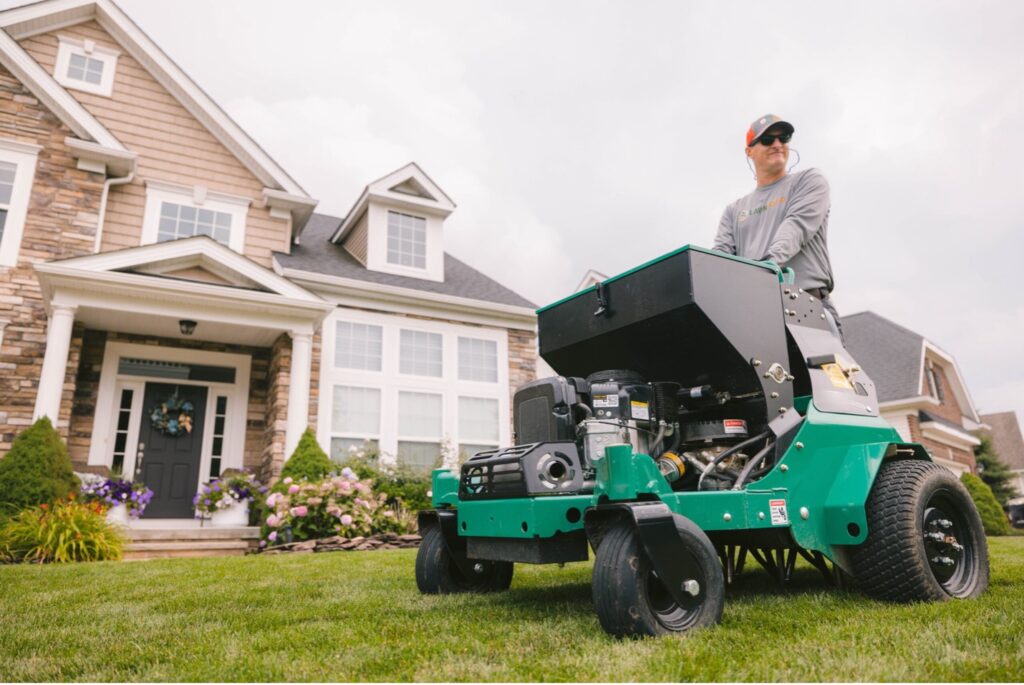
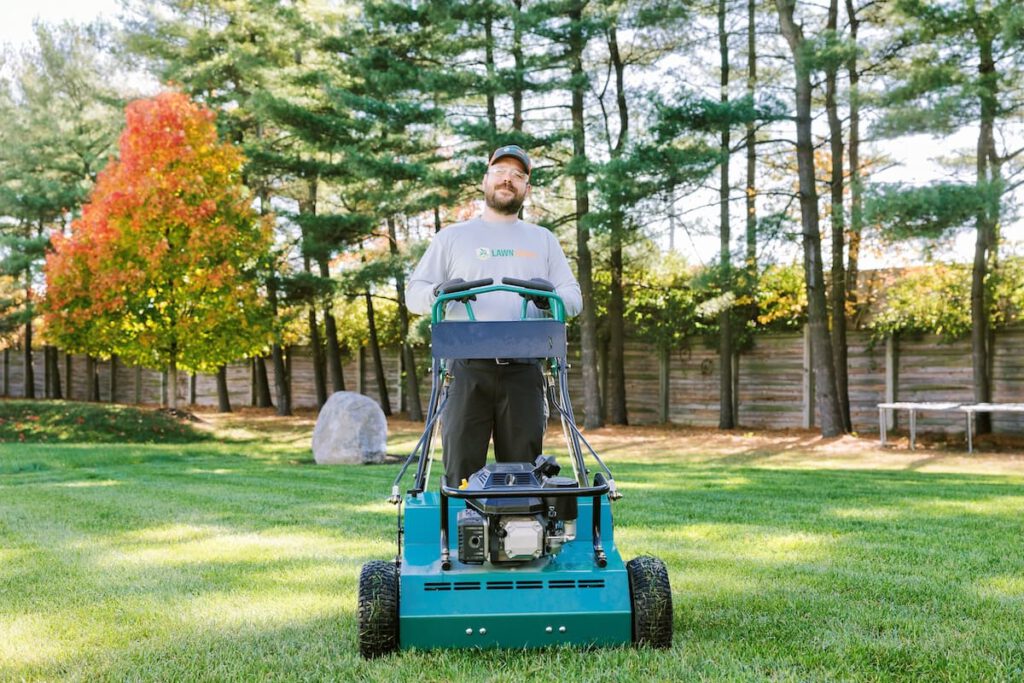
First, these products need to be watered in to move off the granule or out of the spray solution and into the top layer of soil. Roughly a quarter to a half inch of water within a day or two of application is the general expectation. Second, water moves slowly into compacted clay and tends to run off before it soaks in. If your lawn has a compaction problem, aeration improves the situation, but note that aerating after applying a pre-emergent punches holes through the treated barrier and creates openings weeds can germinate through. Aerate first, then apply, not the reverse.
Density Is Still the Best Weed Control
No herbicide program compensates for a thin lawn. Winter annual seeds need light at the soil surface to germinate, and a dense canopy mowed at three and a half to four inches denies them that light across most of the lawn.
That is why the lawns we see with chronic henbit and deadnettle problems almost always have an underlying cause: compaction from clay soil, shade along a tree line, scalping from mowing too short, or thinning left over from summer disease and grub feeding. Fix the density and the pre-emergent has far less work to do. Skip the density work and you will be applying herbicide indefinitely to the same spots every year.
A Central Indiana Fall Schedule
- Late August to early September: aerate, then either overseed thin areas or apply a fall pre-emergent, depending on which the lawn needs more. Aerate before applying, never after.
- Early to mid September: prime seeding window. Starter fertilizer at seeding, then keep new seed damp for two to three weeks.
- Mid September: latest practical timing for pre-emergent aimed at annual bluegrass on lawns you are not seeding.
- Late October: post emergent broadleaf application on winter annual seedlings, and on perennials like ground ivy, violet, and clover which are also easiest to control now.
- November: final fertilizer application while the lawn is still green, and a final mow stepped down to about two and a half inches.
What to Do Next
Walk the lawn this week and write down the two or three things that actually bother you about it, then work backward from the window rather than forward from today. Almost every fall mistake we see in Central Indiana comes from starting with the calendar instead of with the lawn.
If you would rather have someone look at it with you, Lawn Squad of Central Indiana offers a free quote. Call 833-816-7508 or find us at lawnsquad.com. Every Lawn Squad location is independently owned and operated, and our VitaminLawn fertilization and weed control program is built around the grass, soil, and conditions here rather than a national average.
A first visit is a walk of the property, a look at the thin areas, a check of mowing height and irrigation, and a straight conversation about what is realistic in the weeks left this season. At 30 days you should see color and density improve. At 90 days the lawn should be visibly thicker, with the root growth that carries it through winter.