Short Answer: Ragged, notched grass blades and small tan moths flushing up as you walk almost always mean tropical sod webworm, and sometimes fall armyworm. Both are caterpillars that chew leaf tissue at night and leave the roots and runners alive, which is why the lawn looks scalped rather than dead and why it recovers well once feeding stops. Confirm with a soapy water flush over a couple of square feet at the damage edge. Treat in the late afternoon while the larvae are small, and do not water the product in right away.
Two Different Caterpillars, Two Different Speeds
Nearly all caterpillar damage in West Orlando lawns comes from one of two insects, and telling them apart matters mostly for how fast you need to move.
Tropical sod webworm is the everyday problem here. It builds over weeks, damage appears gradually, and you often have some time to respond. Fall armyworm is the emergency version. It arrives in large numbers, feeds in a group that moves across the lawn like a front, and can strip a visible section in a couple of days. Both chew leaf tissue and leave the crowns, stolons, and roots intact, which is the good news in either case.
Sod Webworms: What to Look For
The larvae are small, roughly three quarters of an inch when mature, gray green to tan, with rows of dark spots along the body. They curl into a C shape when you pick them up. You will rarely see them during the day, because they hide in silk lined tunnels in the thatch and at the soil surface and come out to feed after dark.
What you see is the feeding. Individual blades have notches chewed out of the edges or are missing tips entirely, and the overall canopy takes on a ragged, uneven look that people frequently describe as though someone mowed part of the yard too short. Because the grass keeps growing while being chewed, the affected area looks thin and scruffy rather than dead.
The Moths Flying Up as You Walk
This is the earliest and easiest warning sign. If small tan or buff moths, about half an inch long, flush out of the grass ahead of you as you walk across the lawn or run the mower, and fly a short zigzag before dropping back into the canopy, those are the adults.
The moths themselves cause no damage. They lay eggs. So seeing a lot of them means larvae are coming in the following weeks, and it is your chance to get ahead of the problem before any grass is lost. Homeowners who notice the moths in September and check the turf shortly after usually catch the infestation while the larvae are still small and easiest to control.
Look for Frass at the Soil Line
Caterpillars eat a lot of grass and leave the remains behind. Part the turf in a damaged area and look at the soil surface and the base of the runners for small green or tan pellets, roughly the size of coarse ground pepper. That is frass, and it is essentially proof of active feeding.
You may also find fine silk webbing mixed into the thatch, which is where the sod webworm name comes from. Frass and webbing together with notched blades is a complete diagnosis and you do not need to see the insect itself to act on it.
Armyworms Move Fast
Fall armyworm larvae are larger than sod webworms, up to an inch and a half, and vary from green to brown with stripes running the length of the body. A useful identifier is a pale inverted Y marking on the front of the head.
Unlike webworms they will feed during the day, particularly in overcast weather, and they move in a mass. The classic appearance is a clearly defined boundary between untouched grass and grass eaten down to the stems, with that line advancing across the lawn day by day. If you find that, treat immediately rather than waiting to see how it develops, because a heavy armyworm population can strip a large area within seventy two hours.
The Soapy Water Flush
This is the standard confirmation test and it takes about five minutes. Mix roughly one to two tablespoons of liquid dish soap into a gallon of water and pour it slowly over one to two square feet at the edge of the damaged area, where damaged grass meets healthy grass rather than in the dead center.
The soap irritates the insects and they come to the surface within a few minutes. Watch closely, because they can be well camouflaged against the thatch. Finding several larvae in that small area indicates a population worth treating. Rinse the spot with clean water afterward so the soap does not sit on the grass and cause any injury.
How This Differs From Chinch Bug Damage
Chinch bugs are the other major insect problem in Central Florida lawns and they are often confused with caterpillars, but the damage looks quite different once you know what to compare.
Chinch bugs suck sap and kill the grass outright, producing a patch that is genuinely dead, straw colored, and expanding from a center, with dead runners that pull up in a mat. Caterpillars chew leaf tissue only, so the area looks thin, ragged, and short but the runners stay green and firmly anchored. Chinch bug damage also concentrates in the hottest, sunniest strips near driveways and sidewalks, while caterpillar damage is less tied to heat and often shows up in the middle of an otherwise healthy lawn.
How It Differs From Drought and Disease
Drought stressed St. Augustine folds its blades along the midrib and shifts to a dull blue gray before browning, but the blades stay intact with no chewed edges. Look at an individual blade closely. Notches and blunt missing tips mean an insect ate it. A whole blade that is simply discolored means something else.
Fungal disease produces circular or doughnut shaped patches with a distinct yellow or orange advancing margin, and with large patch the blade slips out of the sheath easily with a dark rotted base. None of that resembles ragged chewing. When you are unsure, the flush test settles it, because if caterpillars are present they will come up.
Why Fall Is Peak Season in West Orlando
Tropical sod webworm does not overwinter well in cold climates, which is why it is a Florida problem in particular. Here the populations build through the warm months and typically peak in late summer and fall, with multiple overlapping generations because our conditions never interrupt the cycle.
That timing is unfortunate, since it lands right as the grass is slowing down and losing some of its capacity to outgrow damage. It is also why the same lawn can get hit more than once in a season. Clearing one generation does not mean you are finished, and continuing to watch for moths through the fall is worthwhile.
Do Not Try to Fertilize Your Way Out of It
The common reaction to a thin, chewed lawn is to fertilize it and force it to grow past the damage. This generally makes things worse. Lush, tender new growth is more attractive and more nutritious to the caterpillars, so you are feeding the insects along with the grass.
Nitrogen applied as soil temperatures fall also raises large patch risk, so you can trade an insect problem for a disease problem. Stop the feeding first, then help the lawn recover. Keep in mind as well that Central Florida communities may have fertilizer ordinances restricting nitrogen and phosphorus applications at certain times of year, and those rules vary by county and municipality, so confirm what applies at your address.
Timing Treatment So It Actually Works
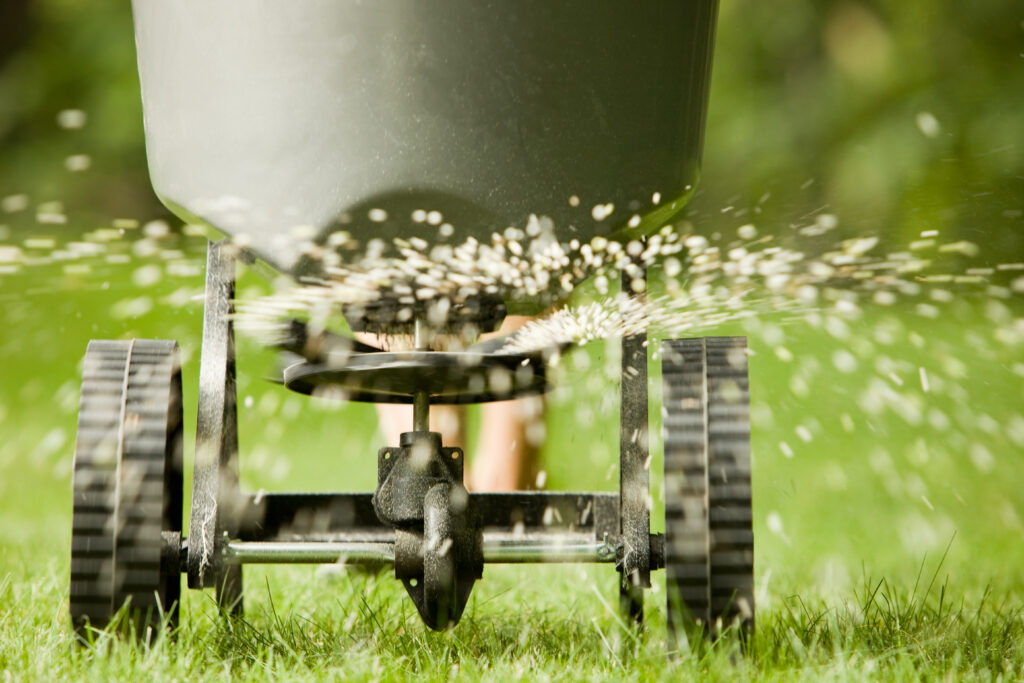
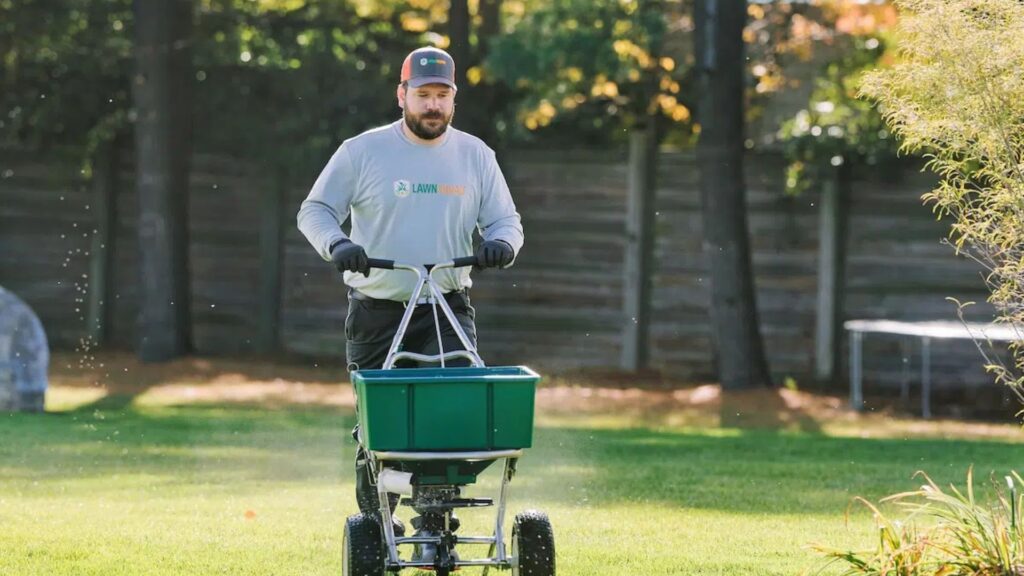
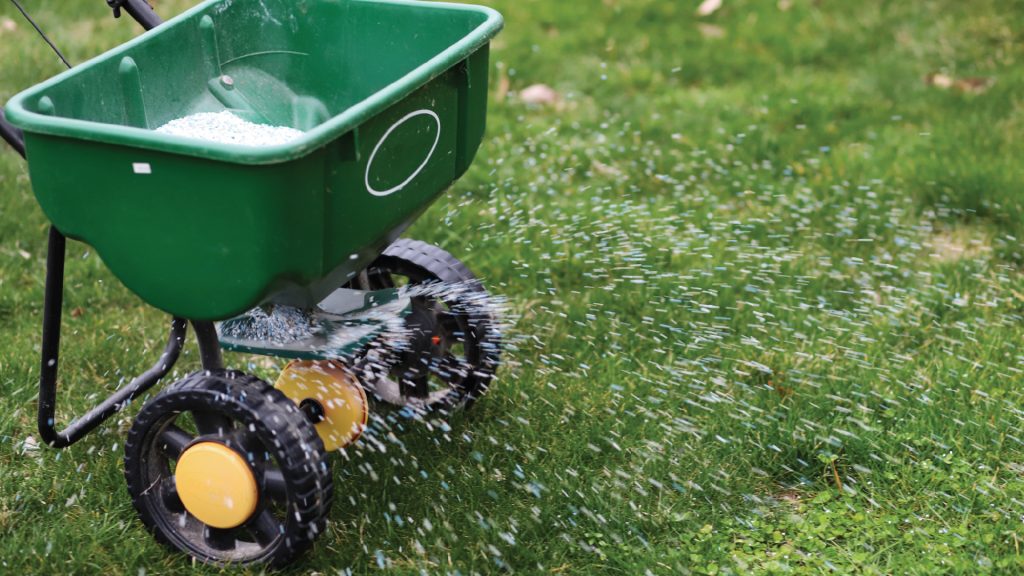
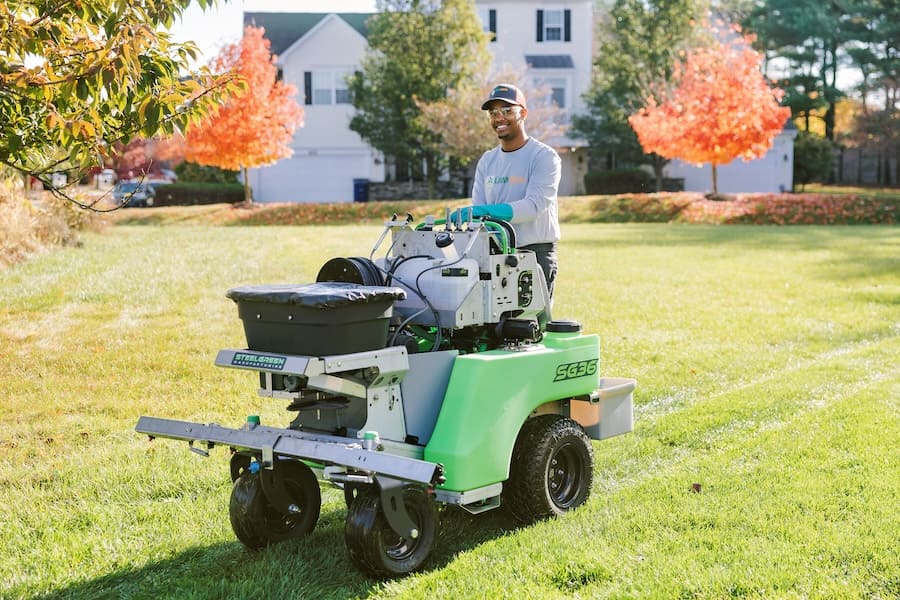
Three details determine whether an application succeeds. First, treat while the larvae are small. Young caterpillars are far easier to control than mature ones, and products based on Bacillus thuringiensis in particular work well on small larvae and poorly on large ones. Second, apply in the late afternoon or early evening, because these insects feed at night and the material is then present on the foliage when they are actively eating.
Third, and this is the one most people get backward, do not irrigate immediately after treating. Grub products get watered in to move them down to the roots. Caterpillar products need to stay on the leaf blades where the feeding happens, so watering right after application washes off the treatment. Mowing just before treating also removes the material you paid for, so mow first and then apply.
What Recovery Should Look Like
This is the encouraging part. Because sod webworms and armyworms eat leaf tissue and leave the crowns and root system alive, a lawn that looks devastated usually recovers on its own once feeding stops. There is no need to replace sod in most cases.
With warm weather, appropriate water, and reasonable nutrition after the insects are controlled, expect visible improvement within two to three weeks and substantial recovery within a month or so. Our long growing season in West Orlando means a September or October infestation still has real recovery weather ahead of it. Keep mowing height tall through that period so the grass has leaf area to work with and weed seed stays shaded out of the thinned areas.
What to Do Next
Walk the lawn this week and write down the two or three things that actually bother you about it, then work backward from the window rather than forward from today. Almost every fall mistake we see in West Orlando comes from starting with the calendar instead of with the lawn.
If you would rather have someone look at it with you, Lawn Squad of West Orlando offers a free quote. Call 833-816-7508 or find us at lawnsquad.com. Every Lawn Squad location is independently owned and operated, and our VitaminLawn fertilization and weed control program is built around the grass, soil, and conditions here rather than a national average.
A first visit is a walk of the property, a look at the thin areas, a check of mowing height and irrigation, and a straight conversation about what is realistic in the weeks left this season. At 30 days you should see color and density improve. At 90 days the lawn should be visibly thicker, with the root growth that carries it through winter.