
Short Answer: Fall armyworms are migratory caterpillars that arrive in late summer and early fall, hatch in huge numbers, and feed as a group across a lawn. A heavy population can remove most of the leaf tissue in two or three days, which is why the damage looks like it happened overnight. Confirm with a soap flush at the edge of the damage, treat only while larvae are present and still small, and expect established bermuda and zoysia to recover from the crowns while newly seeded fescue may not.
What Actually Happened
You mowed on Saturday and the lawn was fine. By Wednesday a large section is chewed down to stubble and dirt. Nothing about that timeline suggests disease or drought, both of which develop over weeks.
That speed is the signature of fall armyworms. They are caterpillars, the larval stage of a moth, and they feed in dense groups that move across turf in a roughly straight advancing line. The name comes from that behavior. A population large enough to notice can strip a quarter acre in a couple of days.
Eastern North Carolina sees this more than most of the country, and Greenville and the surrounding coastal plain get hit particularly hard in years when conditions line up.
Where They Come From
Fall armyworms do not overwinter in our area in meaningful numbers. They overwinter along the Gulf Coast and in south Florida, and moths migrate north through the growing season, producing successive generations as they go.
That migration is why timing is late here. By the time populations have built through several generations and reached the Carolinas, it is late summer and early fall. It also explains why the problem is so uneven year to year. Some years we barely see them. Other years a combination of a mild winter to the south, favorable winds, and a wet late summer produces an outbreak that hits whole neighborhoods within a week of each other.
Because they arrive rather than emerge locally, you cannot look at your lawn in June and predict what September will bring. Scouting is the only reliable approach.
What the Damage Looks Like
There is a progression, and catching it early is worth real money.
- Early stage. Small larvae scrape the surface of blades rather than eating through them, which leaves a translucent windowpane appearance. From a distance the turf looks slightly frosted or hazy.
- Middle stage. Ragged notched blade edges and thinning. The lawn looks like it needs water even though soil moisture is fine.
- Late stage. Turf chewed to stubble with a visible boundary between untouched and destroyed areas. That advancing front is the single most diagnostic feature.
Two other clues help. You will often see a sudden concentration of birds working an area of lawn, which is worth investigating rather than ignoring. And you may notice small dark green or brown pellets, which is frass, down at the soil surface.
How to Confirm With a Soap Flush
Do not treat on suspicion. Confirm first, because several unrelated problems look similar from a standing position.
Mix a few ounces of dish soap into two gallons of water and pour it slowly over about a square yard at the boundary between damaged and healthy grass. Wait three to five minutes. Irritated caterpillars come to the surface where you can count them.
The boundary matters. In the fully destroyed area they have already moved on and you will find nothing, which leads people to conclude the problem is something else.
You can also part the canopy and look at the soil surface early in the morning or toward evening, which is when they feed most actively. In the heat of the day they retreat down into the thatch.
Identifying Them
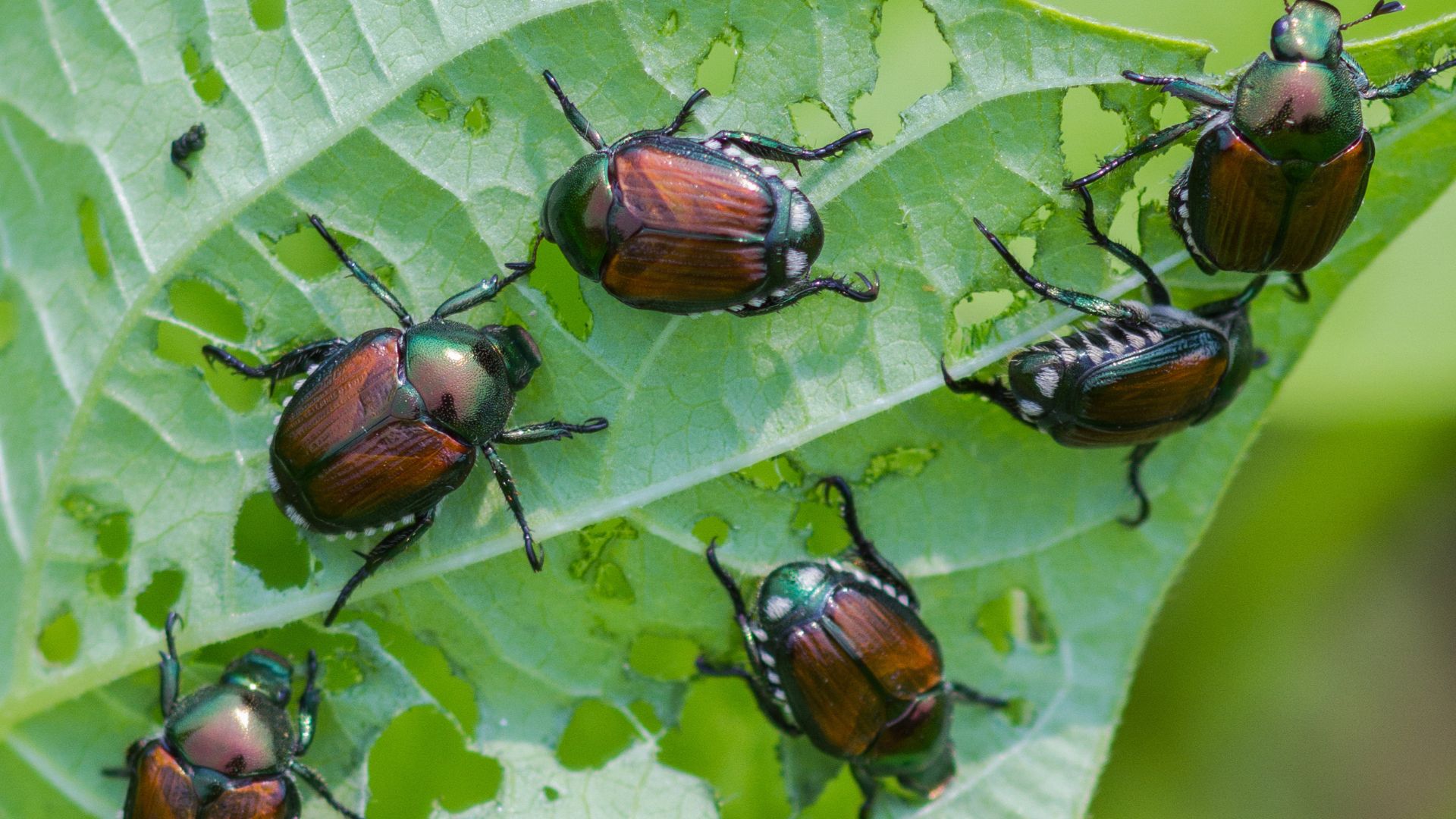
Fall armyworm larvae are green to brown to nearly black with light stripes running the length of the body. The reliable identifier is on the head: a pale inverted Y shape marked on the dark head capsule. They also have four dark spots arranged in a square on the top of the segment nearest the rear.
Size tells you how much time you have. Small larvae under half an inch are early in their development, eat relatively little, and are much easier to control. Large larvae approaching an inch and a half do the overwhelming majority of the total feeding damage and are considerably harder to kill. If the ones you flush are large, most of the damage for that generation is already done.
The Look-Alike: Sod Webworms
Sod webworms cause similar chewing damage and are also active here in late summer and fall, but the response differs enough to be worth telling apart.
Webworms are smaller, tan or gray with dark spots, and they build silk lined tunnels in the thatch where they hide during the day. Their damage appears as small irregular patches rather than an advancing front, and it develops over weeks rather than days. The other tell is the adult: small buff colored moths that flush up in a zigzag flight when you walk the lawn at dusk.
Armyworms move as a group and fast. Webworms work in scattered pockets and slowly. If you are seeing a distinct line advancing across the yard, it is armyworms.
Which Lawns Are Most at Risk Here
Armyworms are not particularly picky, but some situations attract far more damage.
Bermuda takes the heaviest hit across our area, and well fertilized, lush, actively growing bermuda is the most attractive target of all. Tall fescue is also readily fed on. Zoysia and centipede get damaged less often, though it happens.
The highest risk situation in our service area is a newly overseeded tall fescue lawn. September is when fescue seedings go in across North Raleigh, and that tender new growth is exactly what a migrating population is looking for. An established bermuda lawn that gets stripped will regrow from crowns and stolons. A two week old fescue seedling that gets eaten to the ground is simply gone, along with the money spent on seed.
If you seeded fescue this month, scout weekly until temperatures drop. That is the single most useful habit available.
When Treatment Is Warranted
Treatment makes sense when you have confirmed active larvae and there is still leaf tissue left to protect, or a new seeding at stake.
The general guideline used in turf is roughly three or more larvae per square foot on established lawns, with a much lower tolerance on new seedings where even light feeding can be fatal. Applying insecticide after the caterpillars have finished feeding and pupated accomplishes nothing, and that is a common waste. If a flush turns up nothing, the generation has moved through and your money is better spent on recovery.
Timing within the day helps. Applications made in late afternoon or evening line up with peak feeding activity. Mowing shortly before treatment removes some larvae with the clippings and improves coverage. Watering practices around the application depend on the specific product, since some need to be watered in and others must stay on the leaf surface, which is one reason product selection matters more than it appears.
Will the Lawn Come Back?
This depends on grass type and on how late in the season you are, and it is worth being honest about.
Armyworms eat leaf tissue. They do not destroy crowns, rhizomes, or stolons. So established bermuda and zoysia usually recover fully, because the growing points survive. The complication is timing. In July a stripped bermuda lawn regrows in two to three weeks. In late September or October it is heading into dormancy with little growth capacity left, so the recovery you are waiting for may not really happen until spring.
Tall fescue is different because it does not spread. Established fescue plants that keep their crowns will push new leaves, since fall is fescue growing season and it can genuinely recover now. New seedlings chewed off at the soil line are usually lost and the area needs reseeding, which is only worthwhile if there is still enough of the fall window left.
Recovery Without Making It Worse
The instinct after severe damage is to fertilize heavily. On a warm season lawn in October, resist it.
The last nitrogen application on bermuda, zoysia, or centipede should land roughly six weeks ahead of average first frost, which in our area means late August into early September. Pushing nitrogen in October to force recovery produces soft tissue heading into freeze events, and that turns an insect problem into winter injury. The lawn will look marginally better for three weeks and worse next April.
Tall fescue is the exception and can take a fall feeding, including a late one in November when top growth has slowed but roots are still active.
For warm season turf, the productive moves are keeping moisture reasonable without overwatering, keeping traffic off thin areas, and getting a properly timed pre-emergent down so winter annual weeds do not colonize the bare ground armyworms just created. That last point matters more than people expect. Thin turf in October is an open invitation to annual bluegrass, henbit, chickweed, and lawn burweed.
Why You Cannot Just Prevent Them in Advance
Homeowners often ask for a preventive treatment in July so this never happens. Unfortunately that is not how these insects work.
Because armyworms migrate in rather than emerging from your soil, and because residual control from most products lasts weeks rather than months, a preventive application made well before arrival is usually gone by the time it would matter. There is no dependable calendar date to target the way there is with a fall pre-emergent for weeds.
What actually works is monitoring. Once you know the pattern, a two minute walk of the lawn every week or so in late summer and early fall, looking for that hazy windowpane appearance and any concentration of birds, catches an infestation while larvae are still small. That is when control is cheapest and most effective, and it is the difference between light thinning and a stripped yard.
What to Do Next
Walk the lawn this week and write down the two or three things that actually bother you about it, then work backward from the window rather than forward from today. Almost every fall mistake we see in North Raleigh and Greenville comes from starting with the calendar instead of with the lawn.
If you would rather have someone look at it with you, Lawn Squad of North Raleigh and Greenville offers a free quote. Call 833-816-7508 or find us at lawnsquad.com. Every Lawn Squad location is independently owned and operated, and our VitaminLawn fertilization and weed control program is built around the grass, soil, and conditions here rather than a national average.
A first visit is a walk of the property, a look at the thin areas, a check of mowing height and irrigation, and a straight conversation about what is realistic in the weeks left this season. At 30 days you should see color and density improve. At 90 days the lawn should be visibly thicker, with the root growth that carries it through winter.