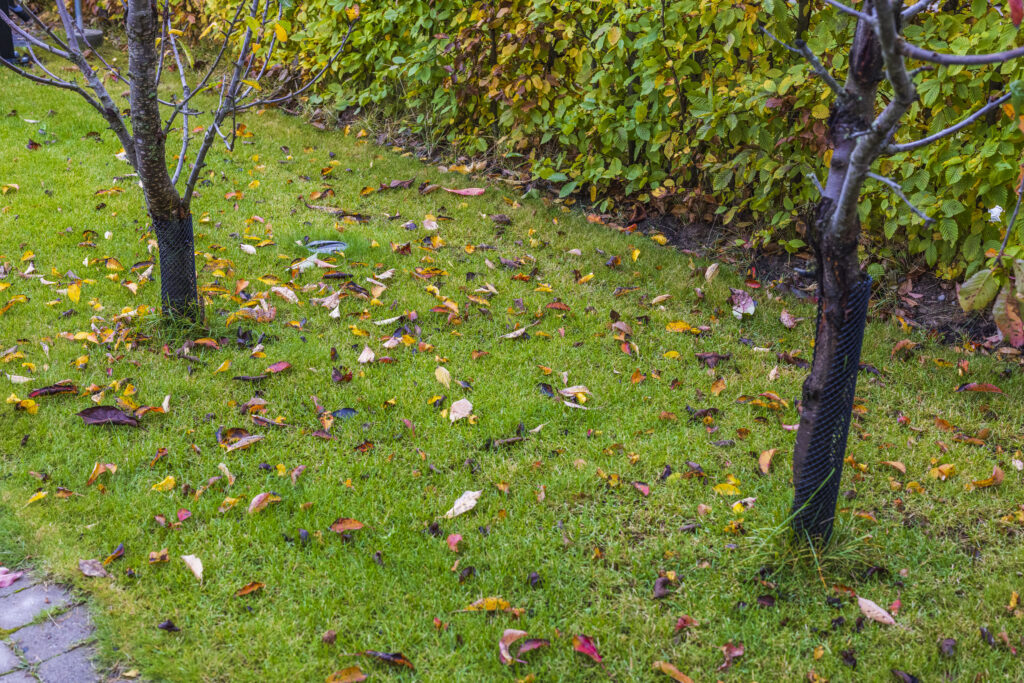
Short Answer: Thinning St. Augustine in North Austin almost always comes down to one of four causes: take-all root rot, chinch bugs, too much shade, or an irrigation problem that mimics both. Take-all shows yellowing with dark rotted roots and stolons that lift easily. Chinch bugs damage hot dry edges near pavement first. Shade thinning is gradual and follows the tree canopy. Diagnose before you treat, because our alkaline soils and mild fall weather let take-all keep working long after summer heat is gone.
Start by Ruling Things Out
St. Augustine is the dominant shade tolerant lawn grass across much of North Austin, and when it starts thinning, homeowners tend to reach for fertilizer first. That is usually the wrong move. Nitrogen makes some of the causes worse, and it never fixes the ones that matter.
Nearly every thinning St. Augustine lawn we look at here traces back to take-all root rot, chinch bugs, shade, or an irrigation problem. Each one has a signature. Spending twenty minutes identifying which one you have is worth more than any product you can buy.
Take-All Root Rot: The Quiet One
Take-all root rot is a fungal disease that attacks roots and stolons rather than leaf blades. Because the damage is underground, the aboveground symptoms look like something else entirely. The grass yellows, thins, and slowly declines in irregular patches that expand over weeks or months. It often looks like drought stress or a nutrient deficiency, so people water more and fertilize more, and neither helps.
The disease is most active when soil is moist and temperatures are moderate, which in Central Texas means spring and fall rather than the peak of summer. That is why a lawn can limp through August and then visibly fall apart in October. Warm soil plus fall rain plus a grass heading toward dormancy is the combination it likes.
How to Confirm It Is Take-All
The test takes a few minutes and it is decisive.
- Grab a runner at the edge of a declining area and pull. Healthy St. Augustine resists. Take-all infected stolons lift away with almost no effort because the roots holding them are gone.
- Dig a small plug and look at the roots. Healthy roots are white or cream and springy. Take-all roots are short, dark brown or black, and brittle.
- Look at the stolon nodes where roots should be emerging. On an infected plant they are often dark and rotted.
If the roots look fine and the blades are the damaged part, you are looking at something else. That distinction matters because take-all is a soil and root problem, and treating the leaf surface accomplishes nothing.
Why Our Soil Makes Take-All Worse
North Austin sits on alkaline ground. West and north of the city the soil is often thin over limestone, sometimes only a few inches deep. Further east it shifts to heavy dark clay. Both run high in pH.
Take-all is more aggressive in high pH soil, and high pH also locks up iron and manganese, which is why so many lawns here look pale even when they have been fed. The lawn is not short on nitrogen. It cannot access the micronutrients it needs.
Two practical responses follow from that. First, a supplemental iron application usually does more for color than more nitrogen, and it does not carry the winter injury risk. Second, topdressing affected areas with sphagnum peat moss is a long standing approach for take-all, because it acidifies the top layer of soil where the disease operates and gives the grass a better environment to root into. It is slow, it is not a cure, and it works better as part of a program than as a single rescue attempt.
Chinch Bugs and the Hot Edge Pattern
Chinch bugs are the other major cause, and they have a very recognizable pattern. Damage starts in the hottest, driest, sunniest parts of the lawn: strips along a south facing driveway, the band next to a sidewalk, the area against a west facing wall. It appears as yellowing that turns straw brown, and it expands outward as the population moves.
The reason it gets missed is that it looks exactly like drought stress in the exact places you would expect drought stress. Homeowners water more, the grass keeps dying, and the conclusion is that the irrigation is broken.
Chinch bugs stay active in Central Texas well into the fall while temperatures remain warm. A mild October keeps them feeding.
How to Check for Chinch Bugs
Get down on your hands and knees at the boundary between damaged and healthy turf. Part the grass at the soil surface and watch for small fast moving insects. Adults are black with white wings folded over the back and are about an eighth of an inch long. Nymphs are smaller and reddish orange with a pale band.
If you cannot see them, use a flush. Mix a few ounces of dish soap into a couple of gallons of water and pour it slowly over a square yard at the damage edge. Irritated insects come to the surface within a few minutes. Doing this in the transition zone rather than in the dead center matters, because they have already left the fully dead area.
Confirming before treating is not a formality. An insecticide does nothing for take-all, and a fungicide does nothing for chinch bugs.
Shade, the Cause Nobody Wants to Hear
St. Augustine handles shade better than bermuda, but better is not unlimited. It still needs several hours of direct or filtered light daily. Trees add canopy every year, so a lawn that was fine five years ago can quietly fall below the threshold.
Shade thinning has its own signature: it is gradual, it follows the shape of the canopy rather than making circles, blades stretch out long and thin reaching for light, and the turf never really recovers no matter what you apply. It also compounds the disease problem, since shaded turf stays wet longer after dew or irrigation.
The honest answers are limbing up trees to let in morning light, accepting a thinner stand, or converting the deepest shade to beds or mulch. No fertilizer program overcomes insufficient light.
Watering Problems That Imitate Everything Else
Central Texas moves in and out of drought, and watering restrictions are a normal part of life here rather than an exception. That combination produces a lot of misdiagnosis.
Shallow frequent watering builds shallow roots, which makes a lawn fragile and more vulnerable to both disease and insects. Deep and infrequent is the right pattern even under restricted schedules. Water early in the morning, between about four and eight, so blades dry as the sun comes up. Evening watering extends leaf wetness and raises disease pressure.
Also check the system itself. A clogged head, a tilted nozzle, or a zone that never runs will produce a dying strip that looks like an insect or disease problem. Run each zone manually and walk it before assuming anything biological.
As fall progresses, reduce frequency. Evaporation drops sharply once nights cool, and the August schedule left running into November keeps soil saturated at exactly the time fungal problems are most active.
Mowing Height Matters More on St. Augustine
St. Augustine should be mowed high, generally in the range of three to four inches, and higher in shade. Cutting it short is one of the most reliable ways to thin it out. Short mowing reduces the leaf area the plant needs to feed itself, exposes stolons to sun scald, and opens the canopy for weeds.
Going into fall, keep the height consistent rather than dropping it. There is a persistent belief that a warm season lawn should be scalped before winter. On St. Augustine in North Austin that is a bad trade, because leaf tissue is what protects the stolons and crowns during a cold event, and our cold events are unpredictable.
Never remove more than about a third of the blade in a single cut, and keep the blade sharp. Torn leaf tips lose water faster and give disease easier entry.
What Not to Do This Fall
Several common fall moves are actively harmful on a struggling St. Augustine lawn in Central Texas.
- Do not apply nitrogen late. The last real feeding on warm season grass should be roughly six weeks before average first frost, which here means late August into early September. Late nitrogen pushes tender growth into cold weather and it feeds take-all rather than the lawn.
- Do not aerate and overseed. That is cool season advice. St. Augustine does not establish from seed in any practical way, and aeration on a root rot lawn in fall damages what little root system remains.
- Do not dethatch in fall. If thatch is genuinely excessive, address it in late spring or early summer when the grass can recover.
- Do not keep fertilizing to chase color. If the yellowing is pH driven, iron is the answer, not more nitrogen.
Setting Realistic Expectations for Recovery
St. Augustine spreads by stolons, which means it can fill gaps on its own, but only during active growth. In the fall the plant is winding down, so a thin area diagnosed in October is not going to close before winter no matter what you do.
What fall work buys you is a better starting point in spring. Correcting irrigation, dealing with insects, addressing pH at the surface, and avoiding late nitrogen all mean the lawn wakes up with more root system and more stored energy. Real filling in happens from late spring through summer, when soil is warm and the grass is running.
If an area has lost its stolons entirely, that becomes a sodding project during the growing season rather than something a treatment program fixes.
What to Do Next
Walk the lawn this week and write down the two or three things that actually bother you about it, then work backward from the window rather than forward from today. Almost every fall mistake we see in North Austin comes from starting with the calendar instead of with the lawn.
If you would rather have someone look at it with you, Lawn Squad of North Austin offers a free quote. Call 833-816-7508 or find us at lawnsquad.com. Every Lawn Squad location is independently owned and operated, and our VitaminLawn fertilization and weed control program is built around the grass, soil, and conditions here rather than a national average.
A first visit is a walk of the property, a look at the thin areas, a check of mowing height and irrigation, and a straight conversation about what is realistic in the weeks left this season. At 30 days you should see color and density improve. At 90 days the lawn should be visibly thicker, with the root growth that carries it through winter.