Short Answer: Winter prep in New Hampshire is mostly decided in October and early November, not in December. The essentials are a final fertilization while the grass is still green and taking up nutrients, keeping leaves off the turf, dropping mowing height for the last cut or two, blowing out irrigation before the first hard freeze, and staking plow markers so the truck stays off the lawn. Snow mold and plow and salt damage cause most of the injury we see in April here, and both are very largely preventable during a few weekends in the fall.
Winter Damage Is Decided in October
Almost everything that looks wrong with a New Hampshire lawn in April was set in motion the previous fall. Matted gray patches, dead scalloped edges along the driveway, tan strips beside the road, winding brown trails across the yard. None of those were caused by the winter being unusually hard. They were caused by grass going into the winter in the wrong condition, or by the lawn taking damage from things we put on it.
That is genuinely good news, because it means a handful of tasks in October and early November has an outsized effect on how the lawn looks six months later. Here is what matters here, roughly in the order you should do it.
The Last Fertilization of the Year
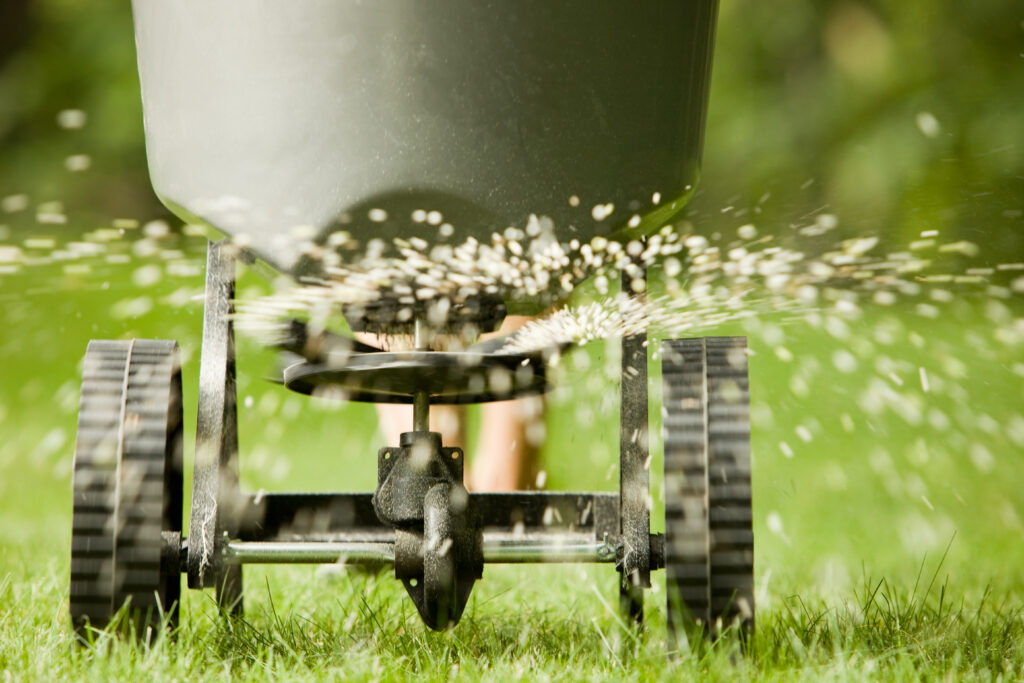
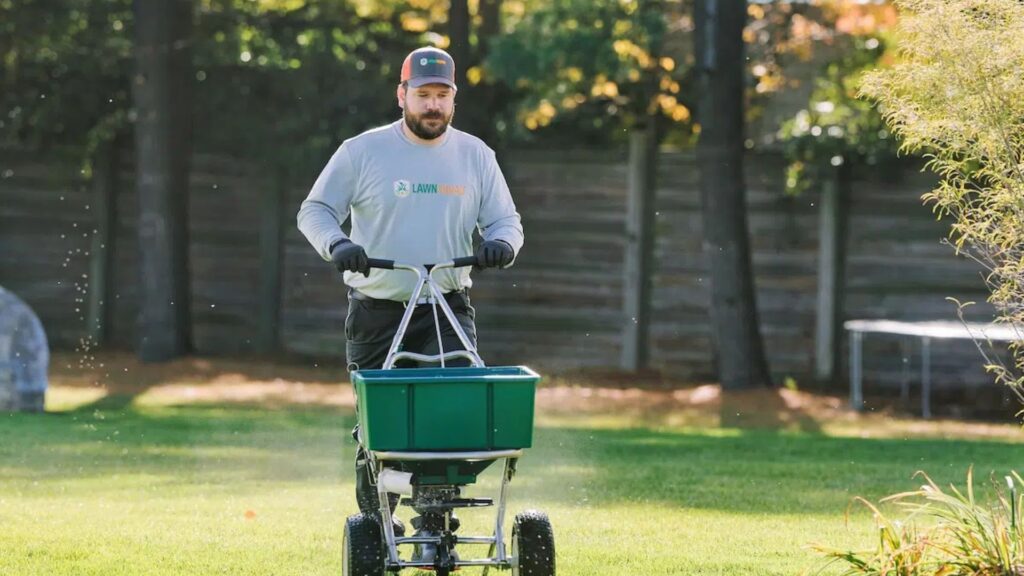
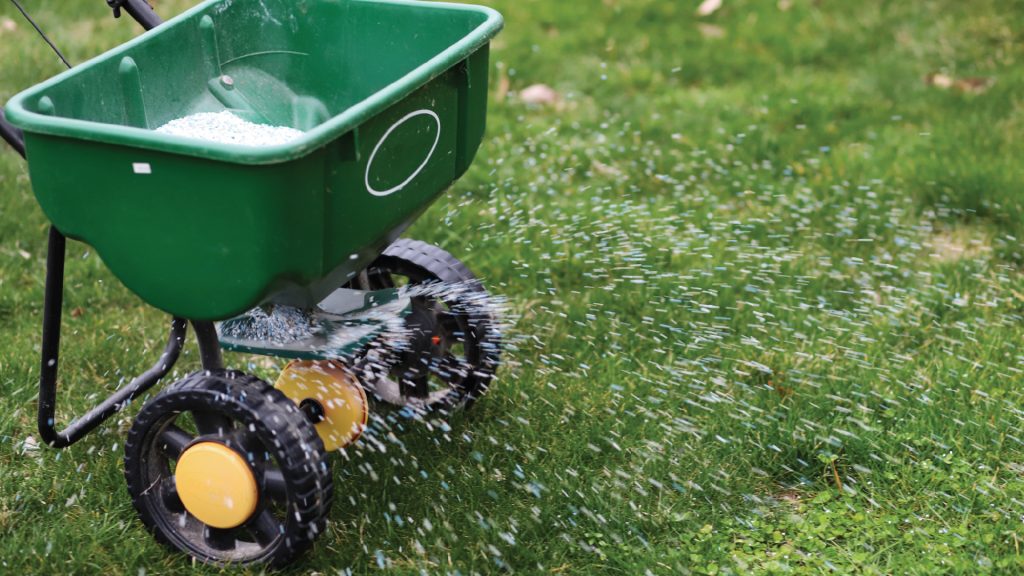
The most valuable fertilizer application of the entire year in a cool season climate is the late fall one. Timing is the trick. You want the grass still green and still photosynthesizing, but with top growth mostly stopped, which in most of New Hampshire lands somewhere between mid October and early November depending on elevation and how far north you are.
At that point the plant is no longer pushing blade growth, so it takes the nitrogen and moves it into root growth and carbohydrate storage instead. That stored energy is what pushes green-up in April without you having to feed heavily in the spring. Applied too early, you get soft top growth heading into frost. Applied after the ground is frozen, none of it gets taken up and it just runs off with the melt.
Cut It Shorter for the Last Mow or Two
We tell people to mow tall all summer, three inches or more, and that is correct for June through September. The last two cuts of the season are the exception. Bring the height down gradually to somewhere around two to two and a half inches for the final cut.
The reason is snow mold. Long grass blades lie down under snowpack, mat together, and hold moisture against the crowns for months. Short grass does not mat nearly as badly and dries faster during thaws. Do not scalp it to an inch. That exposes crowns and invites winter desiccation, which is its own separate problem in an open, windy spot.
Snow Mold Comes in Two Colors
New Hampshire gets both kinds and they behave differently.
- Gray snow mold needs prolonged snow cover, generally sixty days or more, over unfrozen ground. It shows up at melt as matted straw-colored patches with a grayish crust. It is common in the north country and anywhere snowpack sits long.
- Pink snow mold does not require snow at all. It works in cold, wet conditions right around freezing, so it can appear in a wet November or during a long gray thaw, and it can cause deeper crown damage than the gray version.
Prevention is the same for both and it is mostly cultural: shorter final cut, no late heavy nitrogen that produces soft growth, leaves cleaned off, and snow not piled deep in the same spot all winter. Most gray snow mold recovers on its own once you rake the matted areas open in spring to let air and sun in.
Leaves Have to Be Off Before the Snow

In a state with this much oak and maple, leaf load is not a cosmetic issue. A wet layer of leaves that gets snowed on top of is a sealed, dark, damp blanket over the crowns for four months. It smothers the grass outright and it is one of the most reliable ways to guarantee snow mold.
Mulch-mowing light leaf drop back into the lawn is fine and actually beneficial, as long as you can still see grass through the shredded material afterward. Once the layer is heavy enough that mulching leaves a visible mat, it needs to come off. And the last pass matters most. Leaves that drop in early November after everyone has put the rake away are the ones that spend the winter on the lawn.
Irrigation Blowout and Outdoor Water
If you have an in-ground system, get it blown out with compressed air before the first hard freeze. In much of New Hampshire that means acting in October rather than waiting for a convenient weekend in November. A hard early freeze on a system with water in the lines cracks heads, splits backflow devices, and turns a routine service call into a spring excavation.
Shut off and drain hose bibs, disconnect and drain hoses, and drain any drip line or soaker hose on beds. If you have a shallow well pump or an above-ground line feeding an outbuilding, that goes on the list too.
Plow Markers and Where the Snow Goes
Plow damage is one of the most common and most avoidable spring problems here. Stake driveway and walkway edges with markers before the ground freezes, which usually means doing it in late October. Once the ground is frozen you are not getting a stake in without a drill.
Think about where snow gets pushed, not just where it comes from. A pile that sits on the same three square yards of lawn from December through April keeps that ground frozen and saturated far longer than the rest of the yard, and it is where snow mold and crown rot show up worst. Spread the piles around if you can, and avoid burying a spot that already struggles.
Road Salt Is a Real Lawn Problem
New Hampshire uses a lot of sodium chloride on roads, and state plows throw a spray of salty slush well beyond the pavement edge. The strip of lawn along a plowed road frequently comes out of winter dead in a band three to eight feet wide. Salt injures grass two ways: direct contact burn on the crowns, and sodium accumulating in the soil, which damages soil structure and makes it harder for roots to take up water.
You cannot control the town truck, but you can control your own driveway and walkways. Use less than you think you need, sweep up excess after the melt, and consider calcium magnesium acetate or sand for traction in the spots that drain directly onto lawn. In spring, heavy watering of the affected band helps flush sodium down past the root zone, and gypsum can help on soils with real sodium accumulation.
Voles Under the Snowpack
Meadow voles spend the winter tunneling at the soil surface underneath the snow, where nothing can see them and the temperature is stable. They eat grass down to the crown as they go. At melt you find winding, interconnected brown runways an inch or two wide crossing the lawn, which people often mistake for a disease.
The fall defense is habitat. Voles want cover. Cut the lawn short for the final mow, cut back tall ornamental grasses and perennials, pull mulch back a few inches from tree trunks and shrub bases, and clear brush piles and long grass at the edges of the yard where the lawn meets the woods. Most vole damage grows back once you rake the runways open and reseed the worst spots in spring.
What Is Not Worth Doing
A few things get recommended that are not worth your time or money in this climate. Do not seed in November expecting fall establishment. It is too late here. If you want winter seeding, do a true dormant seeding after the ground is cold enough that nothing germinates, and accept that results are variable.
Do not walk repeatedly across frozen or frost-covered turf. Frozen grass blades fracture, and the same path taken daily shows as a dead trail in spring. Do not apply a heavy nitrogen dose in December on frozen ground. And do not cover the lawn with tarps or plastic to protect it. That traps moisture and produces exactly the conditions snow mold needs.
What to Do Next
Walk the lawn this week and write down the two or three things that actually bother you about it, then work backward from the window rather than forward from today. Almost every fall mistake we see in New Hampshire comes from starting with the calendar instead of with the lawn.
If you would rather have someone look at it with you, Lawn Squad of New Hampshire offers a free quote. Call 833-816-7508 or find us at lawnsquad.com. Every Lawn Squad location is independently owned and operated, and our VitaminLawn fertilization and weed control program is built around the grass, soil, and conditions here rather than a national average.
A first visit is a walk of the property, a look at the thin areas, a check of mowing height and irrigation, and a straight conversation about what is realistic in the weeks left this season. At 30 days you should see color and density improve. At 90 days the lawn should be visibly thicker, with the root growth that carries it through winter.