Short Answer: Yes, and fall is the most effective time of year to do it in this region. From mid September through early November, perennial broadleaf weeds move sugars down into their roots to prepare for winter, and a systemic herbicide applied then travels with that flow instead of only burning off the top growth. Ground ivy, wild violet, clover, and dandelion are all substantially easier to control now than in spring. The main constraint is new seed, which needs two or three mowings before it can tolerate a broadleaf product.
Why Fall Beats Spring for Weed Control
In spring, a perennial weed is doing the opposite of what you want. It is pushing energy upward into new leaves and flowers. A systemic herbicide applied then gets partly stranded in the top growth, which is why dandelions treated in April often look dead in two weeks and reappear in June from a root that was never reached.
From roughly mid September onward, that flow reverses. Shortening days and cooling nights trigger perennials to move carbohydrates down into roots, rhizomes, and taproots to store for winter. A systemic product applied during that period rides the same downward current straight into the storage tissue. The same weed, the same herbicide, and a much higher kill rate simply because of when it went down.
The Weeds That Respond Best Right Now
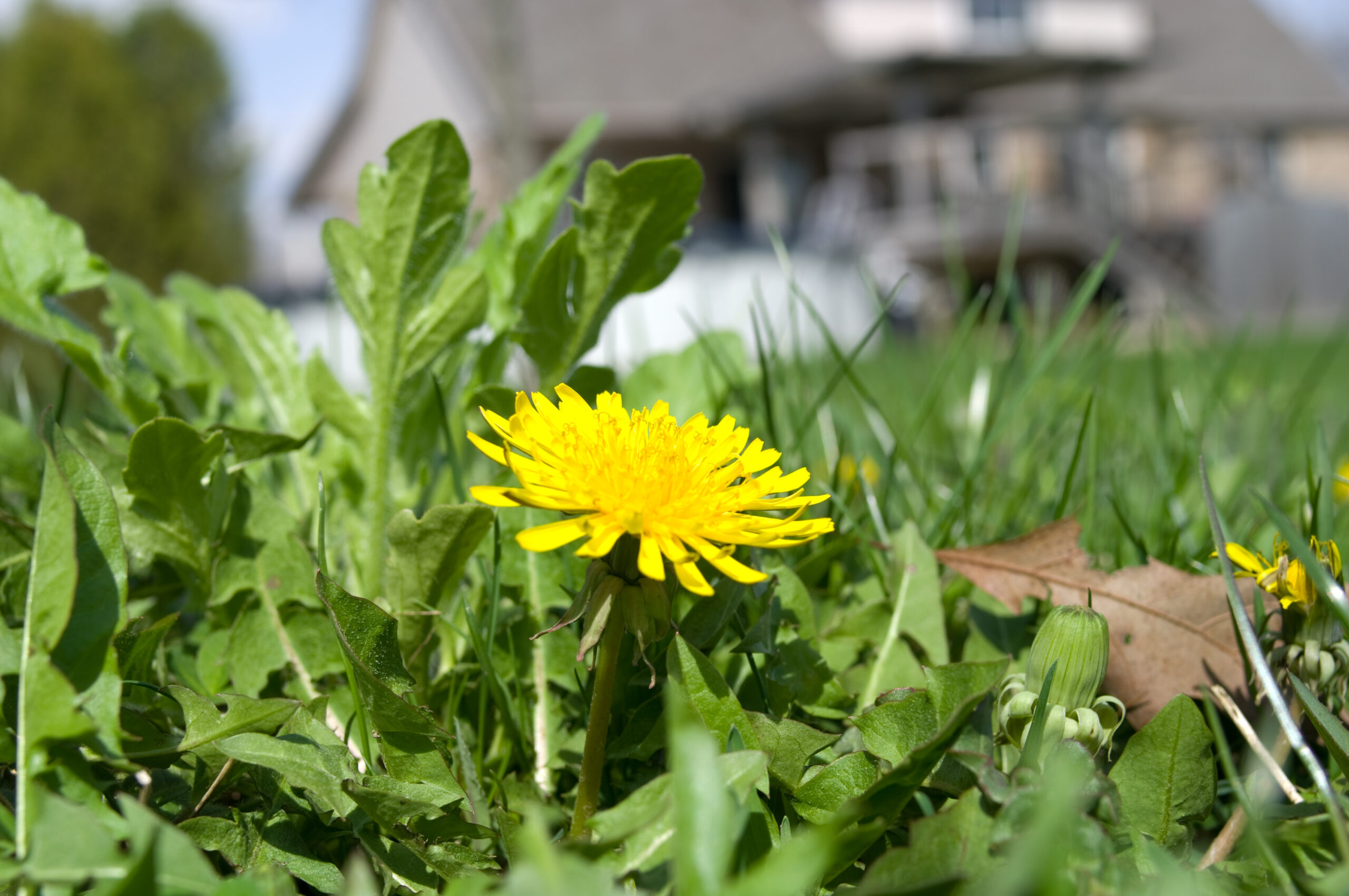
Fall treatment gives the biggest advantage on established perennials, which are the weeds people in both counties complain about most. Dandelion, broadleaf plantain, buckhorn plantain, white clover, and black medic all respond noticeably better to a fall application than a spring one.
Younger, smaller weeds are also easier to kill than mature ones. A dandelion that germinated in August has a taproot a few inches long. The same plant next May has a root a foot deep and a season of stored energy behind it. Treating the population you can see now prevents most of what would otherwise be a spring problem, which is why lawns on a consistent fall program need far less spraying in April.
Ground Ivy Is the One That Really Needs Fall
Ground ivy, which most people here call creeping charlie, is the weed that convinces homeowners their lawn program is not working. It has scalloped round leaves, square stems, small purple flowers in spring, and it spreads by creeping stems that root at every node. It thrives in the shaded, damp, compacted conditions common along the wooded edges of properties in both counties.
Spring applications on ground ivy are usually disappointing. The reliable window is mid October into early November, ideally after the first light frost, when the plant is actively pulling reserves down. Products containing triclopyr are far more effective on it than a standard three way broadleaf mix. Even then, plan on a follow up application the next fall. Ground ivy is a two season project, not a one spray fix.
Wild Violet Is the Hardest Weed in the Two Counties
Wild violet is the most stubborn common broadleaf weed in this area, and it is worth setting expectations honestly. The leaves are thick and waxy, which sheds spray. It spreads by underground rhizomes, so killing visible leaves does nothing to the network below. It also produces seed from small self pollinating flowers at ground level that never open, which means it seeds itself even after you remove the obvious blooms.
Fall is still your best shot. Use a triclopyr based product with a surfactant so the spray sticks to that waxy surface, apply while the plant is actively growing before a hard freeze, and expect to repeat. Two fall applications spaced three to four weeks apart, repeated over two seasons, is a realistic path. Anyone promising a single treatment solution on violet is overselling.
Winter Annuals Are Germinating Right Now
The weeds that make lawns look terrible in March are germinating in September and October. Common chickweed, henbit, purple deadnettle, hairy bittercress, and annual bluegrass all sprout in fall, sit through winter as small rosettes, then explode into growth and flower before the lawn has greened up.
Homeowners usually first notice them in early spring, at which point they are flowering, setting seed, and nearly finished with their life cycle. Killing them in November while they are seedlings is easier, cheaper, and stops the seed bank from refilling. A fall preemergent application is the other half of that strategy, and it targets a different set of weeds than the crabgrass preemergent that goes down in spring.
Nutsedge and Stiltgrass Are Different Problems
Two of the most common complaints in this region will not respond to a fall broadleaf application, and it is worth knowing that before you spend money.
Yellow nutsedge is a sedge, not a broadleaf. By fall it has already produced underground tubers and is shutting down for the year. Broadleaf herbicides do not touch it, and this late in the season even a proper sedge product mostly wastes material. The effective window is June and July, when plants are young and before tubers form. Japanese stiltgrass, which is widespread along wooded property edges throughout Bucks County, is an annual grass. By late September it has already set seed and will die on its own at first frost. The control point for stiltgrass is a preemergent in spring, not anything you do now.
The Conflict Between Seeding and Spraying
This is the practical problem most homeowners run into, because both jobs want the same six weeks. Nearly every broadleaf herbicide label requires that new seedlings be mowed two or three times before application, which works out to roughly four weeks after germination. Spray sooner and you damage or kill the seedlings you just paid for.
It works in the other direction too. Most broadleaf products require a waiting period, commonly two to four weeks, between application and seeding. So you have to choose an order. If the lawn is thin and weedy, seed first in early September and hold the broadleaf application until late October once the new grass has been cut a few times. If the lawn is dense but weedy, spray in late September and seed next year. Trying to do both in the same week is the most common way people waste both.
Weather Rules That Decide the Outcome
Timing within the season matters as much as picking the season. A few rules that apply directly to fall conditions in southeastern Pennsylvania:
- Apply when daytime highs are between 50 and 80 degrees. Below 50, weeds are not translocating enough for a systemic product to move. Above 85, you risk injuring the turf.
- The weeds must be actively growing. Spraying drought stressed plants during a dry September stretch gives poor results. Water first or wait for rain.
- Check the forecast for rain. Most products need somewhere between one hour and twenty four hours of dry conditions to be absorbed.
- Do not mow for two to three days before or after. The weed needs leaf surface to absorb through.
- Stop once a hard freeze arrives. A light frost is acceptable and even helpful for ground ivy, but a plant knocked down by a hard freeze is no longer moving anything to its roots.
What Fall Treatment Will Not Fix
Herbicide removes weeds. It does not create grass. Every square inch a dead weed leaves behind is open soil, and open soil in this region is claimed by crabgrass or the next generation of broadleaf weeds within a season.
If a lawn is thirty percent weeds, killing them all produces a lawn that is thirty percent bare. That is why weed control and overseeding belong in the same plan. Weeds are usually filling a gap the turf created, whether from compaction, shade, poor soil pH, summer disease, or mowing too short. Fixing the underlying condition is what keeps them from returning. Soil across both counties frequently tests between 5.0 and 5.8, and grass competes poorly at that pH while many weeds do not mind it at all.
A Realistic Fall Calendar for This Area
- Early to mid September: aerate and overseed thin areas. Fertilize. Do not apply broadleaf herbicide over new seed.
- Late September: if you are not seeding, this is a good first broadleaf application on dandelion, plantain, and clover while temperatures are still mild.
- Mid to late October: the prime window for ground ivy and wild violet, using a triclopyr based product. Also the point at which September seedlings have usually been mowed enough to tolerate treatment.
- Late October into early November: second application where needed, plus fall preemergent for winter annual weeds.
- November: final fertilizer application while the lawn is still green, and last chance for a broadleaf application before a hard freeze.
What to Do Next
Walk the lawn this week and write down the two or three things that actually bother you about it, then work backward from the window rather than forward from today. Almost every fall mistake we see in Bucks and Montgomery Counties comes from starting with the calendar instead of with the lawn.
If you would rather have someone look at it with you, Lawn Squad of Bucks and Montgomery Counties offers a free quote. Call 833-816-7508 or find us at lawnsquad.com. Every Lawn Squad location is independently owned and operated, and our VitaminLawn fertilization and weed control program is built around the grass, soil, and conditions here rather than a national average.
A first visit is a walk of the property, a look at the thin areas, a check of mowing height and irrigation, and a straight conversation about what is realistic in the weeks left this season. At 30 days you should see color and density improve. At 90 days the lawn should be visibly thicker, with the root growth that carries it through winter.