Short Answer: Keep mowing as long as the grass is growing, which along the Southeastern Massachusetts coast usually means into early or mid November in a normal year. Do not stop on a date. Stop when growth stops. The final feeding should go down while roots are still active, generally through October, and Massachusetts regulations set a late-season cutoff after which turf fertilizer applications are not permitted, so confirm the current date before applying. Take the last cut slightly shorter, clear the leaves, and shut down irrigation before the first hard freeze.
Stop Watching the Calendar and Watch the Grass
The most common late-season question we get is what date to stop mowing, and the honest answer is that there is no date. Cool-season grass keeps producing leaf as long as soil temperatures stay above roughly 45 degrees, and the ocean influence across Bristol, Plymouth, and Barnstable counties holds soil warmth later than it does inland. In a typical year that means the lawn is still growing into early November, sometimes past it. A homeowner who parks the mower on Columbus Day usually ends up with four extra inches of soft growth going into winter, which is the exact condition that invites disease.
Why the Last Cut Should Be Slightly Shorter
Through the season you should mow high, three and a half inches or more, especially on the sandy soils common here. The final cut of the year is the one exception. Bringing the last one or two cuts down to around two and a half to three inches reduces the mat of long, wet leaf blades that lies flat under snow and ice. That mat is what snow mold grows in. Do not scalp it. Taking a tall lawn straight down to an inch and a half removes leaf tissue the plant needs and exposes crowns to winter desiccation, which is a worse trade.
The Final Feeding Is the Most Valuable One
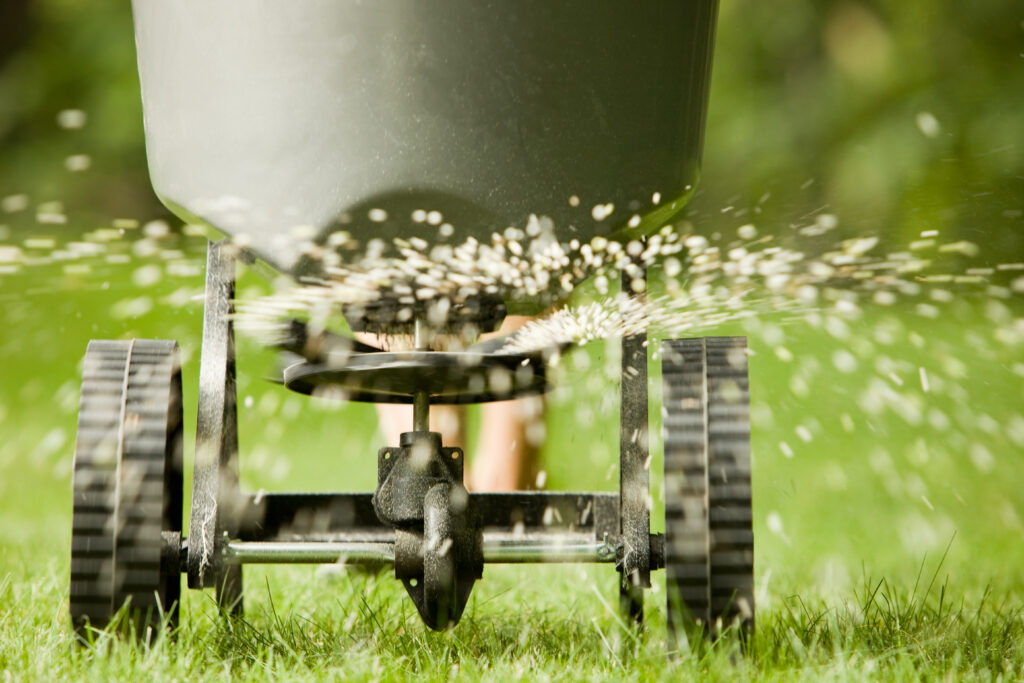
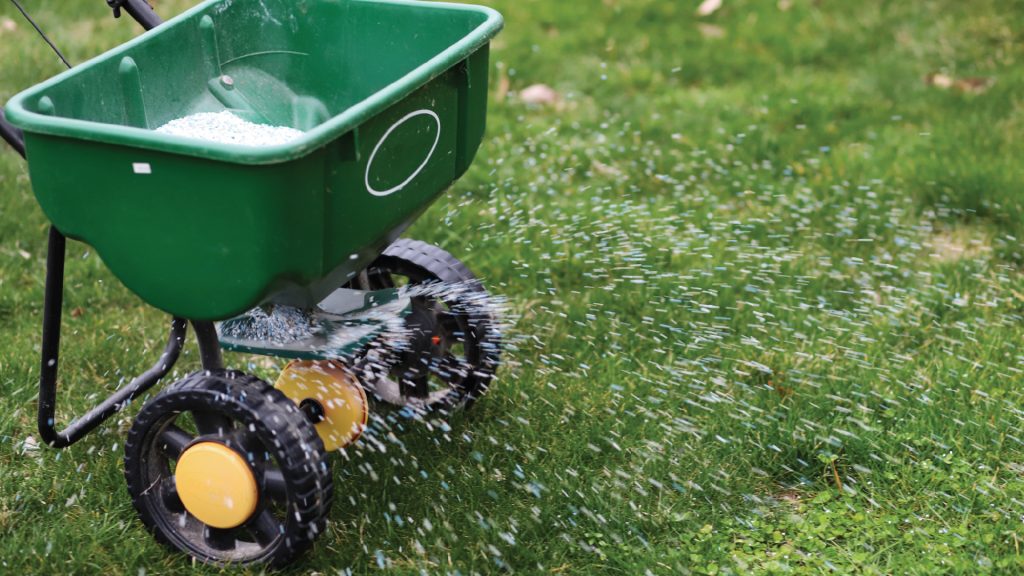
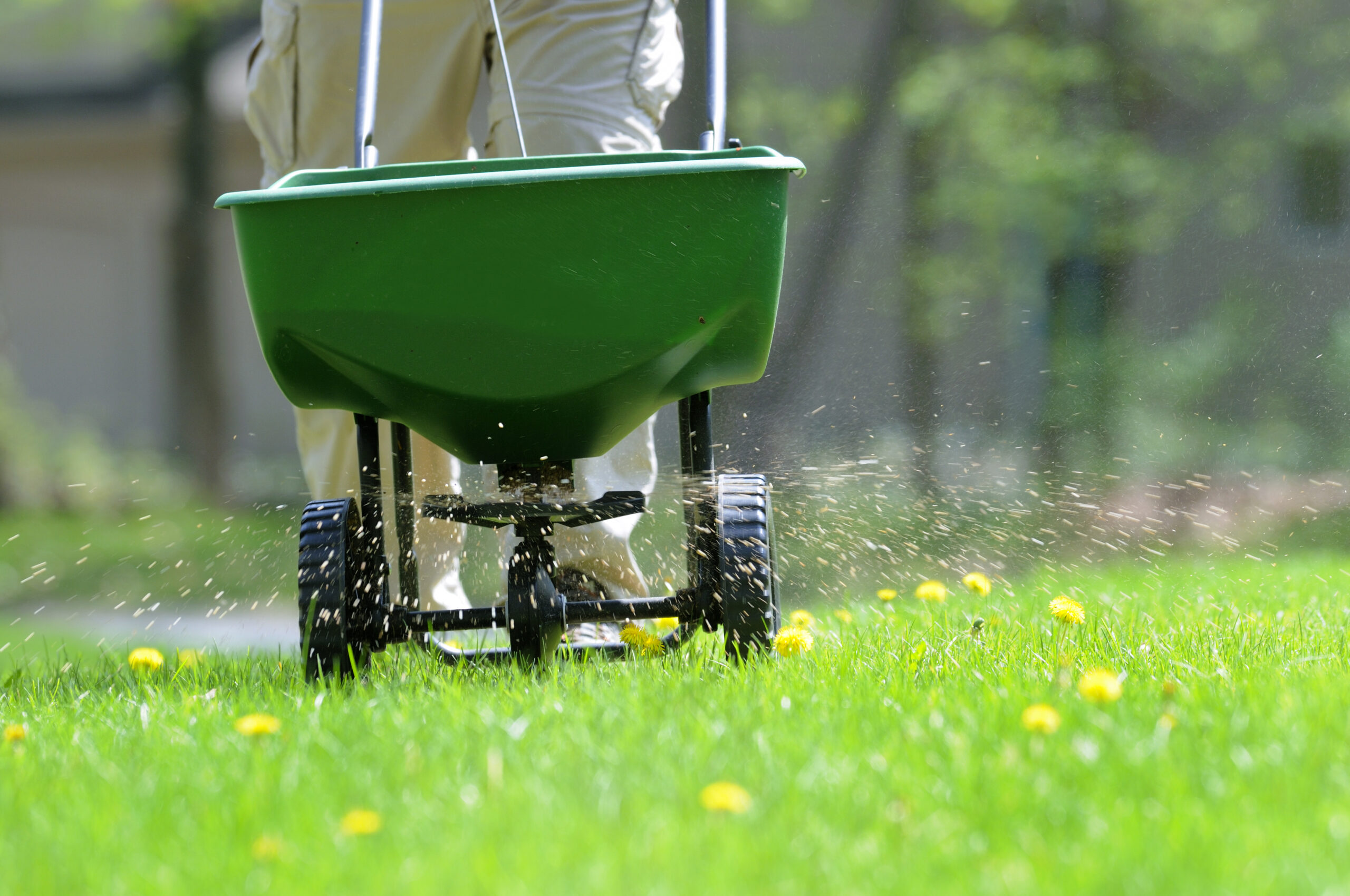
Grass shifts its priorities in autumn. Top growth slows while root growth continues, and nitrogen applied while soil is still active goes into root mass and carbohydrate storage rather than into blades you then have to mow. That stored energy is what produces early green-up in April without a spring nitrogen push. On sandy soil a slow-release source matters more than the analysis on the bag, because quick-release nitrogen applied to sand in November largely leaves before the plant can use it.
Know the Massachusetts Cutoff Before You Apply
Massachusetts regulates turf fertilizer statewide. The rules restrict phosphorus on established lawns unless a soil test demonstrates a need, and they establish a late-season date after which fertilizer may not be applied to turf. Many towns in this region, particularly those in the Buzzards Bay watershed and on the Cape, have adopted local bylaws that go further. Confirm the current state date and your town’s bylaw before the last application, or ask your applicator to confirm they are working inside both. Nitrogen that moves through sand reaches groundwater and estuaries quickly here, which is precisely why these rules exist.
What Actually Counts as Winterizer
The word winterizer is a marketing term rather than a technical one, and products sold under it vary widely. What matters is that the nitrogen source is largely slow release, that the application lands while soil is still biologically active, and that potassium is present if a soil test shows it is low, which is common on sand because potassium leaches readily. A high-nitrogen quick-release product applied in late November to cold soil does close to nothing for the lawn and a fair amount for the watershed. Timing and formulation, not the label, determine whether the application was worth making.
Leaves Are a Deadline, Not a Chore
Oak and maple canopy is heavy across much of this region, and oak leaves in particular are leathery and slow to break down. A layer left in place through a wet November mats down, blocks light, traps moisture against the crowns, and reliably produces dead patches by March. You do not have to bag everything. Mulch-mowing a moderate leaf layer chops it into pieces small enough to fall into the canopy and decompose, which adds organic matter to soil that badly needs it. When the layer is thick enough that you cannot see grass after a pass, that is the point where removal is the better call.
Shut Down Irrigation Before the First Hard Freeze
Do not let this slide. Water left in lateral lines and backflow devices expands when it freezes and cracks fittings, and the repair is discovered in April when the system is charged and the yard floods. Coastal Southeastern Massachusetts usually sees its first hard freeze somewhere in the second half of November, but a cold snap can arrive earlier. Schedule the blowout while the calendar still has room, not after the forecast turns. Run one final deep watering before shutting down if autumn has been dry, because grass going into winter on dry soil suffers more from cold desiccation.
Late Fall Is the Best Broadleaf Weed Timing of the Year
Perennial broadleaf weeds such as dandelion, clover, and ground ivy are pulling resources into their root systems in autumn, exactly like the grass is. Herbicide applied during that period gets carried down with everything else, which is why fall treatments produce far better control of established perennials than spring ones do. The practical limit is temperature. Below roughly 50 degrees the plants are not moving much, so the productive window generally closes as October ends. This is also the year’s best opportunity against ground ivy, which is stubborn at every other time.
Snow Mold and What Actually Prevents It
Gray and pink snow mold show up in spring as matted, straw-colored circles, usually where snow sat longest or where a plow pile melted last. Fungicide is rarely warranted on a home lawn here. The preventive work is cultural and it all happens now: take that final cut shorter, remove the leaf mat, avoid a heavy late nitrogen push that produces soft growth going into winter, and try not to pile snow in the same spot every storm. Most cases recover on their own once things dry out in April, helped along by light raking to break up the matted turf.
Protect the Lawn From Winter Salt
Road and walkway salt does real damage along driveways, street edges, and paths, and it looks exactly like drought when it appears in spring. On sandy soil the salt at least flushes downward with rain reasonably well, which is one advantage of this region’s drainage. Use the minimum product that keeps surfaces safe, sweep up excess rather than letting it wash into the turf, and consider a physical barrier along the worst edge. In spring, a deep watering of affected strips helps move residual salt below the root zone before seeding those areas.
Finish the Season With Notes
The best thing you can do in the last week of the season costs nothing. Walk the property, photograph the thin areas, note which side of the house browned first in August, note where water pooled, and note where leaves piled deepest. In April none of that will be visible and you will make decisions from memory, which is unreliable. Homeowners who write it down in November are the ones who aerate the right areas and seed the right grass the following September instead of treating the lawn as a single uniform surface.
What to Do Next
Walk the lawn this week and write down the two or three things that actually bother you about it, then work backward from the window rather than forward from today. Almost every fall mistake we see in Southeastern Massachusetts comes from starting with the calendar instead of with the lawn.
If you would rather have someone look at it with you, Lawn Squad of Southeastern Massachusetts offers a free quote. Call 833-816-7508 or find us at lawnsquad.com. Every Lawn Squad location is independently owned and operated, and our VitaminLawn fertilization and weed control program is built around the grass, soil, and conditions here rather than a national average.
A first visit is a walk of the property, a look at the thin areas, a check of mowing height and irrigation, and a straight conversation about what is realistic in the weeks left this season. At 30 days you should see color and density improve. At 90 days the lawn should be visibly thicker, with the root growth that carries it through winter.