
Why Is My Central Georgia Centipede Lawn Declining in August, and How Do I Reverse It?
Short Answer: Centipede decline is usually a case of a lawn being killed with kindness. Centipede is a low-input grass that wants little nitrogen and acidic soil, and the most common causes of decline in Central Georgia are too much fertilizer, soil pH pushed too high, often by liming, and thick thatch. The stress builds all season and becomes obvious in the August heat as yellowing, thinning, and patches that are slow to recover. What reverses it is doing less: a soil test, far less nitrogen, correcting pH back toward acidic, iron for color instead of feeding, and getting thatch and mowing under control. Recovery is real but slow.
Centipede has a nickname around here, the lazy man’s grass, because it asks for so little. It is the default lawn on countless Macon and Central Georgia properties precisely because it is supposed to be low-maintenance. So it catches homeowners off guard when a centipede lawn they have been diligently fertilizing, liming, and watering starts thinning out, yellowing, and dying in patches by late summer. The frustrating twist is that the diligence is often the problem.
Centipede decline is one of the most common calls we get in August, and it is one of the most misunderstood, because almost everything instinct tells you to do to a struggling lawn is the opposite of what centipede actually needs.
What Centipede Decline Actually Is
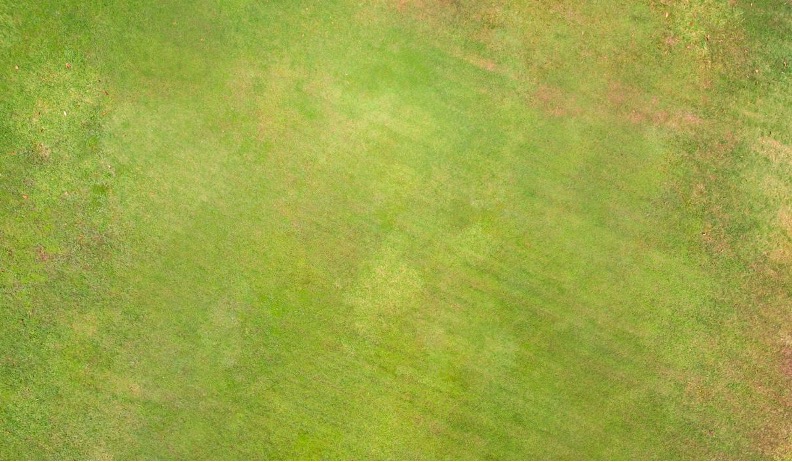
Centipede decline is not a single disease you can spray away. It is a syndrome, a general failure of the turf that shows up as yellowing, thinning, and dead or slow-to-recover patches, usually on lawns that are a few years old. Sometimes it appears as a lawn that greened up poorly and unevenly in spring and never fully caught up. Sometimes it is patches that expand through the summer. Either way, it is the lawn telling you that its growing conditions or its care have pushed it past what it can tolerate, and by August the accumulated stress is on full display.
Because it is a management syndrome rather than a bug or a fungus, the fix is almost always about changing what is being done to the lawn, not about finding a product to rescue it. That is good news, because it means the cause is usually within your control.
One thing worth ruling out early is ground pearls, a tiny soil insect that feeds on centipede roots and leaves round dead patches no amount of fertility correction will fix. They are difficult to control and easy to confuse with management decline, so if areas keep dying out even after you have corrected everything else, it is worth checking for them specifically rather than assuming it is care.
Why It Surfaces in August
The stresses that cause centipede decline build quietly all year and then cash in during the hottest, driest stretch. A lawn that was over-fertilized in spring put on soft growth and thatch it could not support, a lawn on soil that is too alkaline has been slowly starving for iron, and a shallow-rooted centipede lawn pushed by heat and drought simply runs out of margin. On top of that, iron chlorosis, the yellowing that comes from unavailable iron, is most visible during the summer flush of growth. So August is when a problem that started months earlier finally looks like an emergency.
The Biggest Culprit: Too Much Nitrogen
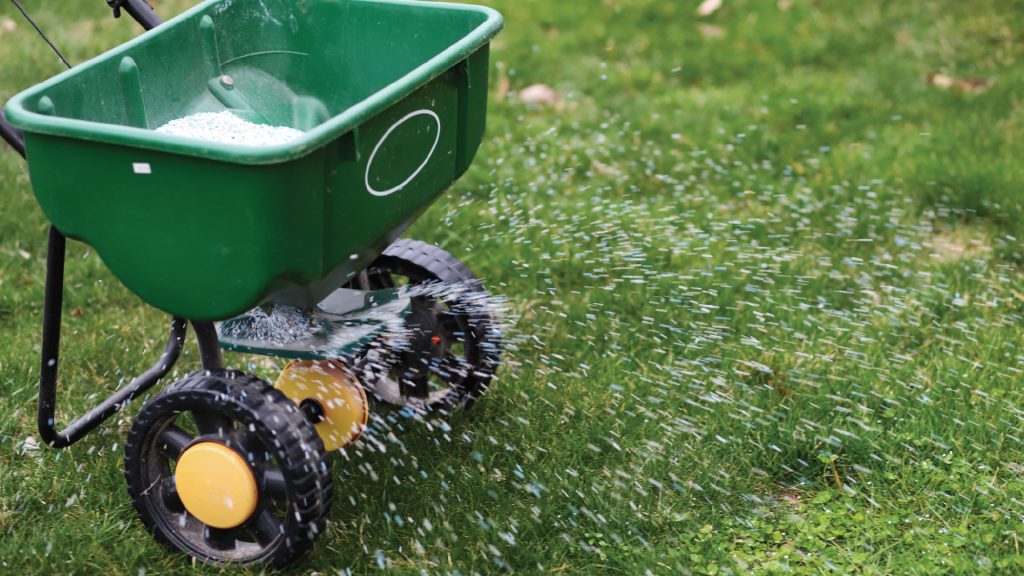
If there is one cause of centipede decline to understand, it is over-fertilization. Centipede evolved on poor, sandy, acidic soil and it is genuinely adapted to low fertility. It needs far less nitrogen than bermuda or the fescue lawns up north, and feeding it on a bermuda schedule is the single most common way homeowners destroy it.
Excess nitrogen pushes centipede into growth it cannot sustain. It builds thatch, reduces the plant’s cold hardiness so it takes more winter injury, and leaves it weaker and more disease-prone. A well-meaning homeowner who fertilizes centipede four times a year to make it greener is, over a couple of seasons, feeding it to death. Less is genuinely more with this grass.
As a rough sense of scale, centipede is usually happy with a small fraction of the nitrogen a bermuda lawn gets across a year, often a single modest feeding rather than the repeated applications people are used to giving a Southern lawn. When you are unsure with centipede, the safer error is almost always to feed less.
The Second Culprit: Soil pH and Iron
Centipede is unusual in that it wants acidic soil, generally in the range of about 5.0 to 6.0, which is lower than most lawns prefer. This is where a lot of decline gets set in motion, because the standard advice to lime a lawn is exactly wrong for centipede. Liming raises the pH, and when the pH climbs too high, iron in the soil becomes chemically unavailable to the plant even when it is present. The result is iron chlorosis, that pale yellow-green cast, and a lawn that slowly weakens.
The fix follows directly. When centipede looks yellow, the instinct is to add nitrogen to green it up, but on high-pH soil that makes things worse. What it usually needs instead is its pH brought back down toward acidic, sometimes with elemental sulfur if it has been limed for years, and iron rather than nitrogen for color. Iron greens centipede up without forcing the growth that gets it into trouble. None of this can be guessed, which is why a soil test is the foundation of every centipede recovery.
Thatch, Mowing, and Water
Three more management factors round out the picture. Thatch, the spongy layer of undecomposed stems between the grass and the soil, builds up fast on over-fertilized centipede and holds the crowns and runners up off the soil where they dry out and freeze more easily. Mowing height matters too, since centipede does best cut fairly low, and letting it grow tall encourages still more thatch. And watering is a balance, because centipede is shallow-rooted and both drought stress and constant overwatering can push it toward decline. Deep, infrequent watering serves it far better than daily sprinkling.
What Actually Reverses It
Recovery starts with a soil test, because it tells you the one thing you cannot see, your pH, and therefore whether iron chlorosis and over-liming are part of the story. From there the plan is mostly subtraction. Cut the nitrogen back hard to what centipede actually needs, which is very little. If the pH is too high, begin bringing it back down toward the acidic range the grass wants. Use iron rather than fertilizer when you want color. Get thatch under control and keep the mowing height appropriate. Water deeply but not often. Every one of those steps is about removing a stress rather than adding a treatment.
The honest part is that centipede recovers slowly. It is not a grass that bounces back in two weeks, and areas that were killed outright may need to be plugged or re-established since centipede spreads on its own only gradually. But a centipede lawn given the right, minimal conditions is remarkably durable and low-maintenance, which is the whole reason it was planted in the first place.
What to Do Next
If your centipede lawn is yellowing, thinning, or failing to fill back in this August, resist the urge to fertilize your way out of it, because that is often what started the decline. Begin with a soil test and an honest look at what the lawn has been getting. Call us at PHONE_PLACEHOLDER or request a free quote at lawnsquad.com. We serve Macon, SERVICE_AREA_PLACEHOLDER, and the surrounding Central Georgia communities.
On a first visit we confirm the grass is centipede, check thatch depth and mowing height, look at drainage and watering, and pull a soil sample so pH and nutrients are measured rather than guessed. Do not expect an overnight turnaround, because centipede recovers at its own pace, but you should see the yellowing improve as iron and corrected pH take hold, and the thinning stabilize as the lawn stops being overfed. The real recovery shows over the following season as the grass rebuilds under conditions that actually suit it.
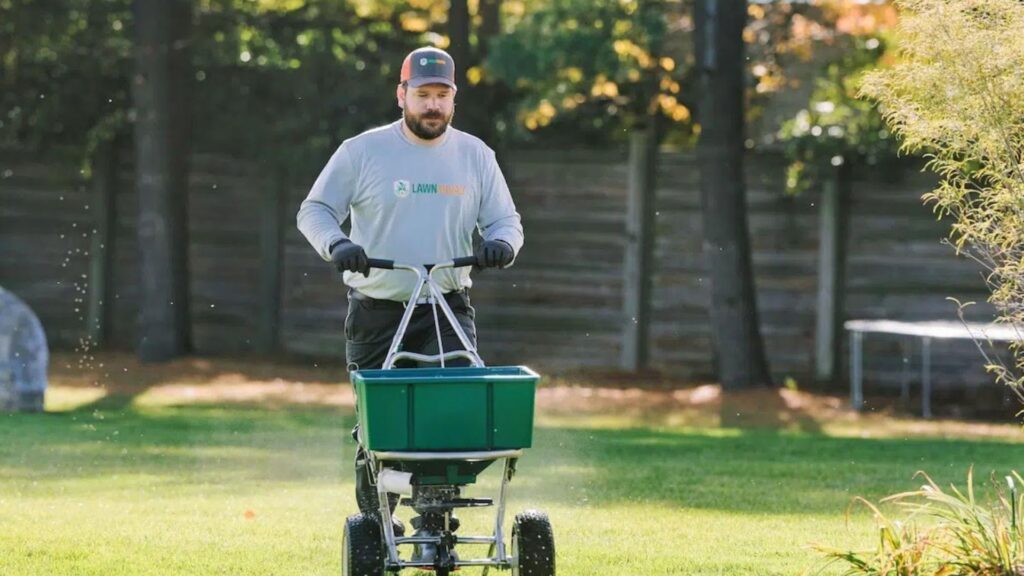
Longer term, this is exactly what our VitaminLawn program is built to get right. Centipede does not want the same program as bermuda, and treating it like a high-input lawn is what causes most decline in the first place. We build the fertility, pH, and iron plan around what centipede actually needs in Central Georgia soil. We are independently owned and operated, every quote is free, and our work is backed by a satisfaction guarantee.