DIY Fall Fertilizer or Hire It Out? An Honest Comparison for Aurora Homeowners
Short Answer: Doing your own fall fertilization in Aurora is very achievable, and the cost gap is smaller than most people assume. Quality granular product for an average lot runs roughly $100 to $180 for the two fall applications, plus a spreader you buy once. A professional fall program covering the same two visits generally lands somewhere in the $110 to $220 range. The real difference is not price, it is execution. Spreader calibration, application timing tied to soil temperature rather than the calendar, and matching the nitrogen source to the season are where DIY results usually slip. If you enjoy the work and will calibrate, DIY works well.
Most articles comparing do it yourself lawn care to hiring a company are written by companies who want you to hire them, and they tend to skip the part where DIY works perfectly well for a lot of people. We would rather give you the real numbers and let you decide, partly because the homeowners who choose us after seeing honest math tend to be happier customers than the ones who were talked into it.
So here is the comparison as we would explain it to a neighbor. What fall fertilization actually costs each way in the Aurora area, where the DIY approach tends to break down, and the specific situations where we tell people to just handle it themselves.
The Real Cost of Doing It Yourself
Start with your actual lawn size, because everything follows from it. A typical Aurora subdivision lot has somewhere between five and twelve thousand square feet of turf after you subtract the house, driveway, and beds. Most people overestimate this substantially, which is the first place DIY budgets go wrong.
A quality granular fertilizer bag covers roughly five thousand square feet and runs about $25 to $45 depending on the nitrogen source and whether it carries a control product. For the two fall applications on a ten thousand square foot lawn, you are buying four bags, so roughly $100 to $180 for the season. Add a broadcast spreader, which is a one time purchase of about $60 for a basic model or $150 and up for one that holds calibration well.
Then add the time. Each application is maybe forty five minutes including loading, walking the lawn, and cleanup, plus a trip to buy product. Call it two to three hours across the fall. That is a genuinely modest commitment.
What a Fall Program Costs Instead
Professional fertilization is typically priced per visit based on measured square footage. For the same average Aurora lot, individual applications commonly fall in the $55 to $110 range, so the two fall feedings generally land somewhere around $110 to $220. Full season programs of five to seven visits are usually quoted as a package and often work out lower per application than one off visits.
Compare that against the DIY numbers and the gap is real but not dramatic. You are usually looking at a difference of a few dozen dollars per application for the fall portion. This surprises people who assumed hiring out costs several times more.
The gap narrows further when you account for a spreader purchase in year one, and for the reality that leftover partial bags often sit in the garage and absorb humidity until they clump and get thrown out. But the honest summary is that if you are optimizing purely for the lowest dollar figure, DIY does win, modestly.
Where DIY Results Usually Slip
In our experience the difference in outcomes almost never comes from the product in the bag. It comes from three execution details.
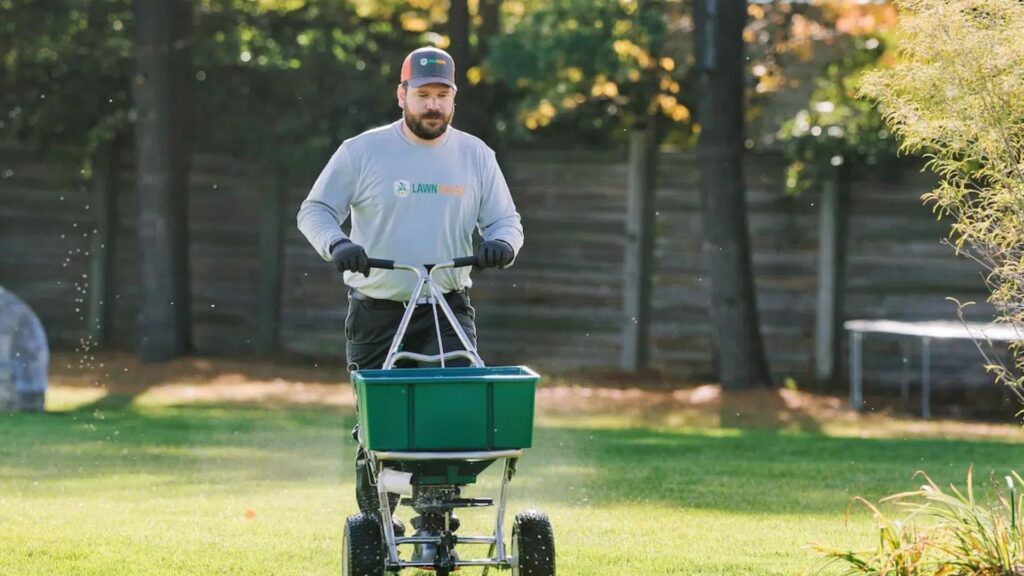
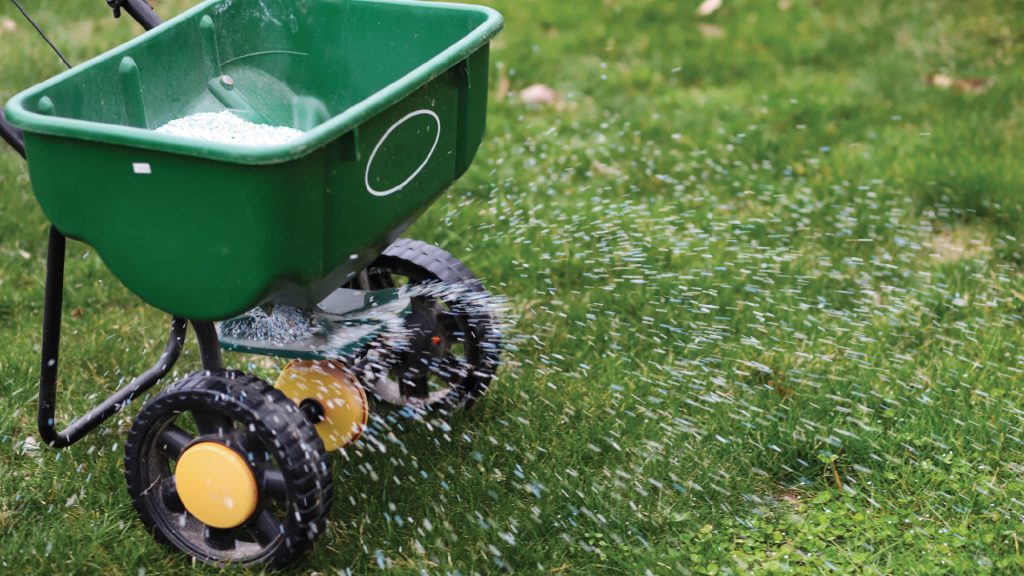
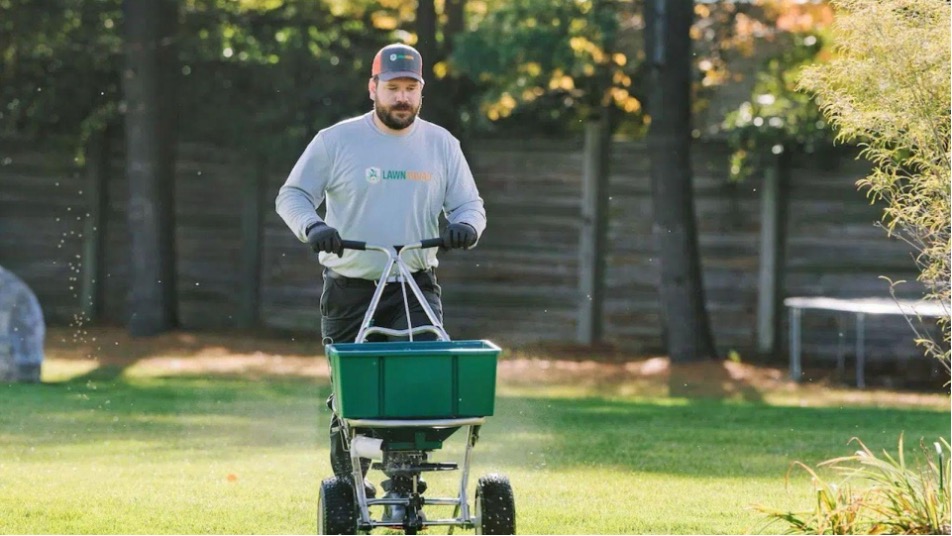
The first is spreader calibration. Every spreader setting number means something different on every bag, because granule size and density vary by product. The setting chart on the bag is a starting point tuned to specific popular spreaders, not a guarantee. Applying twenty percent heavy wastes money and can burn turf. Applying twenty percent light produces a lawn that never quite responds and leaves you wondering why. Most homeowners never verify, and this is the single biggest gap we see.
The second is pattern. Striping happens when passes do not overlap correctly, and it shows up two weeks later as dark green bands with pale ones between them. The fix is walking at a consistent pace and overlapping the edge of your spread pattern rather than the edge of your wheel track.
The third is timing, and in fall it is the one that costs the most. The late season application has to land while the grass is still green and the soil is still above roughly forty degrees but top growth has stopped. That window moves every year with the weather. A homeowner applying on the last Saturday in October because that was when they had time may hit it perfectly or miss it entirely.
Reading the Bag Without Getting Lost
If you go the DIY route, the three numbers on the bag are nitrogen, phosphorus, and potassium by percentage. For fall feeding in northern Illinois, nitrogen is what you are primarily buying.
Worth knowing for Illinois specifically: phosphorus, the middle number, is restricted on established lawns in this state. You will find most bags on local shelves carry a zero in that position, which is correct and not a defect. Phosphorus is appropriate when establishing new seed or when a soil test shows a deficiency, and otherwise it runs off into waterways.
Check the nitrogen source on the back label. For the September feeding, slow release forms such as coated urea or methylene urea feed gradually and are the right choice. For the late fall application, soil biology has slowed too much to break those down, so a product with a meaningful share of quick available nitrogen is what actually works. Using a heavy slow release product in November is a common and expensive mistake.
What You Are Actually Paying a Company For
It is not the fertilizer. Commercial product is better than consumer product in some respects, mainly consistency of granule size and blend uniformity, but that difference alone would not justify the price.
What you are buying is calibrated equipment, someone watching soil temperatures and adjusting the schedule rather than following a calendar, and a set of eyes on your lawn several times a year. Across the properties we manage in the Fox Valley, catching a problem early is often worth more than the application itself. Grubs, snow mold pressure, and thinning that signals compaction all show up to someone walking the lawn regularly.
You are also buying the thing nobody puts in a brochure, which is that it happens whether or not you feel like it on a cold November Saturday. The late fall feeding is the one DIY homeowners skip most, and it is the one that matters most.
When We Tell People to Do It Themselves
There are situations where hiring out does not make sense, and saying so costs us nothing. If you genuinely enjoy yard work, own a decent spreader, and are willing to calibrate it once a season, you can get results very close to professional. Fertilization is among the most DIY friendly parts of lawn care, far more so than weed control or disease management.
Small lawns are another case. Under about three thousand square feet, the per visit minimum most companies charge makes the economics awkward, and a single bag covers your whole season.
And if the lawn is not the priority right now, that is a completely legitimate position. A lawn that gets one well timed late fall feeding a year and nothing else will still be meaningfully better than one that gets nothing, and there is no obligation to run a full program.
What to Do Next
Whichever direction you lean, start by measuring your actual turf area. Pace the perimeter of each turf section, multiply, subtract beds and hardscape. Nearly every homeowner we do this with is surprised, usually because the number is smaller than they guessed. Everything downstream, cost estimates, bag counts, and quotes you compare, depends on that figure being right.
If you are going DIY, calibrate the spreader before the first pass. Put a known weight of product in, run a measured area, weigh what is left, and compare to the target rate. It takes fifteen minutes once and it is the difference between a program that works and one that does not.
If you would rather hand it off, ask any company you call three questions. Is the price based on measured square footage. What nitrogen source is used for the late fall application specifically. Does the schedule follow soil conditions or fixed calendar dates. The answers separate companies quickly.
If you would rather have someone else handle the timing decisions, product selection, and application for your Aurora lawn, we are here for that. Visit lawnsquad.com to find Lawn Squad of Aurora and request a free quote on your property. Our VitaminLawn program is built around the grass types, clay soils, and weather patterns of the Fox Valley, and we are happy to tell you honestly if your lawn does not need us this year.