
Why Is My Palm Beach Lawn Turning Yellow in August: Nutrition, Water, or Disease?
Short Answer: Four causes account for nearly all of it. Our sandy soil over limestone runs high in pH, which locks up iron and manganese even when they are present, so yellowing on the newest blades with green veins still showing is usually a micronutrient availability problem rather than a lack of nitrogen. Uniform yellowing in low spots after storms points to saturated roots. Yellowing that fades to straw in the hottest sunny strips suggests chinch bugs. Patchy yellowing where the turf lifts easily with dark rotted runners points to take-all root rot. The blade pattern and the location tell you which.
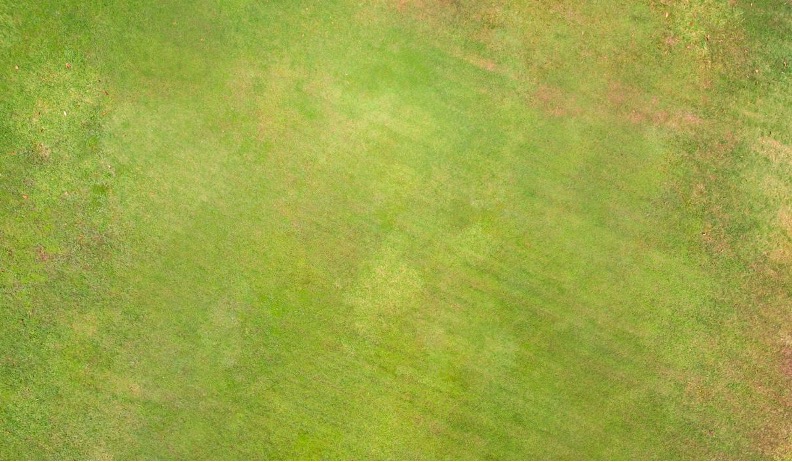
It is the second week of August in Boca Raton. Rain most afternoons, the lawn growing hard enough that you are cutting twice a week, and yet the whole thing has gone a flat yellow green that catches your eye every time you pull into the driveway. Not brown. Not dead. Just pale, in a way that makes the neighbor’s St. Augustine look artificially deep.
The reflex is to reach for fertilizer, and that reflex is wrong often enough to be worth slowing down. Nearly everyone we meet here assumes the lawn is hungry. Sometimes it is. Just as often the nutrients are already in the soil and the grass cannot reach them, so more of the wrong thing costs money without changing the color. Here is the sequence we use when we walk a yellow lawn in West Palm Beach or Delray Beach. It takes about ten minutes.
Step One: Look at One Blade, Up Close
Pull a single yellow blade and hold it up against the sky. Is the yellow uniform across the whole blade, or are the veins running its length still green while the tissue between them has gone pale? That second pattern, green veins on a yellow background, is interveinal chlorosis, and it is the single most useful thing your lawn can tell you in August.
Interveinal yellowing points at iron, sometimes manganese. Uniform pale yellow points toward nitrogen, or toward a root problem starving the plant of everything at once. Take three or four blades from different parts of the yellow area so you are not reading one odd sample.
Step Two: Ask Whether It Is the New Growth or the Old
This is the step almost nobody takes, and it settles the question fastest. Nitrogen is mobile inside the plant. When a lawn runs short, the grass pulls nitrogen out of its older lower leaves and sends it to the new growth. So a genuinely nitrogen hungry lawn yellows from the bottom up, oldest blades first, while the youngest blades at the tips of the runners stay reasonably green.
Iron and manganese are not mobile. The plant cannot rob its old leaves to supply the new ones, so a deficiency shows up first and worst on the newest growth while the older tissue underneath still looks fine.
Put the two steps together. New growth yellow between green veins, older growth still green, is an iron or manganese availability problem, far and away the most common answer in our market. Uniform yellowing that starts at the bottom points toward nitrogen, and that answer depends on the calendar and on where you live.
Step Three: What August Actually Allows You to Apply
Before you buy anything, know this. Palm Beach County and its municipalities restrict lawn fertilizers containing nitrogen or phosphorus through the summer rainy season to keep nutrients out of the canals and the Lake Worth Lagoon, and the end date is not the same everywhere. Some jurisdictions lift it a full month earlier than others, so Boca Raton and Delray Beach do not run on the same calendar as West Palm Beach or Lake Worth. Rules also get amended. Confirm the current dates for your own municipality rather than trusting a neighbor or a bag label.
So if your diagnosis lands on nitrogen, the fix waits, and that costs you less than it sounds like, because nitrogen pushed into saturated August soil largely washes into the storm drain anyway. The better news is that the most common cause here was never nitrogen. Iron and micronutrient products are not restricted, and they address exactly the interveinal yellowing our high pH soil creates. A lawn treated with chelated iron in August often greens up within a week or two, without the soft flush growth nitrogen would have forced in the wettest month of the year. The compliant answer and the agronomically correct answer happen to be the same one. For the properties we service, we track which dates apply to each address and time the program around them.
It is worth knowing why our soil sets this trap. The coastal ridge from Pompano Beach through Boynton Beach and up into Palm Beach is sand over limestone, which is calcium carbonate. Decades of it weathering into the profile, plus irrigation water drawn from the same aquifer, push pH into the alkaline range, where iron and manganese shift into forms roots cannot absorb. A soil test can show adequate iron while the lawn above it is visibly starving. That is also why more granular iron often does little: it ties up the same way the old iron did. Chelated and foliar products work because they bypass the soil chemistry entirely.
Step Four: Rule Out Water Before You Rule In Nutrition
August is the wettest stretch of our year, and saturated soil produces yellowing that mimics deficiency almost perfectly. Roots need oxygen, and when storm water fills every pore space for hours they suffocate, leaving the lawn pale and limp.
The test is simple. Push a long screwdriver into the yellow area and into healthy turf nearby. If it slides in with almost no resistance and comes out with wet soil clinging to it, water is your problem. Where the yellow sits matters too: waterlogged yellowing follows topography, showing up in swales, along the low side of a Lake Worth back yard, or where a downspout empties. Nutritional yellowing is broad and even.
The correction is not fertilizer. It is turning the irrigation controller down or off during the rainy stretch and clearing whatever holds the water. We have watched lawns recover color in a week and a half with nothing applied.
Step Five: Check the Hot Sunny Strips for Chinch Bugs
Southern chinch bug is a St. Augustine specialist working the hottest, sunniest parts of a lawn: the strip between sidewalk and street, or the edge of a Delray Beach driveway where reflected heat bakes the turf.
Chinch damage starts yellow and does not stay yellow. It runs through coppery orange to straw, spreading outward as the insects work, and water does not fix it. Most homeowners notice that tell first, when a week of heavy watering only makes the spot bigger. To confirm, kneel at the boundary between yellow and green turf, spread the canopy with your fingers, and watch the soil surface for thirty seconds. Chinch bugs are roughly an eighth of an inch, black with white wing patches, and the immature ones bright reddish orange. Movement catches your eye first, and a few along a yellowing edge is enough to act on.
Step Six: Consider Take-All Root Rot
Take-all root rot fools experienced people, because above ground it looks like nutrition. Irregular yellow patches appear, a foot to several feet across, thinning slowly rather than collapsing, and fertilizer buys a brief response before the patch fades again. The answer is below the surface: grab a handful of turf at the edge of a patch and pull gently. Healthy St. Augustine resists and tears. Turf with take-all lifts away easily because the root system is gone, leaving roots and runners that are short, sparse, and dark brown or black instead of white and firm.
The disease sits in most of our soils and turns aggressive when the grass is stressed, which is why our long warm wet stretch brings it out. Managing it means reducing stress rather than chasing color: raise the mow height, correct drainage, address thatch, and sometimes apply a targeted fungicide early rather than late. Recovery is measured in months, not weeks.
What to Do Next
Walk your lawn tomorrow morning with those steps. Blade pattern first, new versus old growth second, then the screwdriver, then the sunny edges, then a tug on the worst patch. In most Palm Beach yards you will land on iron availability or too much water, and both are manageable. Raise your mower to the upper end of the St. Augustine range, and stop guessing until you know what you are treating.
If the picture is mixed, or you want a second set of eyes, call Lawn Squad of The Palm Beaches at 561-621-9217 or request a free quote at lawnsquad.com. A first visit means walking the property with you, pulling blades and turf samples, checking soil moisture and irrigation, and giving you a plain diagnosis before anything is applied. We serve Boca Raton, Boynton Beach, Coconut Creek, Deerfield Beach, Delray Beach, Lake Worth, Lake Worth Beach, Palm Beach, Pompano Beach, and West Palm Beach.
Our VitaminLawn program is built around exactly this soil, with micronutrient support scheduled into the plan rather than added as an emergency, and timed around the restriction dates for your address. When yellowing is availability driven, expect visible color within one to two weeks of the first application. By 90 days, with mowing height and irrigation corrected, the goal is even color that holds through the wet season instead of fading every August.