How Do I Get Rid of Necrotic Ring Spot in My Utah County Bluegrass Lawn?
Short Answer: You manage it culturally and then you change the grass. Necrotic ring spot is a root and crown rotting fungus that attacks Kentucky bluegrass, producing sunken rings with a tuft of survivors in the middle. Fungicides are expensive, must be watered deeply into the root zone to reach the pathogen, and suppress rather than eliminate it. The durable answer is aerating and overseeding the affected turf in late summer with turf-type tall fescue and improved perennial ryegrass, which resist the disease. Over two or three seasons the patches stop returning.
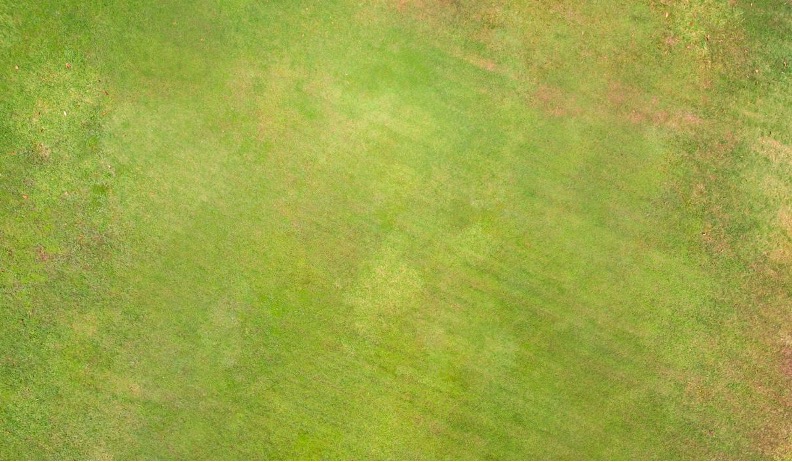
You noticed them in July. A few pale circles in the front lawn, maybe a foot across, looking at first like the sprinkler had missed a spot. By early August they are unmistakable: straw colored rings, slightly sunken so the mower drops as it crosses them, with a stubborn little clump of green grass standing right in the center of each one like a bullseye. Some of the rings have merged into long crescents. And the more you water, the more they seem to spread.
The frustrating part, and we hear it in almost identical words from homeowners in Lehi, Vineyard, and Saratoga Springs, is that this is often a nice, newer lawn on a well kept property, watered faithfully, fed on schedule, with an irrigation system that works. Nothing you did wrong made this happen, and nothing simple is going to make it go away.
Identifying It Correctly Before You Spend a Dollar
Several problems in this valley produce circles in a lawn, and they call for completely different responses. Dry spots from a plugged nozzle have soft, irregular edges and green up within days of a repair. Grub feeding creates patches you can peel back like carpet, with no roots holding. Dog urine leaves small dark green rims around a dead center. Fairy ring often shows a dark green stimulated band, sometimes with mushrooms after a wet stretch.
Necrotic ring spot looks different from all of those. The classic sign is the frog eye: a ring of dead turf, generally from six inches to three feet across, with a tuft of surviving grass or opportunistic weeds in the middle. Rings appear year after year in the same footprint and expand outward. Tug on a plant at the ring’s outer edge and it comes up easily with almost no root system, and if you look closely at the crown and the base of the stems you will often see dark brown or black discoloration.
The Damage Happens Below Ground, Months Before You See It
This is the single most useful thing to understand about the disease. The fungus responsible colonizes roots, crowns, and the short underground stems of Kentucky bluegrass. It is most active during the mild, moist conditions of spring and fall, which means the infection that produced your August rings was quietly established months earlier.
What you are seeing right now is not the infection. It is the collapse. Plants with compromised root systems can hold on while the weather is easy, then die in a matter of days once high demand arrives. That is why the rings seem to appear overnight during a hot, dry, windy stretch, and why lawns in full afternoon sun on the benches above Alpine and Pleasant Grove show it worst.
It also explains why watering more does not rescue them. A plant with rotted roots cannot take up water no matter how much you apply, and the extra irrigation feeds the fungus while it drowns and compacts the surrounding healthy turf.
Why Our Conditions Suit This Disease So Well
Necrotic ring spot is strongly associated with sod grown lawns, which describes the majority of the newer subdivisions across this county. Bluegrass sod is a genetically narrow, single species stand, harvested with a thin layer of soil and laid over graded, compacted construction fill. That combination gives the fungus a uniform host with nowhere to hide and a shallow, stressed root system to attack. Lawns commonly begin showing symptoms two to five years after installation.
Our soils add to it. Alkaline, calcium rich ground is not ideal for bluegrass to begin with, and the compacted subsoil left behind by construction restricts rooting depth right where the disease is working. Add layers of thatch, a summer of intense high altitude sun, single digit humidity, and a lawn maintained on frequent shallow irrigation, and you have close to ideal circumstances for the disease to express itself.
What Fungicide Can and Cannot Do for You
We will be direct, because homeowners deserve the real math. Fungicides labeled for this disease exist and can help, but there are three honest limitations.
First, the product has to reach roots several inches down, which requires immediately watering it in with a substantial volume, not a light rinse. A surface application that stays in the thatch does essentially nothing. Second, timing is preventive, not curative. Effective applications go down in spring and fall when the fungus is active, so spraying in August, when the rings are at their ugliest, is the least productive time to start. Third, the effect is suppression. Stop treating and symptoms typically return, which turns this into an annual expense with no endpoint.
There are situations where fungicide is worth it, mainly a high value lawn a homeowner wants to hold intact while a seeding program takes hold. As a standalone solution, though, we do not recommend it, and we will tell you so rather than sell you a program that never finishes.
The Cultural Practices That Genuinely Help
Several adjustments make a measurable difference and cost almost nothing. Raise your mowing height into the three to three and a half inch range, since taller blades support deeper roots and shade the crowns. Core aerate to break the compaction layer and reduce thatch, which improves rooting and lets water actually reach the root zone.
Nitrogen source matters here more than most places. Ammonium based nitrogen has a mild acidifying effect that suits our high pH soils and has long been associated with reduced severity of this disease. Modest, steady feeding beats heavy spring pushes, which produce lush top growth on roots that cannot support it.
Then there is the counterintuitive one. During extreme heat, a brief midday cycle over affected areas cools the canopy and helps damaged plants survive, because their compromised roots cannot keep up with demand. That is the one circumstance where light, frequent watering is correct, and it applies only to the diseased zones during heat spikes, not to the lawn as a whole.
Changing the Grass Is What Actually Ends It
Here is the part that resolves the problem permanently. The fungus attacks Kentucky bluegrass. Turf-type tall fescue and improved perennial ryegrass are not meaningfully affected, and they are excellent grasses for this climate. Tall fescue in particular roots deeply, which is a genuine advantage in a valley where summer moisture is limited and soils compact.
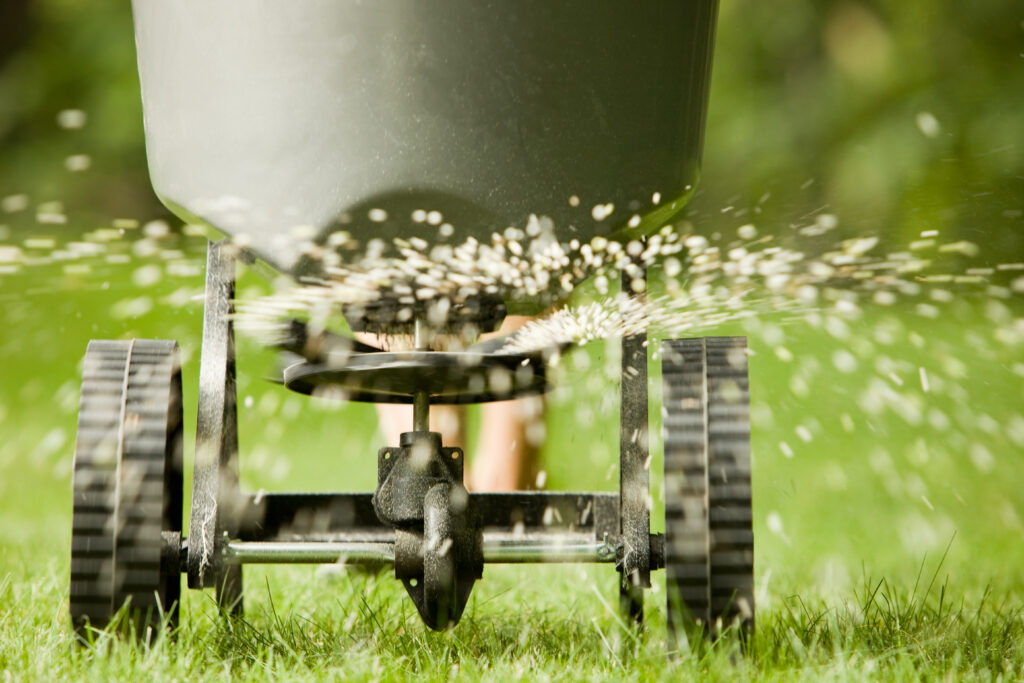
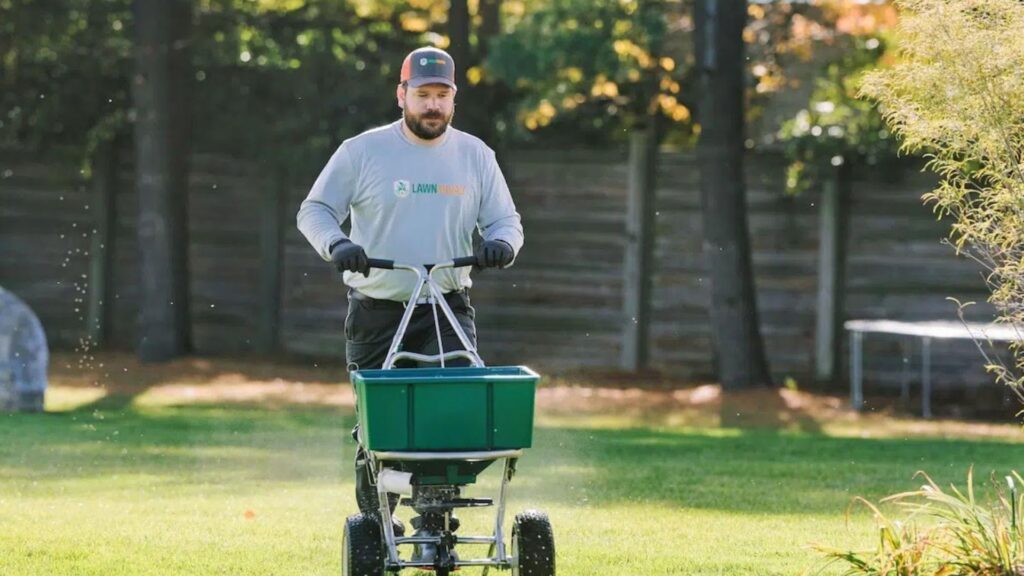
The plan is straightforward. Core aerate, then overseed the whole lawn, applying seed heavily into the rings themselves after loosening the dead surface. Do this in late summer, roughly mid August through the middle of September in most of the county, and earlier at the higher elevations around Midway and Wallsburg where autumn arrives sooner. Keep the seedbed consistently moist while your pressurized irrigation is still available for the season. Repeat the following fall.
Over two or three seasons the stand shifts from vulnerable monoculture to a mixed, resistant lawn. The rings stop reappearing, not because the fungus left, but because the grass it eats is no longer there in quantity. The lawn also looks slightly different, a bit coarser in texture, and we would rather you expect that than be surprised by it.
What to Do Next
Confirm what you have before acting. Pull a few plants from the edge of a ring and look at the roots and crowns, or send us a photo. Then call 385-336-6785 or request a free quote at lawnsquad.com. A first visit takes about half an hour: we verify the diagnosis in person, check thatch depth and rooting with a soil probe, review your irrigation pattern, and lay out a two year recovery plan with the seeding dates written down.
Expect germination roughly one to three weeks after seeding, meaningful fill in the rings at thirty days, and a lawn at ninety days that is visibly denser heading into winter, with the real transformation showing next summer when the patches that always came back do not. Feeding is part of the cure rather than a separate service, which is why our VitaminLawn program is built around the nitrogen sources, timing, and soil conditions specific to this valley.
Lawn Squad of Utah County serves Alpine, American Fork, Draper, Eagle Mountain, Lehi, Lindon, Midway, Orem, Pleasant Grove, Provo, Saratoga Springs, Vineyard, and Wallsburg. We are independently owned and operated, quotes are free, and our work carries a satisfaction guarantee.