Short Answer: Pre-emergent crabgrass control in Utah County is determined by soil temperature, not calendar date. The window opens when soil temperatures at 4-inch depth cross 55 degrees Fahrenheit consistently. In our area, that typically happens between late March and mid-April depending on the year. Warm springs push the window earlier; cold springs hold it back. Applying too early lets the chemical barrier degrade before late-summer crabgrass germination. Applying too late means crabgrass has already sprouted. The window is roughly 2 to 3 weeks of correct timing. Calendar-driven services miss the right timing in about one year out of three. Here is the practical guide for properties across Provo, Orem, Lehi, American Fork, and the surrounding Utah County area.
Pre-emergent crabgrass control is one of the highest-leverage spring lawn care decisions. Get the timing right and the chemical barrier stops crabgrass before it germinates. Get it wrong and you either waste the application or watch crabgrass come up despite your effort.
Across Provo, Orem, Lehi, American Fork, Pleasant Grove, Spanish Fork, and our broader Utah County service area, here is the practical guide to timing pre-emergent correctly.
How Pre-Emergent Works
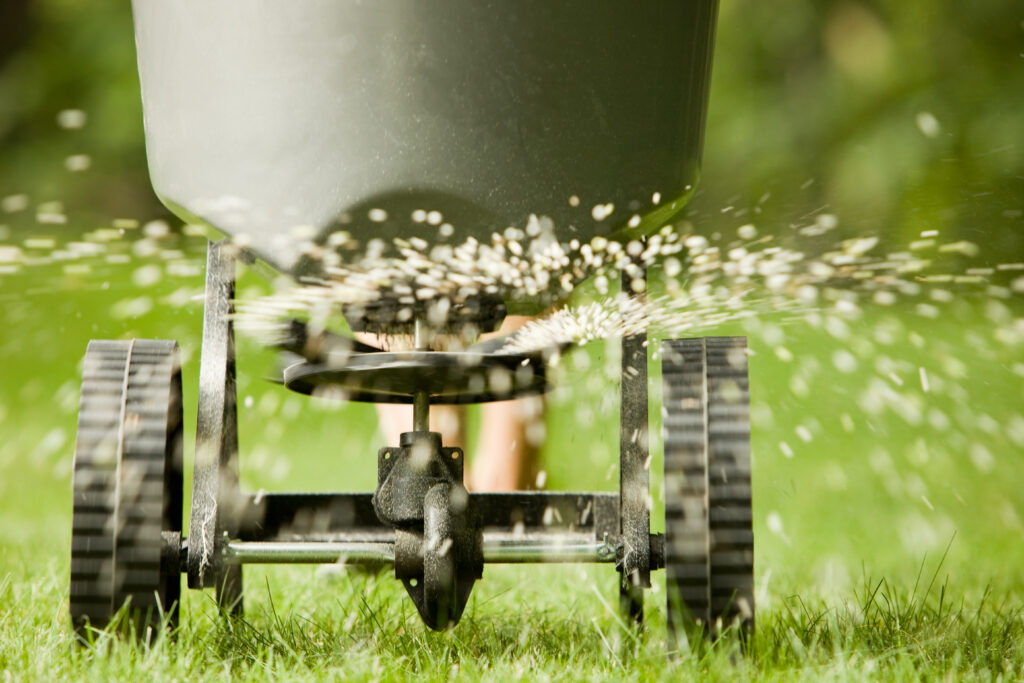
Pre-emergent herbicides create a chemical barrier in the top half-inch of soil that interrupts root development of germinating grass seeds. Crabgrass and other annual grass seeds germinate just below the soil surface. When the developing root encounters the chemical barrier, root function is disrupted and the seedling dies before establishing.
The mechanism is entirely about timing. Once a seedling pushes its first leaf above ground, pre-emergent has no effect. Post-emergent products are required at that point. The window where pre-emergent works is from when soil temperatures approach germination threshold through the first 2 to 3 weeks after germination has finished.
The Soil Temperature Trigger
Crabgrass seeds germinate when soil temperatures at the seed depth (1 to 4 inches below surface) reach a consistent 55 degrees Fahrenheit. Air temperature does not drive this. Soil temperature lags air temperature by several days to weeks depending on conditions.
For Utah County, soil temperature 55 degrees at 4-inch depth typically arrives between late March and mid-April. Warm Marches push it to the earlier end. Cold Marches push it to the later end. Recent years have seen the window vary by 2 to 4 weeks depending on weather.
How to Track Soil Temperature
Several sources work for tracking soil temperature in our area:
Utah State University Extension publishes soil temperature data from monitoring stations across the state. Cross-reference with local readings for your specific area.
USU Climate Center and weather service products provide regional soil temperature information updated through spring.
Direct measurement with a soil thermometer on your own property is the most accurate source. A stem thermometer pushed 4 inches into the soil tells you exactly where your specific lawn is.
Visible indicators help. Forsythia in full bloom typically correlates with soil temperatures approaching the threshold. Tulips fully open suggest active soil warming. Lilac buds breaking is another regional indicator.
Properties at different elevations and exposures warm at different rates. A south-facing slope at valley elevation may hit threshold a week before a north-facing slope at higher elevation just down the road.
Why Applying Too Early Backfires
The instinct is to apply pre-emergent as early as possible to be safe. The problem is that pre-emergent chemistry has finite effective life. Most products provide 8 to 12 weeks of full effectiveness, with declining strength after that.
Apply pre-emergent in early March and crabgrass germination does not begin until mid-April. The barrier is already 4 to 6 weeks into its lifespan when seeds wake up. By June, when crabgrass is still germinating in flushes, your barrier is below half strength. Late-summer crabgrass breaks through and shows up in July and August.
This is one of the most common reasons properties on pre-emergent programs still see crabgrass in midsummer. The product worked. It just ran out before the season ended.
Why Applying Too Late Backfires
The opposite mistake is more dramatic. Apply pre-emergent after crabgrass has germinated and the product does almost nothing for the seeds that already sprouted. You are left treating active plants with post-emergent products, which work less well and cost more.
The visible signal that you applied too late is crabgrass coming up despite an early-season application. The new shoots are visible by mid to late May.
The Split Application Strategy
For Utah County properties with significant crabgrass history, a single pre-emergent application is rarely enough. Crabgrass has a primary germination flush in spring and a secondary flush in early summer. A barrier laid down in late March is starting to weaken by mid-June, exactly when secondary germination is happening.
The split application approach uses two treatments. The first goes down at the soil-temperature window in spring. The second follows 8 to 10 weeks later, typically late May to early June, extending the effective barrier through the entire germination season.
Cost runs roughly 60 to 80 percent more than a single application. Effectiveness on chronic-crabgrass properties improves substantially.
Utah County Specific Conditions
Several local factors affect timing and effectiveness:
Alkaline soils across the valley do not significantly affect pre-emergent chemistry but do affect overall lawn health. Healthier lawns with denser canopies provide additional crabgrass control beyond the chemical barrier.
Elevation matters. Properties at higher elevations or in shaded canyons hit the soil temperature threshold later than valley floor properties. Same neighborhood can have a 2-week timing difference depending on elevation and exposure.
Hard water from municipal sources does not affect pre-emergent activation directly, but the irrigation water timing matters for product activation. Apply pre-emergent and water it in within 7 to 14 days for proper barrier formation.
Cold spring nights common in our area extend the germination window slightly. The threshold has to be sustained, not just hit once. Several consecutive days of 55+ degree soil are needed before germination actually begins.
What If You Already Missed the Window
If you are reading this in May and crabgrass is already up, pre-emergent is no longer the right answer for this year. Options:
Post-emergent crabgrass herbicide on small actively-growing plants. Most effective when plants have fewer than 4 leaves. Larger plants take more product and may need multiple applications.
Hand pulling for small infestations. Disposing of plants before seed heads mature reduces next year’s seed bank.
Living with it for the rest of the season. Crabgrass is an annual that dies after first frost. Plan correct timing for next spring.
A late-summer pre-emergent for Poa annua, which germinates in fall and has different timing requirements.
What Disrupts the Barrier
Several factors can disrupt pre-emergent effectiveness after application:
Core aeration breaks the chemical barrier where cores come out. Schedule aeration in fall, not after spring pre-emergent.
Heavy rainfall events can move chemistry below the germination zone. Most modern formulations resist this, but extreme storms can affect barrier strength.
Soil disturbance from edging, digging, or other lawn work breaks the barrier locally. Plan major lawn work for before pre-emergent application or after the season.
Overseeding into treated areas. Pre-emergent prevents seed germination, including grass seed. Spring overseeding and spring pre-emergent are not compatible in the same areas.
Building a Tracking Habit
The simplest setup is a soil thermometer kept in a representative part of your lawn from early March on. Check it once or twice a week. Note the readings. When you see 50 degrees and rising, check daily. When it crosses 55 degrees consistently for 3 to 4 days, apply pre-emergent within a few days.
Most homeowners who try this for a season find they actually time it better than calendar-based applications. The data drives the decision.
Common Mistakes
Using last year’s date because last year worked. The window moves year to year.
Combining pre-emergent with weed-and-feed at the wrong time. The fertilizer half wants late spring. The pre-emergent half wants early spring. The combination forces a compromise that does neither well.
Aerating after pre-emergent. Aerate in fall instead, or before pre-emergent.
Watering in too aggressively. Pre-emergent needs water to activate, but heavy irrigation right after application can move chemistry below the germination zone.
Treating heavily shaded areas where crabgrass does not actually thrive. Crabgrass is sun-loving. Shaded areas have different weed issues that pre-emergent does not control.
Skipping the application entirely on properties with crabgrass history. The cost of a correctly-timed application is roughly $60 to $120 for a typical lot. The cost of midsummer crabgrass cleanup is typically higher and produces worse results.
What to Do Next
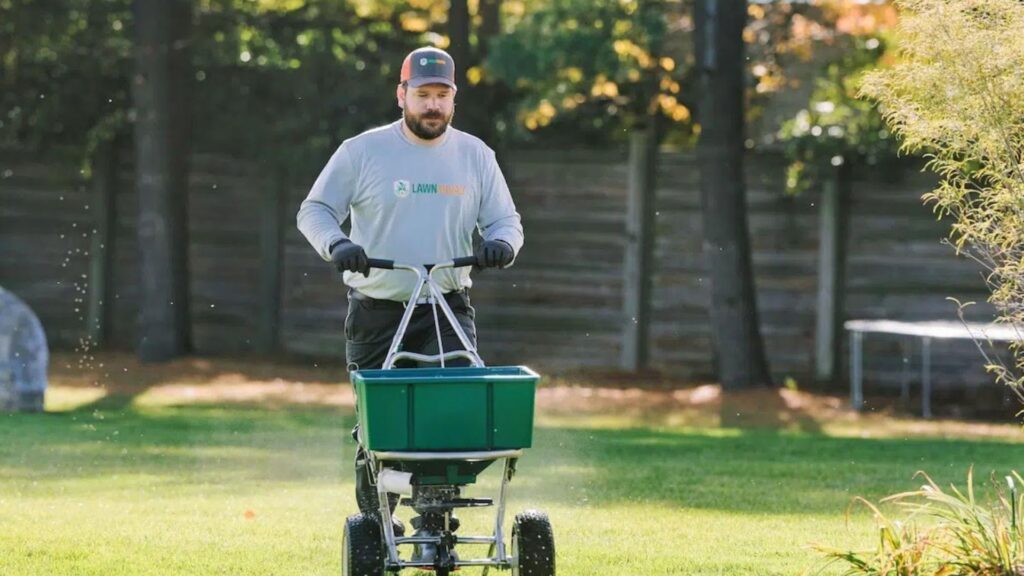
If you would rather have someone else handle the timing decisions, product selection, and application for your Utah County lawn, we are here for that.
Visit lawnsquad.com to find Lawn Squad of Utah County and request a free quote. Our VitaminLawn program is built specifically for the grass types, soils, and weather patterns in our service area. Most homeowners see noticeable improvement within the first two applications.