Short Answer: Pre-emergent crabgrass control in Aurora typically goes down between late March and mid-April depending on the year. The trigger is soil temperature reaching 55 degrees at 4-inch depth for several consecutive days, not a fixed calendar date. Warm Marches push the window earlier; cold Marches delay it. Apply too early and the chemical barrier breaks down before the late-summer crabgrass flush. Apply too late and crabgrass has already germinated. Soil temperature is the only reliable trigger, and a simple soil thermometer or local extension service updates give you the data that matters more than any forecast.
If you have lived in Aurora long enough, you know that two springs in a row never look the same. One year the lawn is greening up by mid-March. The next year there is still snow on the ground in early April. The pre-emergent timing window shifts year to year, and applying on the same date you used last year is one of the most common reasons crabgrass shows up in July despite spring treatments.
Across our service area covering Aurora, Naperville, Oswego, Geneva, and surrounding Fox Valley communities, here is how we track the pre-emergent window each spring and why timing trumps product choice every time.
The Soil Temperature Trigger
Crabgrass seeds germinate based on soil temperature, not air temperature, not calendar date. The trigger is roughly 55 degrees Fahrenheit at a 4-inch soil depth, sustained for several consecutive days.
Air temperature swings dramatically day to day in early spring. Soil temperature lags air temperature significantly because soil takes time to warm. A few warm days in March can have air temperatures in the 60s while soil is still in the 40s. Soil temperature is what determines whether crabgrass seeds are biologically ready to germinate.
For Aurora specifically, soil temperature 55 degrees at 4-inch depth typically arrives somewhere between late March and mid-April. Warm Marches push it to the early end of that range. Cold Marches push it to the late end. Recent years have seen the window vary by 2 to 3 weeks depending on weather.
Why Pre-Emergent Has to Be in Place Before Germination
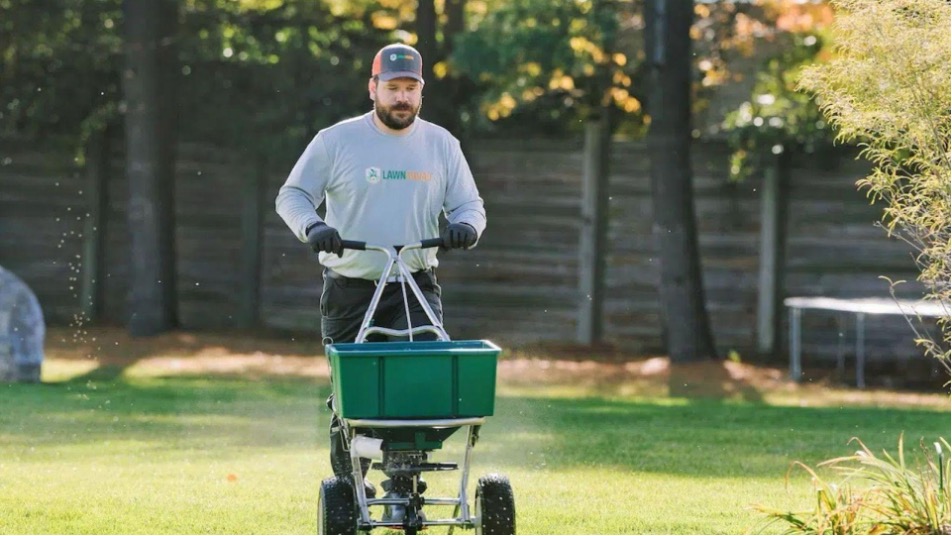
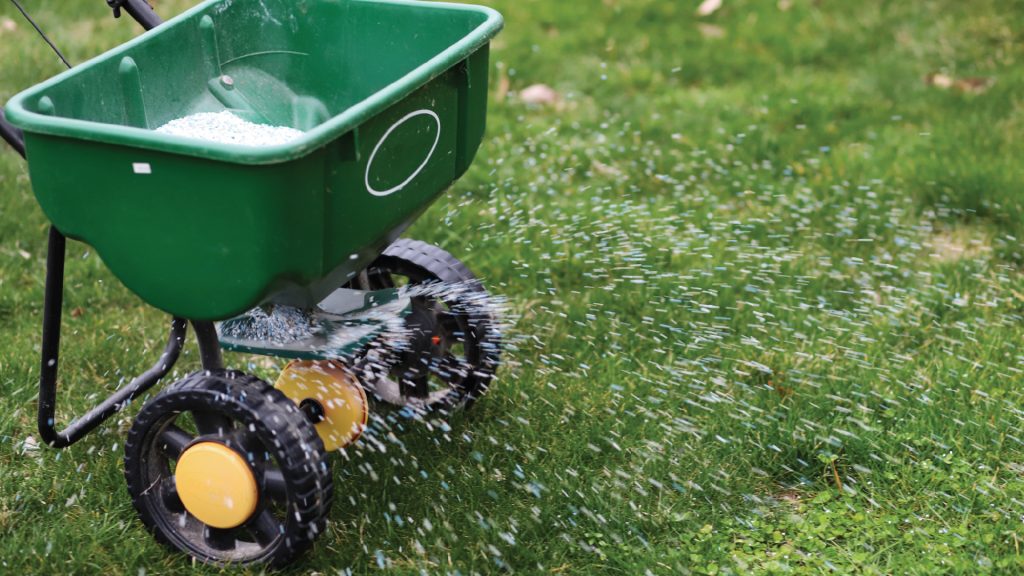
Pre-emergent works by creating a chemical barrier in the top layer of soil that interrupts root development of seedlings. Once a seed germinates and the new shoot pushes up through the soil, pre-emergent does nothing. The barrier has to be in place before germination starts.
Apply too early (early March in our area) and the chemical barrier degrades before late-summer crabgrass germination flushes. Most products provide 8 to 12 weeks of full effectiveness. By June, the barrier is at half strength. By July, it is gone.
Apply too late (mid-May in our area) and crabgrass has already sprouted. The product has no effect on plants that have already germinated.
The window for effective application is roughly 2 weeks. Within that window, full benefit. Outside it, diminishing returns.
How We Track the Window
We monitor several data sources to get pre-emergent timing right:
University of Illinois extension service soil temperature reports update during early spring with current readings.
NWS soil temperature data from regional stations provides daily numbers.
Direct soil thermometer readings on representative properties give us actual data on Aurora area lawns.
Forsythia bloom timing is a reasonable visual indicator. When forsythia is in full bloom in our area, soil temperatures are typically approaching the threshold.
Combined data points let us identify the right week to start application routes. Properties on early routes get treated when conditions are right, not when the calendar reaches a particular date.
What This Looks Like Year to Year
Year-by-year timing in our area has varied substantially:
Warm springs: pre-emergent can need to go down by late March, possibly even mid-March in unusual years.
Average springs: late March to early April is the typical window.
Cold springs: mid to late April. Some years extend into early May before the threshold is met.
This is why services that apply on the same calendar date every year produce inconsistent results. The right date moves with the weather. Services that adjust based on conditions produce consistent results year over year.
The Split Application Strategy
For Aurora properties with significant crabgrass history, a single pre-emergent application is rarely enough. The barrier weakens through summer, and crabgrass has germination flushes that extend into July or August.
The split application strategy uses two treatments. The first goes down at the spring window when soil temperatures hit the threshold. The second follows 8 to 10 weeks later, typically late May to early June. The combined coverage maintains the barrier through the entire crabgrass germination season.
Cost typically runs 60 to 80 percent more than a single application. Result is roughly 90 percent reduction in summer crabgrass for properties that previously saw heavy pressure.
Aurora-Specific Conditions
Several factors specific to our area affect pre-emergent timing and effectiveness:
Lake effect from Lake Michigan keeps soil temperatures slightly behind areas further west. Properties closest to the lake (eastern parts of the metro) typically hit germination temperature later than western suburbs.
Heavy clay soils common across the Fox Valley warm slowly compared to sandy soils. The lag is real and affects the right application week.
Properties with significant tree canopy stay cooler longer than open lots. Same neighborhood, different timing.
Snow cover history matters. Years with prolonged snow cover delay soil warming. Years with little snow speed it up.
What If You Already Missed the Window
If you are reading this in late spring and already see crabgrass coming up, pre-emergent is no longer the right answer. Options:
Post-emergent crabgrass herbicide on small actively-growing plants. Most effective on plants with fewer than 4 leaves. Larger plants are harder to control.
Hand pulling for small infestations. Disposing of plants before seed heads mature reduces next year’s seed bank.
Living with it for the rest of the season. Crabgrass is an annual that dies after first frost. Planning correct timing for next spring.
A late-summer pre-emergent for Poa annua, which germinates in fall and has different timing requirements.
What Most Aurora Homeowners Get Wrong
Treating pre-emergent like fertilizer. The application looks the same (granular product spread across the lawn), but the timing rules are completely different.
Using calendar dates from previous years. The right date varies year to year. Use soil temperatures, not memory.
Applying weed-and-feed combination products at the wrong time for the herbicide half. The fertilizer half wants late spring when grass is growing. The pre-emergent half wants early spring when soil is just warming.
Aerating after pre-emergent application. Core aeration disrupts the barrier. Aerate before, not after.
Power raking or aggressive dethatching after application. Same problem; removes the layer where chemistry concentrates.
The Cost-Benefit on a Typical Aurora Lawn
A correctly timed pre-emergent application costs roughly $60 to $120 per treatment depending on lot size. Pre-emergent is one of the highest-return lawn care investments available. The catch is that the return only realizes if timing is correct.
An ineffective application costs the same as an effective one and produces a small fraction of the benefit. The decision is not whether to apply, but whether to apply at the right time.
Working With Soil Test Data
Pre-emergent works best on lawns with adequate fertility. Properties with chronic nutrient deficiencies or pH problems often see weaker pre-emergent performance because the lawn is not dense enough to crowd out any seedlings that escape the barrier. Pulling a soil test and addressing fertility imbalances supports pre-emergent effectiveness in addition to its standalone benefits.
What to Do Next
If you would rather have someone else handle the timing decisions, product selection, and application for your Aurora lawn, we are here for that.
Lawn Squad of Aurora serves Aurora, Batavia, Bristol, Fox Valley, Montgomery, Mooseheart, Naperville, North Aurora, Oswego, Plainfield, Plano, Yorkville.
Call us at 630-389-4996 or request a free quote at lawnsquad.com. Our VitaminLawn program is built specifically for the grass types, soils, and weather patterns in our service area. Most homeowners see noticeable improvement within the first two applications.