Short Answer: The best pre-emergent products for Cincinnati lawns are prodiamine, dithiopyr, and pendimethalin. The key is timing: first application when soil temperatures reach 55 degrees (usually between April 5 and April 20 in the Ohio River Valley), often with a split-rate second application 6 to 8 weeks later to extend coverage through our full crabgrass germination window. Below is what each product does well, how to pick, and the timing signals we actually use across Mason, West Chester, Loveland, and the rest of our service area.
If you walked through any Cincinnati neighborhood last July and looked at the ragged edges of driveways, you saw the result of mistimed pre-emergent: crabgrass winning. It is the single most common DIY failure in our area, and it is almost entirely a timing problem, not a product problem. Here is what the pros use.
The Weeds We Fight in Cincinnati
- Crabgrass (large and smooth): germinates at 55 degrees soil temperature. Universal pressure.
- Goosegrass: germinates 10 to 14 days after crabgrass at 60 to 65 degrees. Common in West Chester and Fairfield lawns with heavy foot traffic.
- Poa annua: a cool-season winter annual. Germinates in fall, shows in spring. Needs fall pre-emergent for real control.
- Yellow nutsedge: a true sedge, not responsive to typical pre-emergent chemistries. Requires halosulfuron or a similar post-emergent.
- Broadleaf weeds (dandelion, clover, ground ivy): not controlled by pre-emergent. Require post-emergent products.
Prodiamine: The Workhorse
Prodiamine (Barricade and generics) is the most commonly used professional pre-emergent in Cincinnati. Long residual (4 to 6 months), safe on Kentucky bluegrass and fescue at label rates, broad-spectrum on crabgrass and goosegrass.
Best use in Cincinnati: first spring application in early to mid-April. Second split-rate application in late May to June extends coverage through August.
Dithiopyr: The Forgiving Option
Dithiopyr (Dimension and generics) has light early post-emergent activity. If you missed the ideal timing by 7 to 10 days, dithiopyr can still catch crabgrass seedlings up to the one-leaf stage.
Shorter residual than prodiamine (3 to 4 months). Often used as a second application in April or early May to catch later germinators and any seedlings from a missed first round.
Pendimethalin: Effective, Stains Concrete
Pendimethalin (Pendulum and generics) works well on crabgrass and goosegrass with good safety on cool-season lawns. Its one drawback is the yellow-orange color that can stain concrete or light pavers temporarily. On Cincinnati homes with stamped concrete driveways or light-colored walkways (common in Mason and West Chester subdivisions), prodiamine is usually the safer choice.
The Timing Signals We Actually Watch
- Soil temperature at 2 inches hitting 50 to 55 degrees for 3 to 5 consecutive days (OSU Extension publishes data)
- Forsythia bloom finishing (classic indicator, fairly reliable in Cincinnati)
- Magnolia and redbud starting to open
- Daytime highs consistently in the 60s
When two or three of these align, it is application day. Missing the window by 10 days means crabgrass is already germinated.
What DIY Homeowners Get Wrong
- Single application. Cincinnati’s crabgrass germination window runs April through June. One spring application alone rarely holds. A split-rate or second application in late spring catches late germinators.
- Wrong rate. Big-box rate charts assume average conditions. Measure your lawn first.
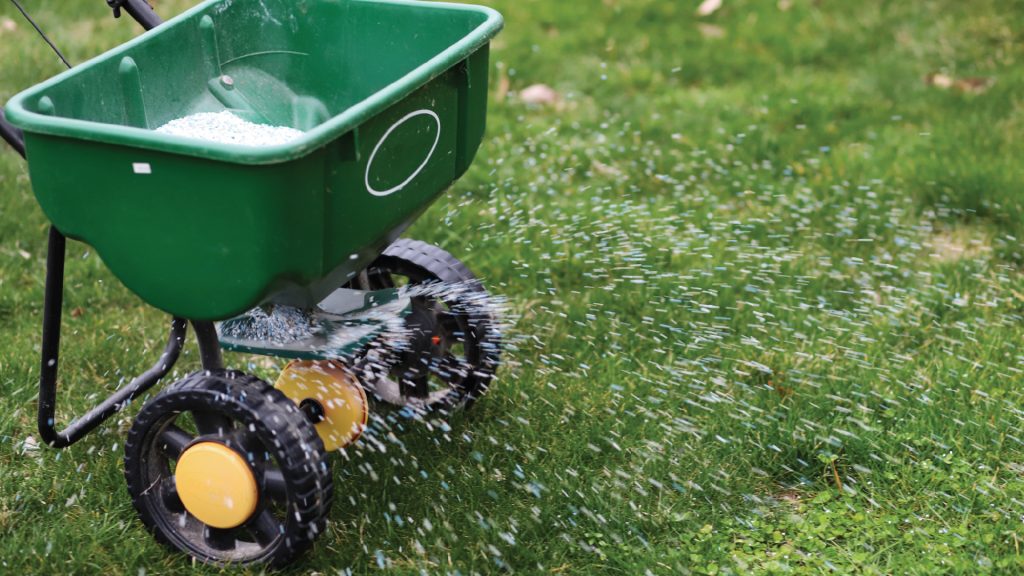
- No watering. Pre-emergent needs to be watered in within 24 to 48 hours. Do not apply and walk away if no rain is forecast.
- Overseeding at the same time. Pre-emergent blocks new grass seed too. If you need to overseed, wait until fall.
What a Professional Rotation Looks Like in Cincinnati
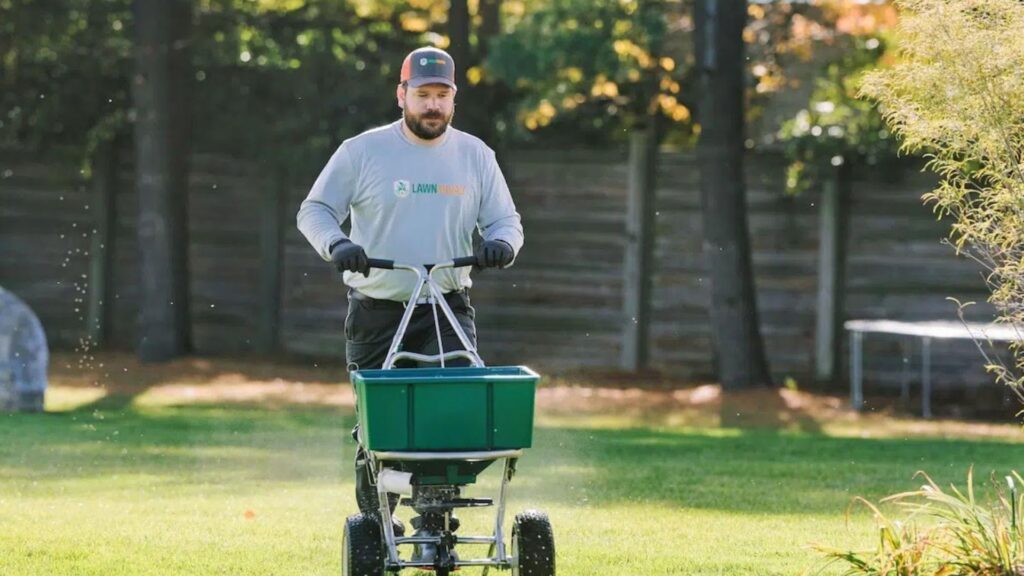
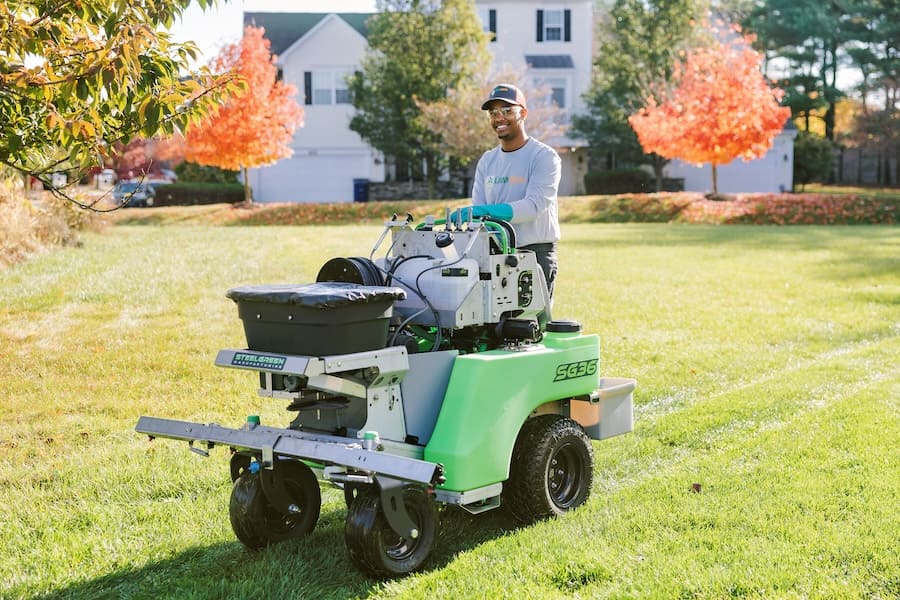
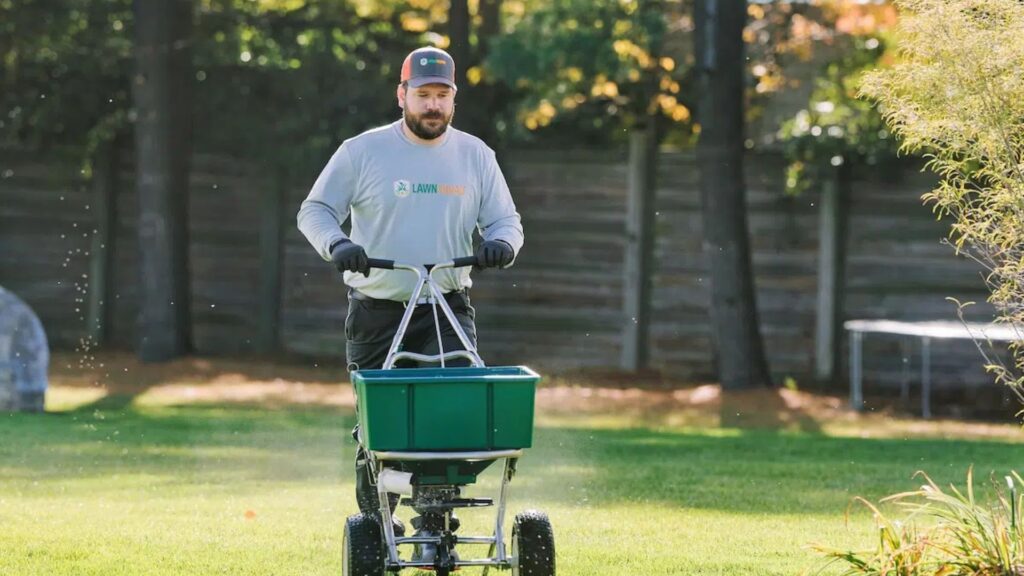
- Round 1 (April 5 to April 20): prodiamine at full label rate for your lawn type
- Round 2 (late May to early June): dithiopyr or prodiamine split-rate for extended coverage
- Round 3 (September): prodiamine for Poa annua control before winter germination
Each application is soil-temperature-timed, rotated to manage resistance, and watered in for activation.
What to Do Next
Lawn Squad of Cincinnati serves Blue Ash, Camp Dennison, Cincinnati, Deer Park, Fairfield, Hamilton, Hyde Park, Indian Hill, Loveland, Madeira, Maineville, Mason, Miamiville, Milford, Mt. Healthy, Reading, Ross, Sharonville, Terrace Park, and West Chester.
Call us at 513-817-4887 or visit lawnsquad.com. Our VitaminLawn program uses professional-grade pre-emergent products, applied on soil-temperature timing, with split-rate coverage for Cincinnati’s full germination window.