
Short Answer: White grubs (the larvae of various beetles including June beetles, masked chafers, and May beetles) feed on lawn roots and can produce serious damage on North San Antonio St. Augustine and Bermuda lawns. The classic signature is irregular brown patches in late summer and fall that pull up like loose carpet because the roots have been consumed. Spring sometimes shows residual damage from the previous fall’s feeding. The diagnostic test is digging a 1-square-foot section of sod and counting grubs in the top 3 inches of soil. Counts of 5 or more white C-shaped larvae per square foot indicate treatment is needed. Properties with chronic grub history benefit from preventive applications timed to early summer egg-laying. Here is the practical guide for properties across San Antonio, Stone Oak, Boerne, Bulverde, and the surrounding North San Antonio area.
White grub damage is one of the more underestimated problems on North San Antonio lawns. The grubs themselves are below the soil surface and invisible. Damage appears suddenly in late summer when affected areas brown out and detach from the soil. Properties seeing this for the first time often assume drought, disease, or chinch bugs before discovering the actual cause.
Across San Antonio, Stone Oak, Boerne, Bulverde, Fair Oaks Ranch, Hill Country Village, and our broader service area, here is the practical guide to identifying and managing white grubs.
What White Grubs Are
White grubs are the larval stage of several beetle species common in our area. The most important ones for lawn damage:
June beetles (Phyllophaga species). Large grubs from late-flying brown beetles common across Texas. Multi-year life cycle.
Masked chafers (Cyclocephala species). Smaller grubs that produce most of the visible lawn damage in our area. Annual life cycle.
May beetles, June bug, and other beetles. Various species with grub stages that feed on grass roots.
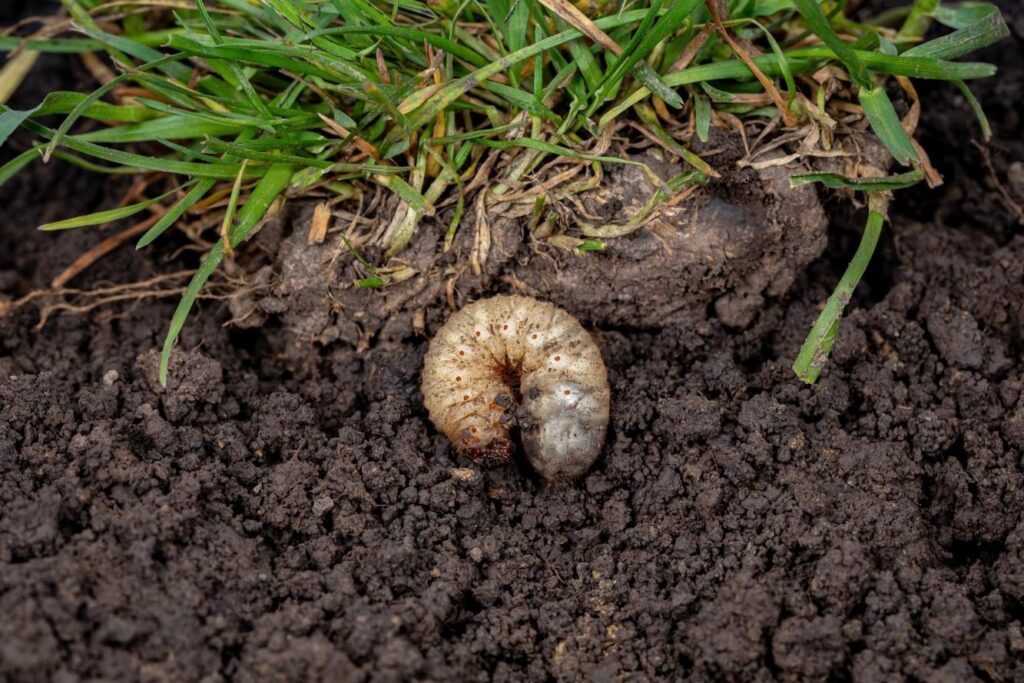
All produce white C-shaped larvae roughly half an inch to 1.5 inches long depending on species and age. The larvae have brown heads and three pairs of small legs near the head end.
What Grub Damage Looks Like
The damage progression on warm-season lawns:
Mid to late summer (July and August): no visible damage yet, but grub populations are building below the surface. This is when treatment is most effective even though nothing is showing.
Late summer to early fall (August through October): irregular brown patches appear. The grass in these patches feels loose and pulls up easily because root systems have been consumed.
Increased animal activity. Skunks, armadillos, raccoons, and birds dig in affected areas to feed on the grubs themselves. Visible holes and tearing add to the cosmetic damage.
Spring presentation. Areas that were damaged the previous fall sometimes show as bare spots or thin areas that did not recover through winter. The grubs themselves are no longer present (they pupated into adult beetles), but the damage from their feeding remains.
The Pull-Up Test
The most diagnostic test for grub damage is the pull-up test. Grab a section of damaged grass and pull firmly. Healthy grass with intact roots resists. Grub-damaged grass pulls up easily, sometimes coming up like rolled carpet because the roots are gone.
If the grass pulls up easily and exposed soil shows no visible root system, grubs are almost certainly the cause. Other damage types (disease, drought, chinch bugs) typically leave at least some root system intact.
The Square Foot Count
To confirm grubs and assess severity, dig a 1-square-foot section of sod and underlying soil to a depth of 3 inches. Inspect the soil and root zone for grubs.
Threshold counts:
0 to 4 grubs per square foot: below action threshold. Some background population is normal and does not produce visible damage.
5 to 9 grubs per square foot: treatment recommended. Damage will likely become visible if untreated.
10+ grubs per square foot: heavy infestation. Treatment is urgent. Damage may already be developing.
Sample several locations across the property if the lawn is large. Grub populations are not uniform; some areas may have heavy infestations while others have none.
Treatment Timing
Grub treatment timing depends on the product type:
Preventive products (imidacloprid, chlorantraniliprole, others). Applied in early summer when adult beetles are laying eggs but before grubs hatch. Timing: late May through July in our area. Products work as eggs hatch and target the most vulnerable grub stages.
Curative products (carbaryl, trichlorfon, others). Applied when active grub damage is visible and grubs are confirmed present. Timing: late summer through early fall. Products work on actively feeding larger grubs but are less effective than preventives.
Preventive treatment is generally more effective and produces less collateral lawn damage. Curative treatment is the right answer when damage is already visible and you need immediate control.
Product Selection
Several active ingredients work on grubs:
Imidacloprid. Standard preventive. Applied early summer. Works on multiple grub species. Concerns about pollinator impact mean it should not be applied during active flowering.
Chlorantraniliprole. Newer preventive with lower environmental impact. Applied early summer. Effective and persistent.
Halofenozide. Insect growth regulator that interferes with grub development. Less acute toxicity than other options.
Carbaryl. Curative option. Fast-acting on existing grubs.
Trichlorfon. Another curative. Often more effective than carbaryl on larger grubs.
Beneficial nematodes are a biological option for properties wanting to avoid synthetic insecticides. Effectiveness varies but can work as part of an integrated approach.
Read product labels carefully. Restrictions on use, timing, and watering-in requirements vary significantly.
Watering In
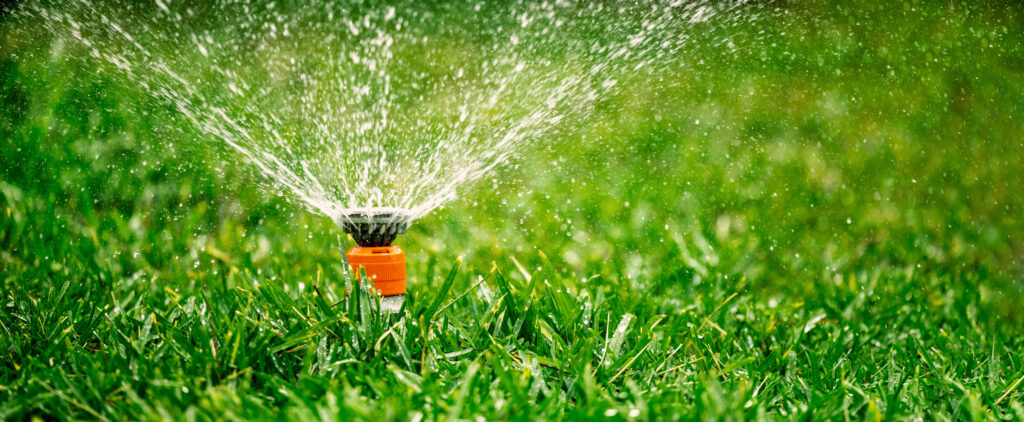
Most grub products require watering in after application. The chemistry needs to move from the surface down into the root zone where grubs feed. Without proper watering, products stay on the surface and produce limited results.
Typical watering recommendation: half an inch of water within 24 hours of application. Rain or irrigation both work.
Skipping the watering-in step is one of the most common reasons grub treatments fail.
NSA-Specific Considerations
Several factors affect grub pressure in our area:
Warm year-round soil temperatures support multi-generation grub populations.
St. Augustine is more grub-susceptible than some grasses because its stolon system is shallow. Damage shows visibly faster than on deeper-rooted grasses.
Hill Country areas with mature canopy provide habitat for beetle adults. Properties adjacent to wooded areas often see more grub pressure than open lots.
Irrigation practices affect grub populations. Heavily watered lawns produce ideal grub habitat. Properties on water restrictions may see less grub pressure indirectly.
Other warm-season lawn pests (chinch bugs, sod webworms) can co-exist with grubs and produce confusing damage patterns. Confirming which pest is present matters for treatment selection.
Damage Recovery
Grub-damaged areas require active recovery because the root system has been destroyed:
Remove dead grass that pulls up. Loose roots and dead tissue prevent new growth.
Loosen the soil surface where roots were destroyed. Some compaction occurs as the grass fails.
Replant. For St. Augustine, plug or sod the affected area. Severely damaged zones may need significant replanting.
Establish irrigation for the new grass during establishment. Adjacent untreated areas may still have grub populations that damage new growth.
Treat preventively next year. Once a property has had grub damage, the conditions usually support recurrence unless treatment continues.
What Does Not Work
Several approaches fail on grub problems:
Heavy fertilization to push recovery. Damaged grass cannot use fertilizer without roots. Fertilization without grub control produces no benefit.
Surface treatments without watering in. The chemistry needs to reach the grubs at root depth.
Reactive treatment after extensive damage. Grubs that have done their damage have already pupated; treatment kills no grubs. Curative treatment works only on grubs still actively feeding.
Single-product approaches in chronic problem properties. Some properties benefit from rotating products or combining preventive plus curative approaches.
Treating only visible damage areas. Adjacent untreated zones may have populations that move into treated areas.
Differentiating Grubs From Other Problems
Grub damage can resemble several other issues:
Chinch bug damage. Chinch bugs damage above the surface; grass blades show visible damage. Grubs damage below the surface; blades may look fine until the grass pulls up.
Drought damage. Drought-stressed grass has intact root systems even when blades are brown. Grub-damaged grass has destroyed roots.
Disease damage. Diseases like take-all root rot affect root systems but produce different patterns and the roots show fungal damage rather than chewing damage.
Pet damage. Concentrated brown spots near doors and along pet routes. Different pattern than grub damage.
The pull-up test is the definitive way to distinguish grubs from other root-zone problems.
Year-Over-Year Patterns
Properties with grub history typically face recurring pressure. Several factors drive this:
Beetle adults lay eggs near where they emerged. Properties with grub populations produce beetles that lay more eggs in the same area.
Habitat conditions (soil moisture, grass type, adjacent wooded areas) typically persist year over year.
Properties with chronic grub problems benefit from annual preventive treatment rather than reactive responses to visible damage.
Documenting damage location and timing year over year reveals patterns that inform treatment decisions.
The Cost-Benefit Math
Preventive grub treatment costs roughly $80 to $150 per application for typical NSA residential lawns. Done annually on chronic-problem properties, this is significantly less expensive than reactive treatment plus extensive replanting after damage.
Properties without grub history typically do not need preventive treatment. Soil sampling or pull-up testing in late summer reveals whether populations are building.
For properties on consistent management, professional grub programs are often more cost-effective than DIY because of product cost, application timing precision, and integration with the broader lawn care program.
Beneficial Insect Considerations
Several grub control products affect non-target insects. Imidacloprid is particularly concerning for pollinator health when applied during flowering. Apply grub products when lawn flowers (clover, dandelion) are not in bloom, or use targeted spot treatment rather than broadcast application near flowering plants.
Beneficial soil organisms (earthworms, beneficial nematodes, predatory insects) can also be affected. Integrated approaches that combine targeted chemistry with cultural practices reduce non-target impact while producing effective control.
What to Do Next
If you would rather have someone else handle the timing decisions, product selection, and application for your North San Antonio lawn, we are here for that.
Visit lawnsquad.com to find Lawn Squad of North San Antonio and request a free quote. Our VitaminLawn program is built specifically for the grass types, soils, and weather patterns in our service area. Most homeowners see noticeable improvement within the first two applications.