
Short Answer: Spring overseeding on tall fescue lawns is more feasible in the North Raleigh and Greenville areas than in colder climates because our spring growing season is long enough for establishment before summer heat. The best window is mid-March to mid-April when soil temperatures cross 50 degrees and active growth begins. Use turf-type tall fescue blends. Prepare the seedbed properly, apply at 4 to 6 pounds per 1,000 square feet for overseeding, water consistently for 3 to 4 weeks until establishment, and skip pre-emergent in the overseeded areas. The trade-off is that fall overseeding still produces better results when possible. Here is the practical guide for properties across Wake Forest, Rolesville, Greenville NC, Winterville, and the surrounding area.
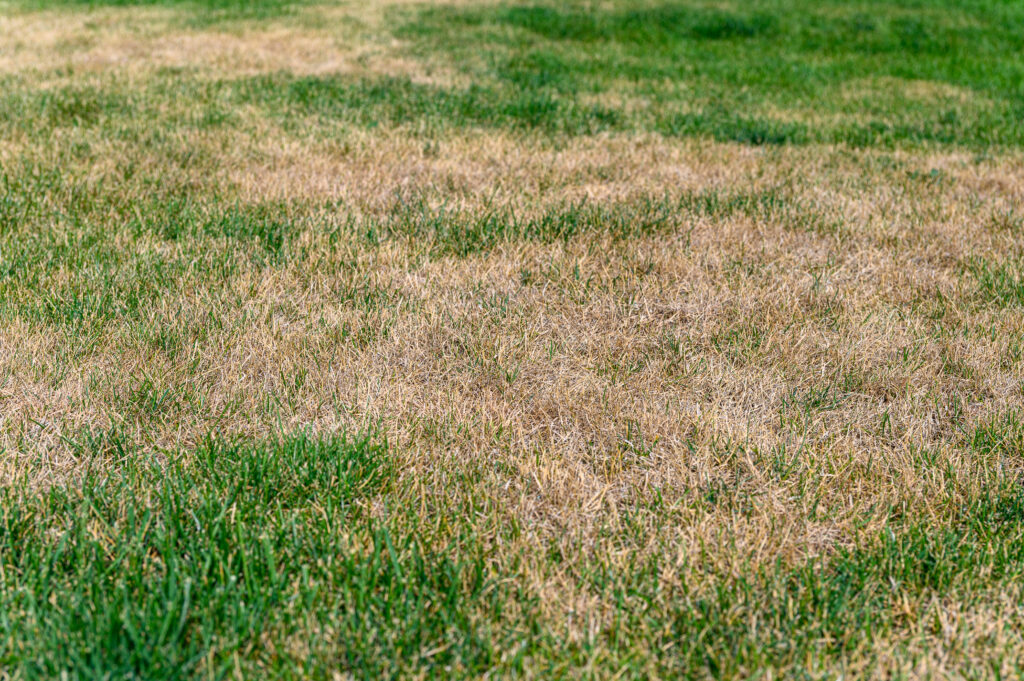
Spring overseeding on tall fescue is more feasible in the Carolinas than in colder climates because our growing season extends through April, May, and into June before summer heat seriously stresses cool-season grasses. Properties with significant winter damage or thin areas have a real spring overseeding window that does not exist farther north.
Across Wake Forest, Rolesville, Knightdale, Greenville, Winterville, and our broader service area, here is the practical guide.
Why Spring Overseeding Is Feasible Here
Tall fescue germinates best when soil temperatures are 60 to 75 degrees. Our spring soils typically reach this range from late March through May. Combined with cool air temperatures, this produces low-stress germination conditions.
The window for spring establishment in our area is roughly 8 to 12 weeks before summer heat intensifies. That is enough time for newly germinated fescue to develop functional root systems before being stressed.
Properties in cooler climates do not have this window. Their spring is too cool and short for fescue establishment, and their summer is also stressful. Fall is the only viable overseeding window. In the Carolinas, both windows work, with fall still producing stronger results.
The Best Spring Window
For our area, the spring overseeding window is mid-March to mid-April. Earlier than that and soil temperatures are too cool for good germination. Later than that and the new grass faces summer stress before it is established.
Within that window, timing depends on local conditions. Properties with significant tree canopy run cooler than open lots and may benefit from later seeding (early to mid April). Open sunny properties can seed earlier (mid to late March).
Track soil temperature with a thermometer pushed 4 inches into the soil. When readings hit 50 degrees consistently, you are in the window.
Choosing Seed
For our area, turf-type tall fescue blends are the standard. Quality blends include multiple fescue varieties to spread risk and provide consistent performance across years.
Look for certified seed with high germination rates (85 percent or higher) and low weed content. Big-box store seed often has lower quality than landscape supply or specialty seed sources.
Avoid Kentucky bluegrass blends for spring overseeding. Bluegrass germinates too slowly to establish before summer heat. Pure tall fescue or fescue with small amounts of perennial ryegrass works better.
Avoid annual ryegrass seed. It establishes very quickly but dies in summer heat, leaving bare areas.
Seedbed Preparation
Seed-to-soil contact drives germination success:
Mow the existing lawn shorter than normal. Cut to 2 to 2.5 inches before overseeding so seed reaches the soil rather than catching in the canopy.
Score the soil surface with a leaf rake or hand cultivator. The disturbance creates contact points for seed.
For larger or more compacted areas, core aeration before overseeding produces excellent results. Aeration holes serve as ideal seed pockets, and the cores break down to provide additional soil contact.
Apply seed at 4 to 6 pounds per 1,000 square feet for overseeding (less than the 8 to 10 pounds used for new lawn establishment). Use a drop spreader or broadcast spreader for even distribution.
Topdressing After Seeding
Light topdressing improves overseeding establishment. A quarter inch of compost or topsoil over seeded areas provides cover that holds moisture and protects seed from washing.
Apply after seed broadcast but before watering. The topdressing settles into aeration holes and over surface seeds, improving germination conditions.
For smaller overseeded zones, topdressing is optional. For larger areas or properties on slopes where erosion is a risk, topdressing is recommended.
Watering for Establishment
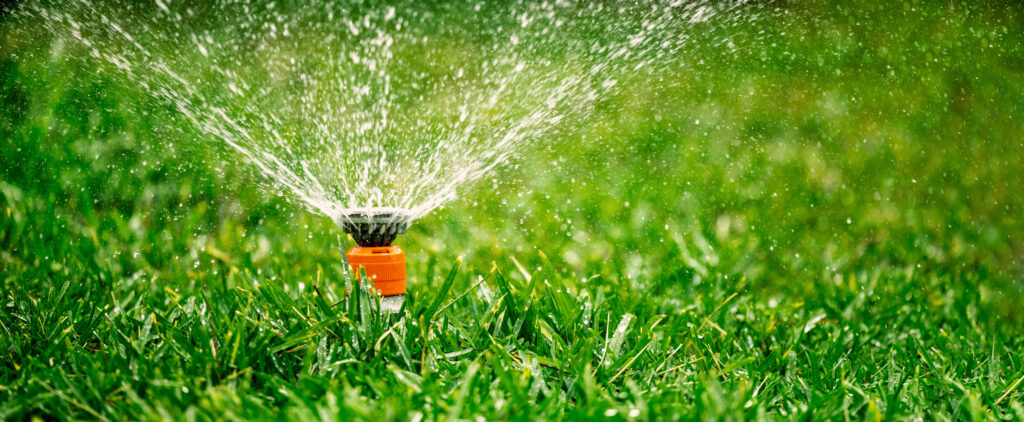
Newly seeded areas need consistent moisture for the first 3 to 4 weeks until germination is complete and seedlings are established:
Light frequent watering rather than deep infrequent. The seedbed should stay consistently moist at the surface where seeds are.
For most properties, this means watering 1 to 2 times daily for 5 to 15 minutes per zone during the first 2 weeks. As germination completes, transition to less frequent deeper watering.
By week 4, transition fully to standard deep infrequent watering as the new grass becomes established.
Avoid heavy watering that washes seed or causes runoff. Light frequent applications work better.
The Pre-Emergent Conflict
Pre-emergent crabgrass control prevents grass seed from germinating along with crabgrass. They cannot be applied to the same area.
Options for properties wanting both:
Skip pre-emergent on overseeded zones. Accept that some crabgrass will come up in those areas. Post-emergent treatment in summer addresses worst escapes.
Use overseed-compatible pre-emergent products like siduron. More expensive and require precise timing.
Apply pre-emergent normally to undisturbed lawn areas. Overseed only in specific damaged zones where pre-emergent is skipped.
Plan for fall overseeding instead. Pre-emergent in spring, overseed in fall. The cleanest sequence but requires patience.
Mowing After Overseeding
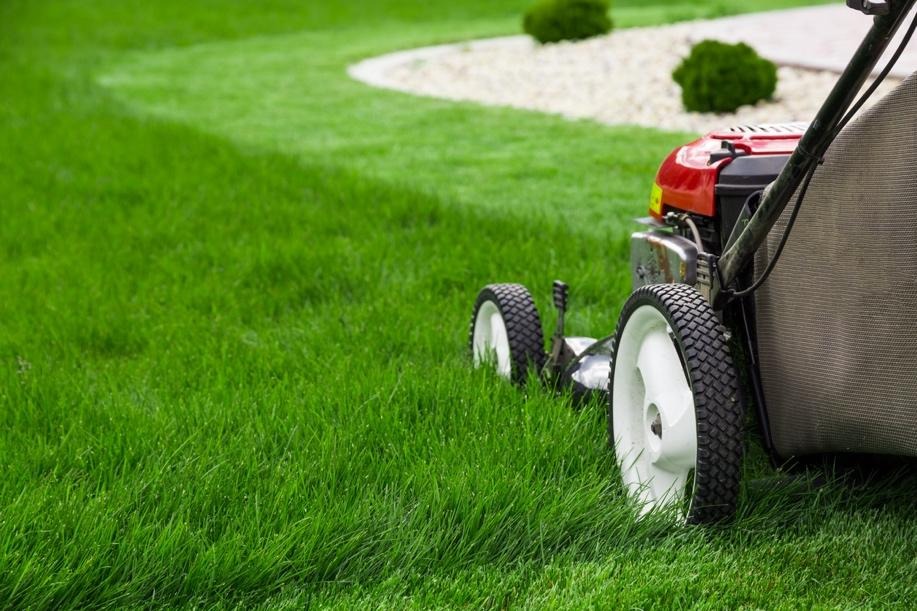
New grass needs time to establish before first mowing. Wait until seedlings reach 3 to 4 inches tall before mowing. Cut high (3.5 to 4 inches) for the first several mowings. Aggressive cutting on young grass damages establishment.
By 6 to 8 weeks after seeding, the new grass should be established enough to handle standard mowing practices.
What Spring Overseeding Cannot Fix
Some problems are not solved by overseeding:
Compaction. Aeration is the answer.
Soil chemistry issues. Soil testing and amendments address pH and fertility.
Drainage problems. Grading or installation work fixes drainage.
Heavy shade. Different grass type or accepting that some areas will not support dense turf works better.
Disease pressure. Different management addresses disease.
Fall vs Spring
Fall overseeding produces stronger results than spring overseeding in our area. Fall conditions are nearly ideal: warm soils, cool air, declining weed pressure, and time for full establishment before winter.
Spring overseeding produces good results but with more variables: weed pressure from spring germinators, summer heat approaching faster than fall winter, and pre-emergent conflicts.
For properties without urgent need, fall is the better choice. For properties with significant winter damage or new construction timing, spring works.
What Establishment Looks Like
Timeline for spring overseeded fescue:
Days 7 to 14: visible germination. New grass blades emerge.
Weeks 2 to 4: rapid growth. Seedlings reach mowing height.
Weeks 4 to 8: tillering. Each plant produces additional shoots, increasing density.
Weeks 8 to 12: established lawn. Standard maintenance works.
Summer: surviving the heat. With proper watering, most spring-established fescue makes it through the first summer.
Fall: full integration with the existing lawn. By fall, the overseeded grass is indistinguishable from established turf.
Common Mistakes
Seeding too early before soil warms. Cool-season seed germinates poorly below 50 degrees.
Seeding too late so new grass faces summer stress before establishment.
Applying pre-emergent on seeded areas.
Inadequate watering during establishment.
Mowing too early or too short on new grass.
Heavy fertilization on new grass. Light starter fertilizer is appropriate.
Walking heavily on newly seeded areas during establishment.
Using low-quality seed. Cheap seed produces inconsistent results.
Sequencing Overseeding With the Rest of the Spring Program
Spring overseeding fits into a broader spring sequence. Pre-emergent on un-overseeded areas at soil-temperature window. Soil testing for information. Overseeding in mid-March to mid-April on damaged or thin areas. Light topdressing over seeded zones. Consistent watering through establishment. First fertilization on established new grass after 6 to 8 weeks. Standard maintenance through summer.
Skipping any step produces worse results. The sequence matters as much as the individual practices.
What to Do Next
If you would rather have someone else handle the timing decisions, product selection, and application for your North Raleigh and Greenville lawn, we are here for that.
Visit lawnsquad.com to find Lawn Squad of North Raleigh-Greenville and request a free quote. Our VitaminLawn program is built specifically for the grass types, soils, and weather patterns in our service area. Most homeowners see noticeable improvement within the first two applications.