
Short Answer: For most Massachusetts cool-season lawns, fall is the better aeration window. Cool-season grass roots are actively growing in fall, the soil is workable, weed pressure is low, and overseeding into aeration holes produces strong establishment. Spring aeration can make sense in specific cases: new construction lawns, properties with severe compaction, or lawns that did not get fall aeration last year. The risk of spring aeration is that it breaks pre-emergent barriers and can introduce weed seeds into open soil. Most properties benefit from waiting for fall and using spring for other priorities. Here is the decision framework for properties across Worcester, Framingham, Natick, and the surrounding Central and Eastern Massachusetts area.
One of the most common spring questions we get from Massachusetts homeowners is whether to aerate now or wait until fall. The honest answer is that fall is almost always the better choice for cool-season lawns in our climate, but there are specific situations where spring aeration makes sense. Knowing which situation applies to your property is the call.
Across Worcester, Framingham, Natick, Marlborough, Westborough, and our broader Central and Eastern Massachusetts service area, here is how we think about spring versus fall aeration on cool-season lawns.
Why Fall Aeration Is Better for Most Lawns
Cool-season grasses have their strongest root growth in fall. Soil temperatures are still warm, air temperatures have cooled, and the grass focuses energy on root development before winter dormancy. Aeration in this window produces the strongest response: roots grow into the holes, new tillers establish, and overseeding (if done in conjunction) produces strong germination and establishment.
Weed pressure is also low in fall. Crabgrass season is ending. Broadleaf weeds are not actively germinating in the same way they do in spring. Aeration holes refill with grass rather than weeds.
The lawn looks better through winter because of fall aeration and shows visible improvement in the following spring. Compaction relief from fall aeration carries into the next year with cumulative benefits.
Why Spring Aeration Has Drawbacks
Spring aeration is not inherently wrong, but the trade-offs are real on cool-season lawns:
It breaks pre-emergent barriers. If pre-emergent crabgrass control has been applied, core aeration in spring breaks the chemical barrier where cores come out and where plug holes refill. Crabgrass seeds that would have been blocked find new germination conditions in the disturbed soil.
It opens soil to spring weed seed germination. Aeration holes provide ideal germination conditions for weeds that are actively producing seed in spring. Broadleaf weeds, certain grasses, and even crabgrass can colonize aeration holes if pre-emergent is not in place or has been disrupted.
Spring root response is less robust than fall. Cool-season grasses are coming out of dormancy and focused on top growth and seed production in spring rather than root development. The aeration response is less dramatic than in fall.
Soil conditions are often less workable. Massachusetts springs are typically wet. Aerating on saturated soil produces soil cores that smear rather than break cleanly, and equipment can rut the lawn surface.
When Spring Aeration Does Make Sense
Despite the trade-offs, several specific situations justify spring aeration:
New construction or renovated lawns where compaction from construction equipment is severe. The benefits of relieving compaction outweigh the spring drawbacks. Pair with overseeding to establish new grass in the disturbed conditions.
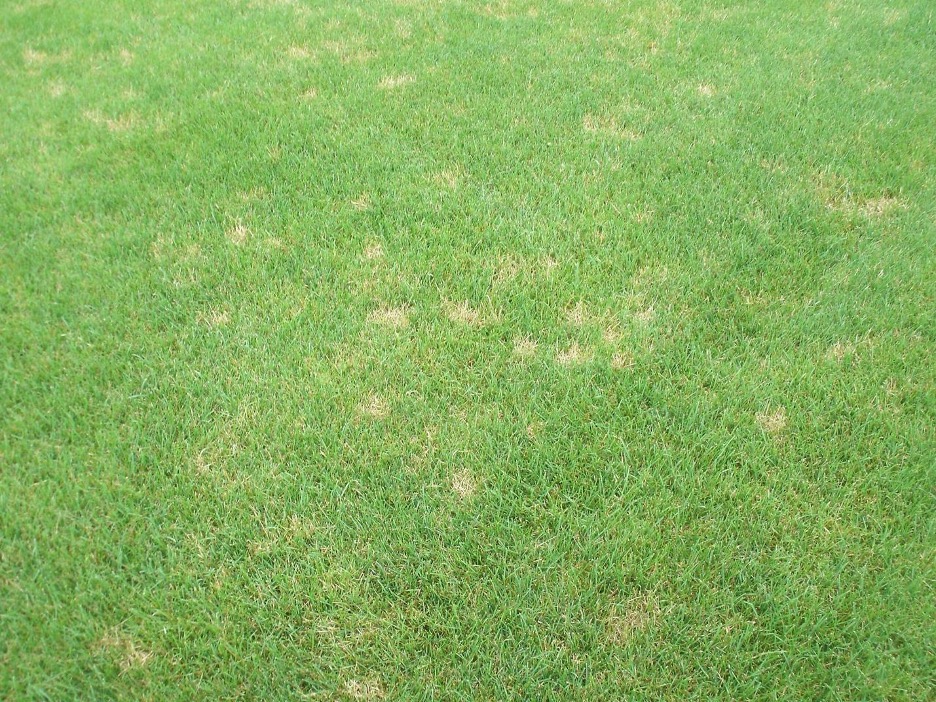
Lawns that did not get fall aeration last year and are showing visible compaction signs: water pooling, footprints staying visible, thin growth in traffic zones. Waiting another six months for fall lets the compaction worsen and the lawn decline.
Properties with extreme compaction issues that benefit from twice-yearly aeration. Some lawns on heavy clay with chronic compaction problems do well with spring and fall aeration as part of a multi-year improvement program.
Properties planning major spring renovation. If the lawn is being substantially renovated or the upper soil profile is being addressed anyway, spring aeration fits into the broader project.
How to Decide for Your Specific Lawn
Several questions guide the decision:
Did the lawn get aerated last fall? If yes, spring aeration is rarely needed. If no, evaluate compaction signs.
Is pre-emergent already down, or are you planning to apply it? If yes, spring aeration breaks the barrier. Either skip aeration this spring or apply pre-emergent after aerating (timing is harder).
How severe are compaction symptoms? If water pools, footprints stay visible, and the lawn feels hard underfoot, compaction is severe enough to justify spring intervention. If you cannot see clear compaction signs, fall is fine.
Is overseeding part of the plan? Spring overseeding into aerated soil works but produces less robust establishment than fall overseeding. If overseeding is the goal, fall is meaningfully better.
What is the lawn’s overall health? Lawns recovering from significant winter damage may benefit from spring aeration to improve soil conditions for recovery. Lawns that came through winter strong can wait.
Timing Within Spring
If spring aeration is the right call, timing matters within the spring season:
Wait until soil temperatures are warming and the lawn is showing active growth. Aerating dormant or barely-active lawns produces less benefit because the grass cannot capitalize on the disturbance.
Avoid aerating wet soil. Saturated conditions produce smeared cores rather than clean breaks. Wait for soil that is moist but firm enough that footprints stay shallow.
For Central and Eastern Massachusetts, the right spring aeration window is typically late April through mid-May. Earlier than that risks dormant lawn or saturated soil. Later than that pushes into peak active growth where the aeration disruption affects appearance during prime visibility weeks.
Aeration Method Choices
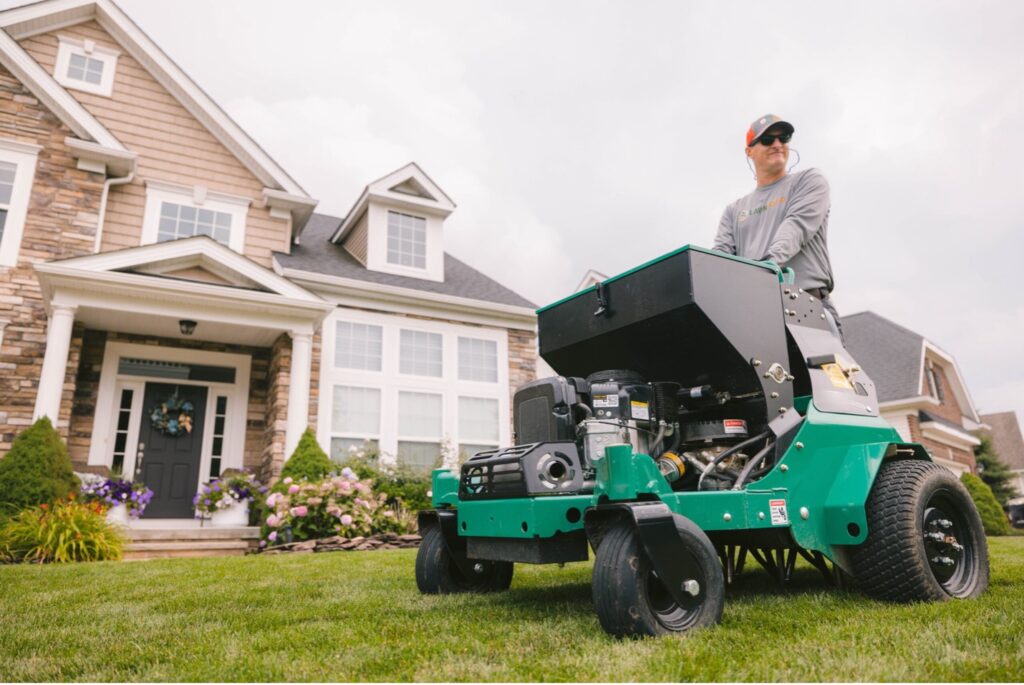
Core aeration (also called plug aeration) is the standard. The machine pulls actual soil cores out of the lawn, leaving holes 2 to 3 inches deep. This is what produces actual compaction relief.
Spike aeration pushes spikes into the soil without removing cores. It produces minimal benefit because no soil is removed. The compaction simply gets pushed sideways. Spike aeration is generally not worth the time or money.
Liquid aeration products use chemical compounds that supposedly improve soil structure. The science on these products is mixed. Most professional turf managers do not consider them substitutes for mechanical core aeration on compacted lawns.
What Aeration Does and Does Not Solve
Aeration relieves soil compaction and improves water and nutrient penetration. It produces meaningful improvements on lawns where compaction is the underlying issue. The benefits compound over multiple years of consistent aeration.
Aeration does not fix fertility problems, pH imbalances, disease pressure, or grass-type mismatches. Soil tests guide fertility decisions. Different problems need different solutions.
Properties on consistent annual aeration programs typically see substantial improvements in lawn density, color, and stress tolerance over 2 to 3 years. The change is gradual but real, and it produces lasting benefits that fertilizer alone does not match.
What About Power Raking or Dethatching?
Dethatching is a separate process that targets thatch buildup at the soil surface rather than compaction below it. Most cool-season Massachusetts lawns do not develop significant thatch problems and do not need dethatching.
If thatch is genuinely an issue (more than half an inch of dead organic material between grass blades and soil), dethatching is appropriate. Done unnecessarily, it damages healthy lawn. For most properties, aeration is the more useful intervention.
The Cost-Benefit Math
A single aeration treatment in our area costs roughly $100 to $300 depending on lot size. Spring aeration costs the same as fall aeration; the difference is when you get the result.
The cumulative benefit on a property that aerates annually for 3 to 5 years is substantial. Lawns on consistent aeration programs visibly differ from lawns that never get aerated, particularly on heavy clay or high-traffic properties.
The decision usually is not whether to aerate but when, and for most Massachusetts cool-season lawns, fall produces meaningfully better results than spring.
What to Do Next
If you would rather have someone else handle the timing decisions, product selection, and application for your Central and Eastern Massachusetts lawn, we are here for that.
Lawn Squad of Central and Eastern Massachusetts serves Acton, Andover, Ashland, Bedford, Billerica, Burlington, Carlisle, Chelmsford, Concord, Danvers, Framingham, Franklin, and surrounding areas.
Call us at 617-468-4486 or request a free quote at lawnsquad.com. Our VitaminLawn program is built specifically for the grass types, soils, and weather patterns in our service area. Most homeowners see noticeable improvement within the first two applications.