
The short answer: Protecting your family and pets from fleas and ticks in New Hampshire requires a yard treatment program that targets the transition zones where ticks and fleas harbor — lawn edges, wooded borders, leaf litter, and dense vegetation — combined with habitat modification that makes your property less hospitable to the wildlife that carries these pests onto your lawn in the first place.
New Hampshire consistently ranks among the highest states in the country for Lyme disease incidence. The blacklegged tick — commonly called the deer tick — is established across virtually every county in the state and is active for a far longer portion of the year than most residents realize. Ticks are not just a summer problem in New Hampshire. They become active whenever temperatures climb above freezing, and the nymphal stage — the smallest and most dangerous from a disease transmission standpoint — peaks in late May through July when people and pets are spending the most time outdoors.
Fleas add another layer of concern, particularly for households with dogs and cats that spend time in the yard. Flea populations build rapidly through summer and can establish indoor infestations that are significantly more difficult and expensive to eliminate than preventing outdoor populations in the first place.
The homeowners who manage flea and tick pressure most effectively in New Hampshire are not the ones who react after a tick bite or a flea infestation — they are the ones with a proactive yard treatment program in place before the season begins.
Quick overview:
- Ticks are active longer than you think: Blacklegged ticks in New Hampshire are active from early spring through late fall — and adult ticks remain active on warm winter days
- Target the right locations: Ticks and fleas do not live in the middle of a sunny, well-maintained lawn — they harbor in the transition zones, leaf litter, wood piles, and dense vegetation at your lawn’s edges
- Habitat modification matters: Reducing the conditions that attract deer, rodents, and other wildlife onto your property reduces the tick pressure those animals carry in
- Timing is critical: Spring treatments before peak nymphal tick activity and fall treatments targeting adult ticks provide the most comprehensive protection
Keep reading to learn exactly how ticks and fleas live and move through New Hampshire properties — and what you can do to protect your family and pets all season long.
The Tick Threat in New Hampshire: What Every Homeowner Needs to Know
New Hampshire’s tick problem has grown significantly over the past two decades. Three tick species are of primary concern for Granite State residents:
Blacklegged Tick (Deer Tick)
The blacklegged tick is the primary health concern for New Hampshire homeowners and the species responsible for transmitting Lyme disease, anaplasmosis, babesiosis, and Powassan virus. It is established statewide — from the Seacoast to the North Country — and its populations have expanded dramatically as deer populations have grown and forested areas have increased across the state.
The blacklegged tick has a two-year life cycle with three active stages: larva, nymph, and adult. Each stage requires a blood meal to develop to the next stage, and each feeding is an opportunity for disease transmission.
Larval stage ticks are extremely small and feed primarily on white-footed mice and other small rodents in late summer. Larvae pick up disease pathogens — particularly the Lyme disease bacterium — from infected rodents during this feeding.
Nymphal stage ticks are the size of a poppy seed — barely visible to the naked eye — and are responsible for the majority of Lyme disease cases in humans. Nymphs are most active from late May through July in New Hampshire, coinciding precisely with peak outdoor activity for families and pets. Because they are so small, nymph bites frequently go undetected long enough for disease transmission to occur.
Adult stage ticks are larger and more visible — about the size of a sesame seed — and are most active in fall (October through November) and again in early spring (March through May) whenever temperatures climb above approximately 35°F. Adult blacklegged ticks actively quest for hosts on warm winter days, making them a year-round concern in New Hampshire’s variable climate.
American Dog Tick (Wood Tick)
The American dog tick is larger and more visible than the blacklegged tick and is the species most commonly encountered in open grassy areas, along trails, and in meadow edges across New Hampshire. It transmits Rocky Mountain spotted fever and tularemia and is most active from April through August.
Despite its common name, the American dog tick readily feeds on humans and is responsible for a significant portion of tick bites reported in New Hampshire each year. Its larger size makes it easier to detect and remove before disease transmission occurs — transmission of most pathogens requires extended attachment of 24 to 48 hours — but encounters are common enough to warrant preventive yard treatment.
Lone Star Tick
The lone star tick has expanded its range northward in recent years and is now found in southern New Hampshire, particularly in the Seacoast region and southeastern portions of the state. It is an aggressive feeder that actively pursues hosts rather than waiting passively for contact and can transmit ehrlichiosis, tularemia, and a condition called alpha-gal syndrome that causes a red meat allergy. Its range and populations in New Hampshire are expected to continue expanding as winters moderate.
Where Ticks and Fleas Actually Live on Your Property
Understanding where ticks and fleas harbor is the foundation of effective yard treatment. Applying insecticide uniformly across a manicured lawn is an inefficient use of product — because that is not where ticks and fleas live.
Tick Habitat
Ticks do not thrive in short, sunny, dry turf. They are highly sensitive to desiccation — they lose moisture rapidly in direct sunlight and low humidity — and they concentrate in environments that protect them from drying out.
Woodland edges and transition zones are the highest-risk areas on most New Hampshire properties. The border between maintained lawn and woods, shrubs, or unmaintained vegetation is where tick populations are densest. Ticks quest for hosts by climbing to the tips of grass blades and low vegetation and waiting for a passing animal or person. The taller, denser vegetation of woodland edges provides ideal questing habitat.
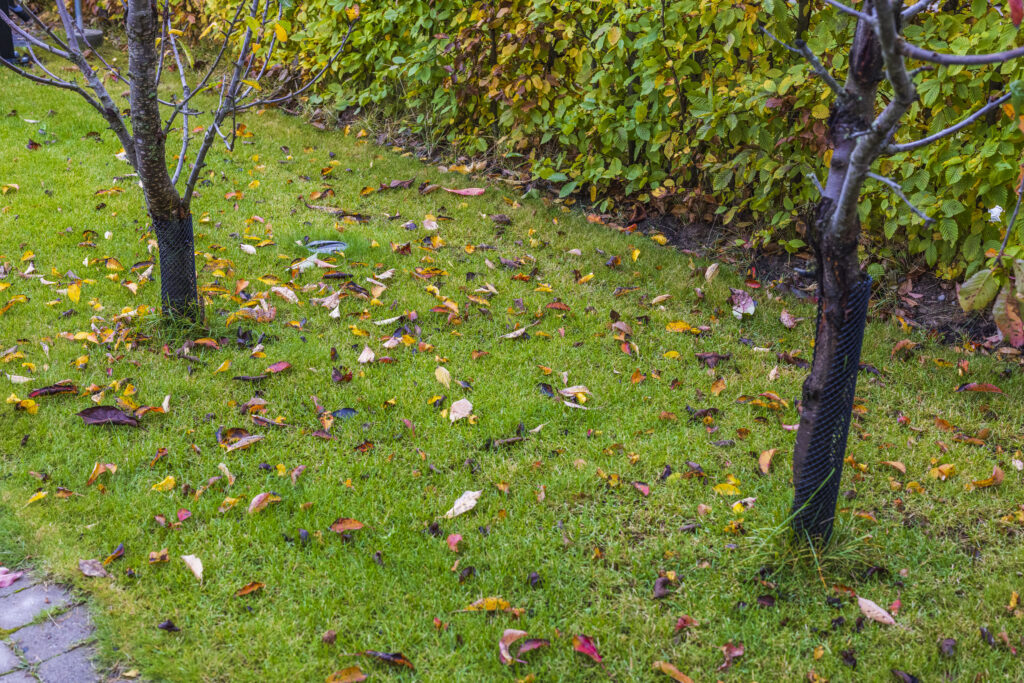
Leaf litter is critical habitat for all tick life stages. The moist, protected environment under fallen leaves maintains the humidity ticks need to survive and provides cover for the rodents that serve as primary larval and nymphal hosts. A thick layer of unmanaged leaf litter around the perimeter of your property is essentially a tick nursery.
Wood piles and debris near the house provide shelter for mice, voles, and chipmunks — the primary reservoirs for Lyme disease bacteria and the primary hosts for larval and nymphal blacklegged ticks. Ticks move from these rodent hosts onto humans and pets when the two populations overlap near the house.
Dense ornamental plantings and ground covers that retain moisture and create shaded, humid microclimates at the soil surface provide tick-friendly habitat much closer to the house than woodland edges.
Stone walls are a classic feature of New Hampshire’s landscape — and prime rodent habitat that supports high tick populations in immediate proximity to homes and yards.
Flea Habitat
Fleas spend most of their life cycle off the host — in the environment rather than on your pet. Flea eggs, larvae, and pupae accumulate in the shaded, moist areas where pets rest and spend time outdoors.
Shaded areas under decks, porches, and dense shrubs are the highest-risk flea zones in most New Hampshire yards. Flea larvae cannot survive in direct sunlight and concentrate wherever humidity is higher and light is lower.
Areas where wildlife rests or travels — particularly raccoons, opossums, skunks, and feral cats — introduce flea populations to your property. These animals carry adult fleas that drop eggs wherever they rest, creating environmental flea populations that persist long after the original host animal has moved on.
Pet resting areas in the yard accumulate flea eggs and larvae over the course of the season, creating localized hotspots of flea activity that re-infest pets repeatedly even after on-animal treatment.
Habitat Modification: Reducing Tick and Flea Pressure at the Source
Chemical treatments are significantly more effective when combined with habitat modifications that reduce the conditions attracting and sustaining tick and flea populations on your property.
Create a Tick-Barrier Zone
Establishing a three-foot wide wood chip or gravel barrier between your lawn and any adjacent woodland or unmaintained vegetation creates a dry, open zone that ticks are reluctant to cross. Ticks crossing from woodland habitat into your lawn must traverse this barrier — and the dry, exposed conditions significantly reduce their survival rate in transit.
Manage Leaf Litter Aggressively
Clearing leaf litter from lawn edges, foundation plantings, and wooded areas adjacent to the yard in fall removes the overwintering habitat that supports tick populations through winter. Regular leaf cleanup throughout fall — rather than a single end-of-season effort — is more effective at reducing accumulation.
Remove Brush Piles and Debris
Brush piles, wood stacks near the house, and general yard debris provide shelter for the rodents that host blacklegged tick larvae and nymphs. Moving wood piles away from the house, eliminating unnecessary debris accumulation, and maintaining tidy foundation plantings reduces rodent activity near the home.
Mow Lawn Edges and Transition Zones Regularly
Keeping grass short and well-maintained at the transition zone between lawn and wooded or unmaintained areas reduces the questing habitat available to ticks at the border most people and pets cross regularly. Regular mowing of these edge areas — even if the lawn interior is mowed less frequently — meaningfully reduces tick encounters.
Manage Deer Attractants
Deer are the primary reproductive host for adult blacklegged ticks and are the primary mechanism by which large numbers of ticks are transported onto residential properties. Removing deer attractants — bird feeders at ground level, ornamental plantings that deer favor, unsecured compost — reduces deer activity on your property and the tick burden they carry.
Address Rodent Habitat
White-footed mice are the primary reservoir for Lyme disease bacteria in New Hampshire and the primary host for larval and nymphal blacklegged ticks. Reducing rodent habitat near the home — eliminating brush piles, sealing gaps in foundations, securing garbage — directly reduces the tick population that develops on your property each year.
Yard Treatment Programs for Flea and Tick Control
Habitat modification reduces tick and flea populations significantly but rarely eliminates them entirely in New Hampshire’s wooded, wildlife-rich environment. Targeted insecticide treatments applied to the specific areas where ticks and fleas harbor provide the additional protection that most properties need.
What to Treat
Effective tick and flea yard treatments focus on:
- Lawn perimeters and edges — the transition zones between maintained lawn and woodland, shrubs, or unmaintained vegetation
- Foundation plantings — the shrubs and ground covers adjacent to the house where ticks can transfer directly to people and pets entering and exiting
- Wooded areas adjacent to the lawn — treating several feet into the woodland edge where ticks are densest
- Shaded areas under decks and porches — primary flea habitat and a common tick resting zone
- Along fence lines and pathways — routes where wildlife and pets travel regularly
Treating the open center of a well-maintained, sunny lawn is generally not necessary and not an efficient use of product. Concentrating treatment on the high-risk zones described above provides better protection with less product.
Treatment Timing in New Hampshire
Spring treatment (May): The most critical application of the year for New Hampshire properties. Targeting nymphal blacklegged ticks before and during peak nymphal activity in late May through June protects during the period of highest Lyme disease transmission risk. This application also targets overwintered adult ticks that are still active in early spring and American dog ticks that become active in April and May.
Summer treatment (July – August): A mid-season application maintains protection through the heart of summer outdoor activity and targets flea populations that have built through June and July. This treatment is particularly important for properties with pets that spend significant time outdoors.
Fall treatment (September – October): Targeting adult blacklegged ticks that become highly active in fall as they seek a final blood meal before winter. Fall adult tick activity in New Hampshire is significant — October is actually one of the highest-risk months for adult tick encounters — and many homeowners who treat in spring skip the fall application, leaving themselves unprotected during a period of real risk.
Product Options
Synthetic pyrethroid insecticides — including bifenthrin, permethrin, and lambda-cyhalothrin — are the most widely used professional tick and flea yard treatment products. They provide effective, residual control when applied to the target zones and are the standard for professional lawn care programs.
Natural and organic options — including cedar oil, rosemary oil, and neem-based products — are available for homeowners seeking reduced-risk alternatives. These products are generally less persistent than synthetic options and may require more frequent application to maintain protection, but can be effective components of an integrated management approach.
Tick tubes are cardboard tubes filled with permethrin-treated cotton that mice collect for nesting material. Mice that use the treated cotton kill the larval and nymphal ticks feeding on them, disrupting the tick life cycle at the rodent host level. Tick tubes are most effective when deployed in late spring and again in late summer, placed near stone walls, wood piles, and other rodent habitat around the property perimeter.
Personal Protection: What Yard Treatments Cannot Do Alone
Yard treatments reduce tick and flea populations on your property but do not eliminate all exposure risk — particularly when spending time in wooded areas, on trails, or in natural habitats beyond your treated yard. Personal protection practices remain important alongside property treatment.
Tick Checks
Performing a thorough tick check after any time spent outdoors — particularly after activities in wooded or brushy areas — is the single most effective personal protection measure. Pay particular attention to the scalp, behind the ears, underarms, groin, and behind the knees. Showering within two hours of coming indoors reduces tick attachment risk significantly.
Protective Clothing
Light-colored clothing makes ticks easier to spot. Tucking pants into socks and wearing long sleeves in tick habitat reduces skin exposure. Treating clothing and gear with permethrin — an insecticide that bonds to fabric and remains effective through multiple washings — provides significant additional protection for high-exposure activities.
Tick Removal
If a tick is found attached, remove it promptly with fine-tipped tweezers by grasping as close to the skin surface as possible and pulling upward with steady, even pressure. Do not twist, burn, or apply substances to the tick. The sooner an attached tick is removed, the lower the risk of disease transmission — blacklegged tick transmission of Lyme disease generally requires attachment of 36 to 48 hours.
Pet Protection
Keeping pets on veterinarian-recommended flea and tick prevention products year-round is essential for New Hampshire households. Pets that spend time outdoors can carry ticks and fleas into the home regardless of yard treatment programs. Checking pets for ticks after outdoor time — particularly after activities near woodland edges — catches hitchhiking ticks before they have time to transmit disease or establish in the home environment.
Fleas in New Hampshire: What Makes Them a Year-Round Concern
While ticks are the primary outdoor pest concern for most New Hampshire homeowners, fleas deserve attention as well — particularly for households with pets.
New Hampshire’s climate limits flea outdoor survival more than in warmer states — populations drop significantly in cold weather and do not persist outdoors through winter. However, flea infestations that begin outdoors in summer can move indoors on pets, establishing in carpets, furniture, and bedding where they survive year-round regardless of outdoor temperatures.
A flea problem that seems to disappear in fall may simply have moved inside, where it will reemerge the following spring and throughout winter whenever indoor temperatures are warm enough for development. Breaking this cycle requires treating both the outdoor environment in summer and, if indoor infestation has occurred, the indoor environment as well.
Summer yard treatments targeting the shaded, moist areas where fleas develop — combined with consistent on-pet prevention products — prevent the outdoor population buildup that leads to indoor infestations. Treating the outdoor problem proactively is far less disruptive and less expensive than addressing an established indoor infestation.
Common Flea and Tick Control Mistakes New Hampshire Homeowners Make
Treating Only in Summer
Blacklegged tick nymphs peak in late May through June, and adult ticks are highly active in October and November. Homeowners who treat only in July and August miss the two most dangerous tick activity periods in New Hampshire. A spring and fall application schedule provides far more comprehensive protection than a single summer treatment.
Treating Only the Lawn Interior
Ticks live at the edges and in the transition zones — not in the sunny center of a well-maintained lawn. Applying treatment uniformly across the entire lawn while neglecting the woodland edges, foundation plantings, and leaf litter zones where ticks actually harbor misses the target completely.
Relying on Yard Treatment Alone Without Habitat Modification
Chemical treatment of a property with abundant leaf litter, brush piles, wood stacks near the house, and dense deer-attracting plantings is fighting an uphill battle. Combining treatment with the habitat modifications described above produces dramatically better and more lasting results.
Skipping Pet Prevention Products
Yard treatment reduces tick and flea populations on your property but does not eliminate them entirely. Pets that go beyond the treated yard — on walks, in parks, in wooded areas — encounter untreated tick and flea populations. Year-round veterinarian-recommended prevention products for pets close the gap that yard treatment alone cannot cover.
Treating Once and Expecting Season-Long Protection
Most yard treatment products provide effective residual control for four to six weeks under normal conditions — less during periods of heavy rainfall. A single spring application does not protect through the entire New Hampshire tick season. A three-application program in May, July, and September/October provides consistent coverage through the full active period.
Professional vs. DIY Flea and Tick Yard Treatment
DIY flea and tick yard treatment is practical for homeowners comfortable with identifying the correct target zones, selecting appropriate products, and applying treatments on the right seasonal schedule. Consumer-grade pyrethroid products are available at local home improvement stores and can provide reasonable protection when applied correctly.
Best for: Attentive homeowners who will treat the right locations — edges, not lawn centers — on a consistent three-application schedule through the season, and who combine chemical treatment with habitat modification practices.
Professional flea and tick yard treatment provides commercial-grade products with better residual performance, expert identification of the highest-risk zones on your specific property, and the scheduling reliability that ensures treatments happen at the right time — particularly important for the spring nymphal tick window that is the most critical treatment timing of the year.
Best for: Properties with high tick pressure due to adjacent woodland, abundant wildlife activity, or a history of tick encounters; households with children or pets that spend significant time outdoors; and homeowners who want reliable, consistently timed protection without tracking application schedules independently.
Your New Hampshire Flea and Tick Treatment Calendar
| Timing | Treatment Focus | Key Targets |
|---|---|---|
| April – May | Spring perimeter treatment | Overwintered adult blacklegged ticks; American dog ticks; pre-nymphal season protection |
| Late May – June | Peak nymph season monitoring | Highest Lyme disease risk period; confirm spring treatment coverage |
| July – August | Mid-season treatment | Flea population peak; continued tick protection; American dog ticks |
| September – October | Fall perimeter treatment | Adult blacklegged tick peak; high Lyme disease risk period |
| Year-round | Pet prevention products | Covers exposure beyond treated yard boundaries |
| Fall | Habitat modification | Leaf litter removal; brush pile elimination; deer attractant management |

The Bottom Line
Flea and tick control in New Hampshire is a year-round commitment that requires understanding where these pests actually live, when they are most dangerous, and how to target treatments effectively rather than broadly.
Key principles to carry with you:
- Blacklegged ticks are active from early spring through late fall — and on warm winter days — making New Hampshire’s tick season far longer than most residents realize
- Treat the edges, transition zones, and shaded areas — not the sunny lawn center
- A three-application program in May, July, and September/October provides comprehensive seasonal coverage
- Habitat modification — leaf litter removal, brush pile elimination, rodent control — amplifies the effectiveness of chemical treatment
- Pet prevention products and personal tick checks close the protection gaps that yard treatment alone cannot cover
- Do not skip the fall application — October is one of the highest-risk months for adult blacklegged tick encounters in New Hampshire
When yard treatment, habitat modification, and personal protection work together, you can dramatically reduce tick and flea encounters on your New Hampshire property and protect your family and pets through every season.
Let Lawn Squad Protect Your New Hampshire Property From Fleas and Ticks
Every property in New Hampshire has its own combination of risk factors — proximity to woodland, wildlife pressure, pet activity, and landscape features that harbor or attract ticks and fleas. A protection program built around your property’s specific conditions produces better results than a generic schedule.
Lawn Squad technicians assess your property’s highest-risk zones, apply targeted treatments at the right time for New Hampshire’s tick and flea activity calendar, and integrate pest control into a comprehensive lawn care program that addresses fertilization, weed control, and turf health alongside flea and tick protection.
Lawn Squad flea and tick control services include:
- Targeted perimeter and transition zone treatments timed to New Hampshire’s tick activity windows
- Spring, summer, and fall application scheduling for comprehensive seasonal coverage
- Habitat assessment and modification recommendations specific to your property
- Integration with broader lawn care programs for maximum property protection
- Unlimited service calls when pest activity is a concern between scheduled visits
Do not wait for a tick bite or a flea infestation to take outdoor pest pressure seriously.
Contact Lawn Squad today at 603-713-5238 or visit https://lawnsquad.com/contact-us/ to get your free quote and start protecting your New Hampshire family and pets from fleas and ticks this season.