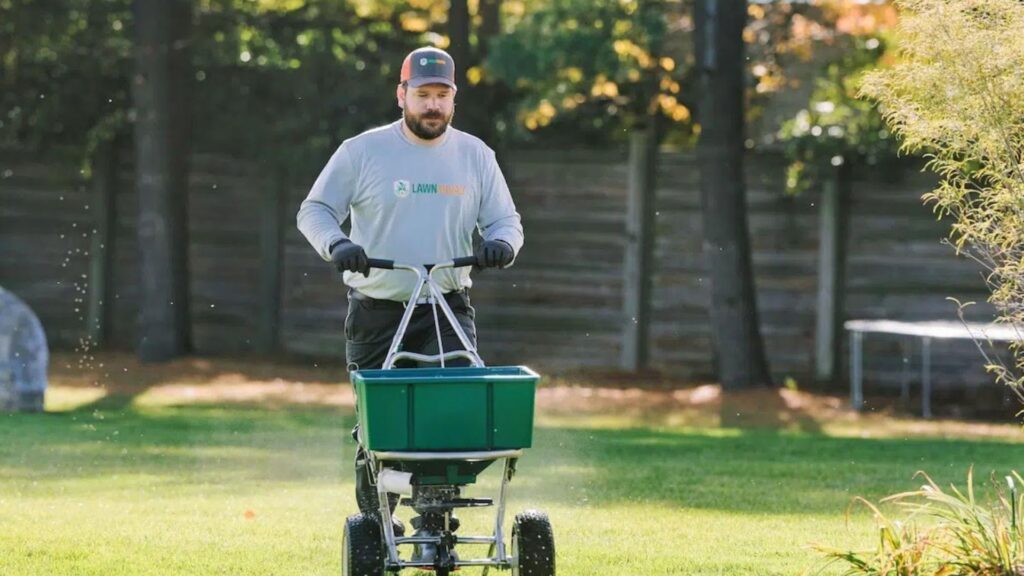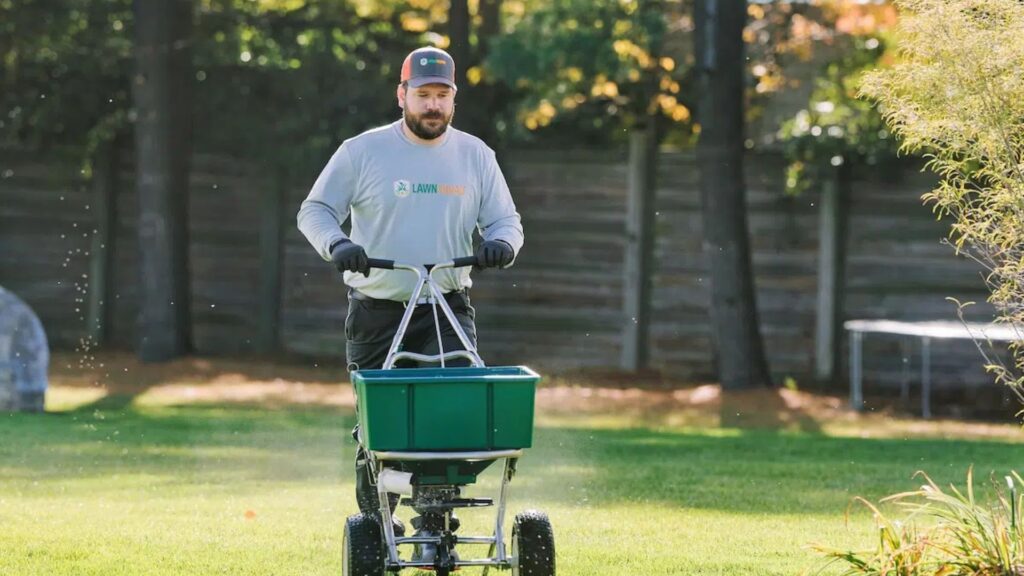

Short Answer: Spring fertilization on Columbus cool-season lawns should be a single light to moderate application after active growth is visible, typically late April to early May. Use a balanced slow-release product at roughly 0.75 to 1 pound of actual nitrogen per 1,000 square feet. Heavy spring nitrogen pushes top growth at the expense of roots and sets the lawn up to struggle in July and August. Fall remains the most important fertilization window. Soil testing guides product selection. pH correction with lime may be needed if soil tests show acidic conditions. Iron applications can produce visible green-up without forcing growth. Here is the practical guide for properties across Columbus, Dublin, Westerville, Worthington, and the surrounding area.
The first warm weekend tempts a lot of Columbus homeowners to throw down fertilizer to push the lawn into spring activity. The result of premature fertilization is usually wasted product and forced growth that the lawn cannot fully use. Done right, spring fertility produces noticeable improvement. Done wrong, it sets up summer problems.
Across Columbus, Dublin, Westerville, Worthington, Upper Arlington, Hilliard, and our broader service area, here is the practical guide.
The Core Idea: Fall Is the Headline, Spring Is Supporting
Fall fertilization is what produces a great Columbus cool-season lawn. The October and early November feeding when grass is putting carbohydrates into roots and crowns is the most consequential application of the year. Spring fertilization supports that foundation, not the other way around.
This is opposite from how most homeowners think about lawn care. The visible spring lawn makes people want to feed it. The math actually favors fall by a wide margin.
Understanding this changes the spring approach. We are not trying to maximize green-up. We are trying to support healthy transition into summer without setting up problems.
When to Apply Spring Fertilizer
Time the first application after the lawn has fully greened up and is actively growing, but before peak growth pushes hard. In Columbus, that window is typically late April to early May.
Soil temperatures and active growth matter more than calendar dates. The lawn is ready when soil temperatures at 4-inch depth are consistently above 55 degrees and you have mowed once or twice already.
Applying before active growth wastes product. Applying during the rush of peak growth produces problems we describe below.
What to Apply
For most Columbus cool-season lawns, a balanced fertilizer with slow-release nitrogen works best. Common analyses that work well: 24-0-6, 22-0-8, 20-0-10. Look for products listing methylene urea, polymer-coated urea, sulfur-coated urea, or IBDU as the slow-release source.
The slow-release component is more important than the exact ratio. Roughly half or more of the nitrogen should be in slow-release form. Fast-release nitrogen produces a green-up surge for a week or two, then drops off. Slow-release feeds steadily for 6 to 10 weeks.
Phosphorus is usually unnecessary on established Columbus lawns. The middle number should be 0 unless soil tests show deficiency or you are establishing new seed.
Potassium supports stress tolerance and root health. A small to moderate amount is helpful.
Iron is a bonus on many Columbus lawns. Some properties show mild iron chlorosis as slight pale-green cast even when nitrogen is adequate. Chelated iron applications produce deeper green color without pushing growth.
How Much to Apply
Target around 0.75 to 1 pound of actual nitrogen per 1,000 square feet. This is less than most homeowners apply by default.
To translate to bag rate, look at the nitrogen percentage on the bag and the bag weight. A 50-pound bag of 24-0-6 contains 12 pounds of actual nitrogen. To apply 0.9 pounds of N per 1,000 square feet, that bag covers about 13,000 square feet at the right rate.
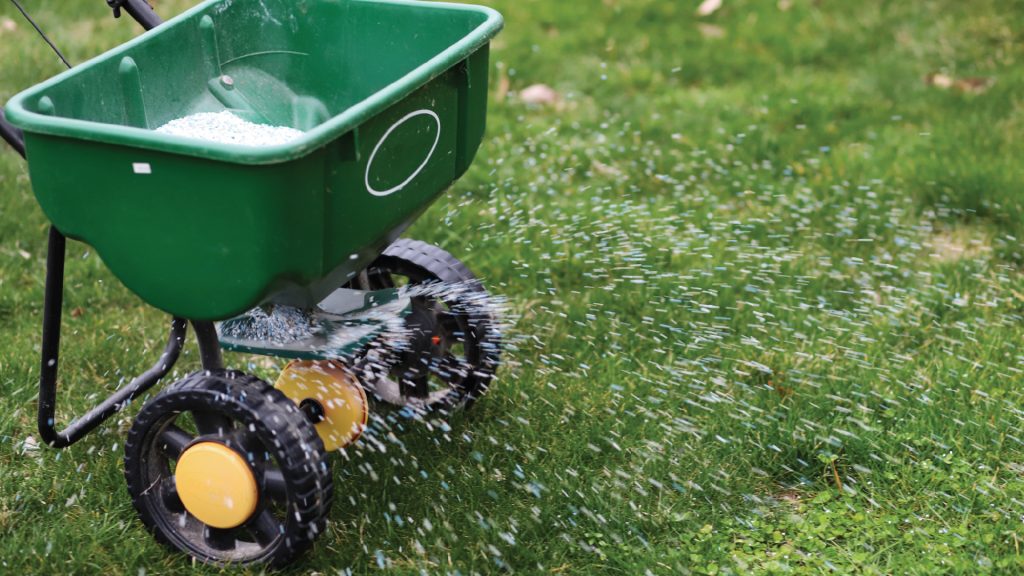
Most bag-rate scoops apply more than this. Read the label and set the spreader correctly. When in doubt, set lower and make a second pass perpendicular to the first.
Why Heavy Spring Nitrogen Backfires
Several problems follow heavy spring fertilization:
Forced top growth at the expense of roots. Grass with abundant nitrogen puts energy into shoot growth and stops developing deeper roots. When summer heat arrives, shallow-rooted lawns wilt and thin.
Increased disease pressure. Soft over-fertilized growth is more susceptible to red thread, dollar spot, and brown patch in early summer.
Faster mowing demands. Heavily fertilized lawns require mowing every 4 to 5 days during peak growth.
Crabgrass and weed seed germination. Fertilizing before pre-emergent has been applied can actually feed germinating weed seeds.
Nutrient loss to runoff. Excess nitrogen runs off into surface water.
Soil Test First, Fertilize Second
Before guessing at what your lawn needs, a soil test from OSU Extension provides real answers. The cost is roughly $20 to $40 and the information lasts 3 years.
Most useful information: pH and major nutrient levels. Columbus area soils run anywhere from slightly acidic to slightly alkaline depending on neighborhood. Adjusting fertility decisions based on actual soil chemistry produces better results than guessing.
Properties with poor lawn performance often discover pH or major nutrient imbalances driving the problem. Correcting those addresses the root cause that fertilization alone cannot fix.
pH Correction
If soil test shows pH below 6.0, lime applications are needed before fertility produces full results. Acidic soil locks up nutrients regardless of how much fertilizer goes down.
Lime applications work slowly. Single applications produce gradual pH change over 6 to 12 months. Multiple applications over multiple years correct significantly acidic soil. Pelletized lime at 30 to 50 pounds per 1,000 square feet annually is standard for moderately acidic soil.
Apply lime separately from fertilizer (separate by at least 2 weeks). The two can interact and reduce nitrogen availability.
Iron Applications
Iron is a separate consideration from nitrogen. Iron deficiency shows as pale green color even when nitrogen is adequate. Many Columbus lawns benefit from chelated iron applications in spring.
Iron produces visible deeper green within 5 to 10 days. The mechanism is direct: iron corrects deficiency that pale color signals.
Iron does not push growth like nitrogen does. The lawn looks greener without the soft growth that nitrogen produces. This makes iron a good supplement when color improvement is the goal but growth pressure is already adequate.
One Application or Split
For most Columbus residential lawns, a single well-timed spring application is enough. Slow-release nitrogen carries the lawn through June and into early summer slowdown.
Some properties benefit from a light second application in early June, particularly if the spring application went down early or if the lawn shows signs of nitrogen draw-down. A second application should be very light, around 0.5 pounds of N per 1,000 square feet.
Avoid heavy summer applications. Mid-summer fertilization on cool-season grass during heat stress causes more harm than benefit.
What Soil Tests Tell You About Your Specific Lawn
A soil test report typically includes:
pH: ideal range is 6.5 to 7.0 for cool-season grass.
Organic matter: indicates soil health. Lower readings suggest amendments may help.
Phosphorus, potassium, calcium, magnesium levels.
Soluble salts: indicate any salt accumulation issues.
Specific recommendations based on the readings.
Pull samples from 4 to 6 different spots across the lawn, mixed into one composite sample. Avoid sampling immediately after fertilization or lime application. Sample at 3-inch depth to capture the active root zone.
What This Approach Produces Over Time
Properties on data-driven fertility programs typically show progressive improvement year over year. Soil chemistry corrects gradually. Lawn density and color improve. Disease pressure decreases as turf strengthens.
The investment is modest. A soil test every 3 years plus correctly-timed annual fertilization produces visibly better results than guess-and-check approaches.
Common Columbus Mistakes
Applying fertilizer in March before the lawn is awake. Wastes product.
Using high-nitrogen products without slow-release component. Produces boom-bust growth.
Skipping soil testing. The information drives every other decision.
Combining fertilizer with herbicide at full rates of both. Compromises both.
Heavy spring nitrogen aiming to maximize green-up. Sets up summer problems.
Ignoring pH. The right fertilizer at the right rate fails on acidic soils.
Applying before forecasted heavy rain. Washes nutrients away before lawn can use them.
What to Do Next
If you would rather have someone else handle the timing decisions, product selection, and application for your Columbus lawn, we are here for that.
Lawn Squad of Columbus serves Baltimore, Blacklick, Brice, Canal Winchester, Carroll, Columbus, Delaware, Dublin, Galloway, Grove City, Groveport, Hilliard, and surrounding areas.
Call us at 740-248-5880 or request a free quote at lawnsquad.com. Our VitaminLawn program is built specifically for the grass types, soils, and weather patterns in our service area. Most homeowners see noticeable improvement within the first two applications.