Short Answer: Crabgrass pressure on Knoxville area lawns is heavier than most homeowners realize because our transition zone climate produces extended germination flushes from early April through August. Pre-emergent crabgrass control timed to the soil temperature window (typically mid March in our area) is the primary defense. For properties that missed the pre-emergent window, post-emergent control on actively-growing crabgrass works when applied while plants are still small. Year-round prevention combines pre-emergent timing, dense turf to crowd out germination, proper mowing height, and consistent fertility. Knoxville’s long warm summer means single-application approaches typically fail; split applications produce significantly better control. Here is the practical guide for properties across Knoxville, Farragut, Oak Ridge, Maryville, and the surrounding area.
If you have lived in the Knoxville area for more than a season or two, you know crabgrass is part of the lawn care reality. Our transition zone climate produces a longer crabgrass germination window than colder climates further north, and the heat-loving annual grass takes advantage of any thin spot or bare area in the lawn.
Across Knoxville, Farragut, Oak Ridge, Maryville, Powell, and our broader service area, here is the practical guide to crabgrass control across the year.
Why Knoxville Crabgrass Pressure Is Heavier
Several factors specific to East Tennessee make crabgrass pressure higher than in many markets:
Long warm season. Crabgrass germinates from spring through midsummer in our climate, producing multiple germination flushes. Northern climates have a single short germination window; we have months of pressure.
Heat tolerance. Crabgrass thrives in the hot humid summer conditions that stress cool-season grasses like fescue. As fescue thins from summer stress, crabgrass fills the open space.
Mixed grass lawns common in our area. Properties with both warm-season Bermuda and cool-season fescue have transition zones at the boundaries where crabgrass establishes easily.
Heavy clay soils common across the region. Compacted clay produces thin turf areas that crabgrass colonizes.
Variable spring weather. Soil temperatures that bounce around in March and April can produce timing challenges for pre-emergent application.
The Soil Temperature Trigger
Crabgrass seeds germinate when soil temperatures at the seed depth reach a consistent 55 degrees Fahrenheit. Air temperature does not drive this; soil temperature does. The seeds respond to what is happening at the seed level, not the weather above.
In the Knoxville area, soil temperature 55 degrees at 4-inch depth typically arrives between mid March and early April. Warm springs push the window earlier; cold springs delay it. Year-over-year variation can be 2 to 3 weeks.
Pre-emergent crabgrass control needs to be in place before this threshold is crossed. Once seeds germinate and seedlings push above ground, pre-emergent has no effect.
The Split Application Strategy
For Knoxville properties with significant crabgrass history, a single pre-emergent application is rarely enough. Our long warm season produces germination flushes from spring through midsummer. A barrier applied in mid March is starting to weaken by mid June, exactly when secondary germination is happening.
The split application strategy uses two treatments. The first at the soil-temperature window (typically mid March). The second 8 to 10 weeks later, typically late May to early June. The combined coverage maintains the barrier through the entire crabgrass germination season.
Cost runs roughly 60 to 80 percent more than a single application. Effectiveness on chronic-crabgrass properties improves substantially, often eliminating midsummer crabgrass entirely.
Properties in northern climates can often get away with single applications because their germination window is shorter. Knoxville properties typically need the split approach for serious control.
Post-Emergent Options When You Missed the Window
If you are reading this in May and crabgrass is already up, pre-emergent is no longer the answer for this year. Post-emergent options:
Quinclorac-based products are the standard for residential post-emergent crabgrass control. Effective on actively-growing crabgrass plants with fewer than 4 leaves. Larger plants are harder to control and may need multiple applications.
Fenoxaprop-based products work well on grass-type weeds including crabgrass but should not be used on bentgrass lawns. Most Knoxville cool-season lawns are not affected, but verify before applying.
MSMA was historically the standard but is now restricted in many jurisdictions and not recommended for residential use.
Hand pulling for small infestations. Dispose of plants before seed heads mature to reduce next year’s seed bank.
Living with it for the rest of the season. Crabgrass is an annual that dies after first frost. Plan correct pre-emergent timing for next spring.
What Makes Pre-Emergent Fail
Properties that apply pre-emergent and still see crabgrass typically have one of several issues:
Timing was wrong. Application too early lets the barrier degrade before late-summer flushes. Application too late misses seeds that already germinated.
Single application when split was needed. The barrier weakens before secondary flushes.
Thin turf. Pre-emergent is more effective when combined with dense lawn that crowds out germinating seeds. Heavily thinned lawns provide too much opportunity for breakthrough.
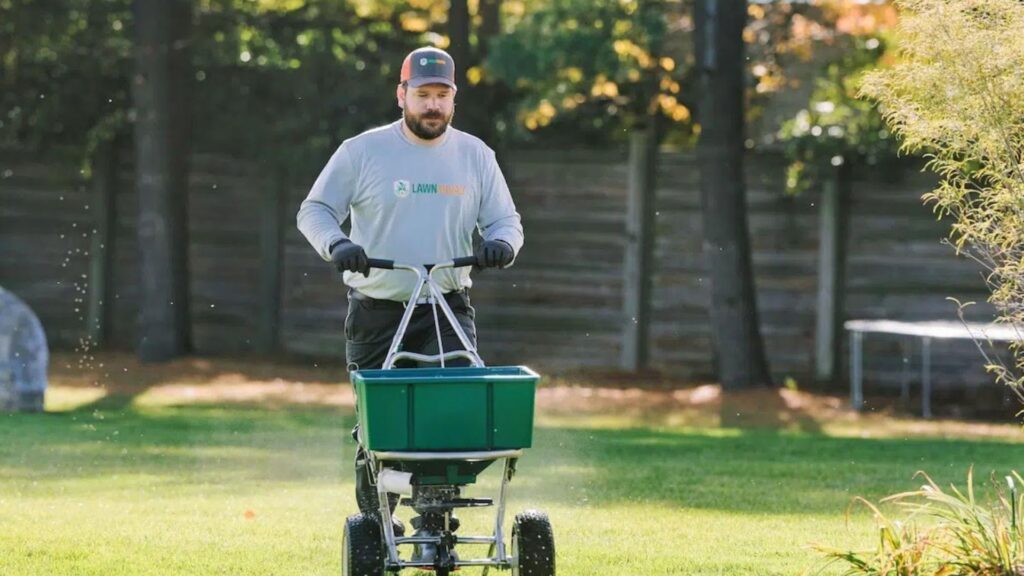
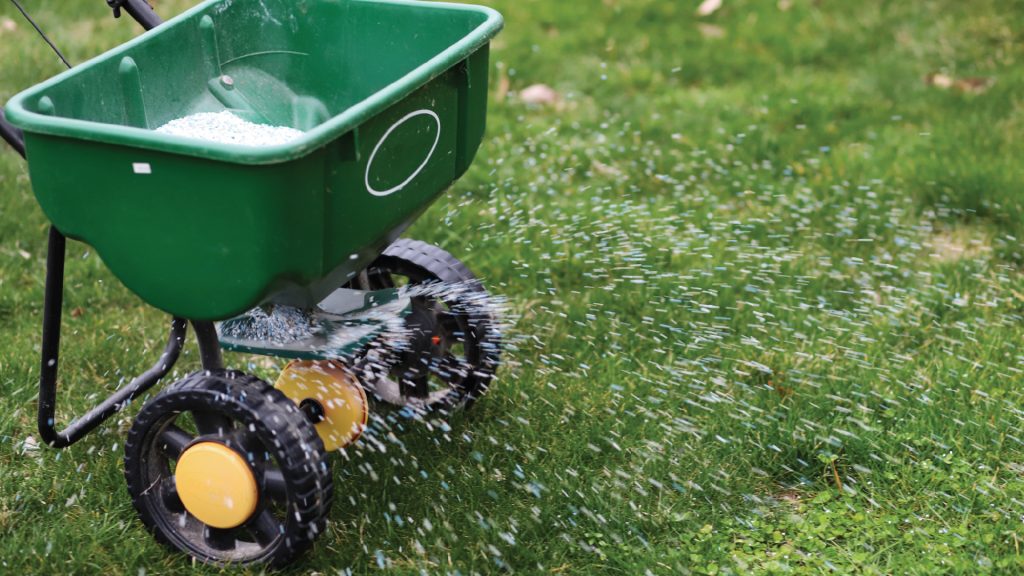
Coverage gaps. Spreader calibration issues, missed strips during application, or operator error all produce zones without barrier coverage. Crabgrass fills those zones.
Aeration after pre-emergent. Core aeration breaks the chemical barrier where cores come out. Schedule aeration before pre-emergent or in fall.
Heavy seed bank. Properties with years of crabgrass producing seed have soil seed banks that overwhelm partial barriers. These properties need 2 to 3 years of consistent strong pre-emergent to deplete the seed bank meaningfully.
Cultural Practices That Reduce Crabgrass Pressure
Pre-emergent works better when combined with cultural practices that produce dense competitive turf:
Proper mowing height. Most cool-season Knoxville lawns should be cut at 3.5 to 4 inches. Taller cut shades soil, reducing germination opportunity for crabgrass that needs sunlight.
Annual fall overseeding on thin lawns. Density built through consistent reseeding reduces bare areas where crabgrass colonizes.
Balanced fertility. Healthy grass competes better than stressed grass. Soil testing and informed fertilization produce stronger turf.
Annual aeration on compacted properties. Compacted areas produce thin grass that crabgrass invades. Aeration relieves compaction over multiple years.
Deep infrequent watering. Builds deep roots that handle stress better. Light frequent watering produces shallow roots that crabgrass outcompetes during dry stretches.
Why Lawn Density Matters as Much as Chemistry
A dense healthy lawn is the most effective crabgrass control available. Crabgrass needs sunlight, bare soil, and moisture to germinate. Dense turf provides none of these.
Properties on consistent multi-year programs that build density typically see progressive reduction in crabgrass pressure year over year, even with the same pre-emergent inputs. The chemistry combined with density produces results that chemistry alone cannot match.
The honest reality for many Knoxville properties is that chronic crabgrass is a symptom of underlying thin turf. Addressing the thinning produces more lasting results than reactive crabgrass treatment.
The Mixed Grass Challenge
Many Knoxville lawns have both Bermuda in sunny areas and fescue in shaded zones. Crabgrass control on mixed lawns has specific considerations:
Pre-emergent timing works for both grass types. The soil temperature trigger is the same.
Some post-emergent products are safer on one grass type than the other. Quinclorac is generally safe on both fescue and Bermuda. Fenoxaprop is safer on cool-season grass than warm-season grass; verify product labels for the specific grass.
Boundary zones between Bermuda and fescue are common crabgrass spots. These transition areas often have weakened grass on both sides that crabgrass colonizes. Extra attention to these zones during application matters.
What Pre-Emergent Cannot Fix
Pre-emergent stops new crabgrass germination. It does not address:
Existing crabgrass plants from previous seasons. Each crabgrass plant typically dies after first frost; perennial crabgrass-like grasses (dallisgrass) require different control.
Other annual grass weeds with different germination requirements. Goosegrass germinates at higher temperatures and needs separate timing.
Broadleaf weeds. Different chemistry entirely.
Underlying conditions producing thin turf. Compaction, shade, drainage, disease all need their own management.
Realistic Expectations
Properties on consistent multi-year crabgrass programs typically see:
Year 1: significant reduction from previous baseline. Some breakthrough still occurs as existing seed bank germinates.
Year 2: 80 to 90 percent control on properties with proper timing and density work.
Year 3 and beyond: crabgrass becomes a minor occasional issue rather than a chronic visible problem.
Properties that switch providers or skip years see slower progress because consistency matters for cumulative results.
Cost-Benefit Math
A correctly-timed pre-emergent application costs $80 to $140 for a typical Knoxville residential lot. Split application doubles that to $160 to $280 for chronic-crabgrass properties.
Compared to post-emergent that costs $100 to $180 per application with less complete control and visible weed damage, pre-emergent is more cost-effective per unit of weed control.
The visual difference through summer is what matters most. Pre-emergent properties show clean turf in July and August. Post-emergent-only properties show patchy weed pressure that never fully clears.
Knoxville-Specific Conditions
Several factors affect crabgrass programs in our area:
Hilly terrain produces sun-exposure differences across short distances. Southern-facing slopes hit pre-emergent timing earlier than northern slopes on the same property.
Heavy clay soils common in our area warm slower than sandy soils. Pre-emergent timing in clay-heavy neighborhoods can lag adjacent properties on lighter soils.
Variable spring weather. Some years bring consistent warming; some bring stop-start patterns that produce timing challenges.
Long summer season with extended germination flushes. Single-application approaches rarely work here.
Mature properties with significant tree canopy have less crabgrass pressure under shade but more along sun-exposed edges.
What to Do Next
If you would rather have someone else handle the timing decisions, product selection, and application for your Knoxville lawn, we are here for that.
Visit lawnsquad.com to find Lawn Squad of Knoxville and request a free quote. Our VitaminLawn program is built specifically for the grass types, soils, and weather patterns in our service area. Most homeowners see noticeable improvement within the first two applications.