Short Answer: Six causes drive most July browning across South Miami St. Augustine lawns even with rainy-season storms and active irrigation: chinch bug feeding in hot sunny zones, take-all root rot weakening the root system, hydrophobic sandy or rocky soil that sheds water, irrigation overlap with afternoon rainfall creating saturated root zones, fungal disease pressure from humid nights, and over-fertilization burning the roots. Each looks like drought from the curb but needs a different fix. Watering more makes most of them worse.
You walked the lawn this morning, somewhere in Pinecrest or Palmetto Bay or Coral Gables or back into Kendall, and the St. Augustine that looked great in May has started showing yellow patches. The afternoon thunderstorms have been hitting daily. The irrigation runs three times a week per the local water restriction schedule. By every measure of rainfall and water input, the lawn should be thriving. So why are these patches browning out?
July in South Miami is the start of the meaningful rainy season. The combination of daily storms, intense heat, humidity that does not quit, and our region’s mix of sandy and rocky soils means that several different lawn problems all surface at once. From the curb, every one of them looks like drought. Each one needs a different fix, and watering more solves almost none of them.
Here are the six causes we see most often on South Miami St. Augustine lawns in July, and how to tell which one is hitting yours.
1. Chinch Bugs Are Working the Hot Sunny Zones
Southern chinch bugs are the single biggest insect threat to St. Augustine in South Florida. By July, populations have compounded through several spring generations and damage is hitting peak visibility. Look first at the strip between the driveway and sidewalk, the south- and west-facing front lawn that bakes all afternoon, around mailboxes and light poles where soil heats faster, and along curbs where reflected heat creates a hot strip.
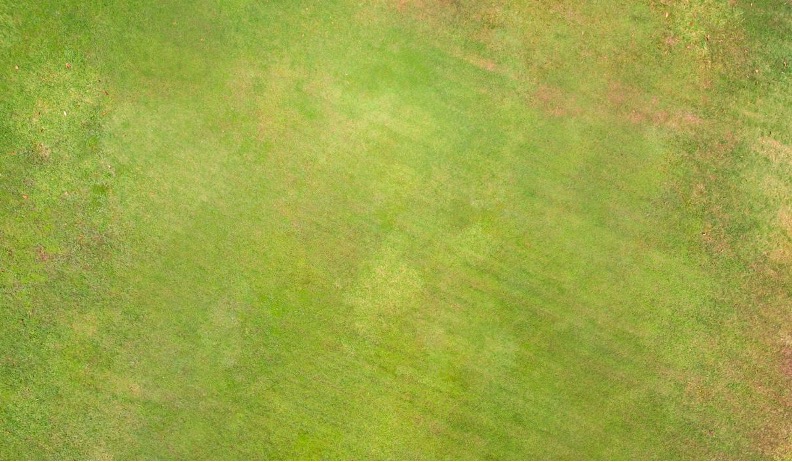
What separates chinch bug damage from real drought is the pattern. Drought browns uniformly across exposed zones. Chinch bugs leave irregular patches with a definable expanding edge. The grass looks “watered but wilting” in the affected zone because the bugs inject a toxin while feeding that blocks water uptake. The plant cannot take in moisture no matter how much you apply.
The five-minute float test confirms it. Cut both ends off a coffee can, push it two inches into the soil at the edge of a yellow patch, fill with water, and wait five minutes. If 20 or more tiny black-and-white adults or red-and-white nymphs float to the surface, you have an active chinch bug infestation. Treatment with a pyrethroid (bifenthrin) or systemic neonicotinoid stops the damage when applied to the affected area plus a 10-to-15-foot buffer.
2. Take-All Root Rot Is Quietly Killing Roots
Take-all root rot (Gaeumannomyces graminis) is a fungal disease that attacks St. Augustine roots from below. The visible damage looks like irregular yellow to light green patches that thin out over weeks, often along property edges or in zones where irrigation has been heaviest. The diagnostic move is to pull up a handful of yellowing grass. If the runners pull easily because the roots are short, brown, or rotted, take-all is likely.
This disease is sneaky because it starts underground in spring and only shows above ground when summer heat overwhelms the weakened plants. Watering more makes it worse because the pathogen thrives in moist root zones. The lawn looks thirsty, you water, the disease spreads, the lawn declines further. South Florida’s combination of heavy irrigation, frequent rain, and warm soils makes our region one of the worst in the country for take-all pressure.
By July, the curative window has narrowed. Fungicide programs (azoxystrobin or fenarimol) help stabilize what is left. Soil pH adjustment downward toward 6.0 to 6.5 with elemental sulfur reduces pathogen activity. Most importantly, irrigation reduction (run shorter and less often, only when soil moisture is genuinely low) is the cultural move that matters most. Fall recovery starts with the right diagnosis now.
3. Sandy and Rocky Soil Has Gone Hydrophobic
South Miami soils are a mix of sand and limerock. Sand drains fast, limerock drains even faster. After weeks of high heat punctuated by intense storms, the surface layer can develop a waxy coating from breakdown of organic matter that actually repels water. This is hydrophobic soil. The irrigation runs, water hits the lawn, beads up, and runs off into the street or pools at the low spots without reaching the root zone.
The test takes one minute. Stick a screwdriver into a brown zone right after the irrigation cycle. If you cannot push it six inches in with steady pressure, the water never penetrated. The grass is thirsty even though your water bill says otherwise.
The fix is a soil wetting agent (also called a soil surfactant). Granular and liquid forms are widely available at South Florida garden centers. One application breaks down the waxy coating and restores normal water absorption within about a week. Aeration and topdressing in fall add longer-term improvement.
4. Irrigation Overlap Is Drowning the Roots
This is the South Miami specialty. Rainy season delivers two to four inches of rain in many afternoons. If your irrigation runs on its normal schedule on top of that, the soil stays saturated for days at a time. St. Augustine roots in saturated soil cannot get oxygen, the root system suffocates, and the visible canopy yellows in patches even though the lawn is technically swimming in water.
The classic sign is yellowing that follows the wettest zones, not the driest ones. Check the low spots first. If the patches concentrate where water sits longest after a storm, you are looking at overwatering damage, not drought.
The fix is a rain sensor or smart controller (now required by Miami-Dade water restrictions on new systems anyway). If you have one and it is working, the irrigation should be skipping cycles after substantial rain. If you do not have one or it has failed, manually pause the irrigation for several days after a heavy storm. Run only when the top three inches of soil are dry to the touch.
5. Fungal Disease From Humid Nights and Storm Cycles
South Florida humidity, combined with afternoon thunderstorms and warm nights, creates ideal conditions for several turf pathogens. The big ones on South Miami St. Augustine include gray leaf spot (small gray-brown lesions on the blades, often in shaded or low-airflow zones), large patch (large circular yellow areas with a darker advancing ring), and dollar spot (small silver-dollar-sized bleached patches).
Disease damage looks like drought from the curb but has distinct close-up signatures. Pull individual blades and look. Drought-stressed blades fold lengthwise and feel papery. Disease blades show lesions, spots, or webbing in early-morning dew. A darker ring at the edge of a yellow patch is often the active fungal front.
Fungicide rotation (azoxystrobin, propiconazole, chlorothalonil) is the curative option. Cultural moves that reduce fungal pressure include keeping mowing height at four inches on St. Augustine, watering only at sunrise so blades dry quickly, and pulling nitrogen back during peak disease pressure. Heavily nitrogen-fed lawns get hit much harder than moderately fed ones, and South Florida’s growing season magnifies any nitrogen excess.
6. A Heavy Fertilizer Application Burned the Roots
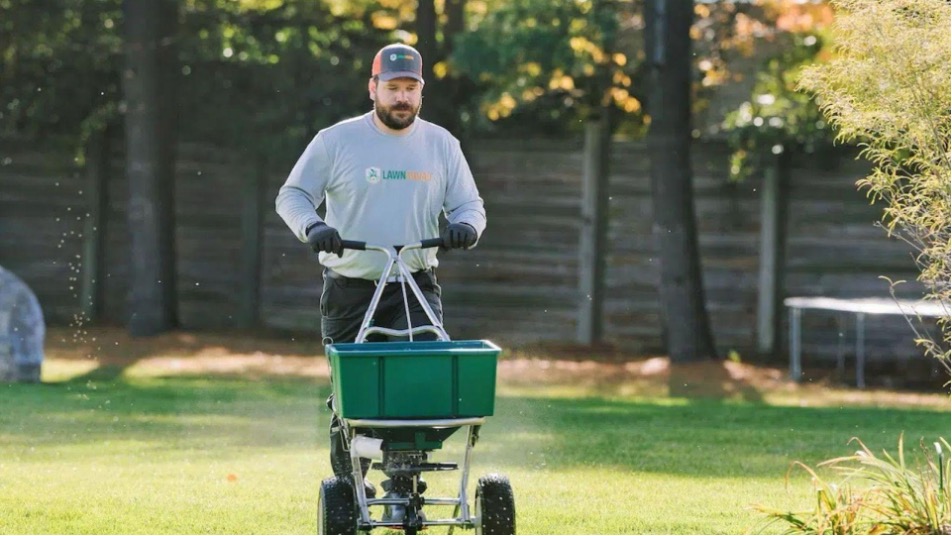
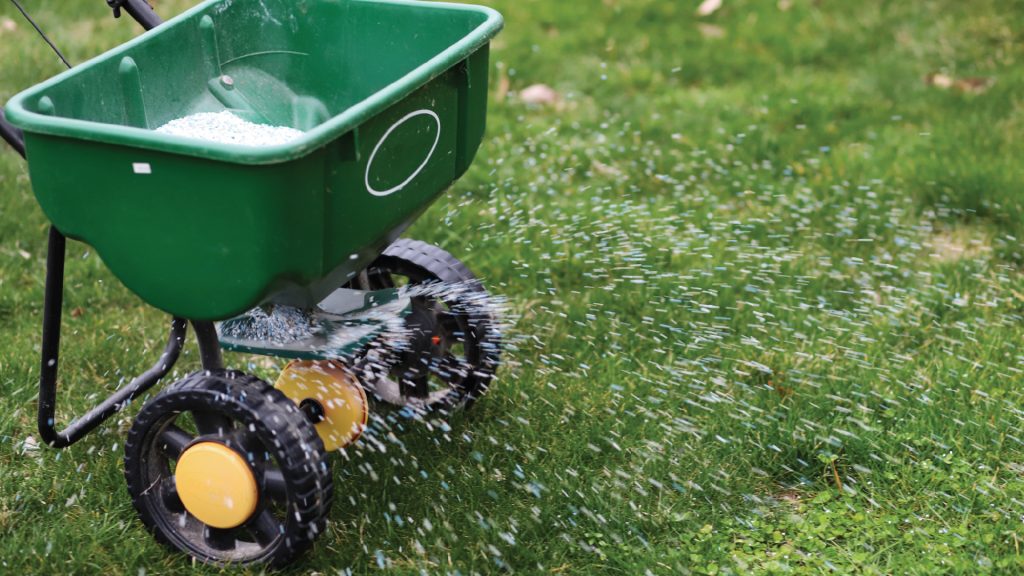
If your lawn was green a month ago and started browning two to three weeks after a fertilizer application, the timing points toward fertilizer burn or salt accumulation at the root level. High nitrogen rates applied during heat stress, granular fertilizer that did not get watered in fully, or fertilizer that landed on already moisture-stressed turf can all push the lawn into a salt-burn pattern. The damage looks like irregular yellowing progressing to a uniform straw color across the application footprint.
The fix is leaching. Run the irrigation longer and deeper for one week to flush excess salts past the root zone (counterintuitive but necessary). Cut back on any additional fertilizer until the lawn recovers. Going forward, target slow-release nitrogen sources, avoid mid-summer applications during heat waves, and water in granular products immediately and thoroughly.
This is also where Miami-Dade’s summer fertilizer ordinance matters. The county restricts nitrogen application during the rainy season for water-quality reasons, and following those guidelines keeps your lawn out of fertilizer-burn territory while staying compliant. It is why our VitaminLawn schedule shifts heavy applications to spring and fall.
Common Questions
Should I water more if the lawn is browning? Almost never in South Miami in July. Of the six causes above, none are solved by more irrigation. Chinch bugs, take-all, hydrophobic soil, irrigation overlap, disease, and fertilizer burn all stay the same or get worse with more water. Diagnose first.
Can I do the float test and screwdriver test myself? Yes, both take five minutes. The float test confirms or rules out chinch bugs. The screwdriver test confirms or rules out hydrophobic soil and irrigation overlap. Together they narrow the diagnosis quickly.
How fast does St. Augustine recover from these issues? If runners are still alive when you intervene, four to six weeks of supportive care brings most lawns back. If runners have died and soil is bare, sod replacement is the realistic path. Our year-round growing season makes recovery faster than most parts of the country, but only if you start now.
What if my lawn shows more than one of these problems at once? Common. Chinch bugs and hydrophobic soil often overlap. Disease often follows fertilizer burn. Address the most urgent driver first (insects, then disease, then water mechanics, then fertility).
What to Do Next
If your lawn is browning despite a working irrigation schedule and active rainy season, the next step is a real diagnosis. Walk the patches, run the float test, check the screwdriver, audit the sprinklers, and check the low spots. Most homeowners who do this find one or two clear causes pointing to a specific fix.
Lawn Squad of South Miami serves homeowners across the South Miami area, including Pinecrest, Palmetto Bay, Coral Gables, Cutler Bay, Kendall, and the surrounding neighborhoods.
Call us at 786-310-1011 or request a free quote at lawnsquad.com. Our VitaminLawn program is built specifically for South Florida St. Augustine on sandy and rocky soils, with chinch bug protection, fungal disease monitoring, hydrophobic-soil amendments, and rainy-season-adjusted fertility built into every visit. The lawns that look best in our service area in late July are the ones that got the right intervention early, not the most water.