Short Answer: Thinning St. Augustine under trees in The Woodlands is almost always three problems stacked together. The grass is short on light, it is losing the competition for water and nutrients to tree roots in the same few inches of soil, and that weakened turf is a prime target for take-all root rot, which is common in this area. Treating only one of the three rarely works. The practical approach is more light where you can get it, less stress everywhere else, and honest expectations about how much lawn a mature canopy will support.
The Woodlands Was Built Inside a Forest
This community was intentionally developed within an existing pine and hardwood forest, and the tree cover is the reason many people live here. It is also the single biggest constraint on growing turfgrass. Mature loblolly pines, water oaks, and sweetgums create dense, shifting shade over most established lots, and that canopy gets thicker every year as the trees grow.
A lawn that was full and healthy fifteen years ago may now be getting half the light it did then, with no visible change in the yard other than the grass slowly giving up. Homeowners often assume something new went wrong, when what actually changed was the amount of sun reaching the ground.
How Much Sun St. Augustine Actually Needs
St. Augustine is the most shade tolerant of the common warm season lawn grasses, which has led to a widespread belief that it grows in shade. It tolerates shade. It does not thrive in it. As a general benchmark, St. Augustine wants somewhere in the range of four to six hours of direct sun or good filtered light per day to hold density.
Below that, growth slows, blades stretch and thin as the plant reaches for light, runners get spindly, and the canopy opens up. Once the canopy opens, weeds move in and any disease pressure has an easier target. Zoysia and bermuda need more light than St. Augustine, not less, so switching grasses is usually not the answer under heavy canopy.
Not All St. Augustine Handles Shade the Same
Cultivar matters more than most people realize. Floratam, which was widely planted for its chinch bug resistance, is one of the poorer performers in shade and needs notably more light than others. Varieties such as Palmetto, Sapphire, and Seville are generally considered more shade tolerant.
If you have an area that is borderline on light, replacing failing Floratam with a more shade tolerant cultivar can be the difference between a lawn that holds and one that keeps retreating. It is not a cure for deep shade. Nothing is. But when you are a little short on light rather than dramatically short, cultivar selection is one of the few levers that actually moves the outcome.
Tree Roots Compete for More Than Water
The light problem gets most of the attention, but competition below ground is just as real. Large trees have dense feeder root systems in the top several inches of soil, which is the same zone the grass roots occupy. Those roots are larger, established, and far better at extracting water and nutrients than turf.
This is why grass under trees can look drought stressed even in a wet stretch, and why adding water under the canopy often produces less improvement than expected. The tree takes it first. Established pines and oaks in The Woodlands move a large volume of water on a hot day, and the grass gets what is left over.
Take-All Root Rot Is Common Here
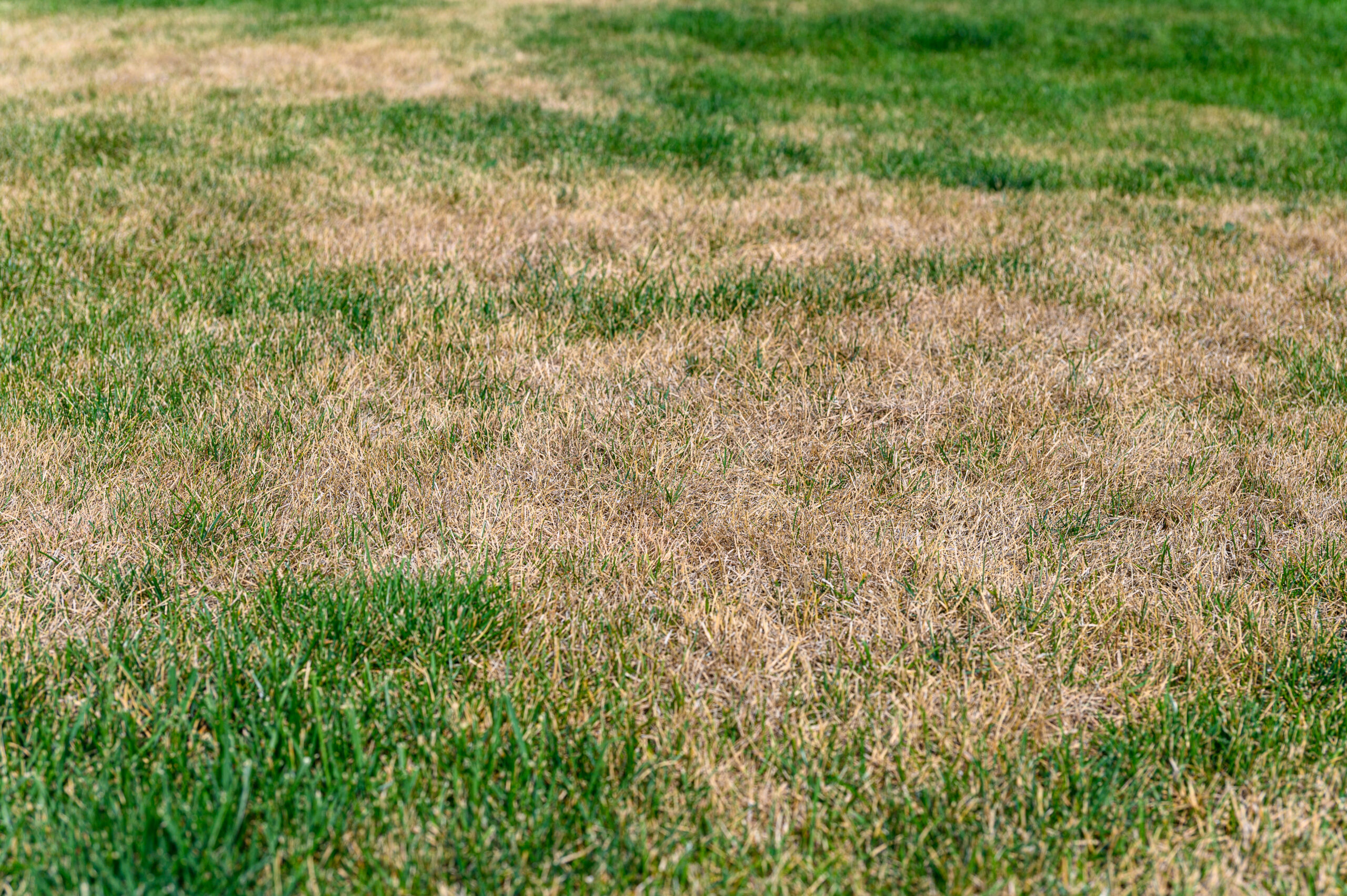
Take-all root rot is a soil borne fungal disease of St. Augustine that is widespread across the Houston region, and shaded, stressed turf is where it does the most damage. The fungus attacks roots and stolons rather than leaf blades, which is why the symptoms look so much like a water or nutrient problem.
You see irregular yellowing and thinning patches that expand slowly, grass that fails to green up in spring or that declines through wet stretches in spring and fall, and turf that simply will not respond to fertilizer. Because the roots are compromised, the plant cannot take up what you apply.
How to Tell Take-All From Simple Shade Decline
Get on your knees and pull. Shaded, light starved St. Augustine is thin and stretched but still anchored, and it resists when you tug on a runner. Turf with take-all root rot lifts away easily because the roots holding it are gone.
Dig a small plug and look at the roots directly. Healthy roots are white to off white and numerous. With take-all they are short, sparse, dark brown or black, and rotted, and the base of the stolon may show dark lesions. That root check takes two minutes and it changes the entire plan, because a disease you can see in the roots does not respond to the fertilizer people usually reach for first.
What Genuinely Helps Under a Canopy
Selective pruning is the highest value action available. Removing lower limbs to raise the canopy and thinning interior branches lets morning and late afternoon sun reach the ground and improves air movement, which shortens the time leaves stay wet. You do not need to remove trees, and in much of The Woodlands tree removal is governed by covenants and requires approval, so check your requirements before planning any removal.
Also reduce every other stress in those areas. Keep traffic off shaded turf, since it recovers far more slowly than sunny turf. Keep leaf litter cleared so it is not smothering thin grass and holding moisture against it through the fall.
Raise the Mowing Height in Shade
The instinct to cut shaded grass shorter so it looks neater is exactly backward. Shaded grass has less leaf area available to capture already limited light, so removing more of it makes the deficit worse. In shade, St. Augustine should be mowed at the top of its range, around four inches, and higher than you mow the sunny parts of the same lawn.
That may mean a separate pass at a different height, which feels like extra work but is the cheapest improvement available. Never remove more than a third of the blade in a single cut, and keep the blade sharp. Ragged cuts create wounds that disease enters through, and shaded turf heals slowly.
Water Less Often in Shade, Not More
Shaded soil holds moisture much longer than soil in full sun because there is less evaporation and less wind. Most irrigation systems run the same schedule everywhere, which means shaded zones are usually overwatered while the homeowner is convinced they are dry.
Persistently wet, shaded soil is close to ideal for take-all root rot and for brown patch as soil temperatures fall through the autumn. If your controller allows separate programs, run shaded zones less frequently than sunny ones. If it does not, check moisture with a screwdriver in both areas before deciding a shaded thin spot needs more water.
Go Light on Nitrogen in These Areas
Feeding heavily is the most common response to thin grass and one of the worst things to do under trees. Shaded St. Augustine cannot photosynthesize enough to support the growth nitrogen pushes, so it produces weak, stretched tissue that is more disease prone rather than denser turf.
With take-all in the picture, excess nitrogen makes things measurably worse. Where soil pH is on the high side, using an ammonium based nitrogen source and topdressing thinly with sphagnum peat moss are established practices for suppressing take-all, because both lower pH at the soil surface where the fungus operates. A soil test tells you whether pH is actually part of your problem.
When to Stop Fighting the Shade
There is a point where the honest answer is that the site will not support turf. If an area gets under about three hours of light, no cultivar, product, or schedule will produce a lawn you are happy with, and you will spend money every year to be disappointed on the same schedule.
In those spots, converting to shade tolerant groundcover, a mulched bed extending the tree ring, a shade bed of ferns and other understory plants, or a stepping stone path is not giving up. It is the choice that finally looks intentional. Many of the best looking yards in The Woodlands have deliberately smaller lawns and larger, well kept shade beds.
What to Do Next
Walk the lawn this week and write down the two or three things that actually bother you about it, then work backward from the window rather than forward from today. Almost every fall mistake we see in The Woodlands comes from starting with the calendar instead of with the lawn.
If you would rather have someone look at it with you, Lawn Squad of The Woodlands offers a free quote. Call 833-816-7508 or find us at lawnsquad.com. Every Lawn Squad location is independently owned and operated, and our VitaminLawn fertilization and weed control program is built around the grass, soil, and conditions here rather than a national average.
A first visit is a walk of the property, a look at the thin areas, a check of mowing height and irrigation, and a straight conversation about what is realistic in the weeks left this season. At 30 days you should see color and density improve. At 90 days the lawn should be visibly thicker, with the root growth that carries it through winter.