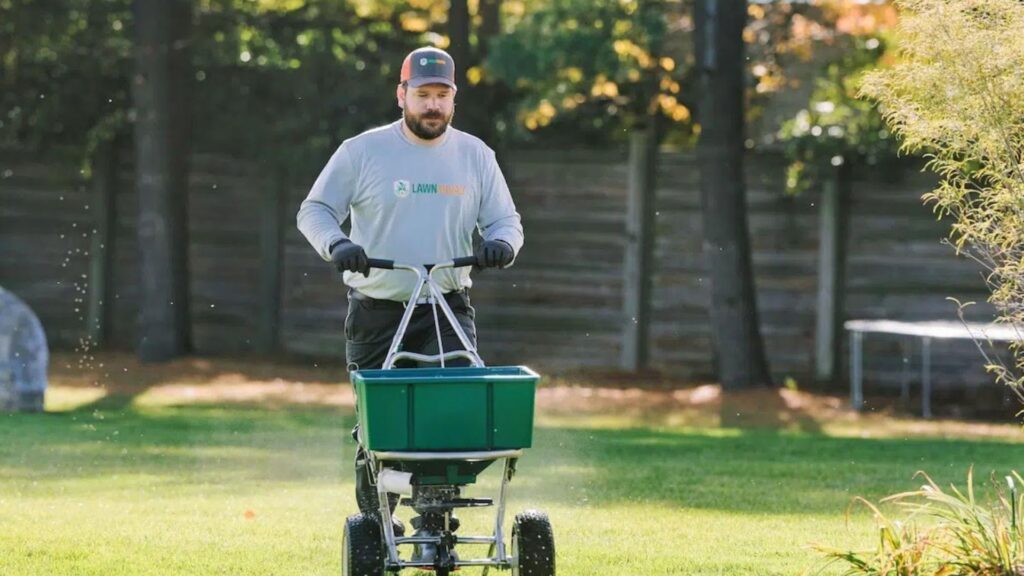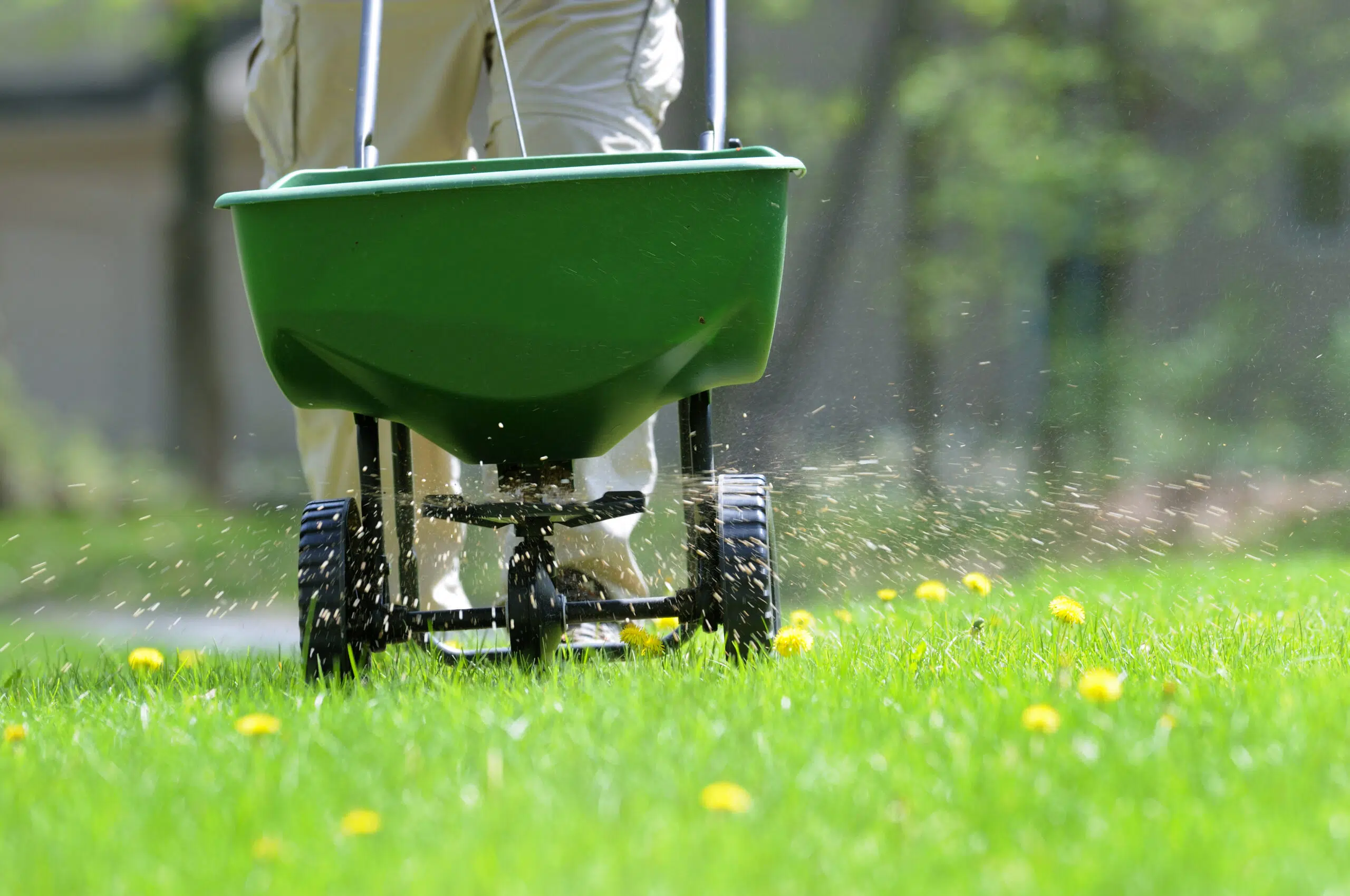
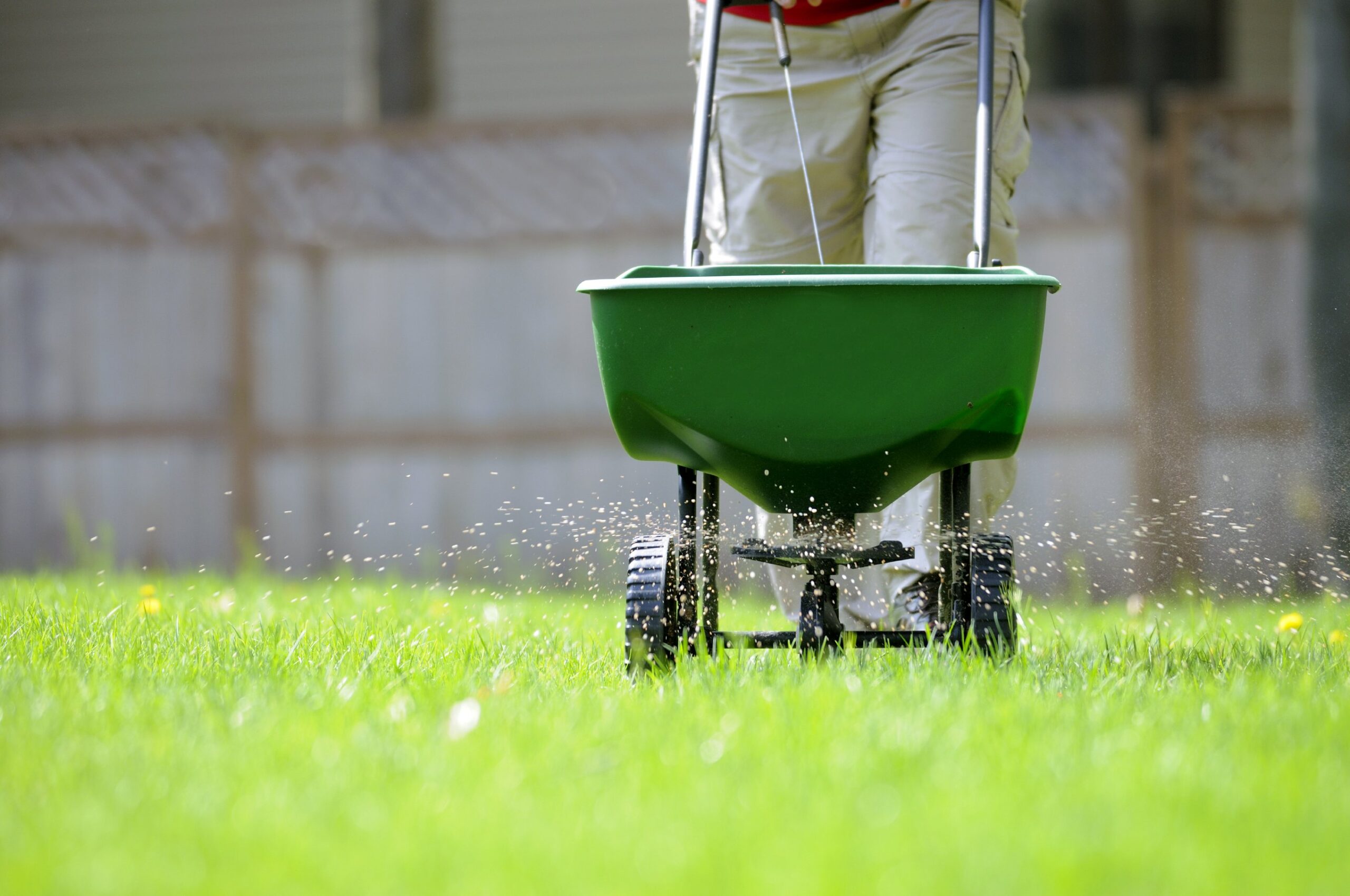
Why Fall Is the Most Important Feeding of the Year for North Raleigh Fescue
Short Answer: On a tall fescue lawn in North Raleigh, the fall feedings do more work than every other application combined. Once air temperatures cool while soil stays warm, the plant shifts from producing leaf blades to building roots and storing carbohydrates in the crown. Nitrogen applied in that window goes into root mass and food reserves rather than growth you have to mow. A complete fall program here is two applications, one in September or early October for recovery and one in November that most homeowners skip. That late one is what produces an early, dense green up in April.
If you have ever fed your lawn hard in April, watched it surge, mowed it twice a week through May, and then watched it fall apart in July, you have run into the central misunderstanding of lawn fertilization in the Piedmont. The feeding that felt most productive was working against you. The one that feels least urgent, made while you are clearing leaves in a jacket, is the one that matters most.
Most homeowners we talk with across North Raleigh find this counterintuitive, and reasonably so. Spring is when the lawn wakes up, so spring feels like the time to feed it. Here is what tall fescue is actually doing in October, because once you see it the timing makes complete sense.
What Fescue Is Doing Right Now
Tall fescue is a cool season grass. It evolved in climates with cool springs and falls and stressful summers, which describes the Piedmont reasonably well except that our summers push it near its limit. It has two growth peaks a year with a summer slump between them, and we are in the second and stronger peak now.
Here is the part that changes how you think about fertilizer. In spring, the plant puts most of its energy into leaf blades. In fall that priority flips. Soil stays warm from summer while air cools, and the plant reads that combination as a signal to build roots and store carbohydrates in the crown, the small growing point right at the soil line.
Above ground it looks like very little is happening. Below ground this is the busiest stretch of the year. Nitrogen applied now does not get spent on blades you have to mow. It becomes root mass and stored food, and those reserves are what the plant lives on through winter and uses to green up in spring before it can photosynthesize much of anything.
Two Applications, Two Different Jobs
A complete fall program here is generally two feedings rather than one, and they do genuinely different things.
The first goes down in September or early October while the grass is actively growing and recovering from summer. That one is about repair. Our summers are hard on fescue, and most North Raleigh lawns arrive at September thinner than they were in May. This application thickens the stand and pushes tillering, where existing plants produce new shoots.
The second is the one people skip and the one that pays. It goes down late, typically late October into November here, once top growth has largely stopped but the grass is still green and soil temperatures are still above roughly forty degrees. Roots stay active well after blades quit growing, and soil holds heat far longer than air does.
Applied in that window, nitrogen goes almost entirely into storage rather than growth. You will not see a response in November. You see it in the first week of April.
Finding the Late Window
Calendar dates are a rough guide and conditions are the real one. Our first frost around North Raleigh typically arrives in late October or early November, and a light frost does not end the season. Fescue keeps working on roots for weeks afterward.
The signal to watch is your own mowing. When you have gone two weeks without needing to mow but the lawn is still green rather than dull, that is the window. In most years here it falls somewhere between the last week of October and late November.
Missing it in the other direction matters. Fertilizer applied onto frozen ground is not taken up and can run off with melt water. Our area drains toward the Falls Lake and Neuse River systems, which are nutrient sensitive watersheds, so timing here is not just an agronomic question.
What to Apply Late in the Season
Product choice matters more on this application than on any other in the year, and a lot of homeowners buy the right idea in the wrong form.
Soil biology slows considerably in the cold. Slow release nitrogen products that depend on microbial breakdown will not release much of anything in November, so a heavily slow release product applied then largely sits until spring. This is one of the few times of year when readily available nitrogen is the correct tool rather than the lazy one.
On the potassium question, bags marketed as winterizer often lead with a high potassium number and a promise of root protection. The late application is genuinely valuable, but university turf research across the region has consistently found that nitrogen rather than potassium drives the benefit. Potassium matters for plant health, and unless a soil test shows you are short, loading up on it is not what produces the spring response you are paying for.
Why This Beats a Heavy Spring Feeding
A big April nitrogen application produces exactly what it looks like. Fast, lush top growth. The problem is what that growth costs the plant two months later.
Resources go into blades rather than roots, and the lawn enters June with a large canopy over a shallow root system. Then a Piedmont summer arrives. Fescue here is already operating near the edge of what the species tolerates, and lawns that were greenest in May are consistently the first to fail in late July.
Lush spring growth is also more susceptible to brown patch, which is the fescue disease that matters most in our humidity, and it means mowing twice a week for a month.
The fall fed lawn arrives at spring differently. It greens up early on stored reserves, with deeper roots underneath and without the growth surge. It needs less water in July because roots reach further into moisture. Across the properties we manage, that summer resilience is the clearest result of a consistent fall program.
What Fall Feeding Will Not Do
Worth being straight about the limits, because fertilizer gets asked to solve problems it cannot touch.
Fescue grows in bunches rather than spreading by runners. That means it does not fill gaps on its own the way Bermuda does. If summer disease or heat killed patches in your lawn, feeding will thicken the plants that remain but will not close bare areas. Those need seed, which is a separate conversation and a separate season.
Fertilizer also will not fix compaction, and many North Raleigh subdivisions sit on ground that was packed hard by construction equipment with a thin layer of soil and sod over it. If roots cannot get past a few inches, a share of what you apply never reaches them.
And it will not overcome deep shade. Under mature hardwoods, light is the limiting factor and no program compensates for it.
What to Do Next
Confirm you have fescue, since this entire article assumes it. Tall fescue grows in clumps with relatively wide flat blades and a prominent midrib, and it stays green through winter. If your lawn turned tan last January, you have Bermuda or zoysia, and the schedule is the opposite of what is described here.
If you have not fed since late summer, get an application down promptly while the grass is still actively growing. Then plan the late application by watching your mowing rather than the calendar, and choose a product with a meaningful share of quick available nitrogen for that one.
Keep leaves from matting on the turf through the rest of fall, since a packed wet leaf layer smothers crowns over winter. Keep mowing at about three inches while growth continues rather than scalping before winter. Both habits protect the value of the applications you just made.
If you would rather have someone watch the conditions and time these applications properly on your lawn, we are here for that. Visit lawnsquad.com to find Lawn Squad of North Raleigh and request a free quote on your property. Our VitaminLawn program is built around the fescue lawns, Piedmont clay, and hot summers we actually work with here.